Arts and crafts, writing, home and garden, dollhouse and miniatures, pets, and anything else!
How to alter toy flocked horses to look realistic
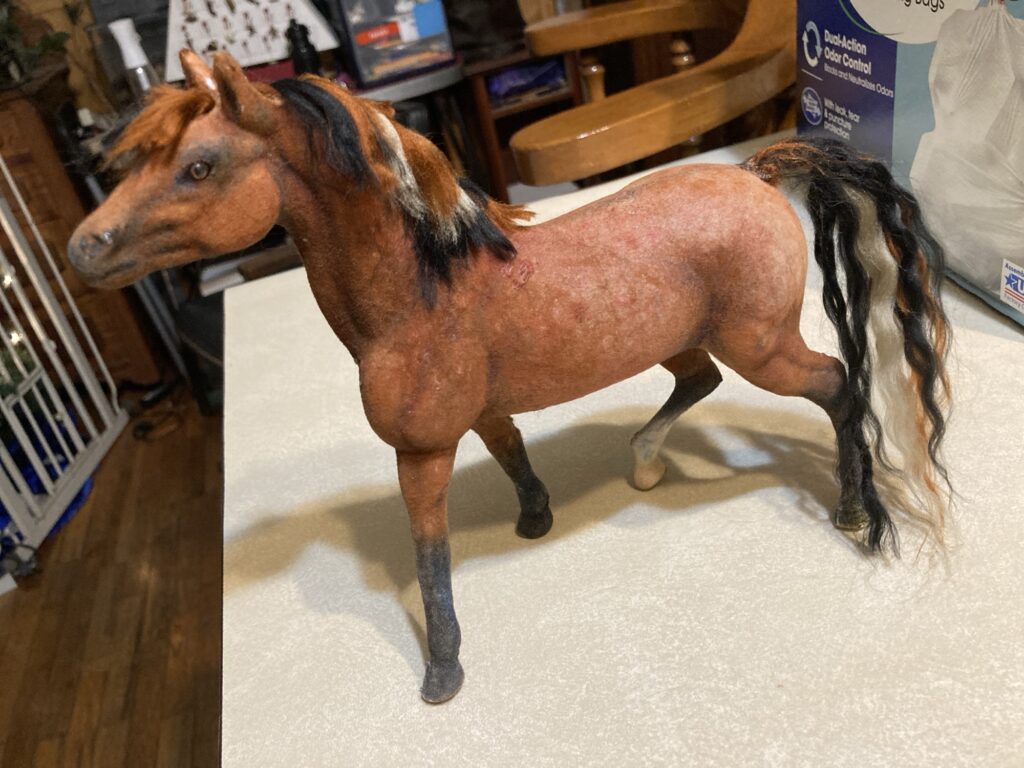
In this post, I experimented with an old flocked or velveted horse toy and altered it to be more realistic by adding new mane and tail, changing the colors to be more realistic, and fixing minor blemishes in the flocking. My plan is to use him in a dollhouse setting.
I recently acquired some inexpensive toy flocked horses, and decided to upgrade them for my dollhouse projects.
Flocked horses (or any other toy animal) are ones that have had a fuzzy velvet-like coating applied, so they look like they have real fur. I remember having some as a kid, and I also remember that the flocking can be easily damaged, so they need to be handled carefully. The ones I acquired are not in the best of shape, which is fine for me since I am doing this as an experiment, anyway.
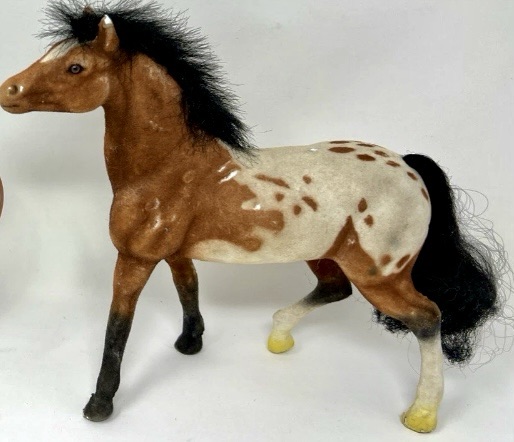
This is a photo from the listing of one of the horses i bought
The first thing I did was remove the mane and tail (i just carefully pulled it off, but discovered that, especially with the mane, you should be more careful as it is glued on and can pull off some flocking skin if you are not careful). I didn’t like the old hair and plan to replace it with something different, so decided that removing it would get it out of the way so I can work more easily.
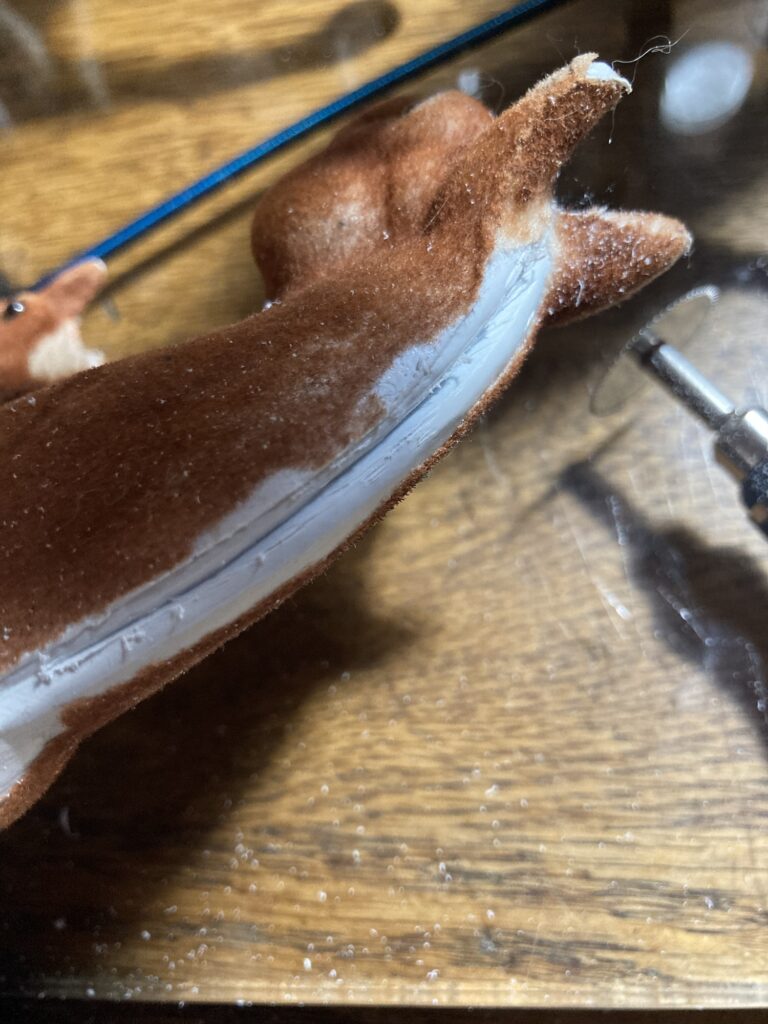
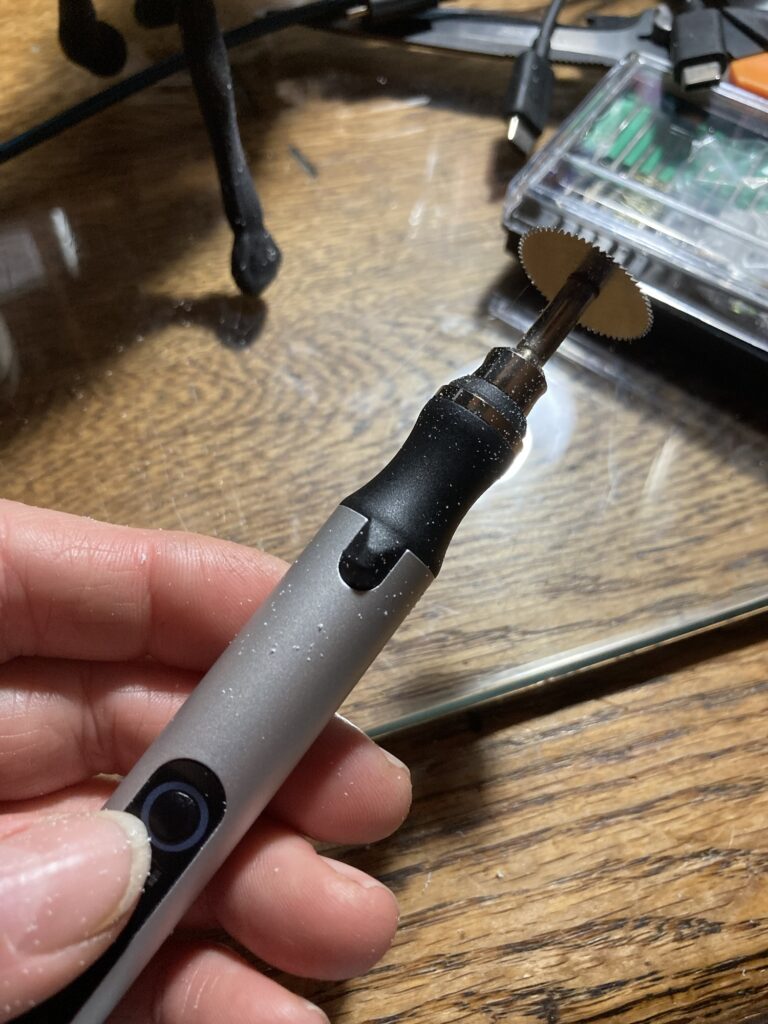
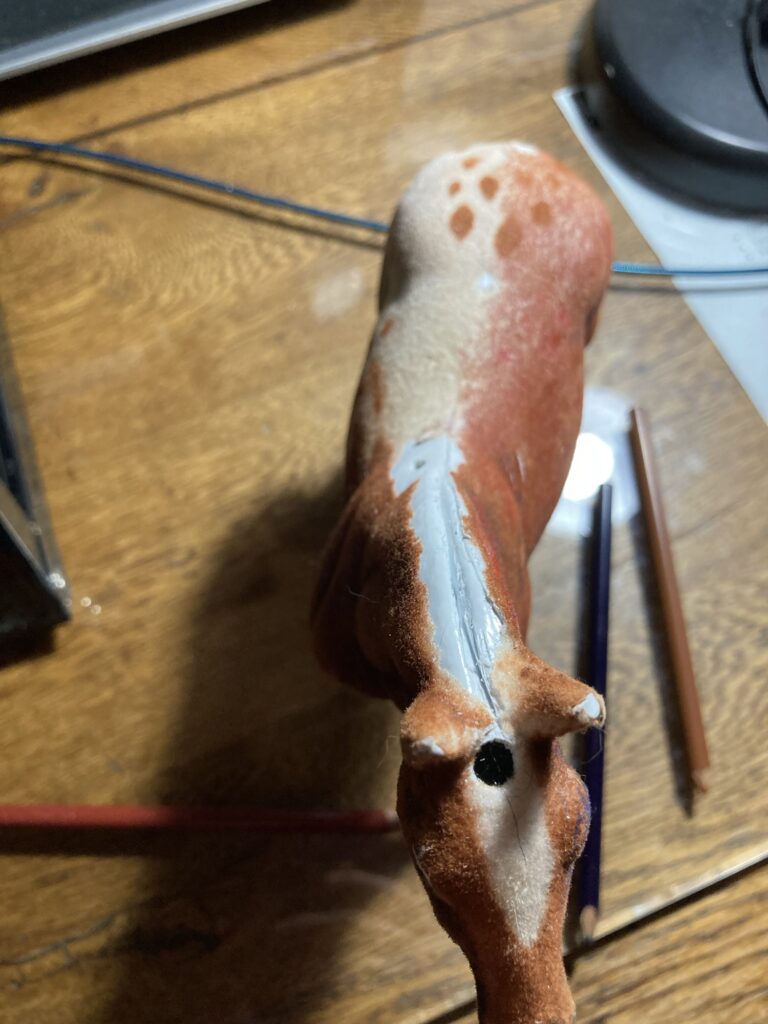
Next I took a small engraving tool with a saw attachment (a dremel type tool would work better, I am sure) and I sawed a small groove along the top of the horse’s neck where the mane will be.
The groove I made. I discovered as I went that it works best to cut right through the plastic into the hollowness beneath, which will help hold the hair better.My little engraving tool with saw attachment. You could even carefully carve it out with an exacto knife.
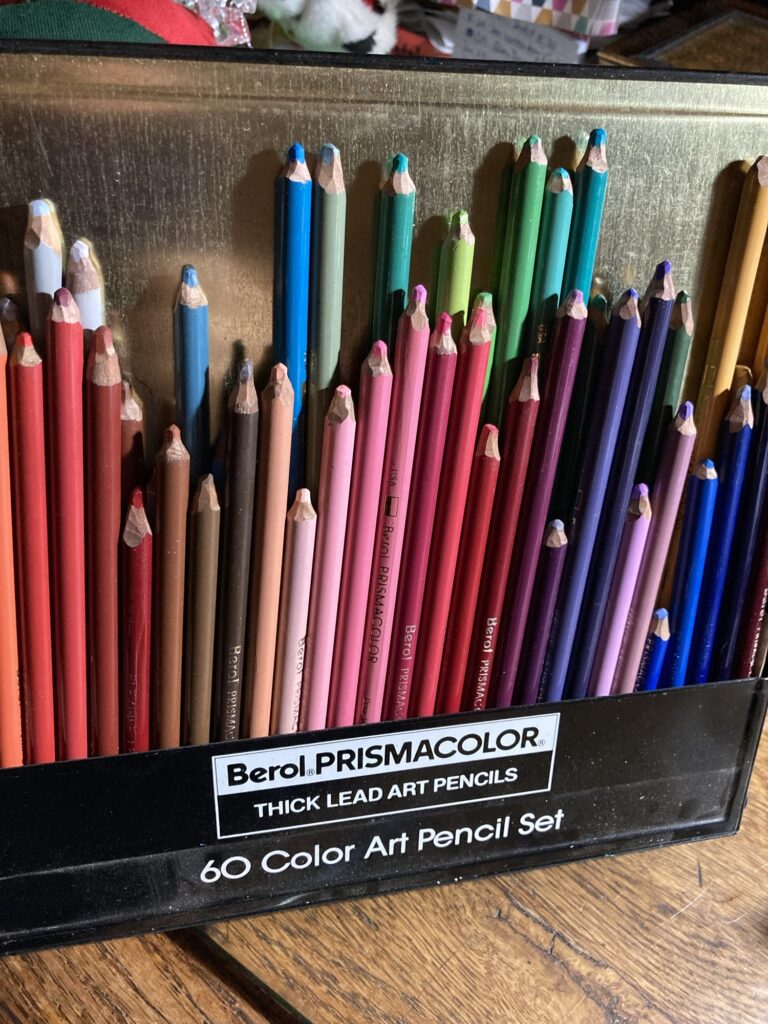
After making a groove, I moved on to experimenting with color. I decided to make this horse more of a roan color, and discovered that my colored pencils worked well. NOTE: I keep my colored pencils sharpened with a knife so that the tips are pretty blunt. I think that if a sharp pencil were used it might damage the fur on the horse. Also, don’t push too hard while coloring as it also may damage the finish. I am shading with light circular pencil strokes and it is working well for me.
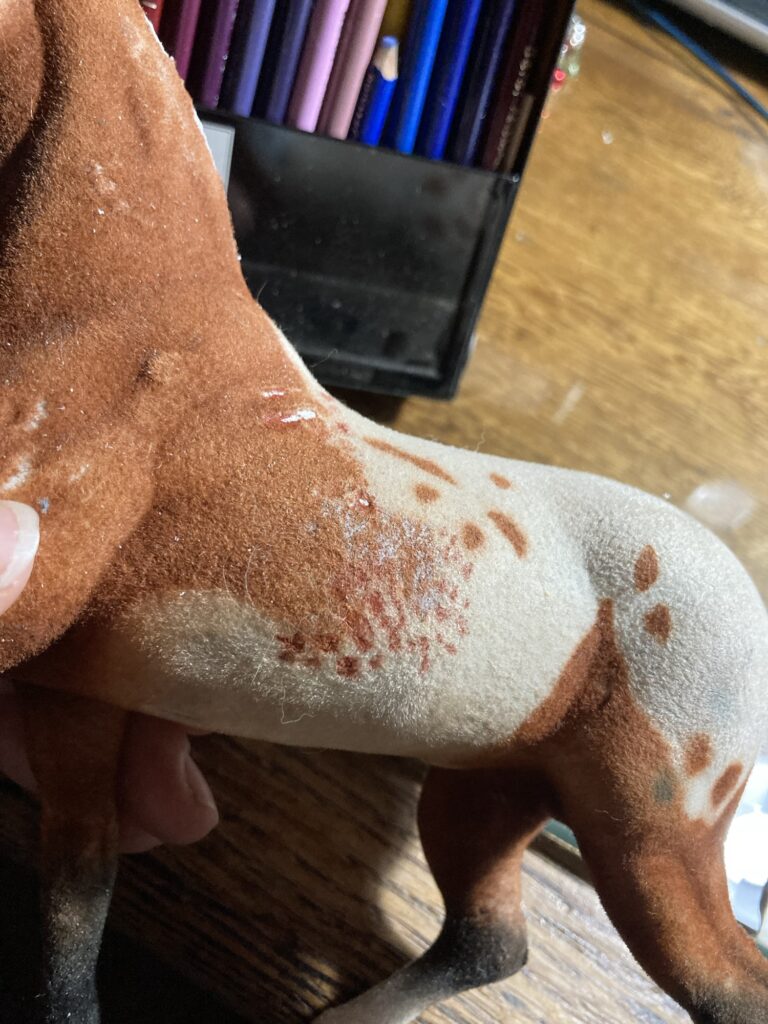
These pencils are great! They are soft enough that they give off enough color without damaging the flocking.A few experimental marks turned out well
I quickly discovered a color that matched the brown of the main body pretty decently, and now can use that to blend the other colors in better. I found a dark grayish blue that works well for shading, to highlight the muscle tone, add dark patches around the mouth, eyes, undercarriage, ears, etc. There are still some areas that have scratches in the flocking. i have a few ideas in mind for simple repairs. I know that Amazon (and probably some hobby stores) sell flocking kits that could be used to repair my horses, but I think I can make do. We’ll see.
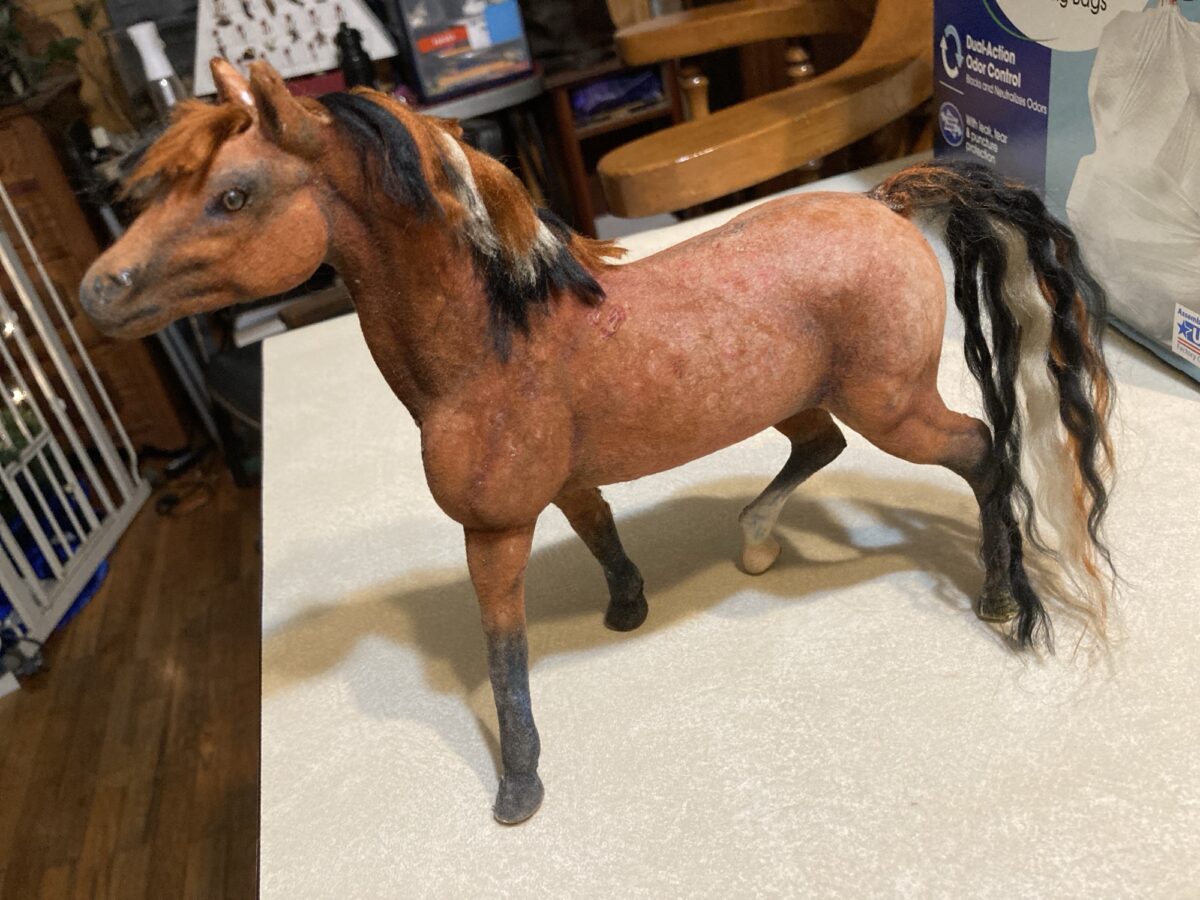
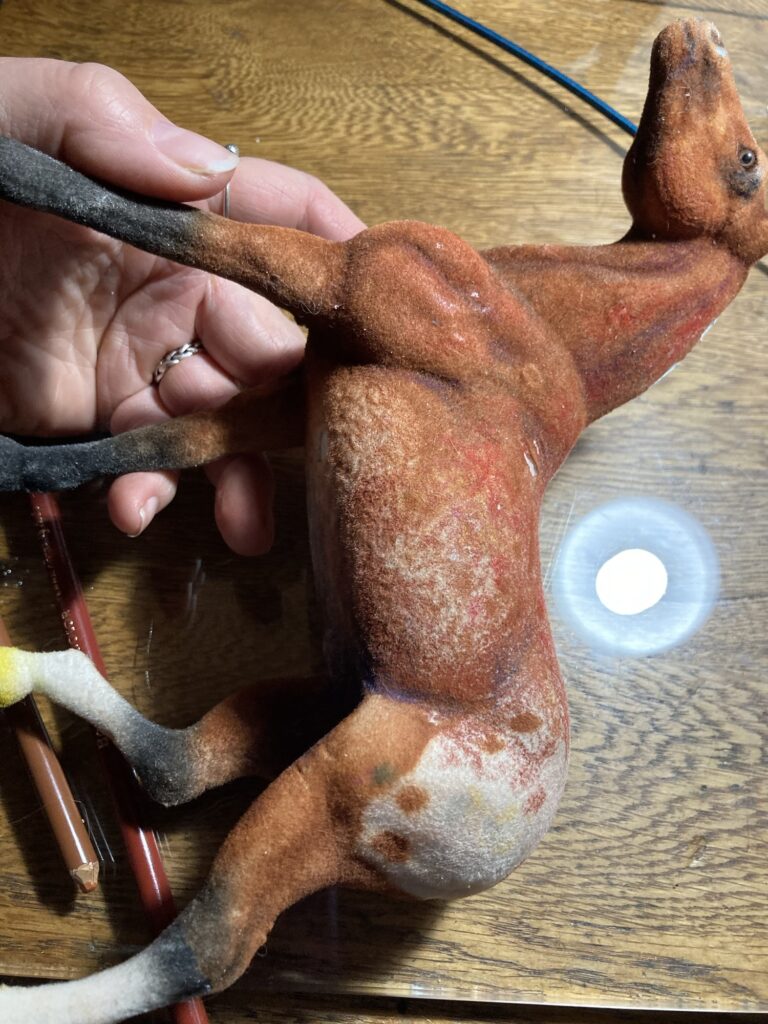
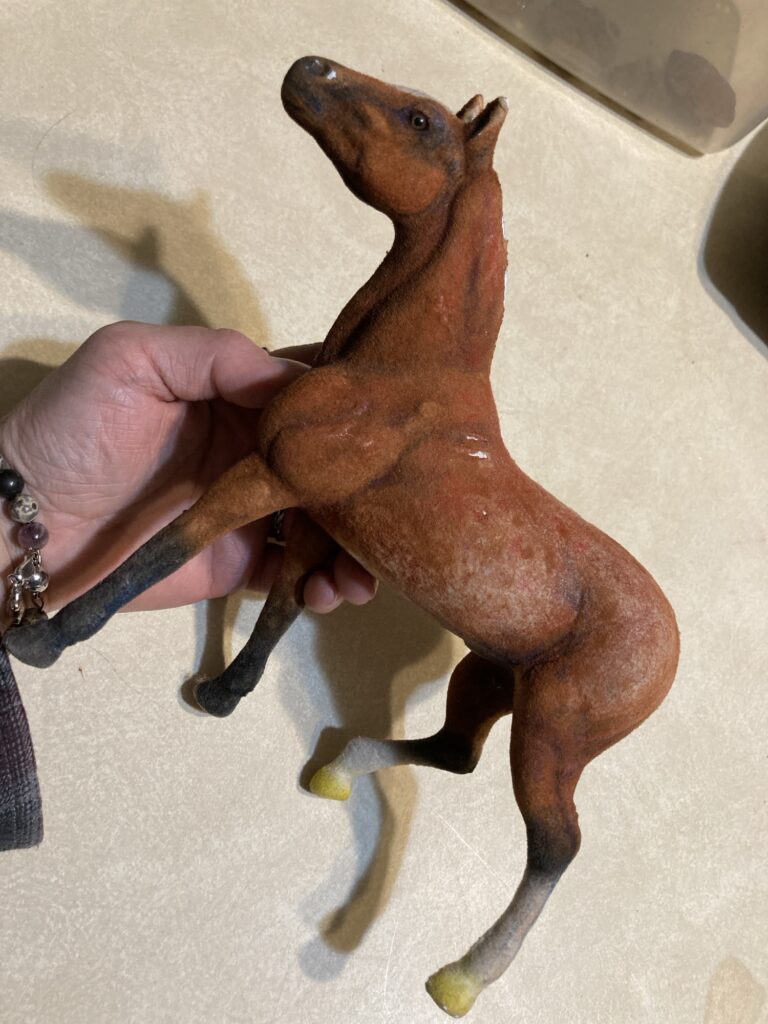
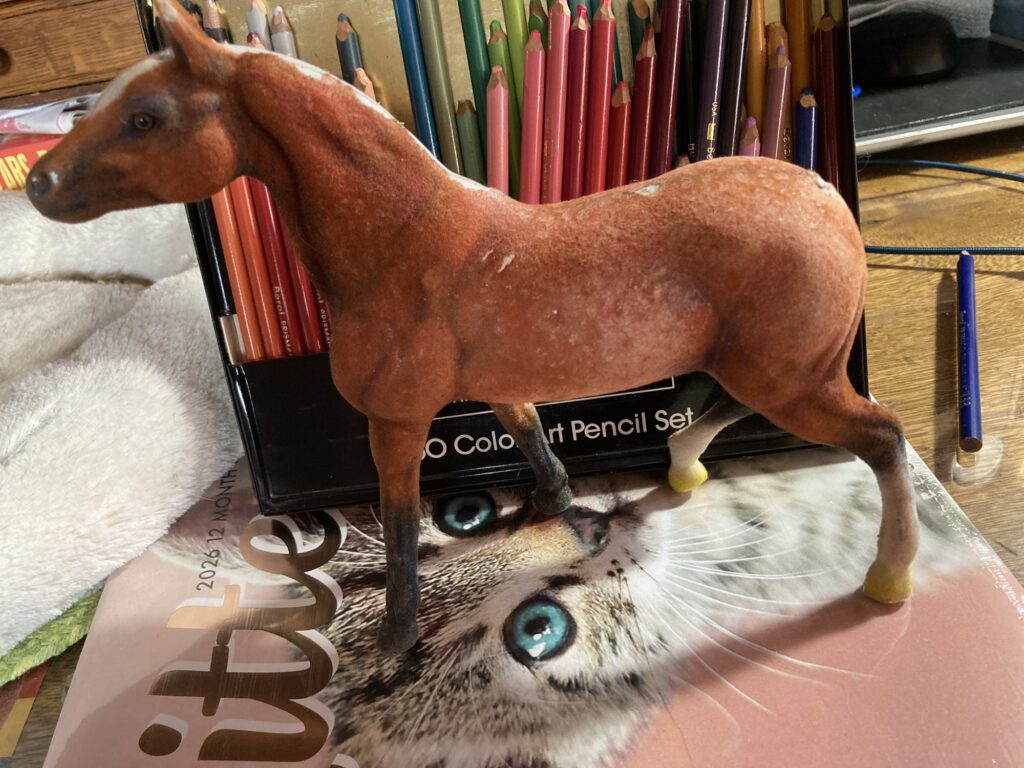
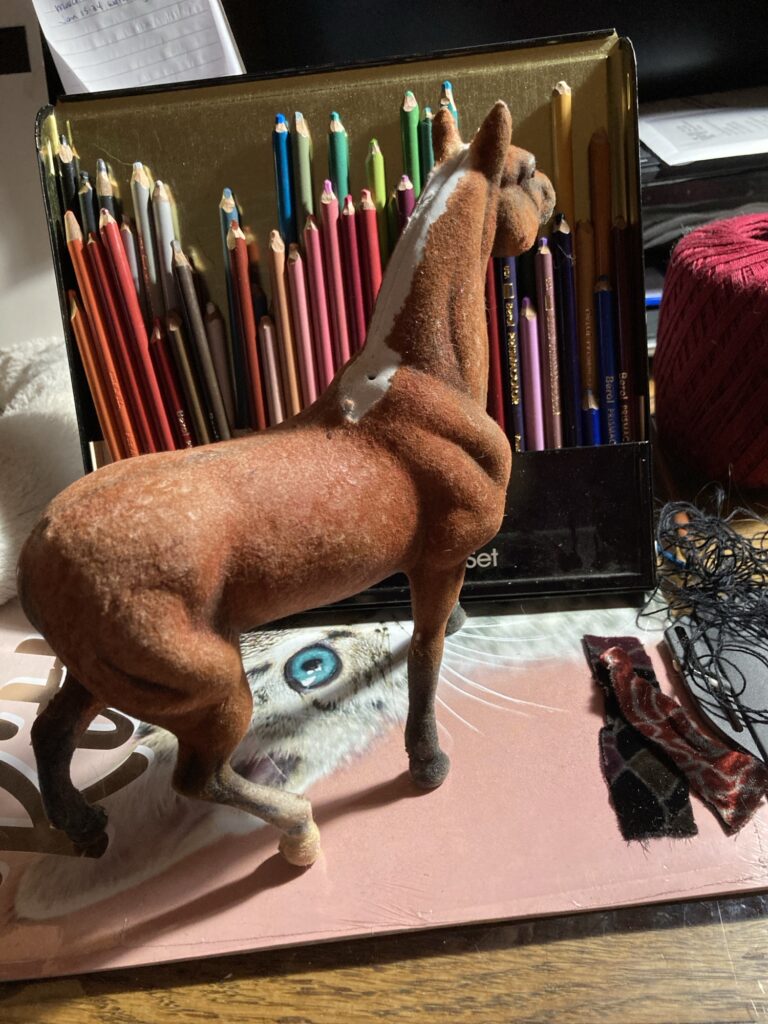
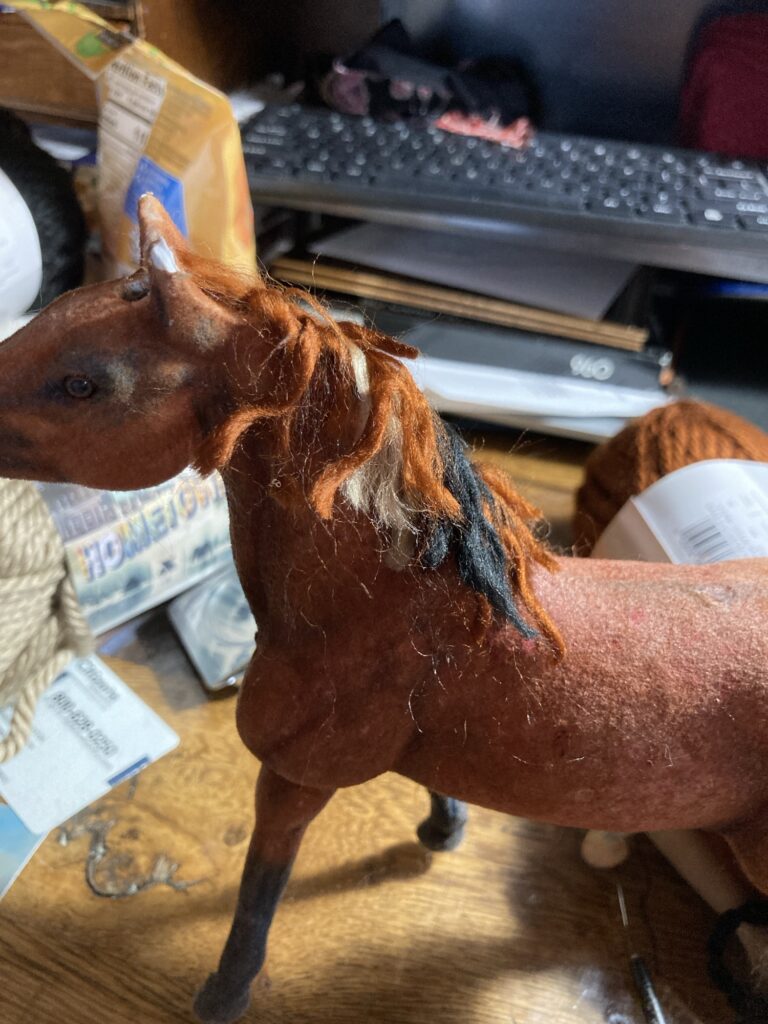
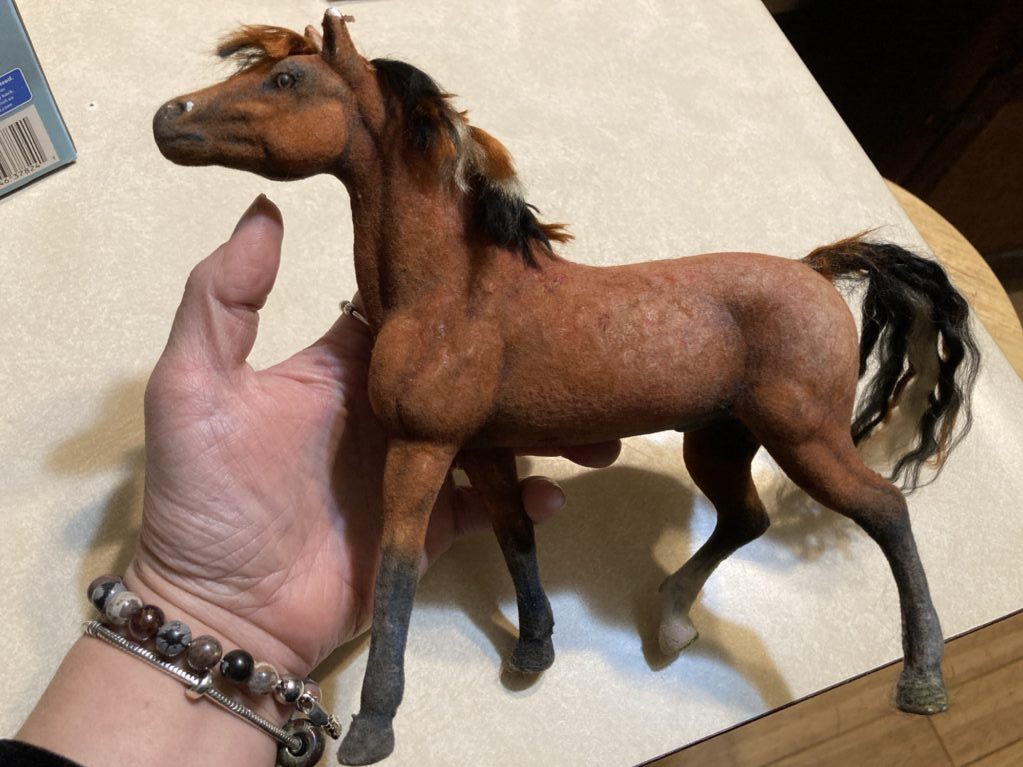
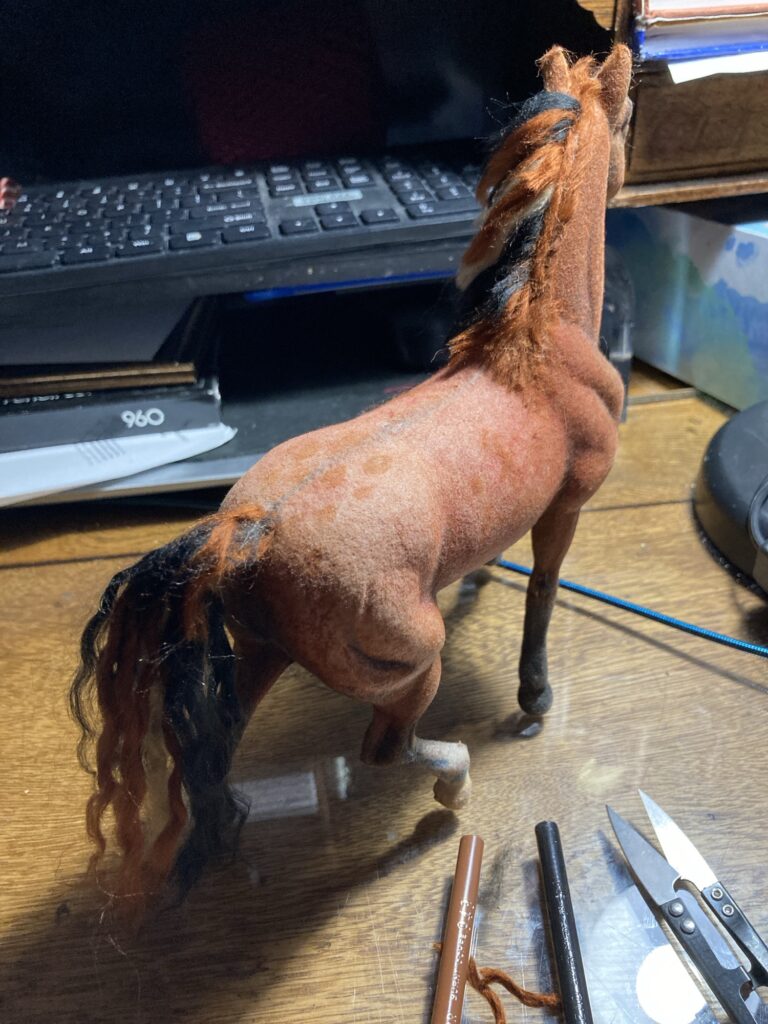
Here he is after a bit of work. I am using several shades of brown, a little blue, some red, and even bits of purple. A top view
I am trying to use shading to bring out or even draw in more of his better details, and also to hide some of the more terrible ones 😆. I tried to find some of the better looking flocked toys that were still inexpensive. Unfortunately they do have some wonky confirmation but it isn’t too bad. Ultimately it would be fun to get some Breyer horses and try flocking and coloring THEM, but it is safer right now to start on the cheap stuff. Also kind of fun!
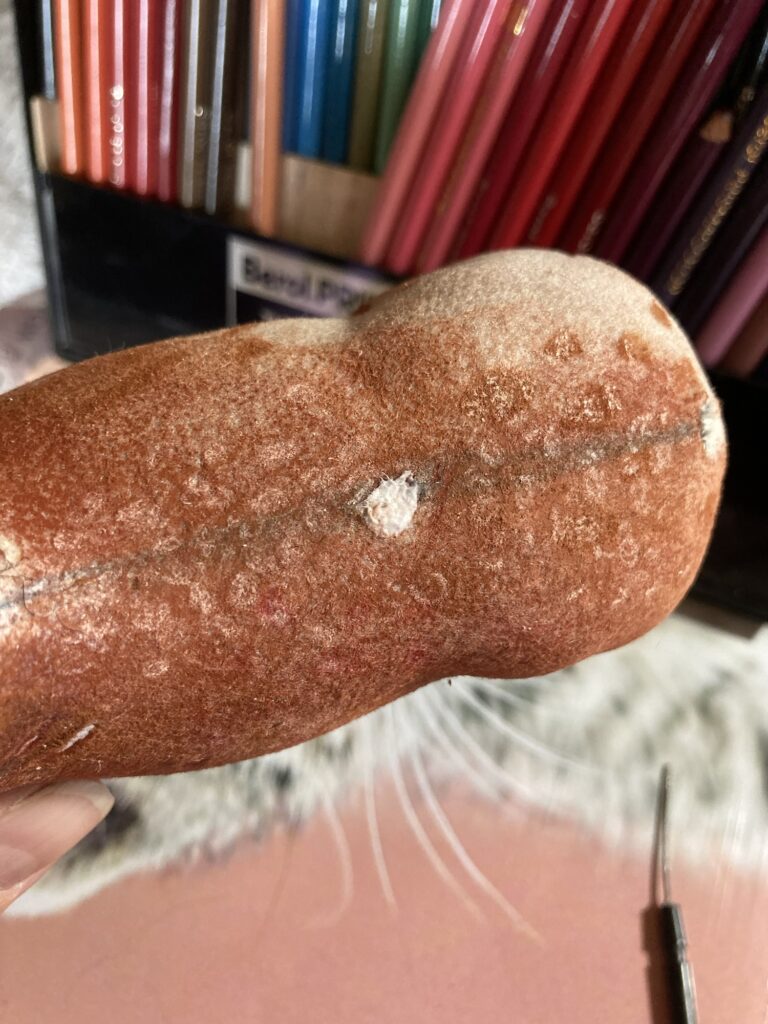
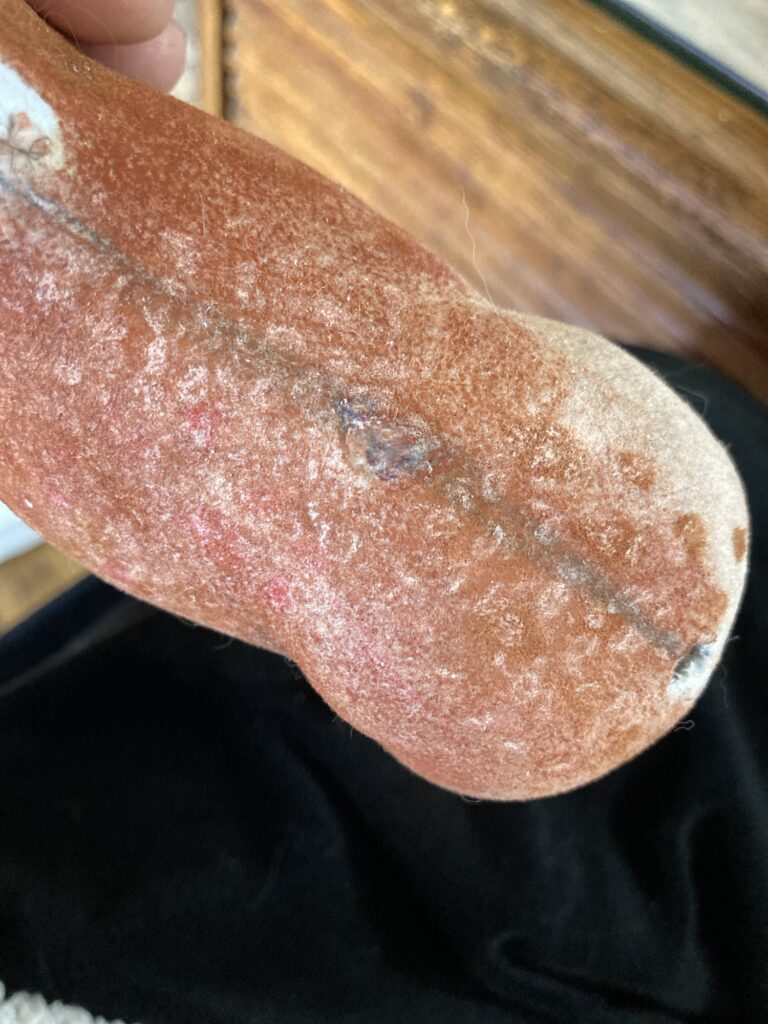
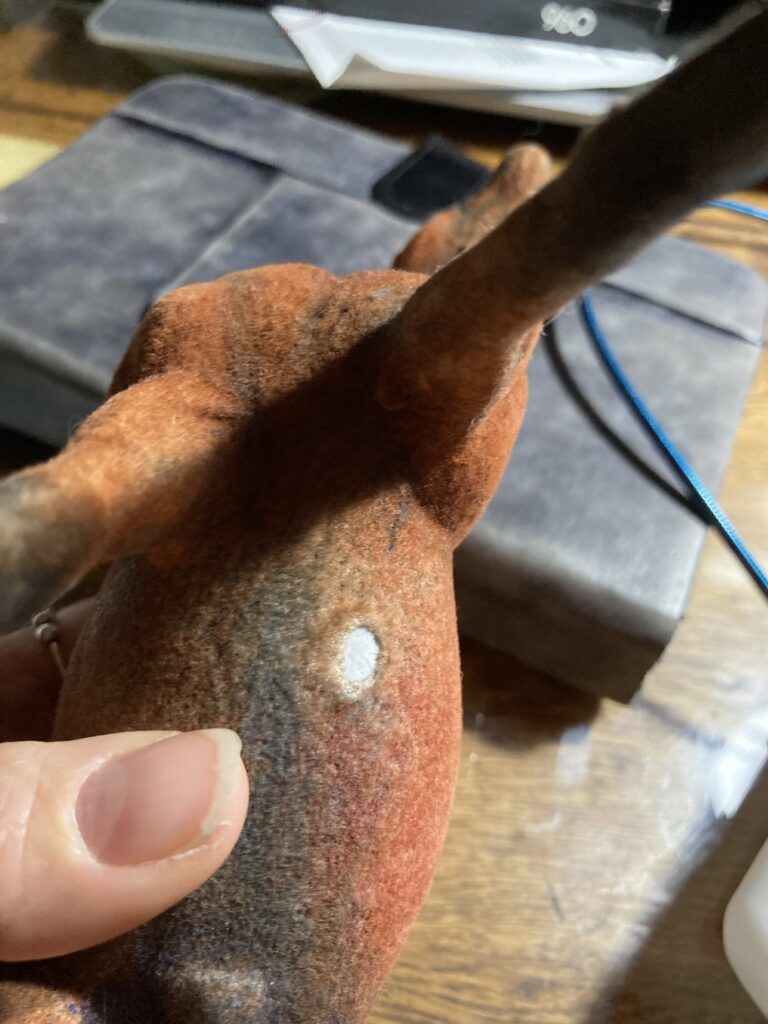
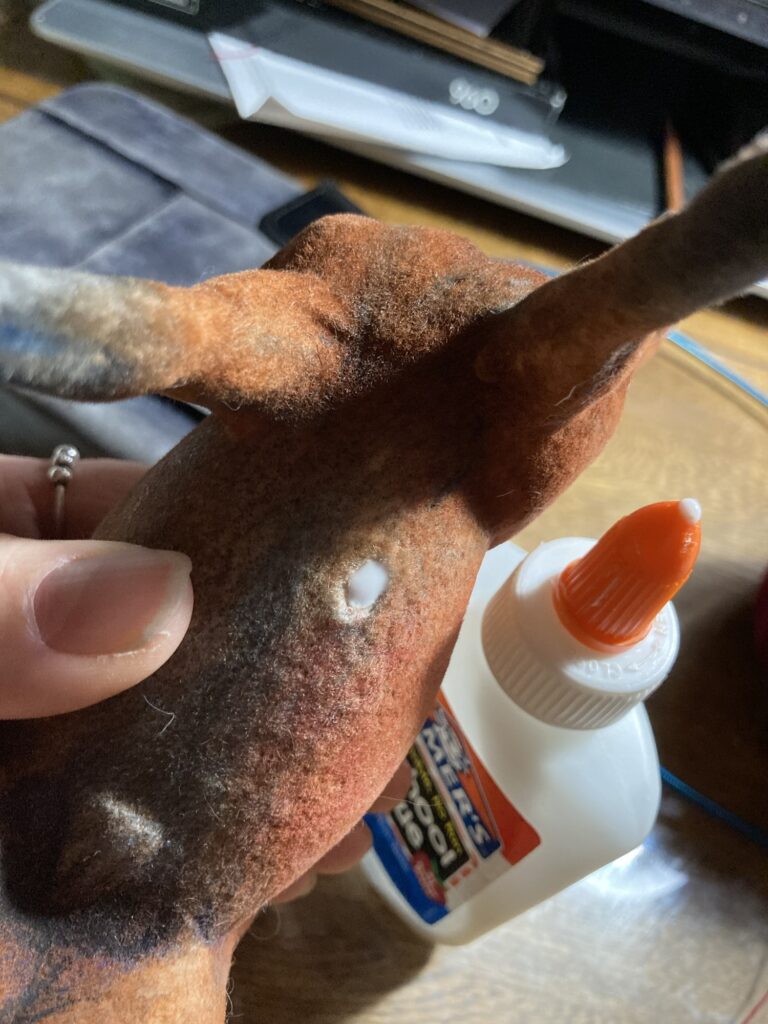
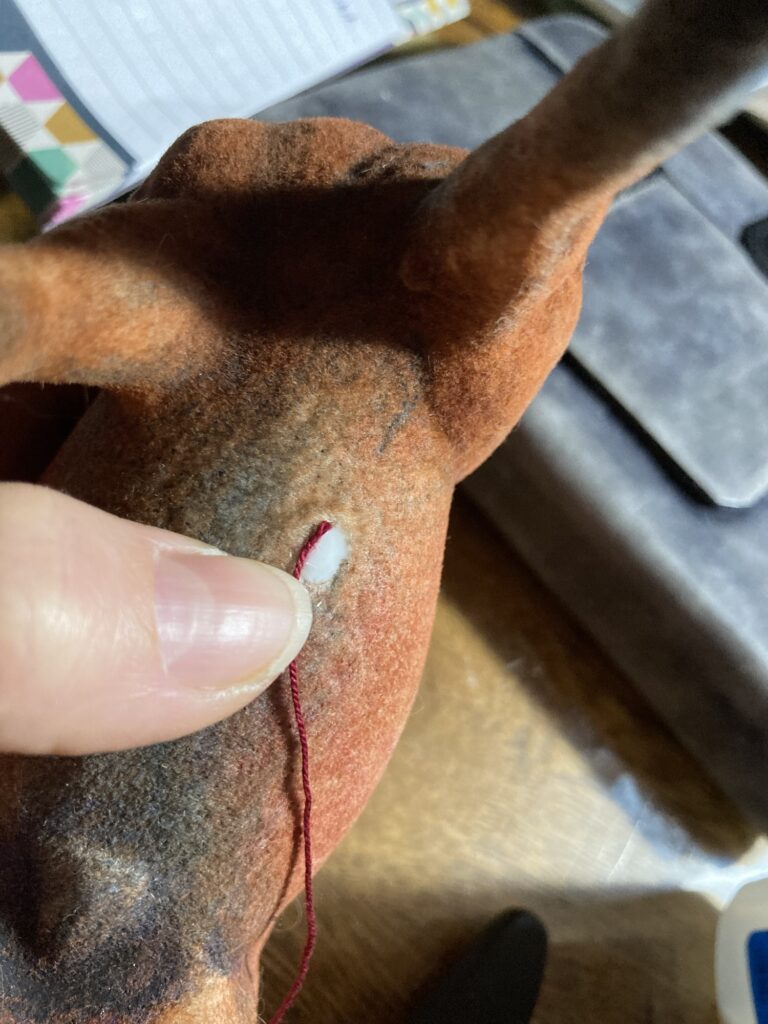
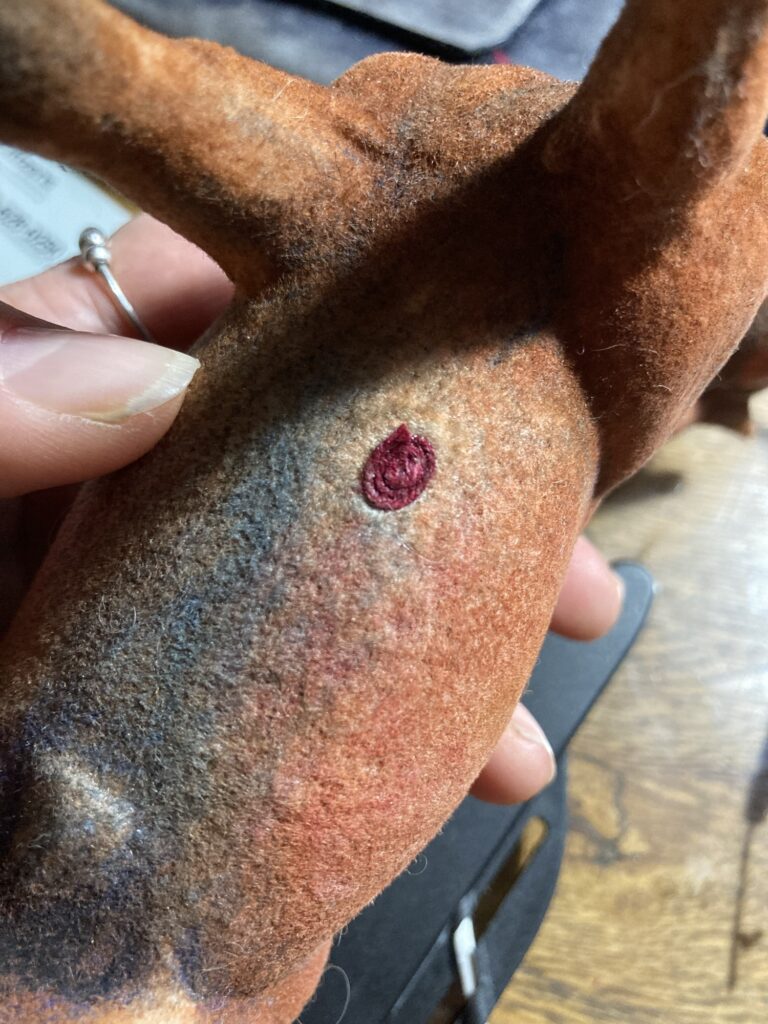
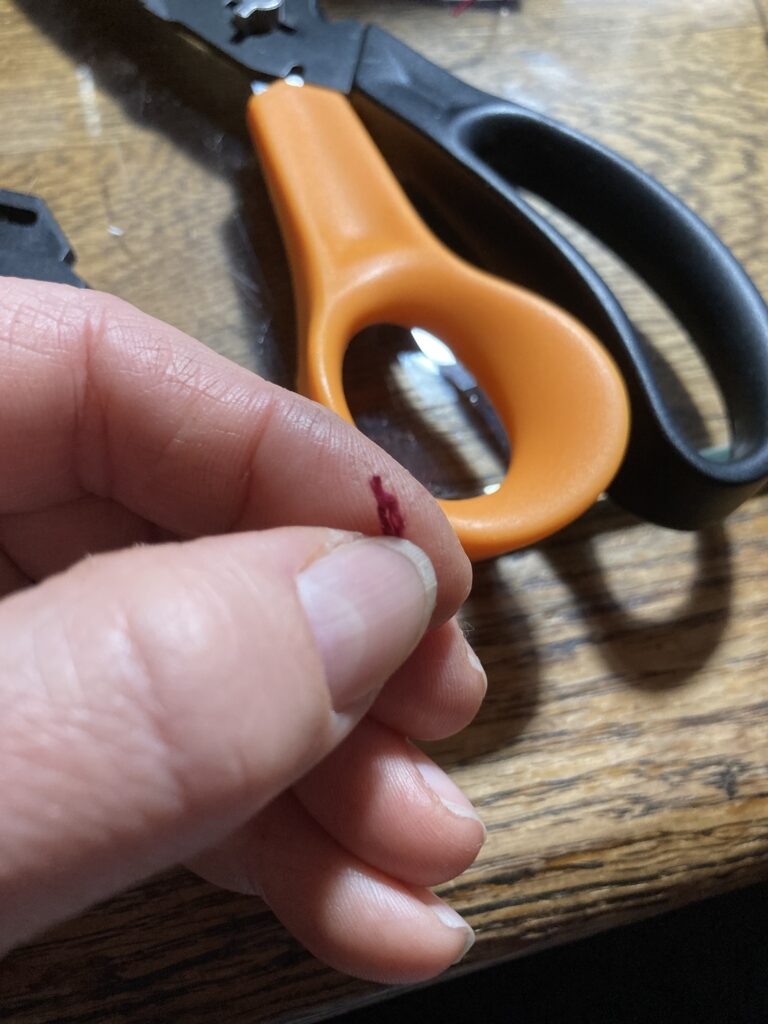
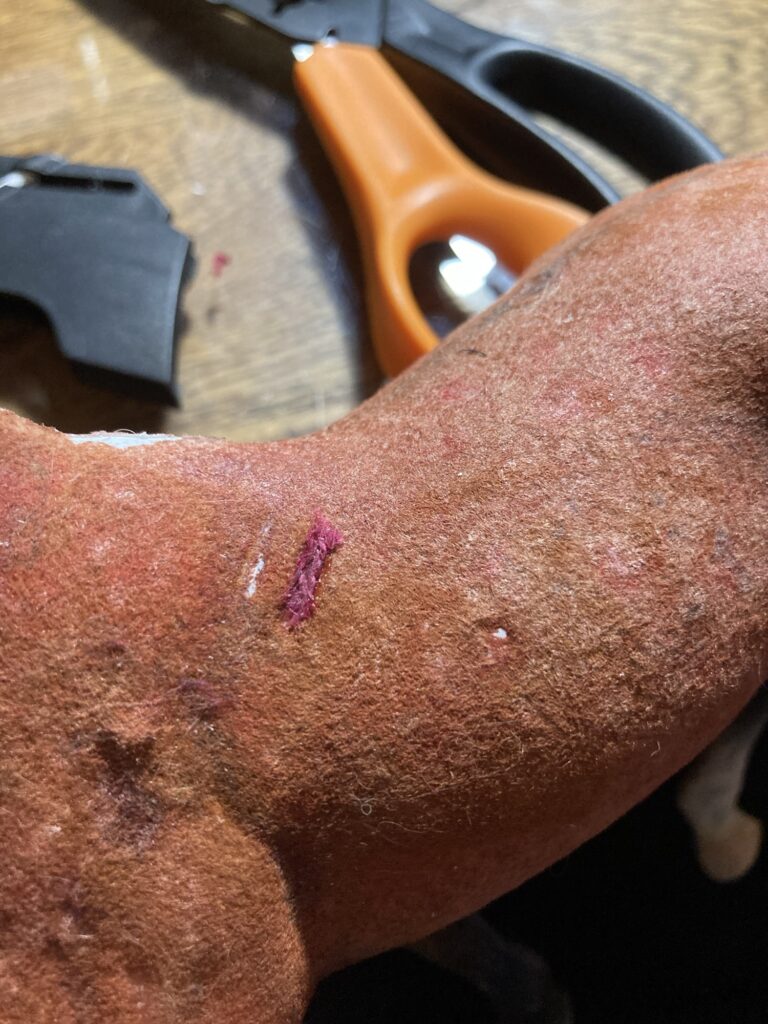
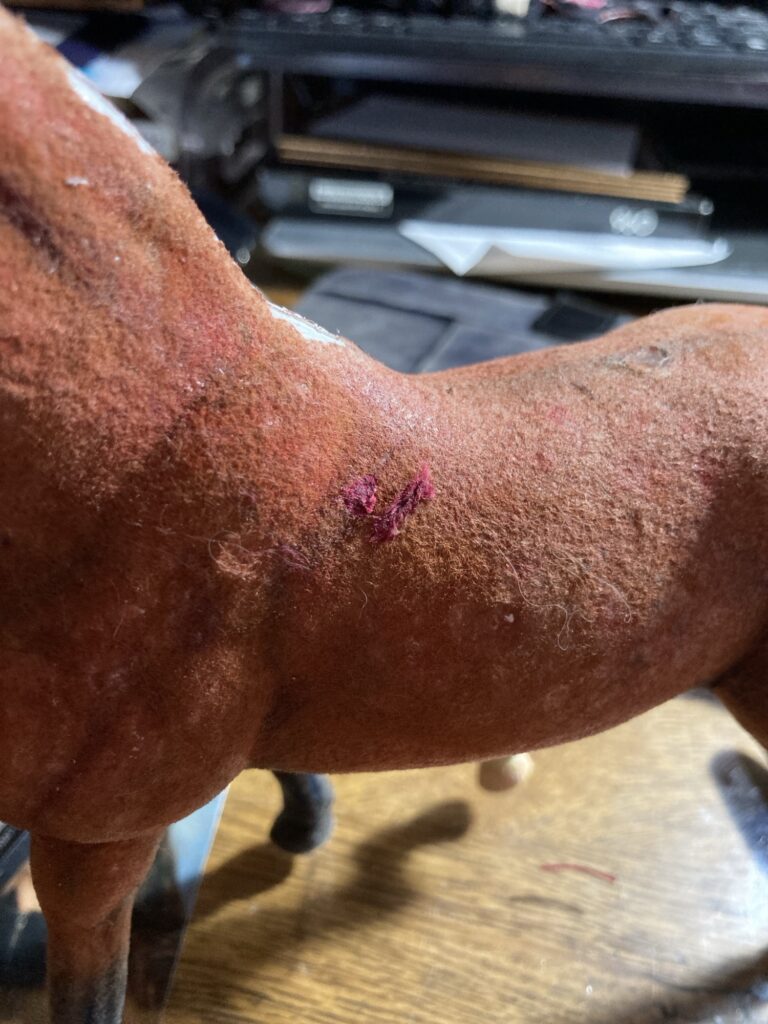
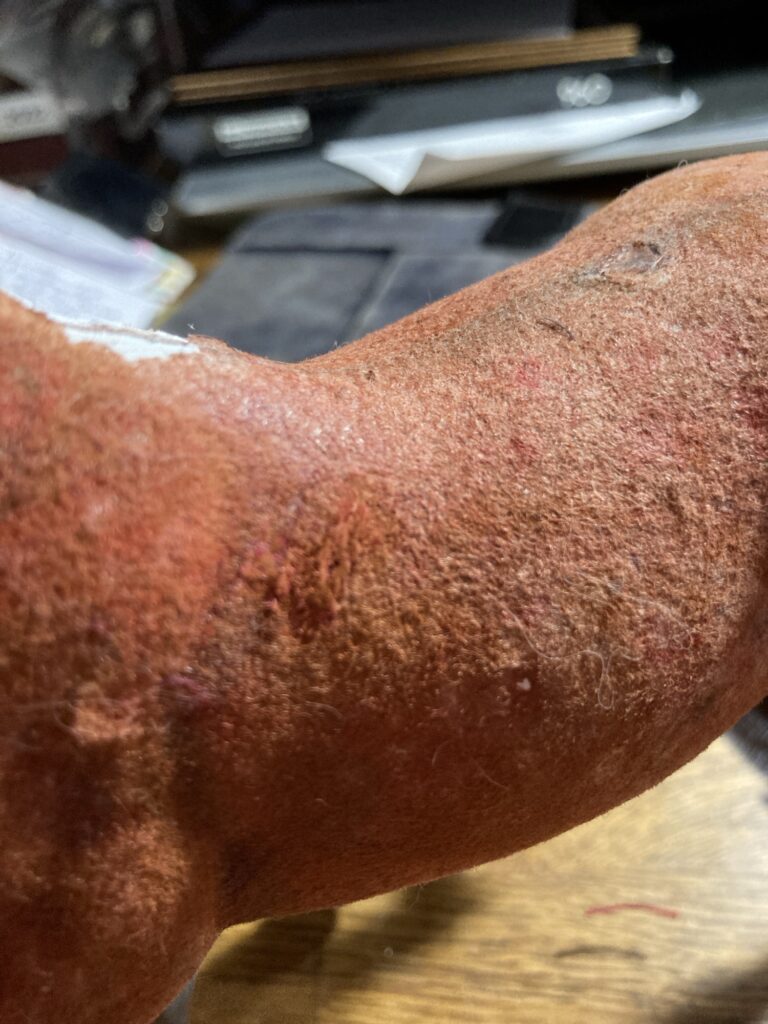
For one of the areas of damaged flocking, i tore off a little piece of paper towel, wet it thoroughly with elmer’s glue, and patted it into the damaged area. While far from perfect, once dried it holds the colored pencil markings enough to not be as noticeable. I have the feeling that too much glue might interfere though. I will probably try small pieces of fabric next.Next I need to fix his scratches and add some hair.Time to focus on this boo-boo. I decided to try string for this fix (it IS an experiment, after all). I filled it with glue. I started out with elmers, but decided that the glue wasn’t strong enough, as the string kept coming back out. I then switched to SUPER GLUE.Still in the process of adding hair.I used crochet string to wind a spiral to fill the hole.Here it is, super-glued in place. Still not sure how this will look, as it is a bit more textured than I thought it might be. Perhaps, if I try this one again, I might break up the fibers of the string a bit before attaching it to the horse. For the next small repair, i took a tiny length of string and pulled the fibers apart a bit before attaching.String glued in place to repair a small scratch in the flocking. I used super glue to attach it, and pushed it down with the butt end of a tool.A few more fibers added to the tiny bare patch above it. Once I color it with my pencils I think the texture will even out more.The same patches colored over with pencil. Not bad!
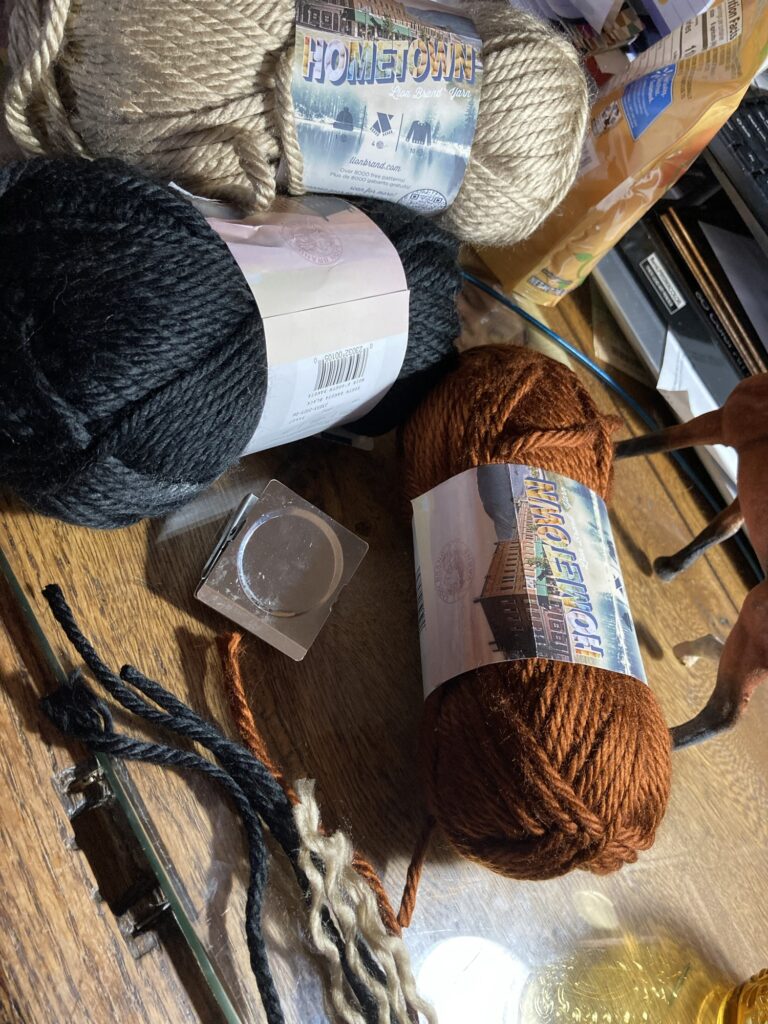
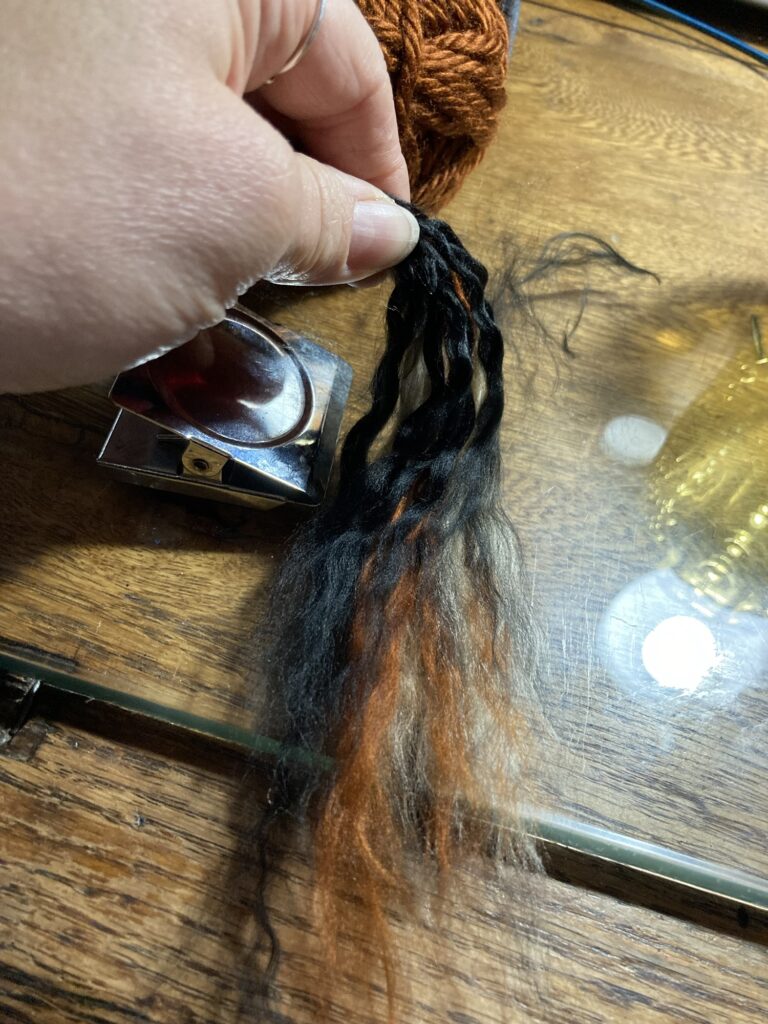
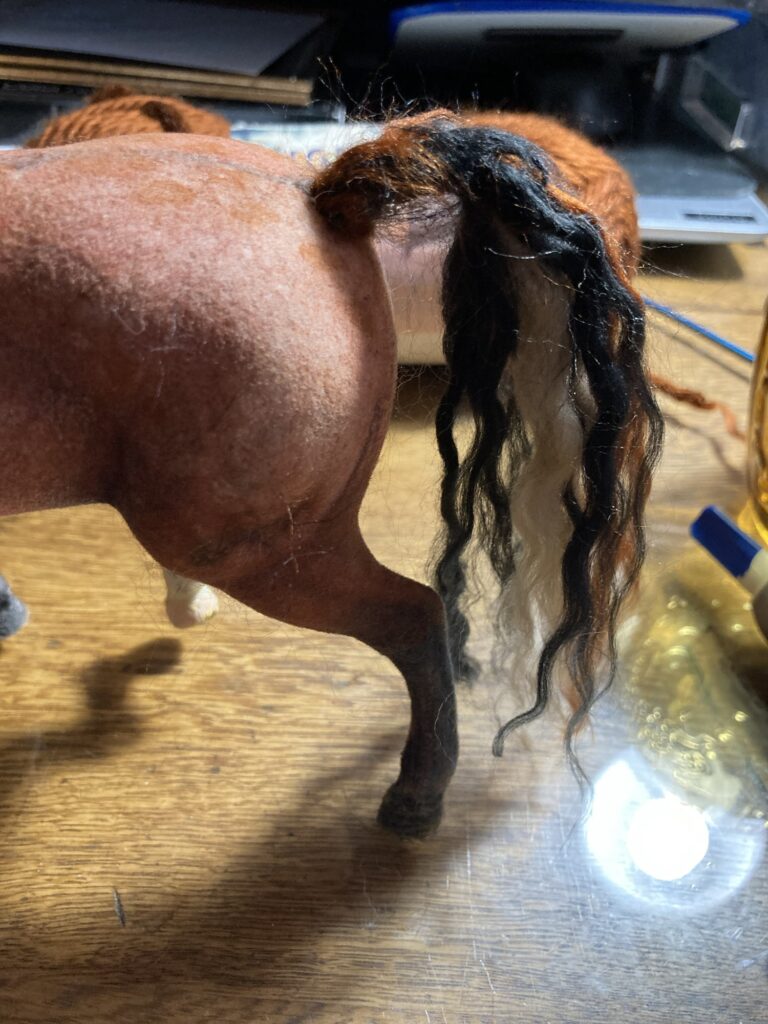
For a tail i decided to use a fluffy acrylic yarn.
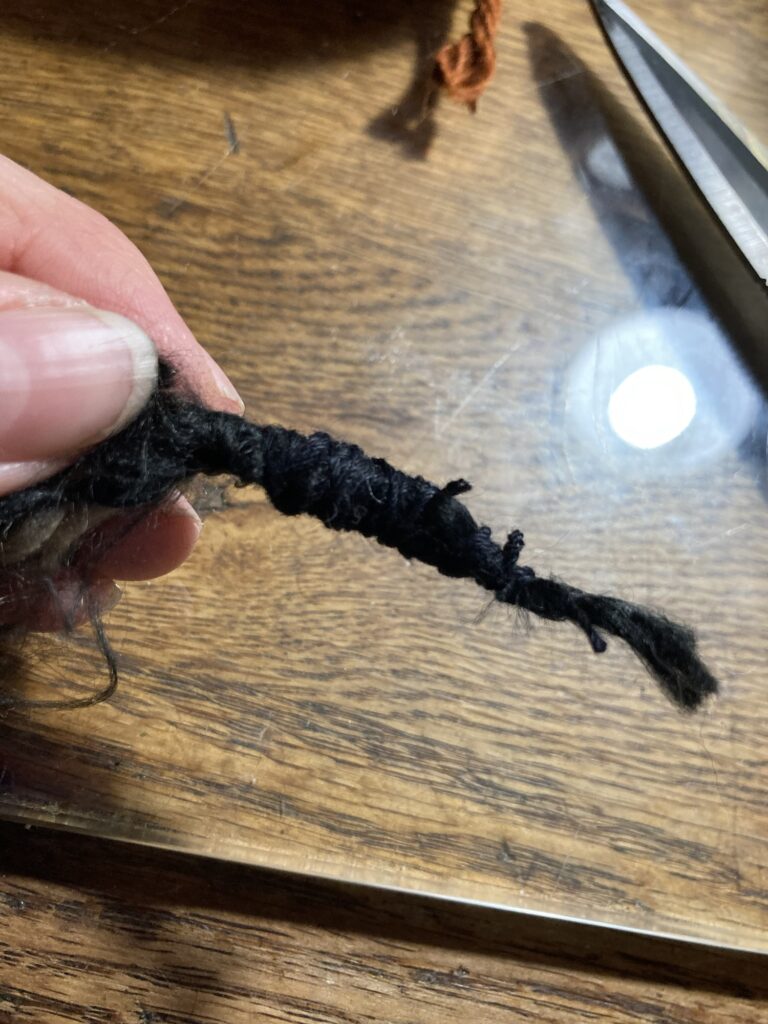
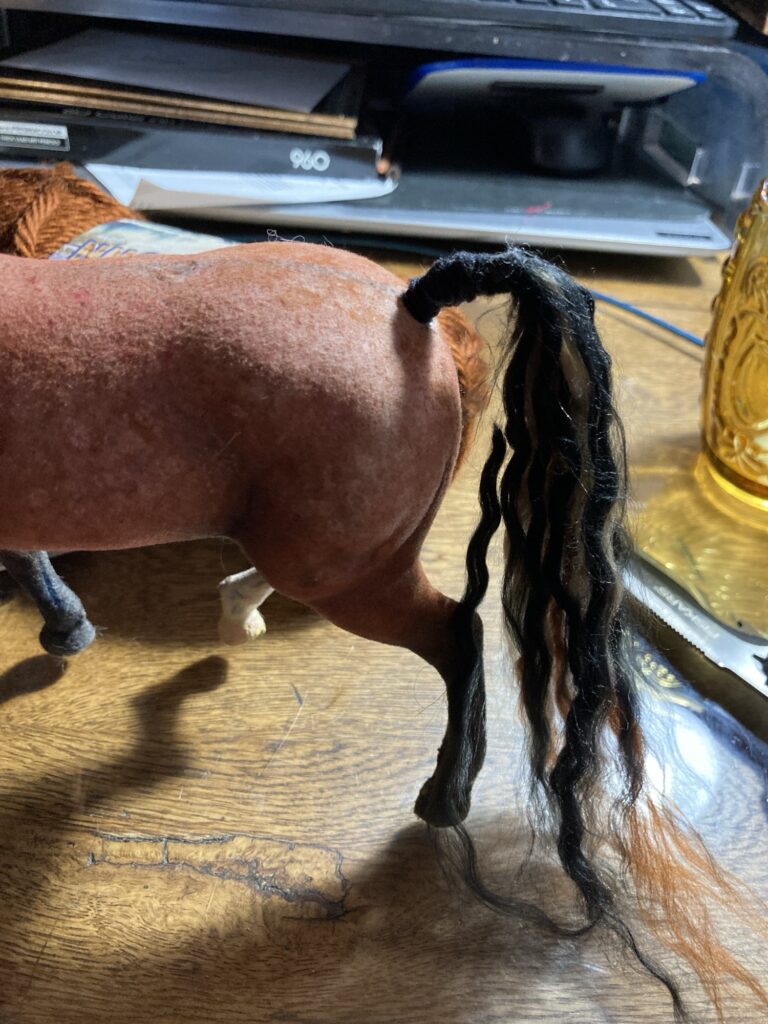
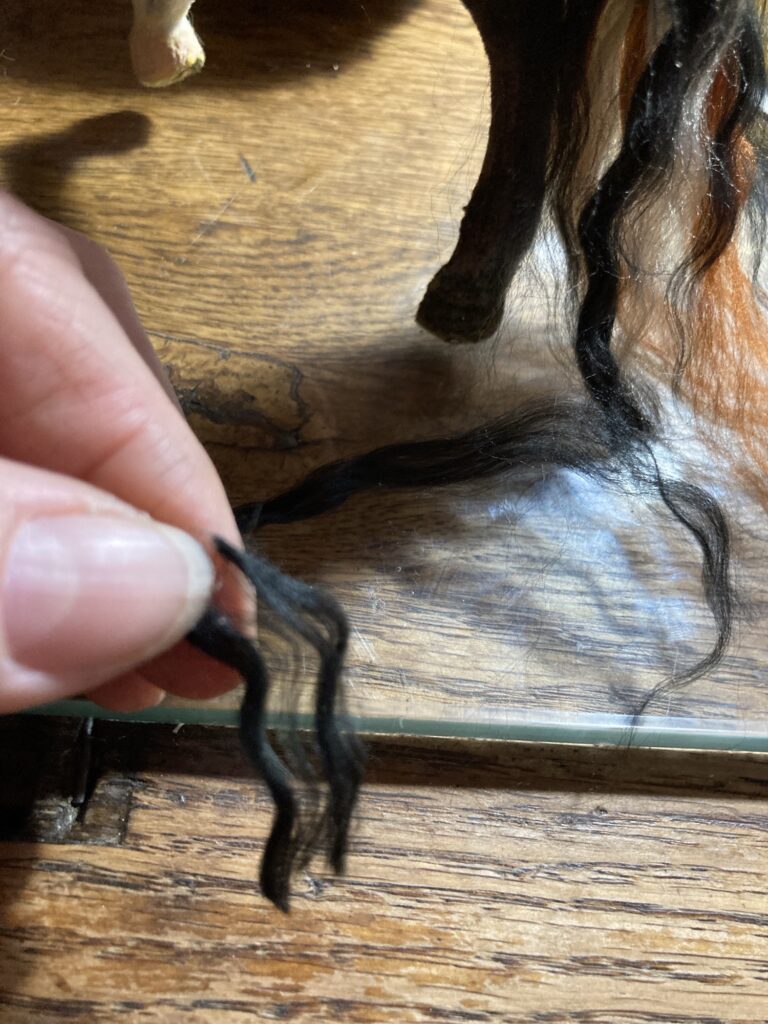
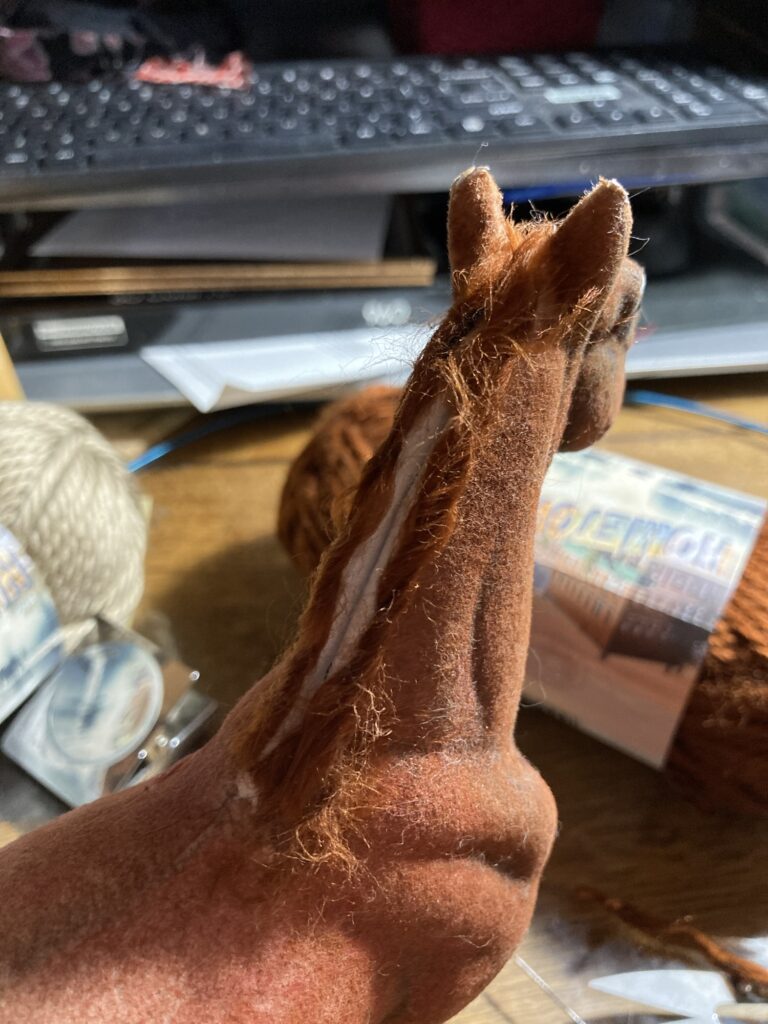
I cut a few strands of different colors that I thought might look well together, and then separated the strands.After giving them a quick little brush out. Don’t overbrush, as it will pull the yarn apart. I wrapped thread around the base of the tail and glued it down to hold. Most of this is going to be inserted into the horse’s body.I used a felting needle to push the tail base into the hole, but I left a bit of the stiff area protruding to give the tail some spine like a real horse’s tail.Next I cut a few shorter fibers for the top of the tail base. I discovered that my felting needle worked well for attaching these fibers to the base of the tail.For the bald areas where the mane was pulled off, I cut and unraveled lengths of yarn that is close to the body color and glued them in place alongside the neck. The body hair alongside the mane is usually a bit longer, anyway, and maybe i can blend it in with colored pencil afterwards.
I cut a bunch of yarn fibers and unraveled them, and made a line of superglue along the trench I cut along the top of the neck. Now I am going to use the back of a knife to push the yarn into the trench.
Now he just needs a few more areas of flocking to repair. I discovered that in areas where it isn’t as important to have fuzziness, like around the eyes and nostrils, I can dab a tiny bit if super glue, allow it to dry, and color right over it with colored pencil. It seems to give it just enough texture for the color to stick.While far from perfect, he does look a lot better than when I started, and I am learning different techniques to fix the flocking and make hair that I can use on the next ones.