While I never did get good marks in History classes (I have to stop and think sometimes to remember important dates in my OWN life, much less others!), I do love seeing and learning about historical artifacts. As a child (and even as a teen) I always wanted to be an archaeologist, digging and discovering.
What I really love is when I find a horseshoe (or other antique) that comes with a story. It isn’t often that you find the history of a lowly horseshoe, but sometimes you will, and sometimes all you have to do is ask, as some sellers don’t think it’s important to say where they dug the shoe up, or how their grandfather was an award winning farrier back in the day and this was one last shoe he kept hanging above his garage door.
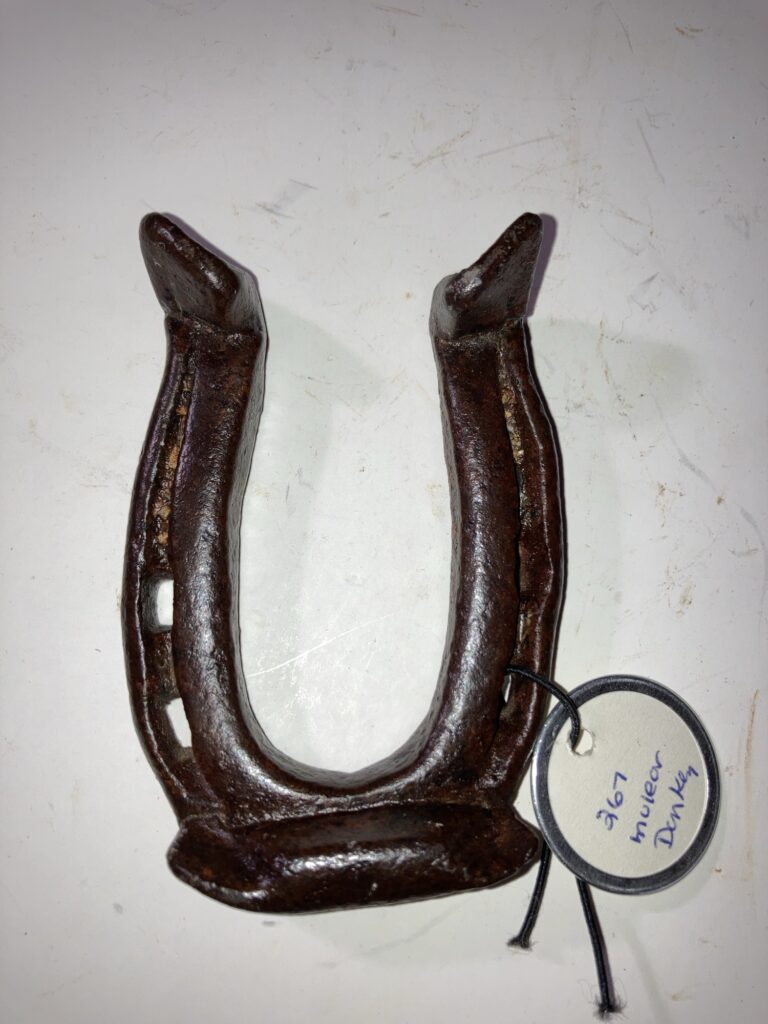
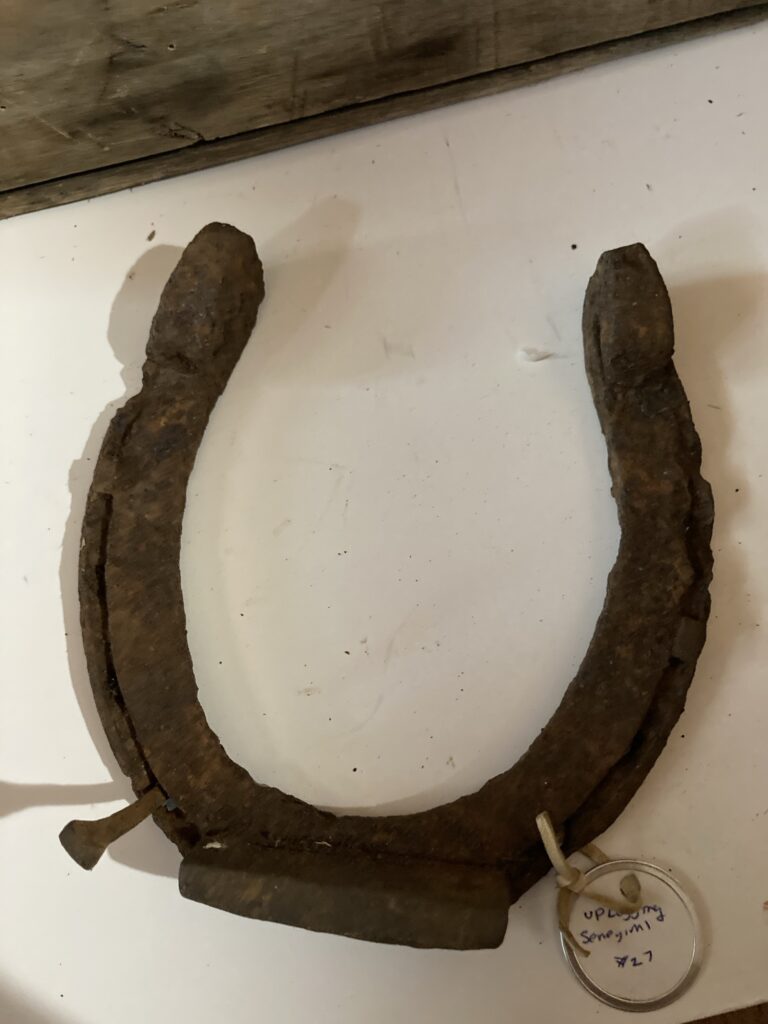
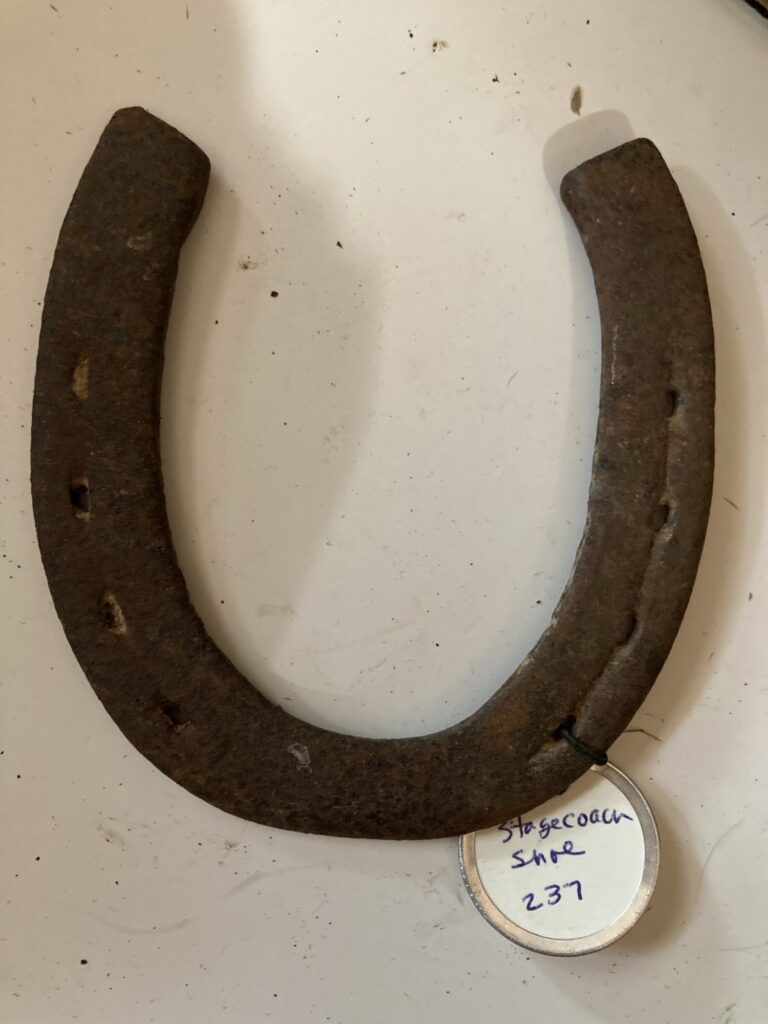
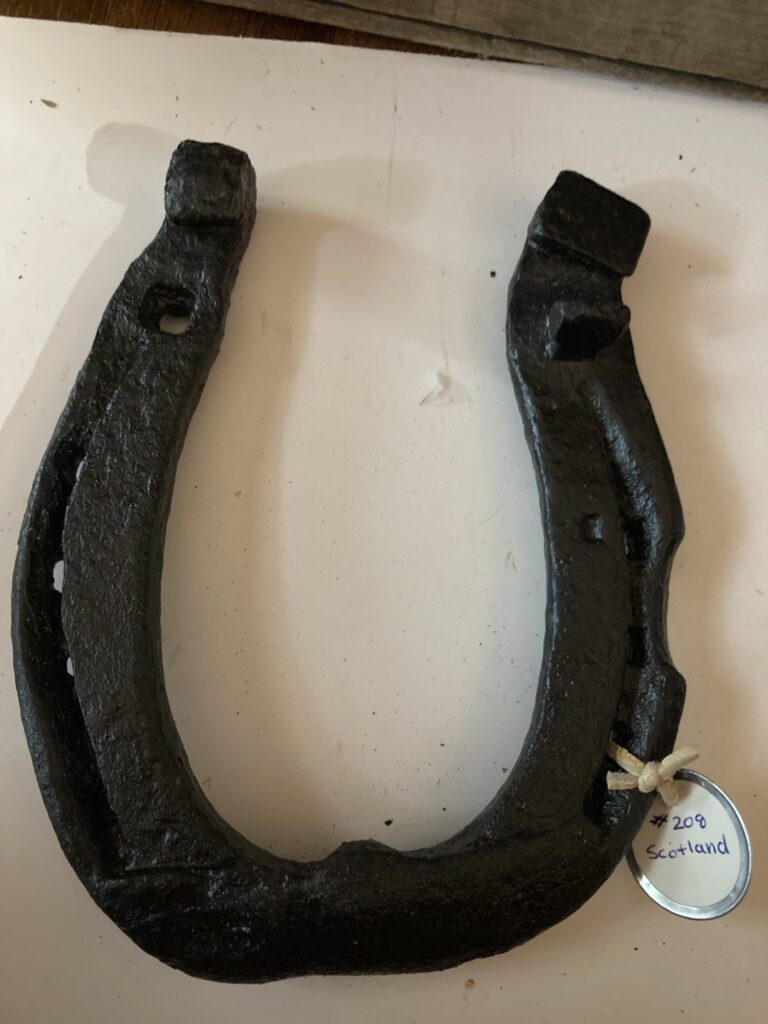
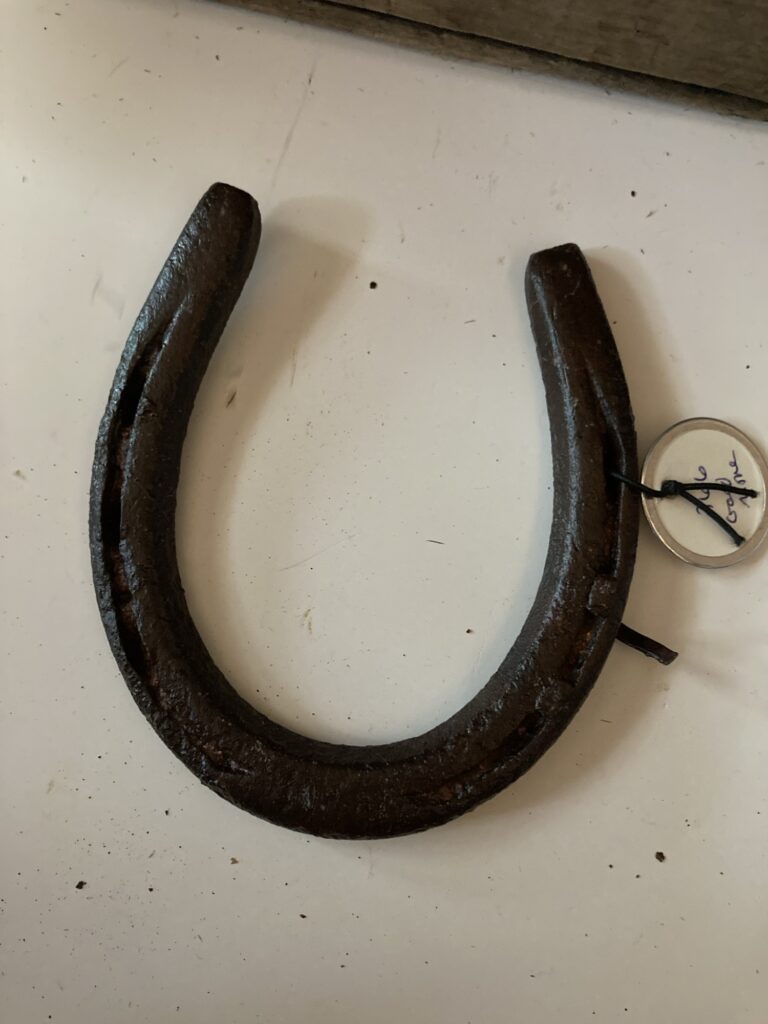
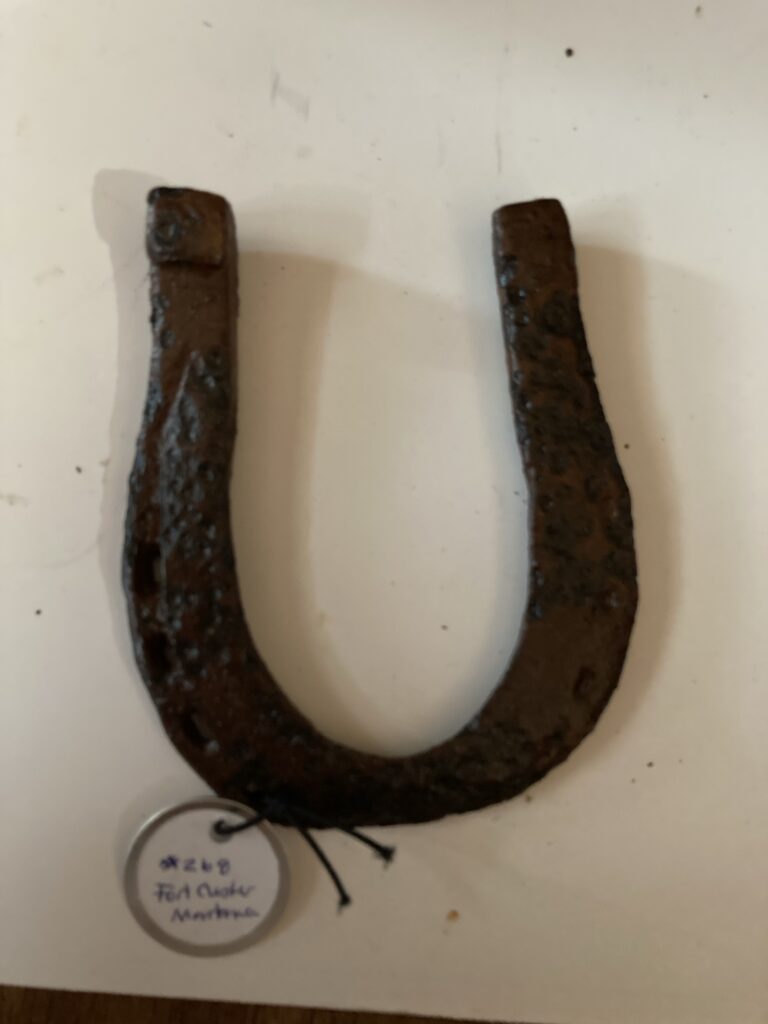
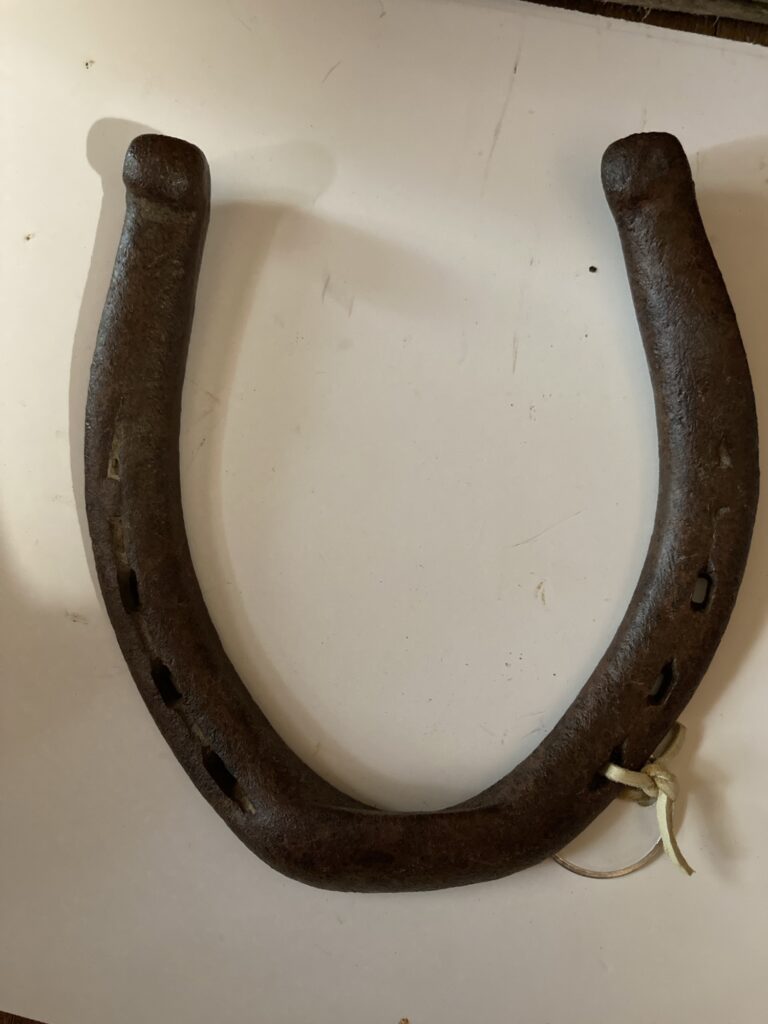
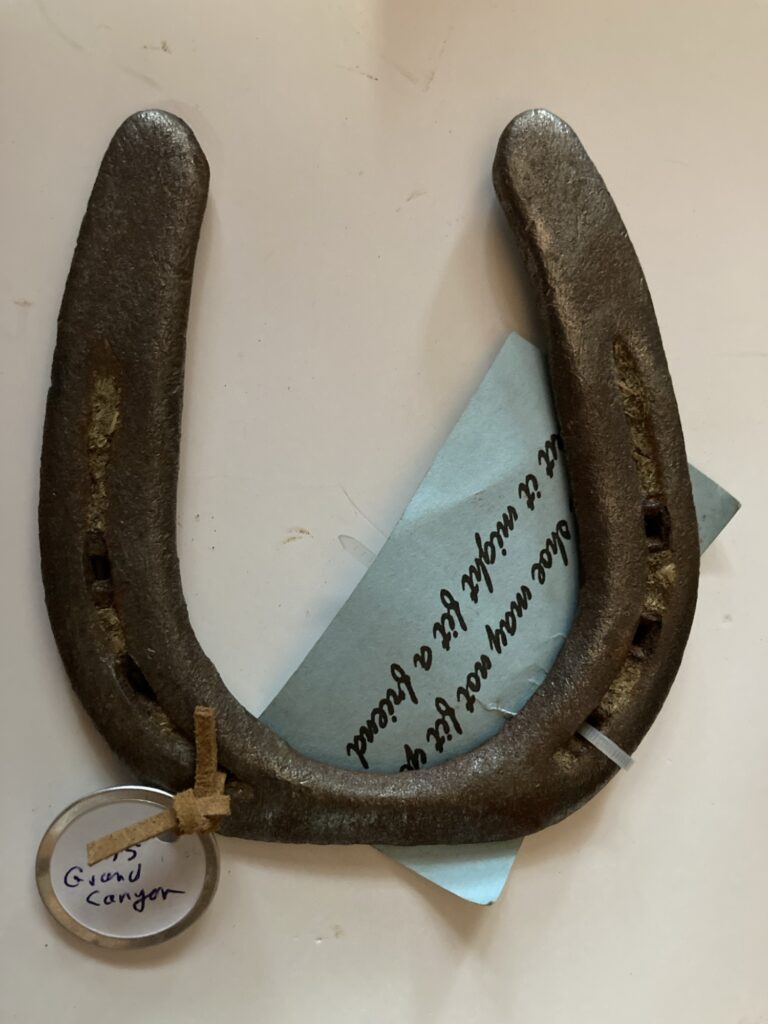
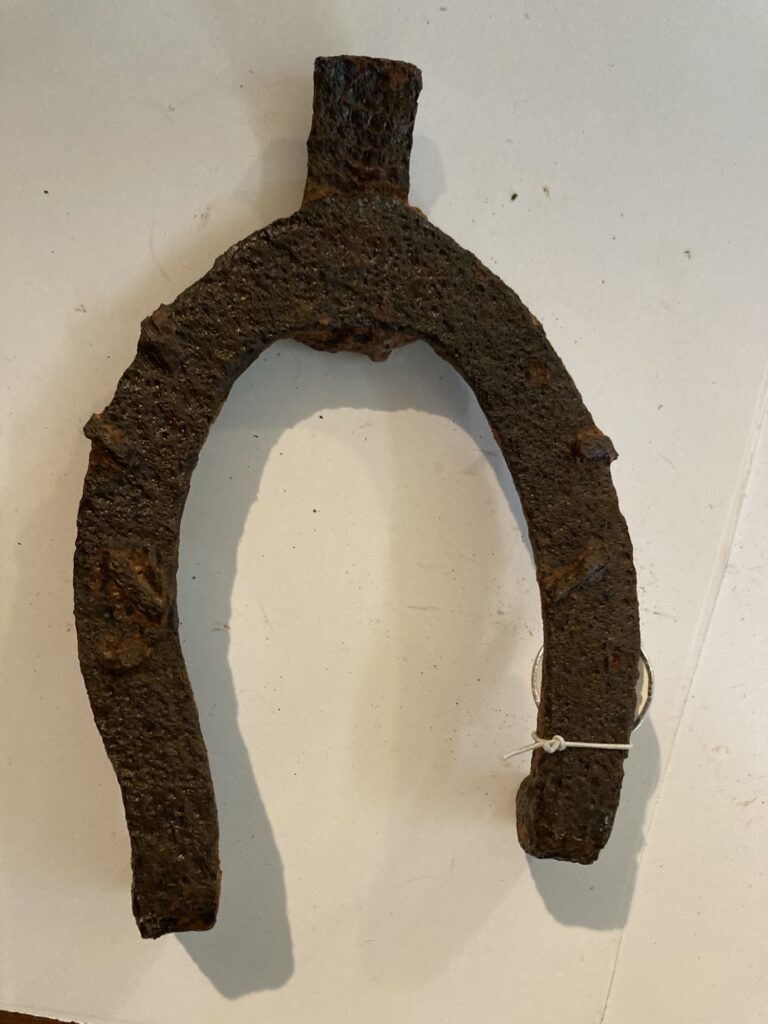
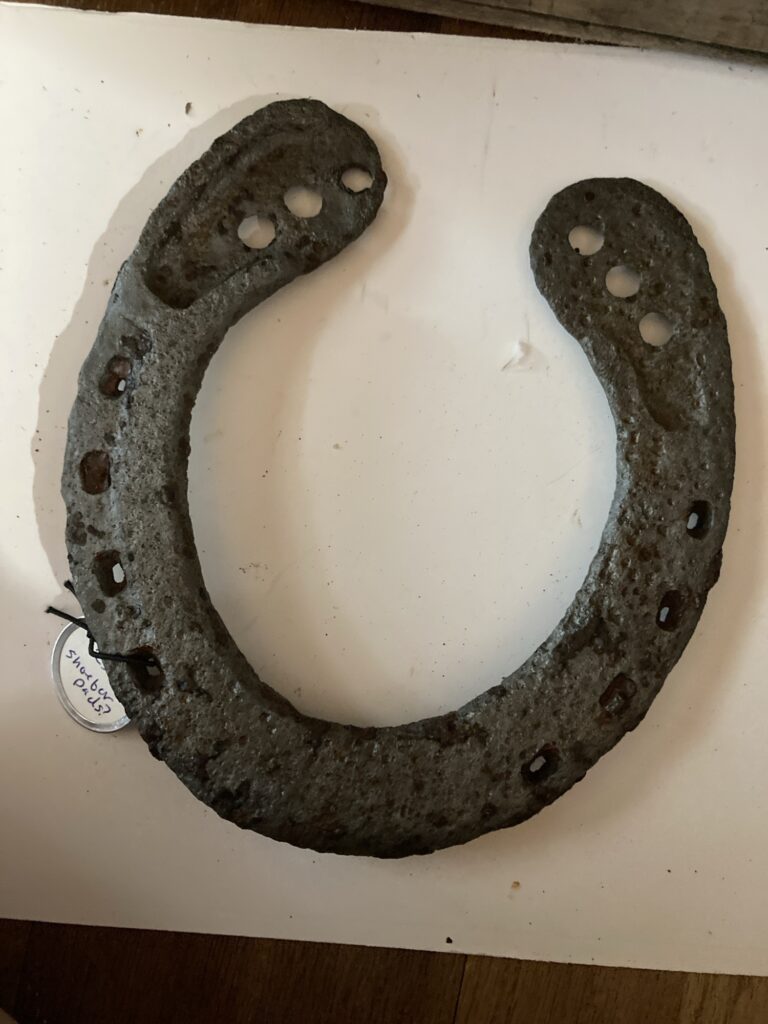
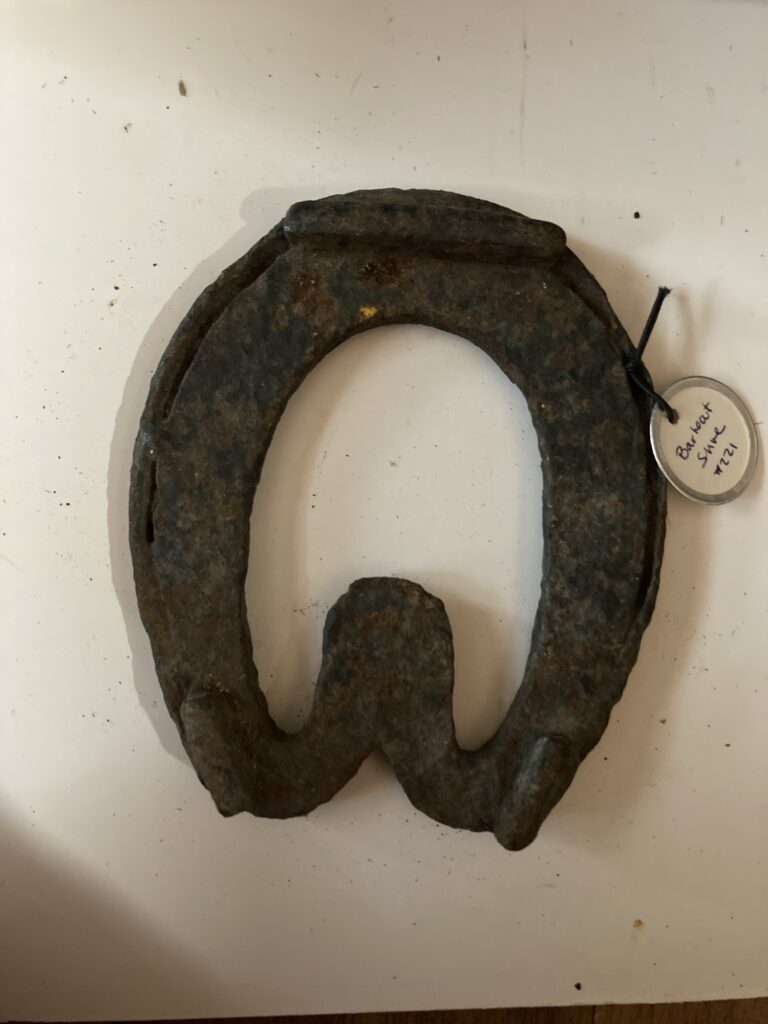
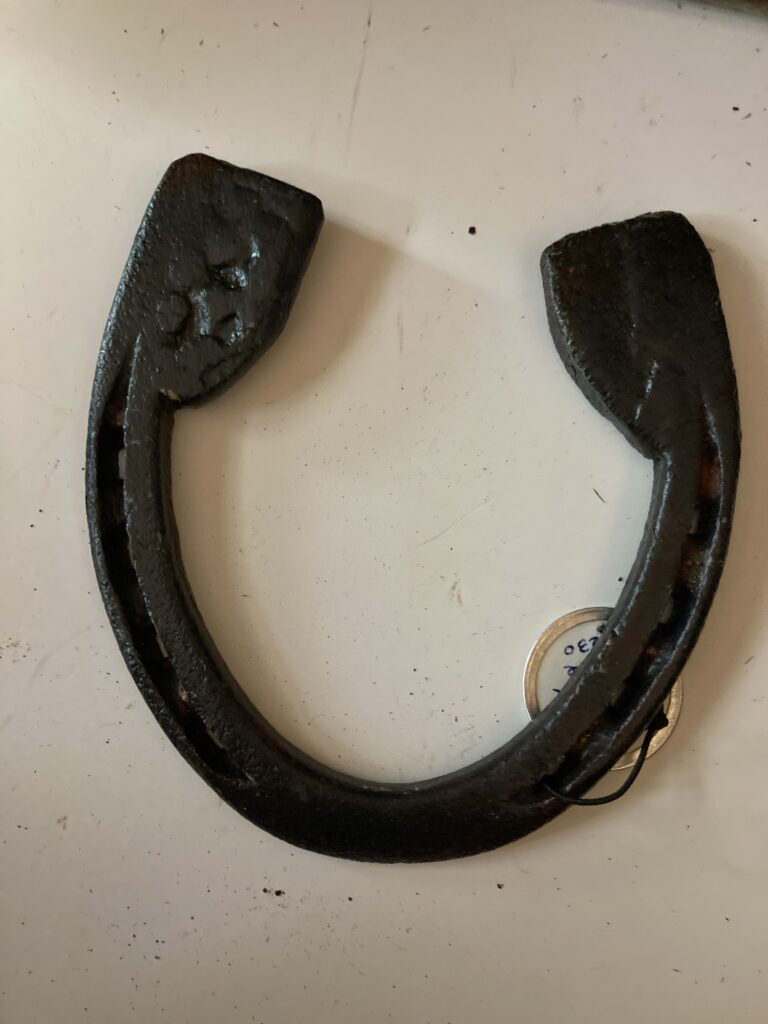
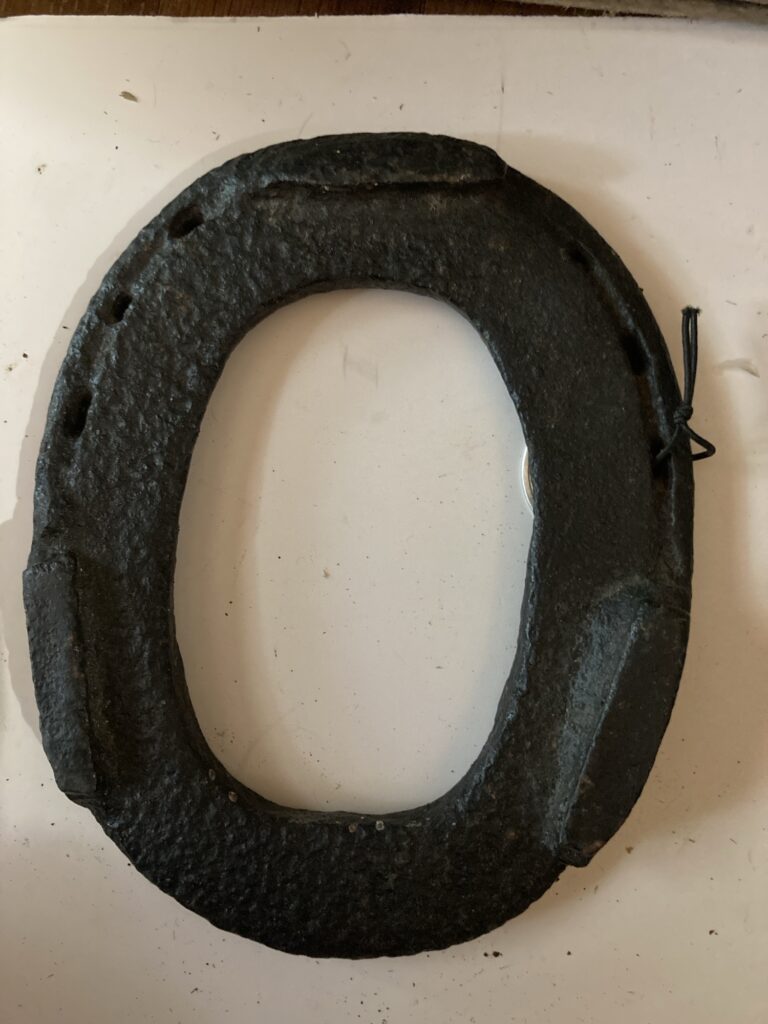
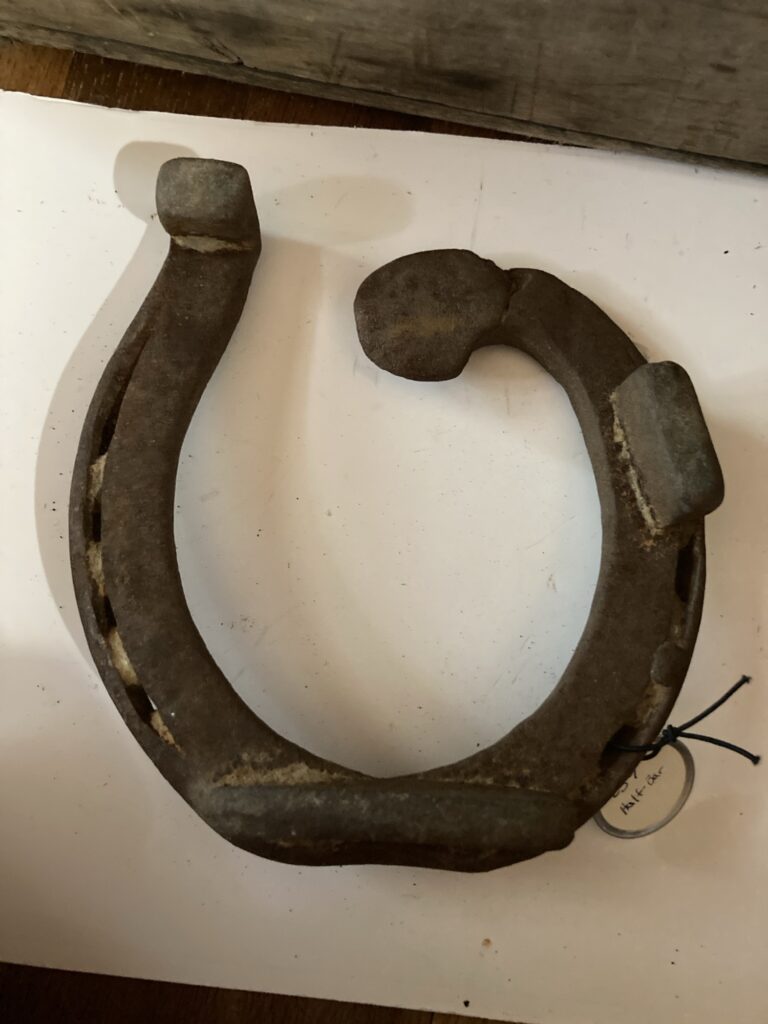
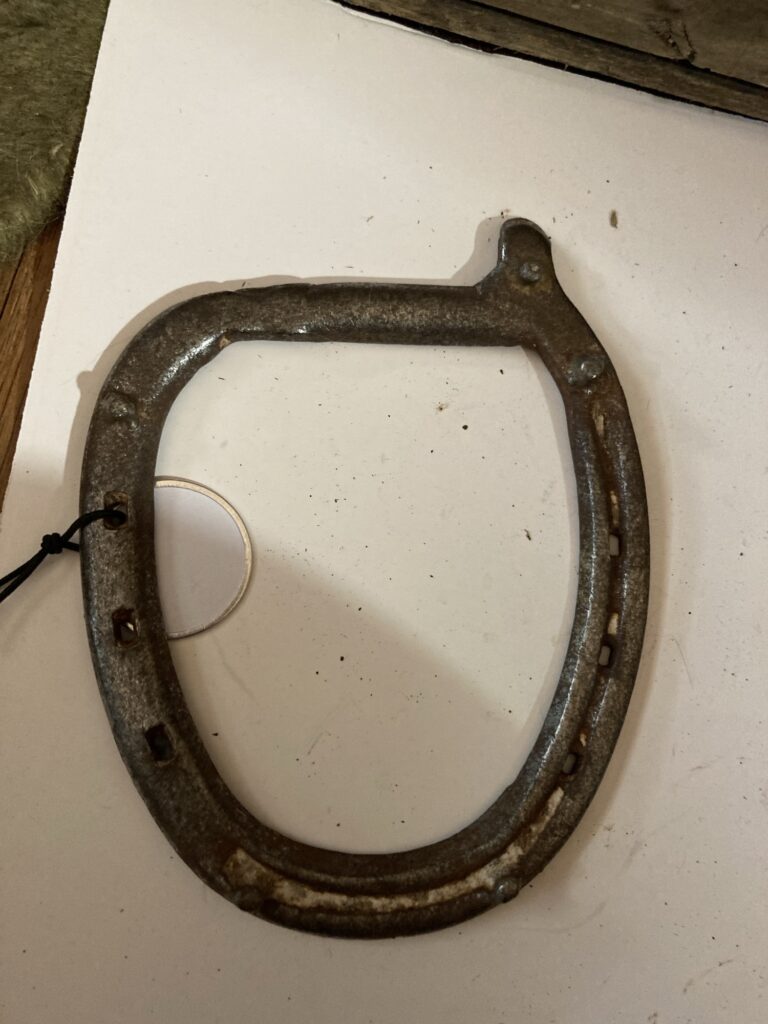
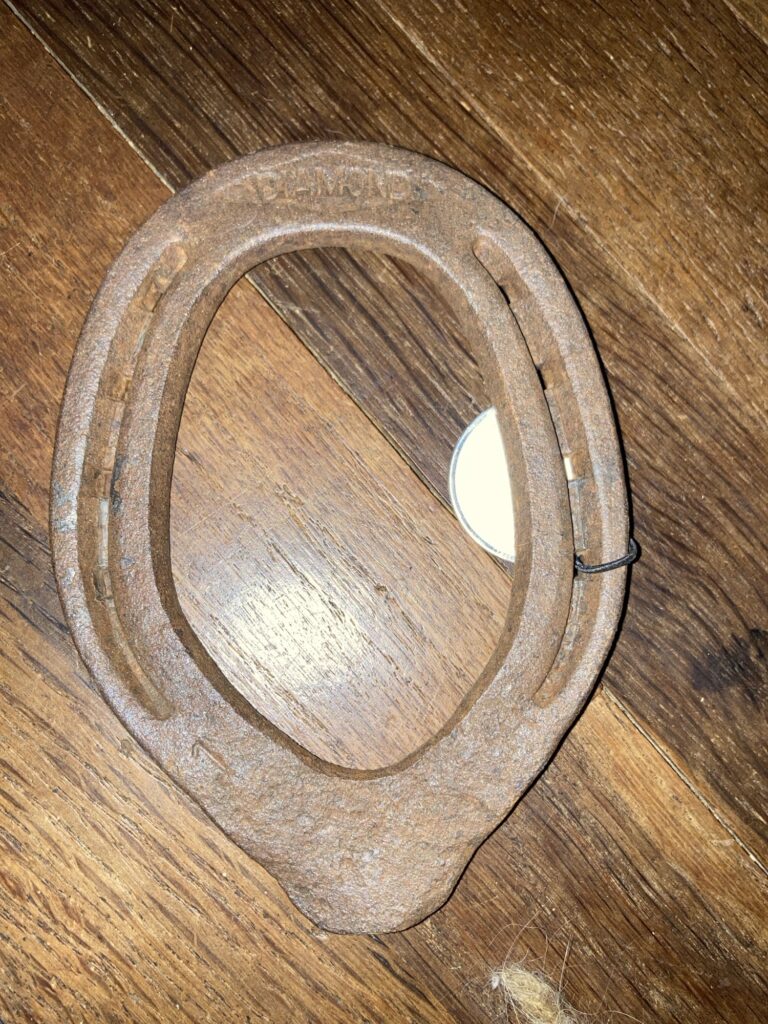
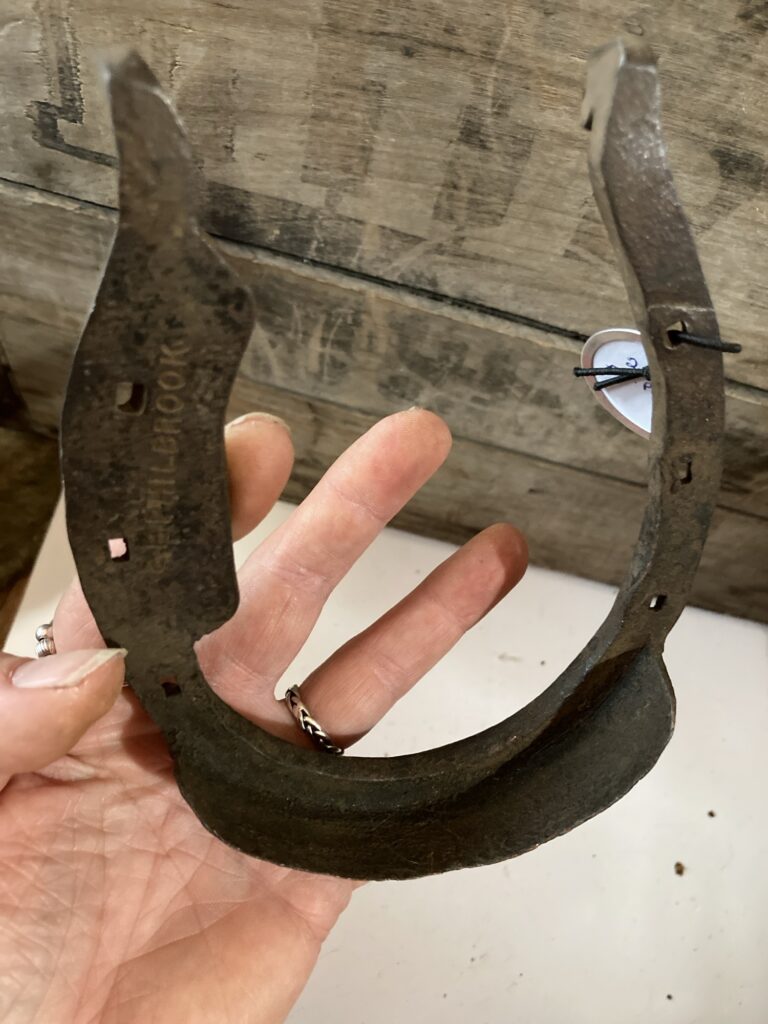
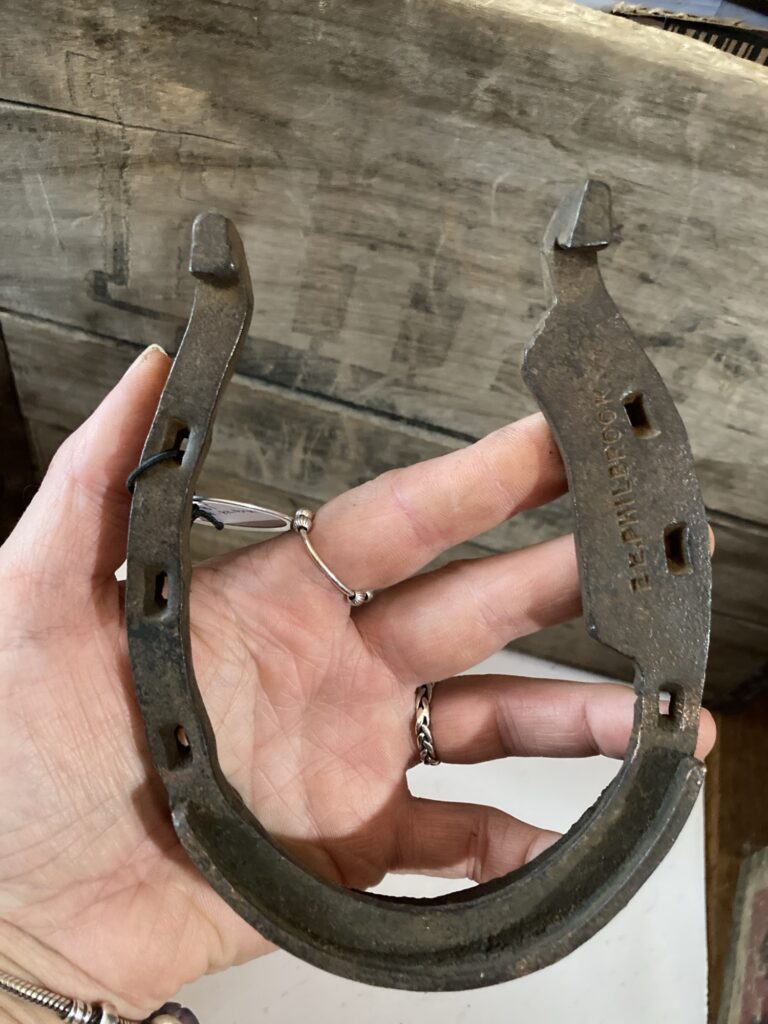
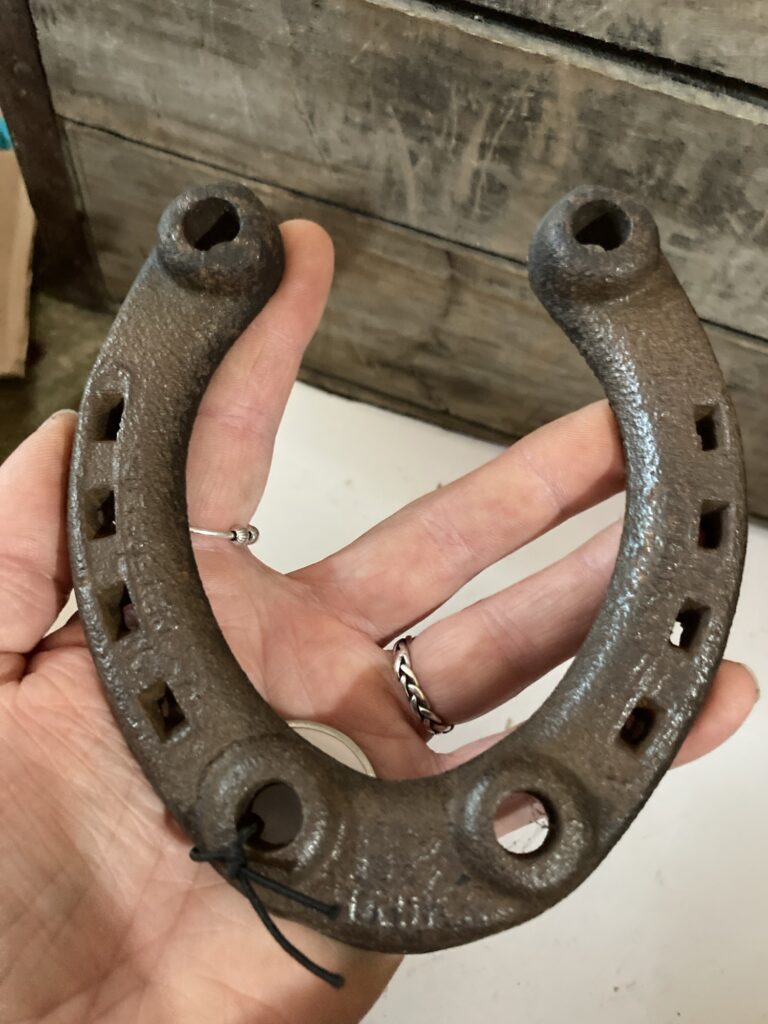
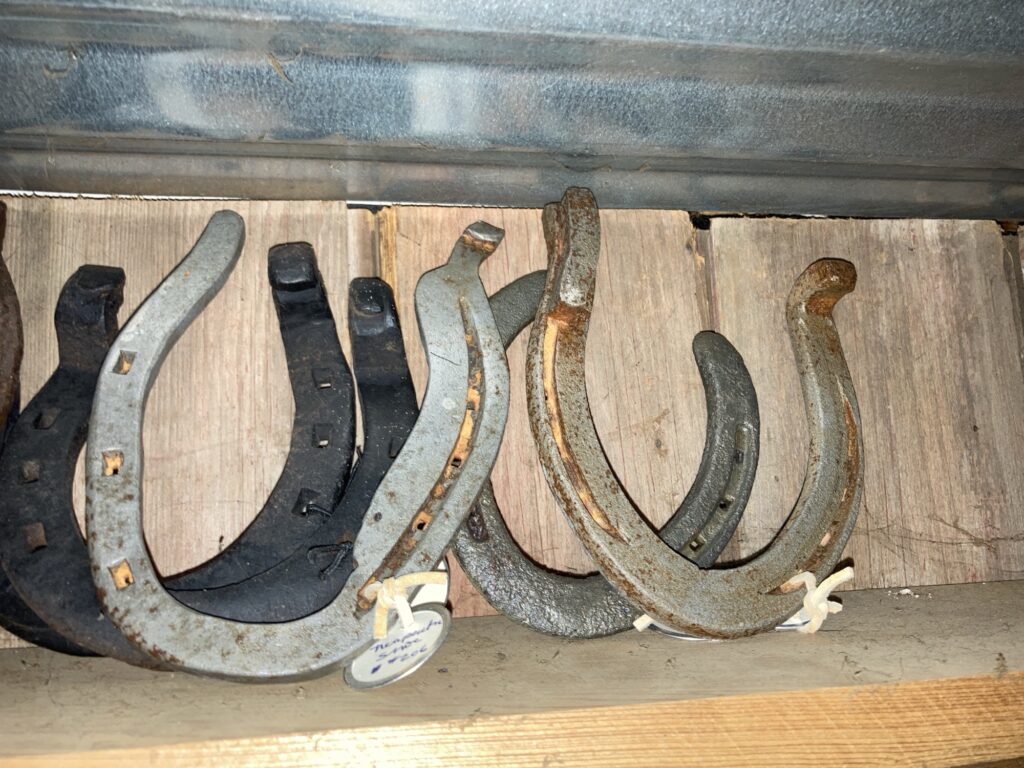
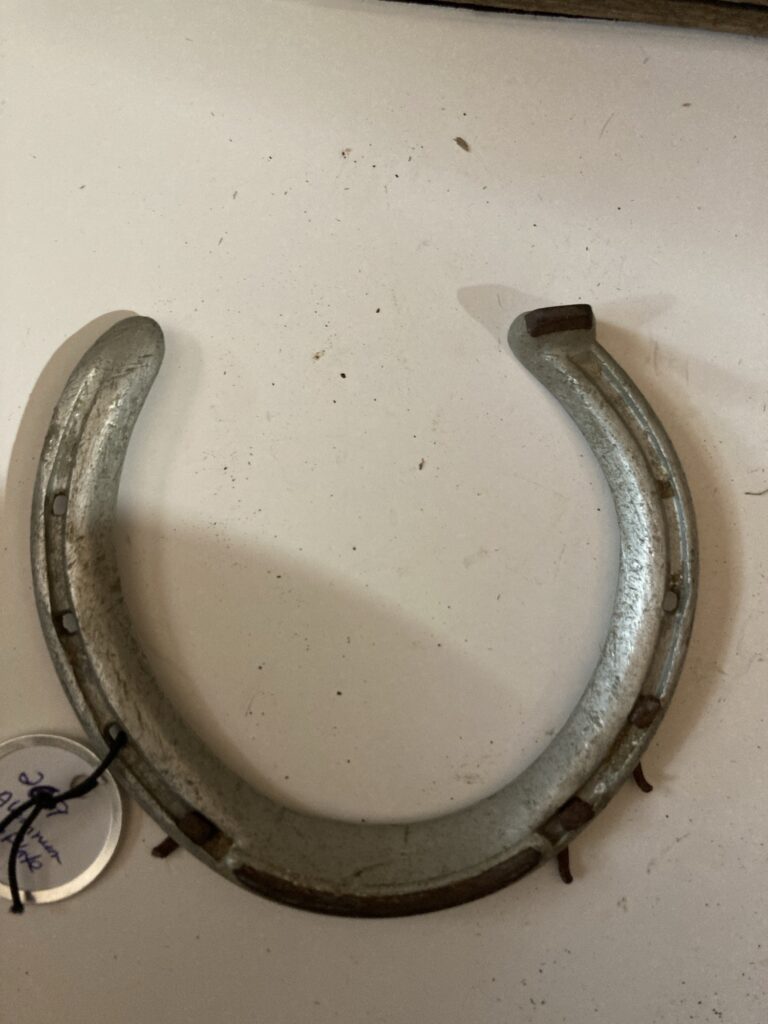
Isn’t it beautiful? The curved toe bar and angled heel caulks? This shoe, and several others that I ended up purchasing, was found by the seller’s uncle when he was younger. He was fascinated with old logging camps in Michigan’s Upper Peninsula, and spent much of his time searching them out through the woods. He picked up several old horseshoes in such locations, and nailed them all along his fences. Their age and condition testify to them probably being worn by the horses of lumberjacks to haul wood in the 1800’s-early 1900’s. Notice the extra bars at heel and toe, called caulkins, that were added for traction. I see this a LOT in old shoes in Michigan, where farming and logging were commonplace in our history.This shoe was found along an old stagecoach road in California. This enormous draft horse shoe was found near the old Smithy in Achafoila on the Aisle of Luing in Scotland. For some reason I can imagine a big old workhorse named Betty wearing it.This shoe was found along with a few others near an old gold mine.This mule shoe was found around Fort Custer, in Montana. Was it from the Indian Wars? This shoe was found metal detecting along the Oregon Trail in Wyoming. It has so much wear to it!This shoe was from a mule used in tours at the Grand Canyon.This solid copper shoe was from a pit pony in a coal mine in Wales.
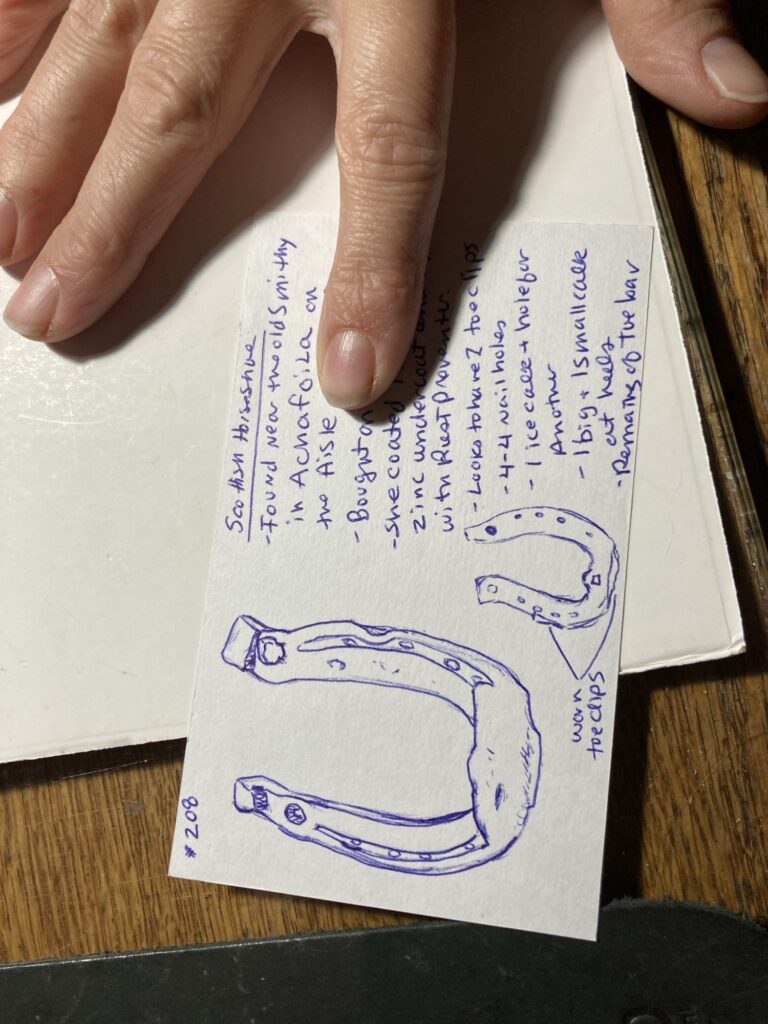
You may be wondering why all of my shoes have tags on them. I tag and number each individual shoe, and write a description of it on an index card so i know where i bought it, everything I know about it, how much I paid, etc. I also draw myself a little picture of it so it is easily recognized when I go to find the individual shoe. I keep the cards organized in a card index.
How I record important information about each shoe. The number on the card matches the numbered tag on the shoe.
I hope that with careful record keeping I can safeguard the history of each of my shoes. Unfortunately I didn’t do these things when I first started collecting as a child, but I remember a few details about my favorite shoes.
I have many, many more shoes in my collection (at the moment of writing this I own over 330 shoes). Record keeping helps keep their information organized and readily available. Now if I can just find an easy way to keep the shoes themselves organized 🤔.
If you collect horseshoes, you may come across some strange ones. There are quite a few variations that were created for different purposes, for hoof therapy, correcting a horse’s movement, or for aesthetic purposes. I am here to share a few from my collection.
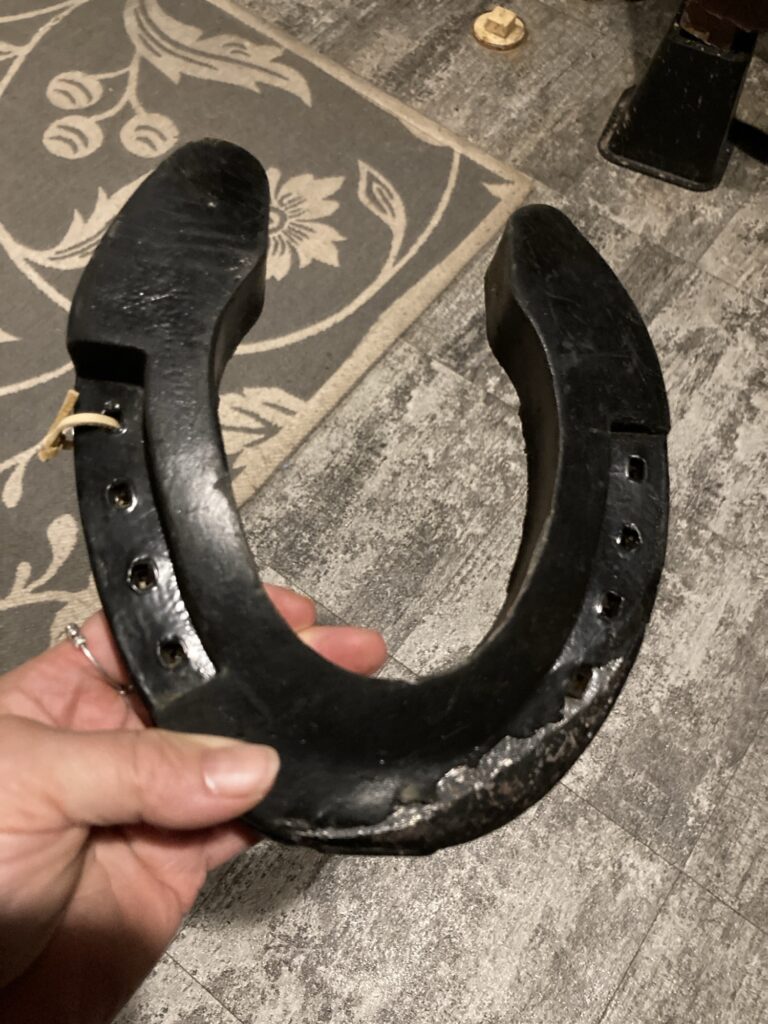
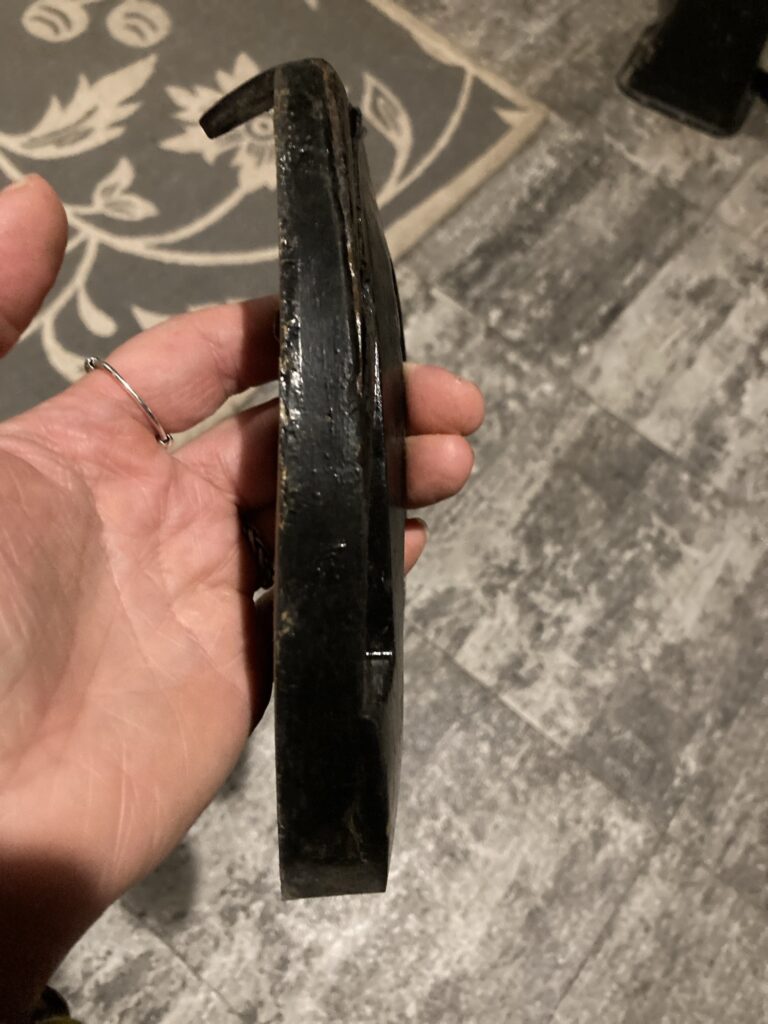
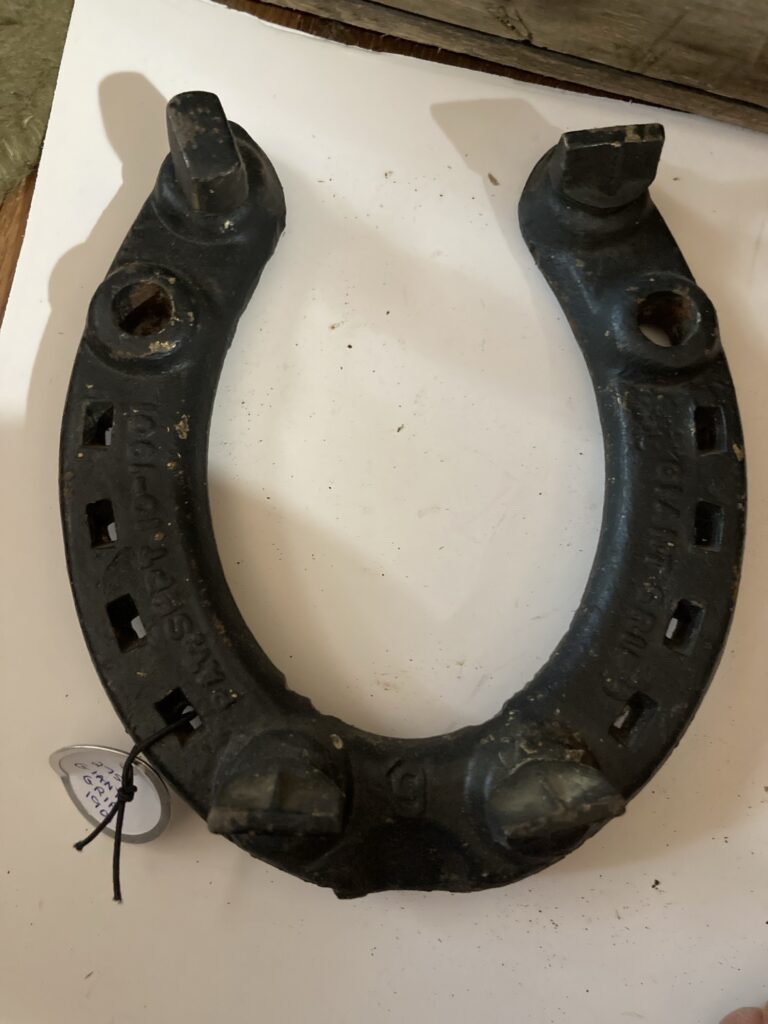
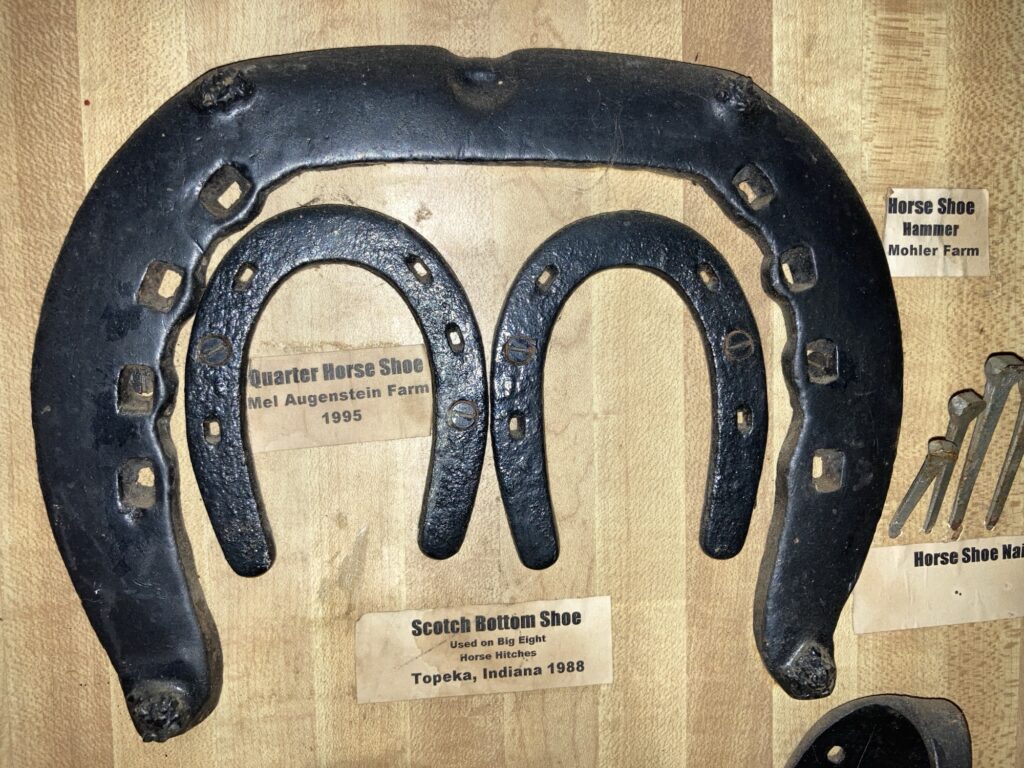
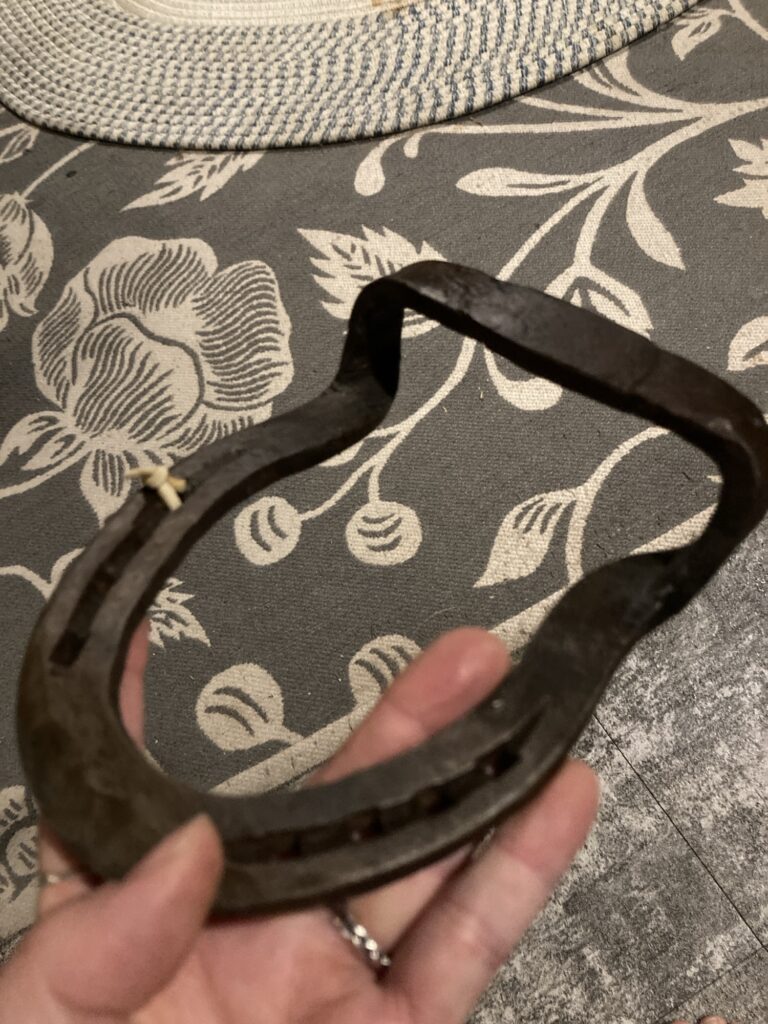
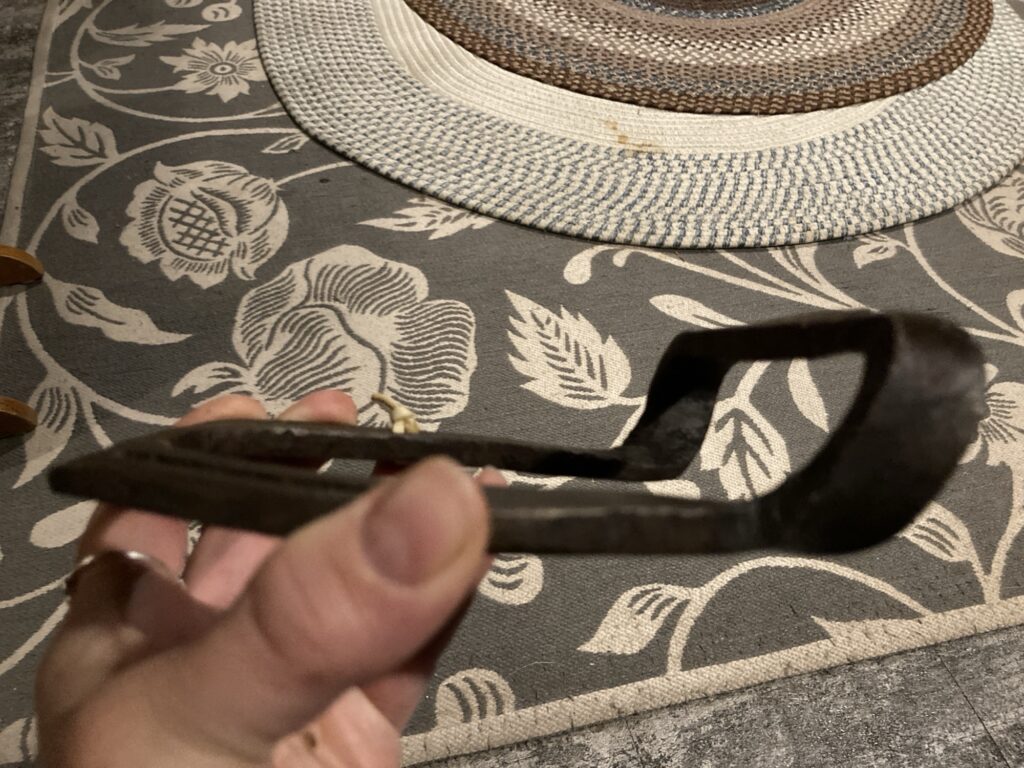
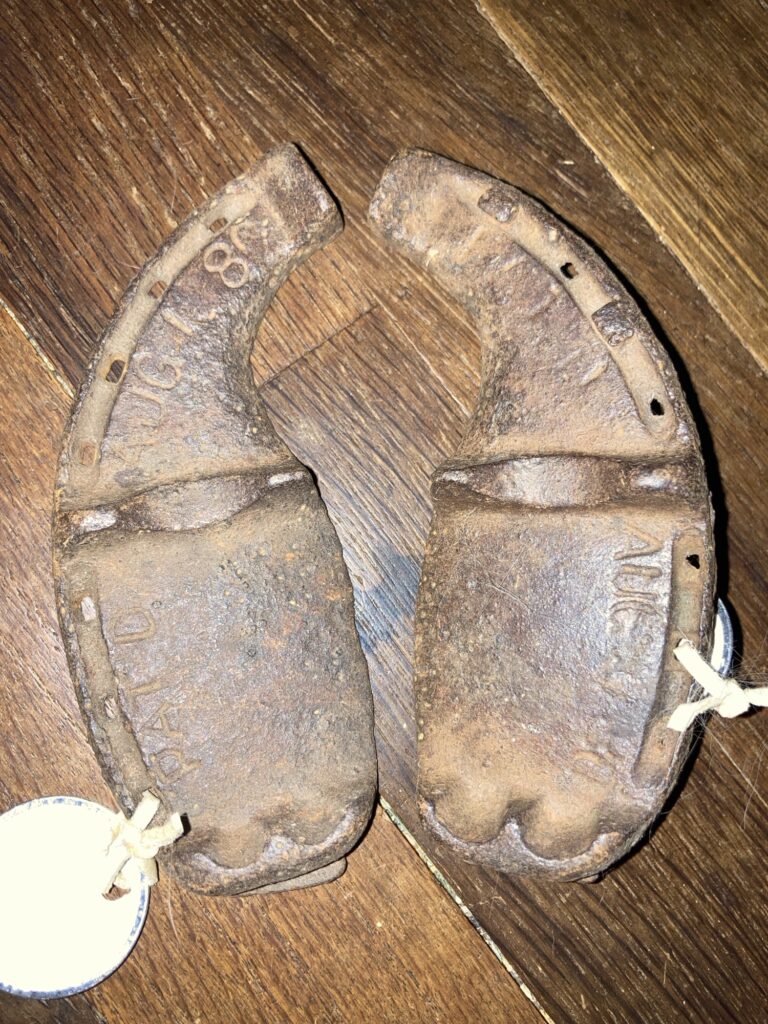
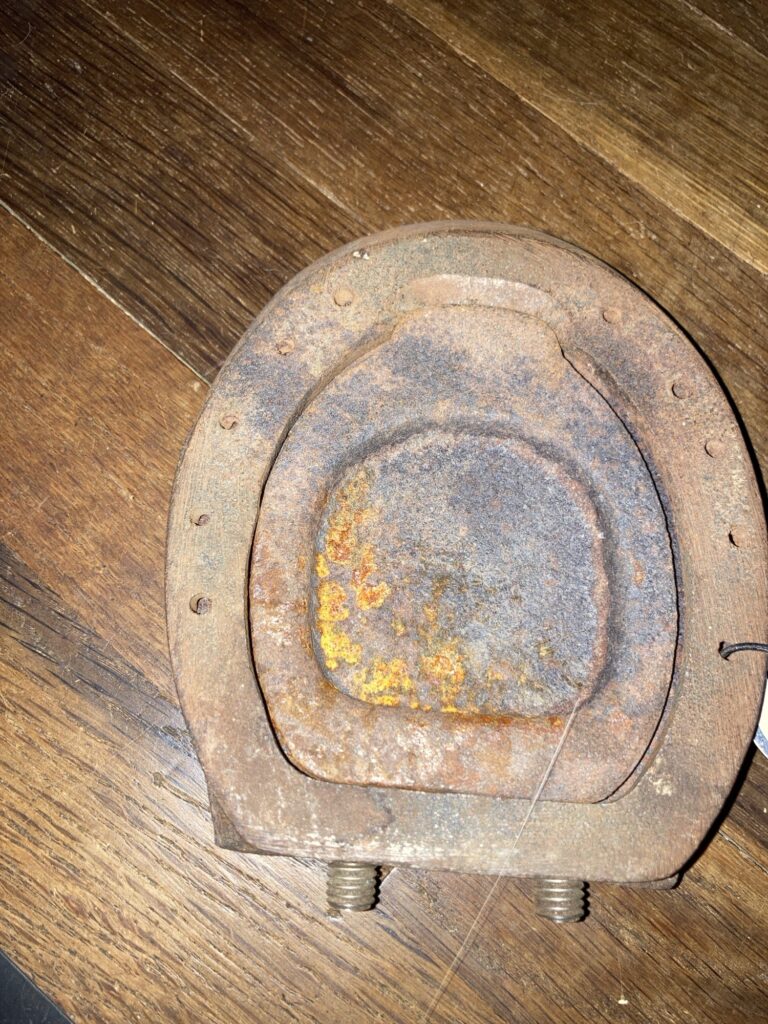
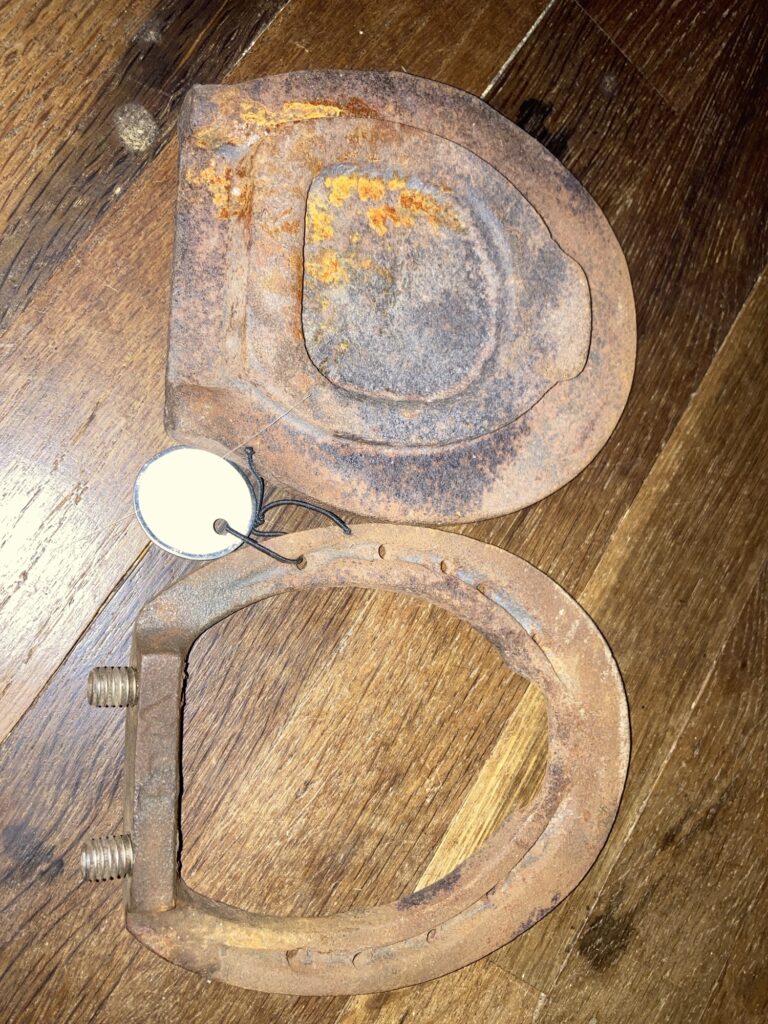
This shoe has an extended toe, which is usually used to treat different tendon issues in horses. This shoe, while looking quite strange, is actually the metal part of a rubber horseshoe. The rubber has been lost for some reason, and would have been used to cushion the foot like a sneaker, protecting the horse from impacts on hard surfaces such as paved roads.This is a runner horseshoe from a carriage horse in Frankenmuth, Michigan. The metal part is embedded in the thick rubber or the shoe. I also have another one that was collected by its previous owner in the 1940’s, so they can be older. A side view. Very thick rubber.This type of horseshoe, a heart bar shoe, is used to treat different lamenesses by relieving pressure on different areas of the hoof. Another odd therapy shoe with hand-made extensions at the heels. Here is another bar shoe. This one is very large—probably a draft horse, and has calkins added to provide traction. This shoe is very odd. It was probably used to treat several different problems on the hoof. Here is another therapeutic bar shoe.Another therapeutic bar shoe. This one has an extension on the heel.This is one of my favorites. There is a piece of metal almost like a long toe clip, plus a wide branch that might add more support to part of the hoof. It has a manufacturer name on it.The other side of the above shoe. it looks to be a ready-made shoe as opposed to handmade. This is a Phoenix Neverslip horseshoe. It was made by the Phoenix horseshoe company, which sold studs that screwed into the large round holes and provided traction in winter. They were popular from about 1880-1940This is a Giant Grip horseshoe. It is very similar, in fact almost identical to the Phoenix Neverslip, and takes identical studs that screw in. This shoe was patented in 1901, when the company started.This is an ENORMOUS Scotch bottom draft horse shoe. The smaller shoes displayed inside of it are pony sized (the label says quarter horses but i am guessing they must have been yearlings as they are smaller than normal). Scotch bottom shoes are slightly larger than the hoof, and are used to widen the support of the hoof, alter their gate, and absorb shock.A patten bar shoe. It is used to rest a limb after a tendon injury. A side view of the patten bar shoe. The raised part actually touches the ground, like the heel of a high heeled shoe, so i am holding it upside down. Two more therapy shoes. These are ox shoes. Each cow hoof gets 2 shoes, as they have cloven hooves. This particular pair was patented in 1880. Not a horseshoe, but still pretty cool.This is an odd shoe that I haven’t seen before. It is divided into to sections. That screw together.They are definitely horseshoes, but i am not sure on their purpose. The lighter section obviously gets nailed on the hoof like a regular shoe, and the other section, which is much heavier, easily screws onto it. My best guess is that they are used to weight the feet, possibly to overemphasize the horse’s gait (which I don’t agree with). Another fuess is that they could be used to medicate the hoof, but i doubt it as they a very heavy.This is an aluminum horseshoe, usually for racing.
As you can see there are many different shoes out there. Most farrier books on horseshoeing will have examples of different types of shoes and what they are used for. Also check the internet. I feel that i have only just scratched the surface of what is available.
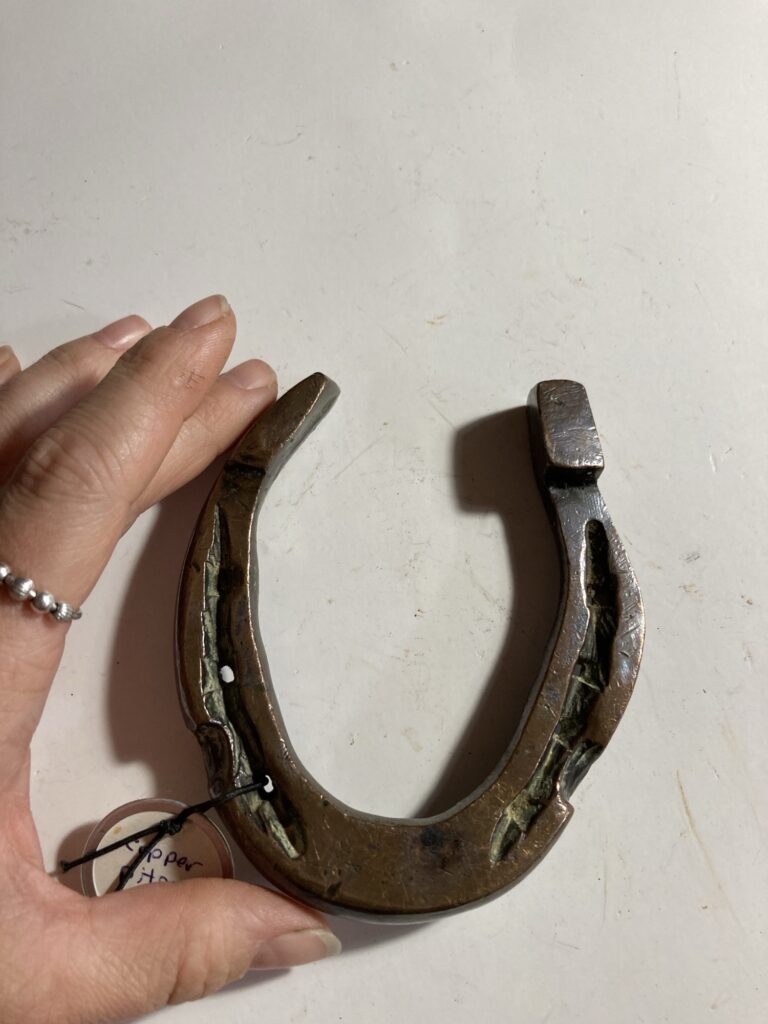
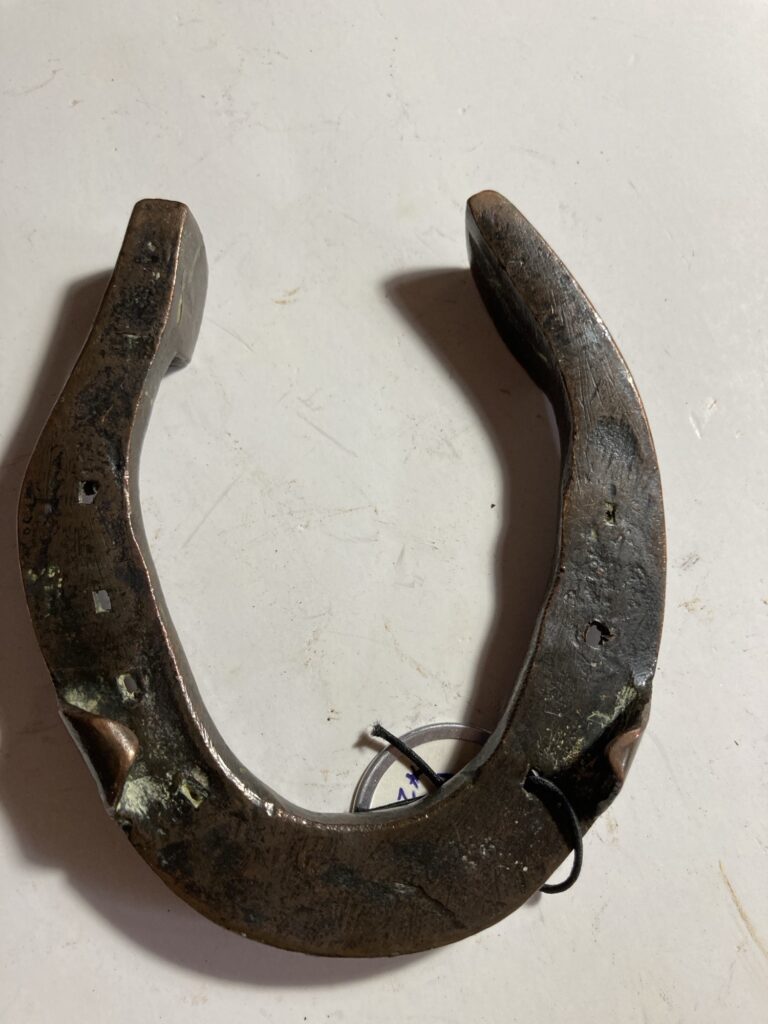
I purchased this horseshoe from someone based in the United Kingdom. Her father had been a coal mining enthusiast and collected many items as souvenirs, including this pony shoe. It was believed to have been from a mine in Wales.
Coal miners used to use ponies to haul loads of coal, as a larger horse would not have had enough head clearance in the tunnels. They had to have solid copper or brass shoes on the horses to prevent sparks that might cause fires what with all of the flammable coal present. This shoe, I believe, is copper. It is not magnetic.
There are two small toe clips present (the clips on this shoe have been bent slightly from handling, particularly since copper is softer than iron, which is what most shoes are made from). With toe clips present, it is safe to say that this particular shoe is dated anytime after 1850, since that is the time that toe clips were invented.
Absolutely one of my favorite finds! Remember, when looking for a pit pony shoe, always check to see if it is magnetic as there are shoes out there that have only been plated or painted with copper or brass for aesthetic purposes and are not actually pit pony shoes.
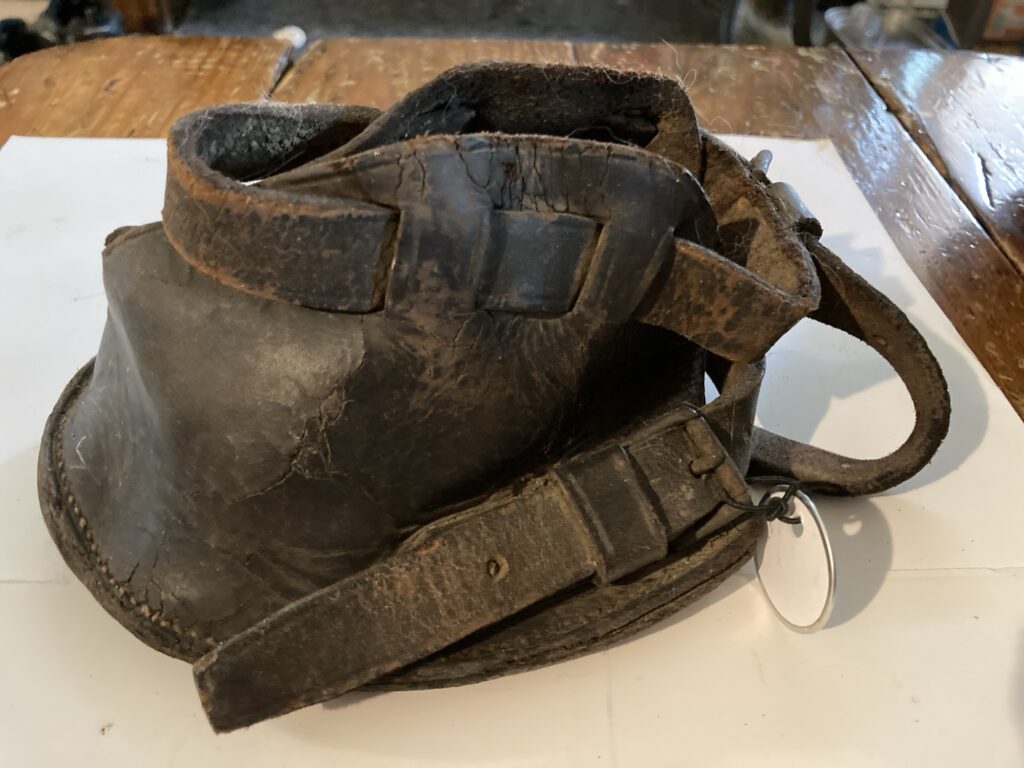
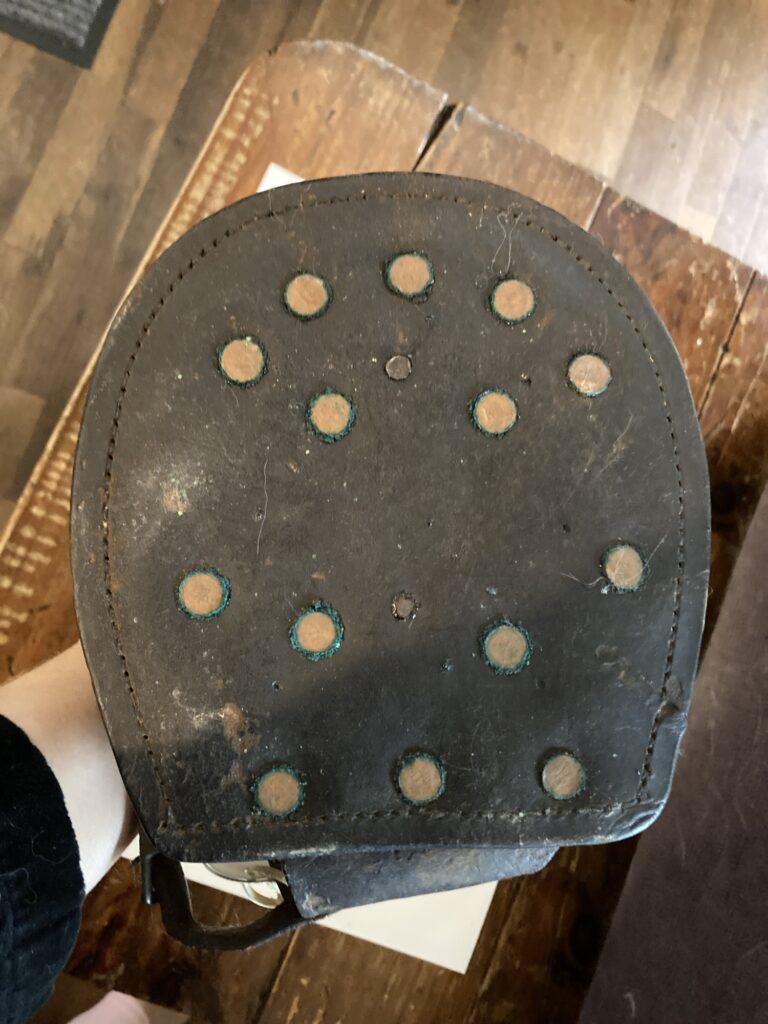
This shoe is a new find for my collection. I believe it is a spare shoe used for emergencies.
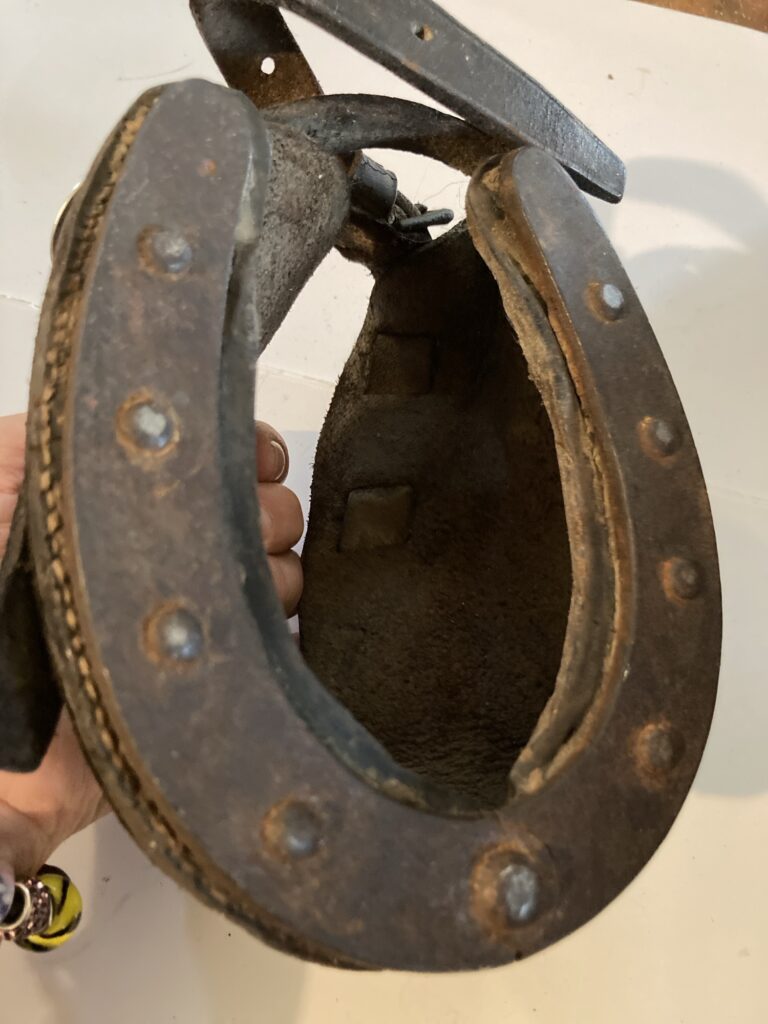
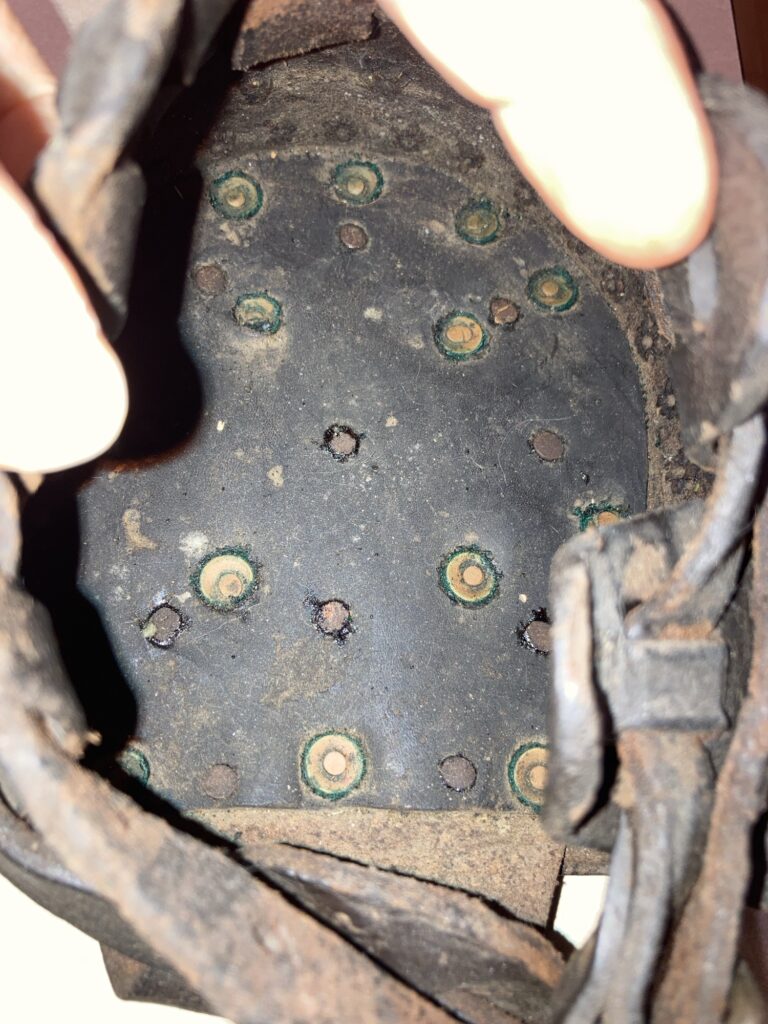
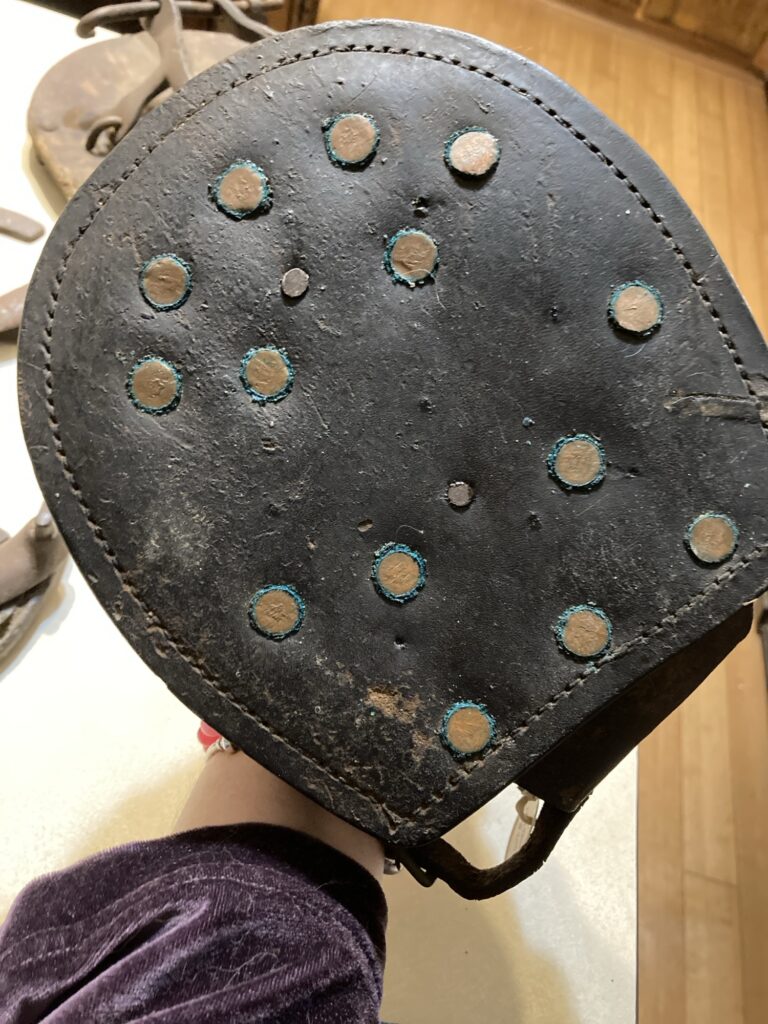
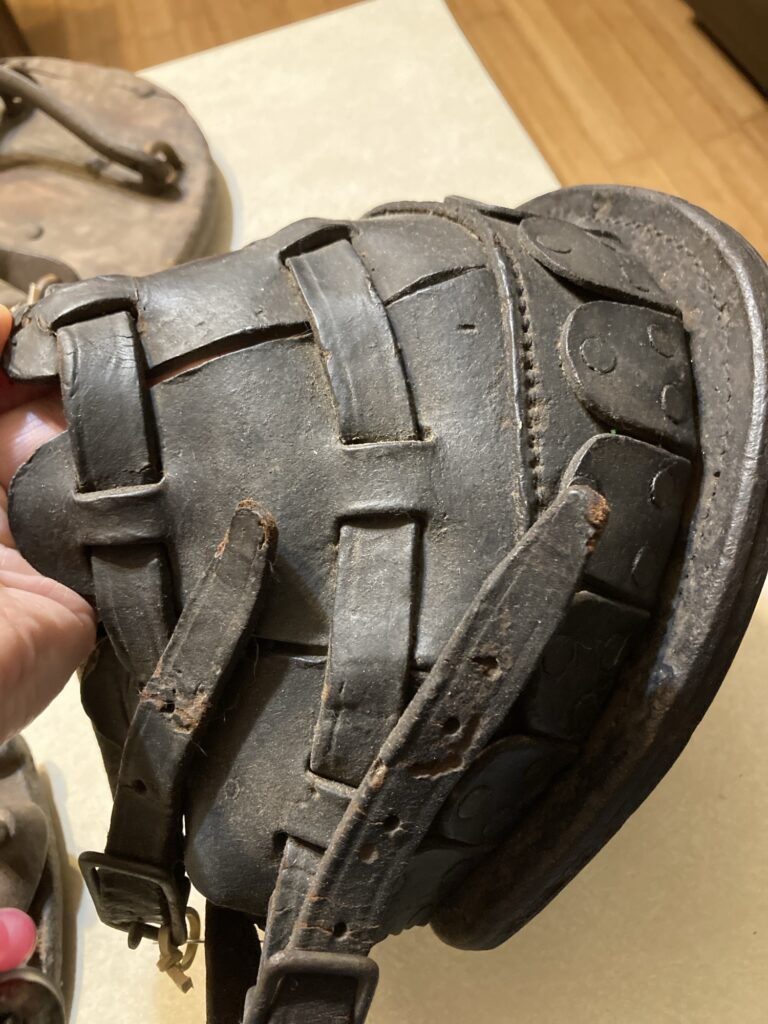
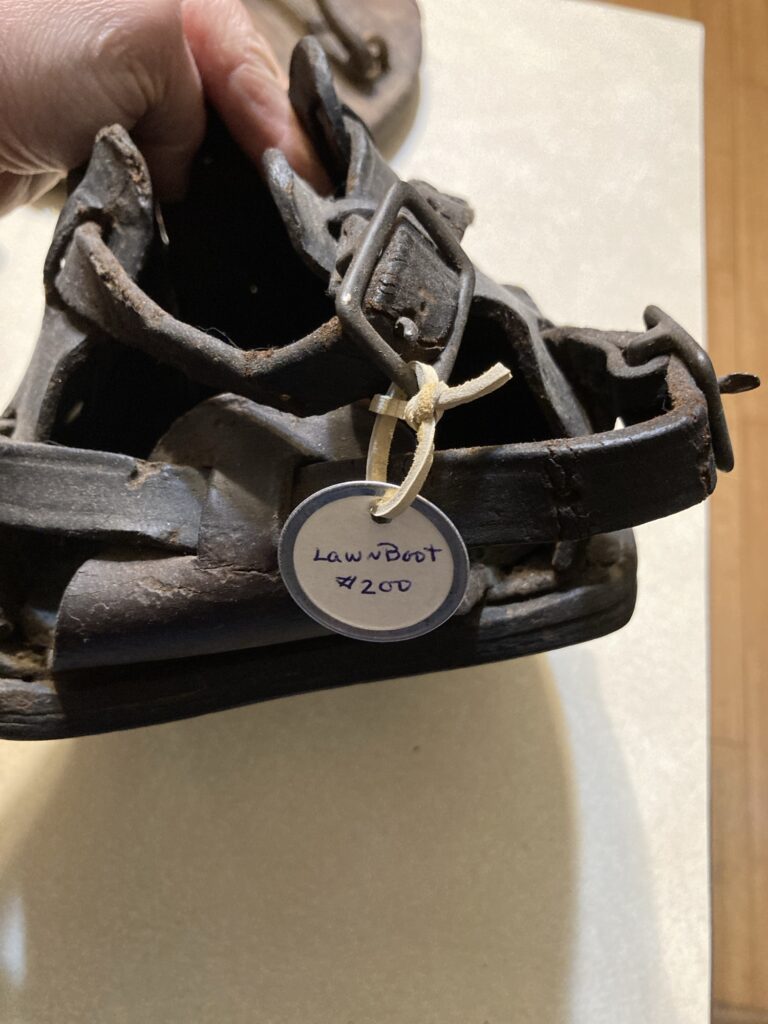
The leather is in poor condition, but it is a boot that buckles over the hoof. It is very similar to a lawn boot, and can easily be mistaken for one at first glance, except that the lawn boots were made with a flat, solid surface of leather to prevent clumps of sod from being scooped out as the horse walked. This spare boot has a horseshoe attached to the bottom and is hollow with no bottom except for the shoe.
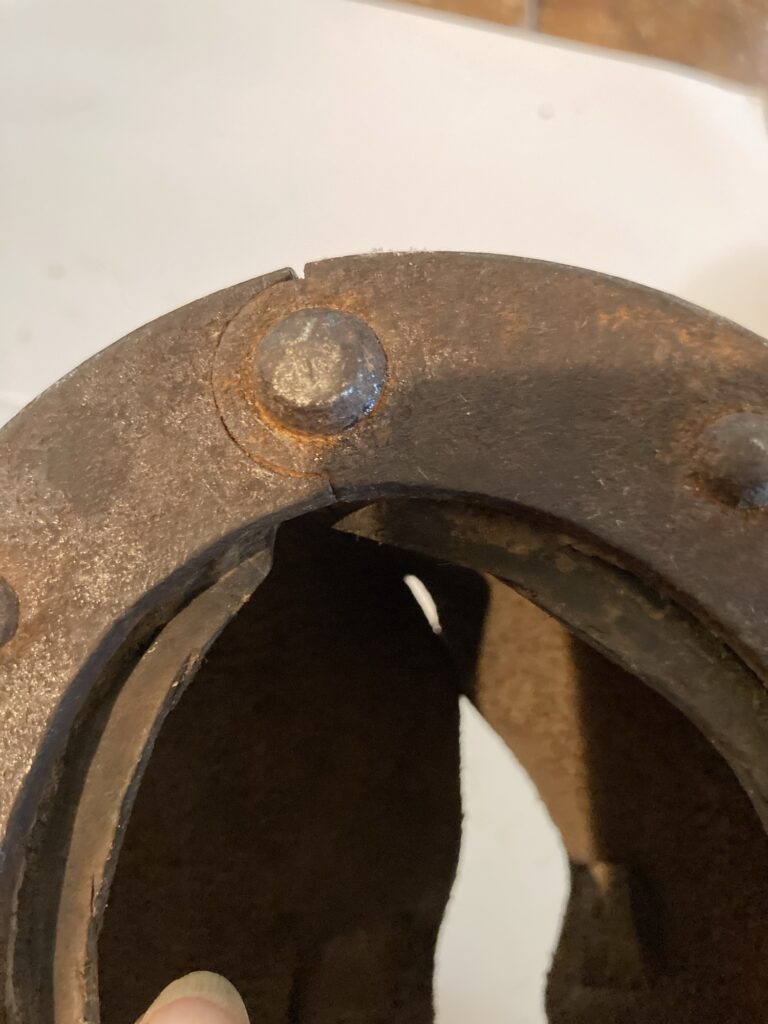
Bottom of the spare shoe. There is a metal horseshoe attached, and the boot is basically hollow.Bottom of an antique lawn boot. The surface is flat with no hollowed out area that might scoop out sod and ruin the grass.
The spare shoe boot would probably have been carried along, perhaps in a carriage or wagon, in case a horse lost its shoe while working. It could easily be buckled in place so the horse would still be able to finish the day of work in comfort. Just like people, if you lost one of your shoes it would be difficult walking the rest of the day with one shoe missing.
In the middle of the toe area, the metal shoe is hinged to allow fitting on different sized hooves.
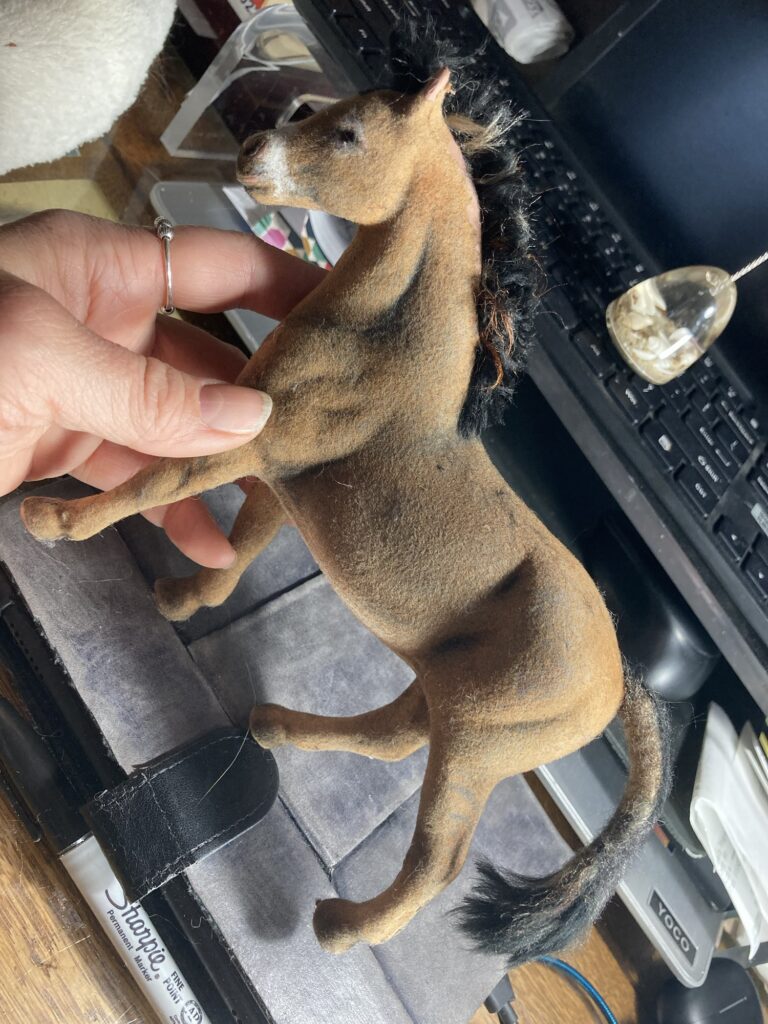
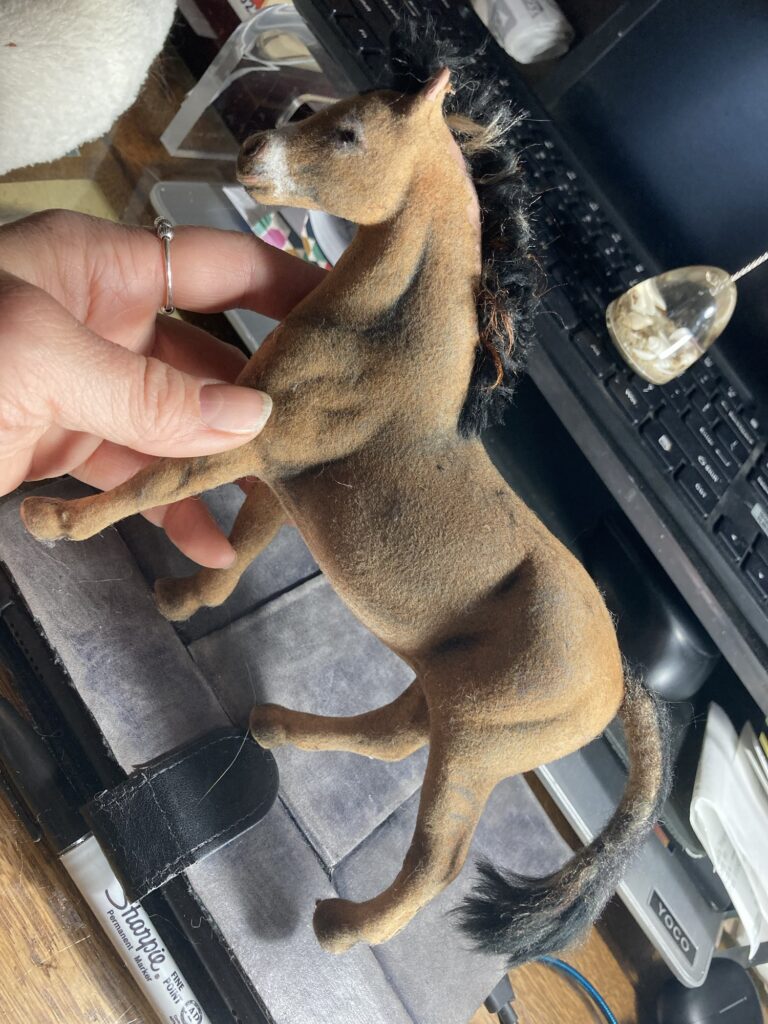
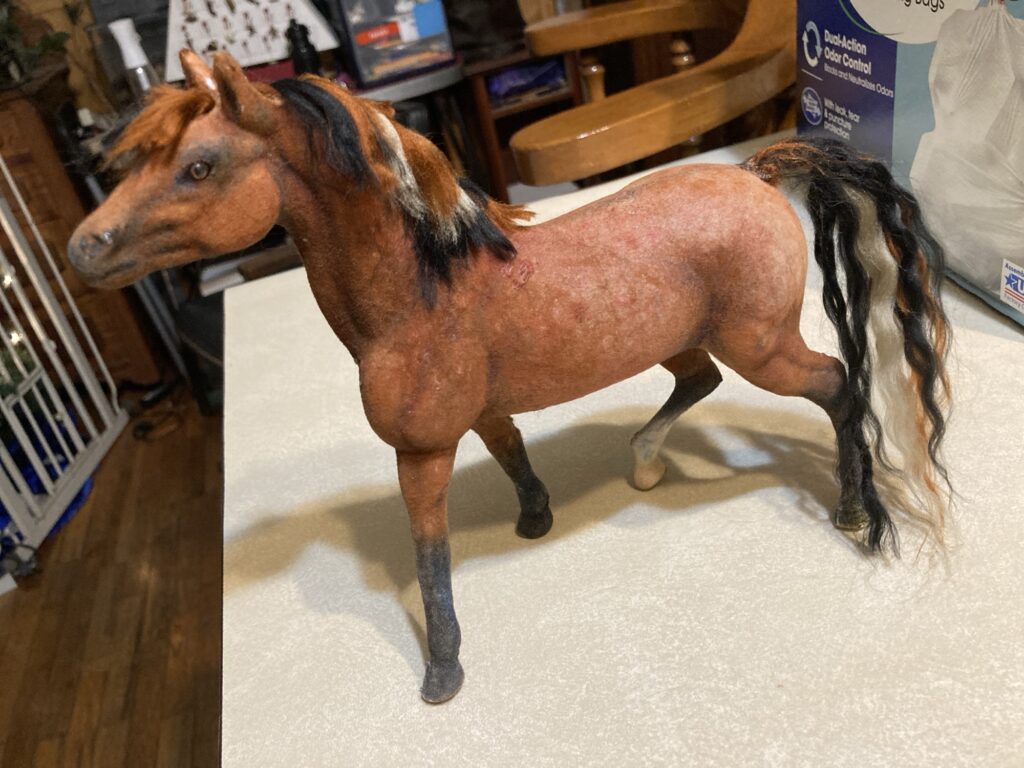
Altering an old flocked horse toy to add detail and make it look like a donkey.
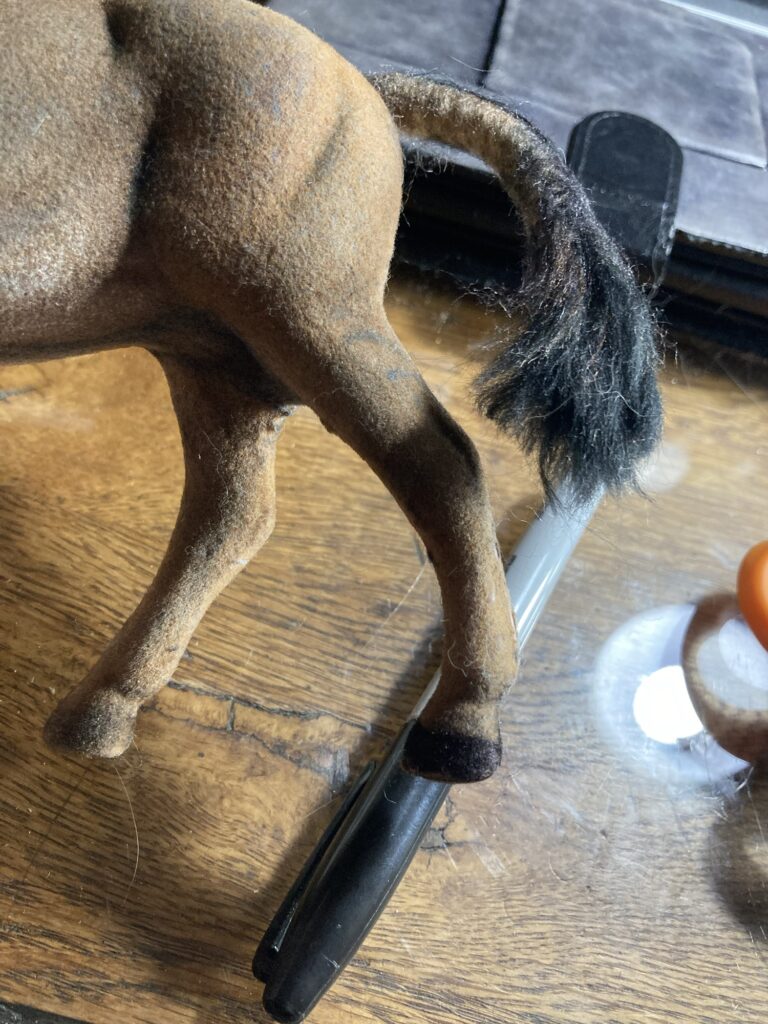
In my last article, I started working on taking an old flocked toy horse and altering it so it resembles a donkey. We already added mane and used colored pencils to add more detail and shading. In this article we will finish up by adding long ears, a tail, and missing body hair.
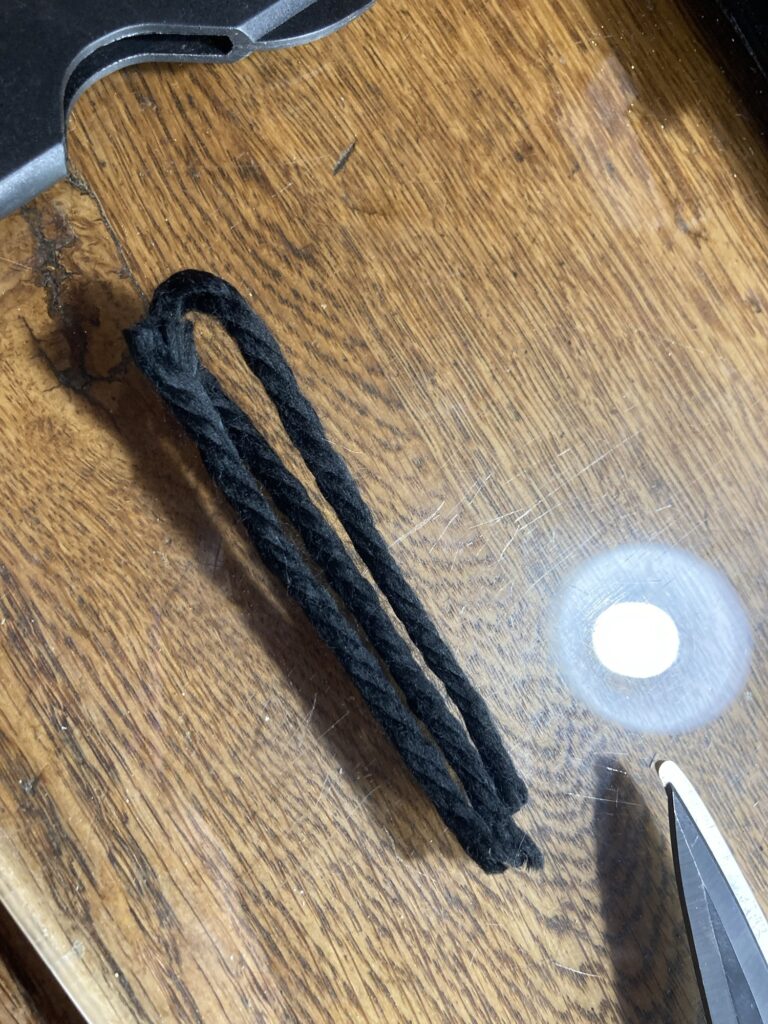
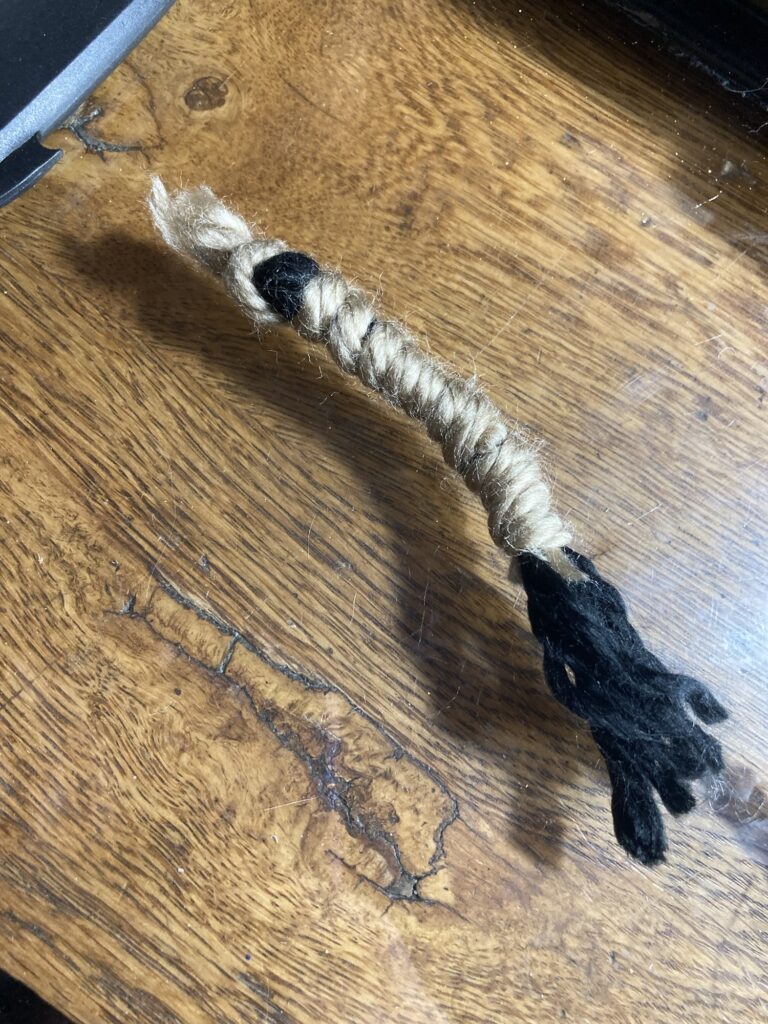
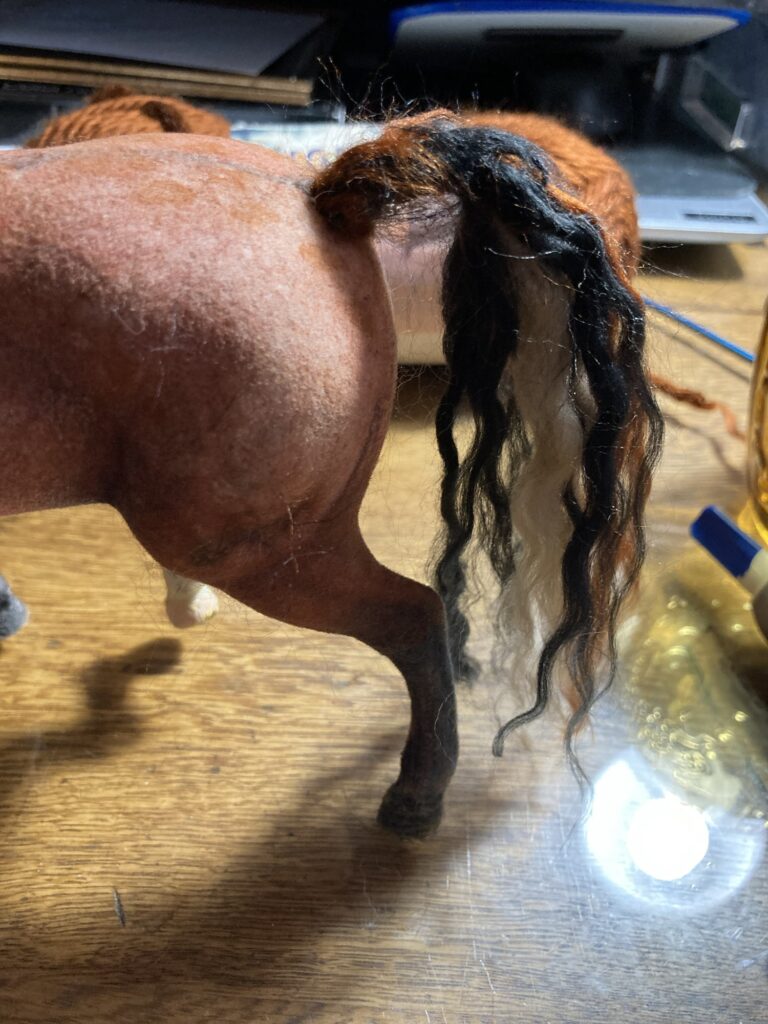
First I will start with the tail. i took some acrylic yarn and made a core for the tail by folding a piece over itself into a shape about as long as i want the tail to be.
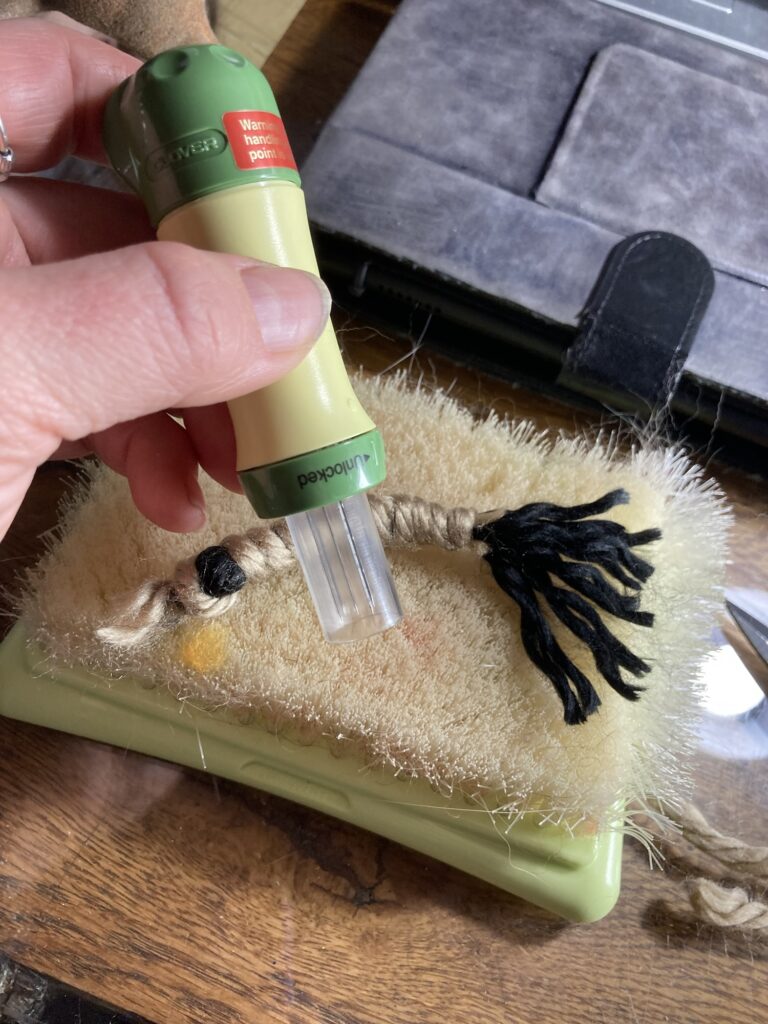
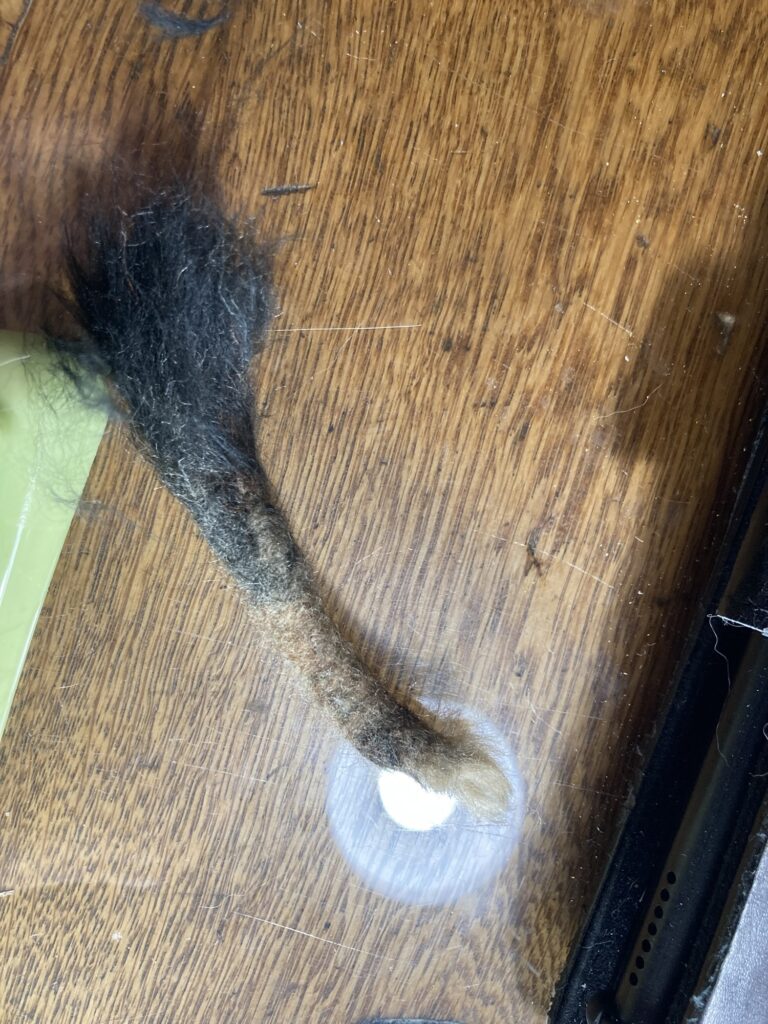
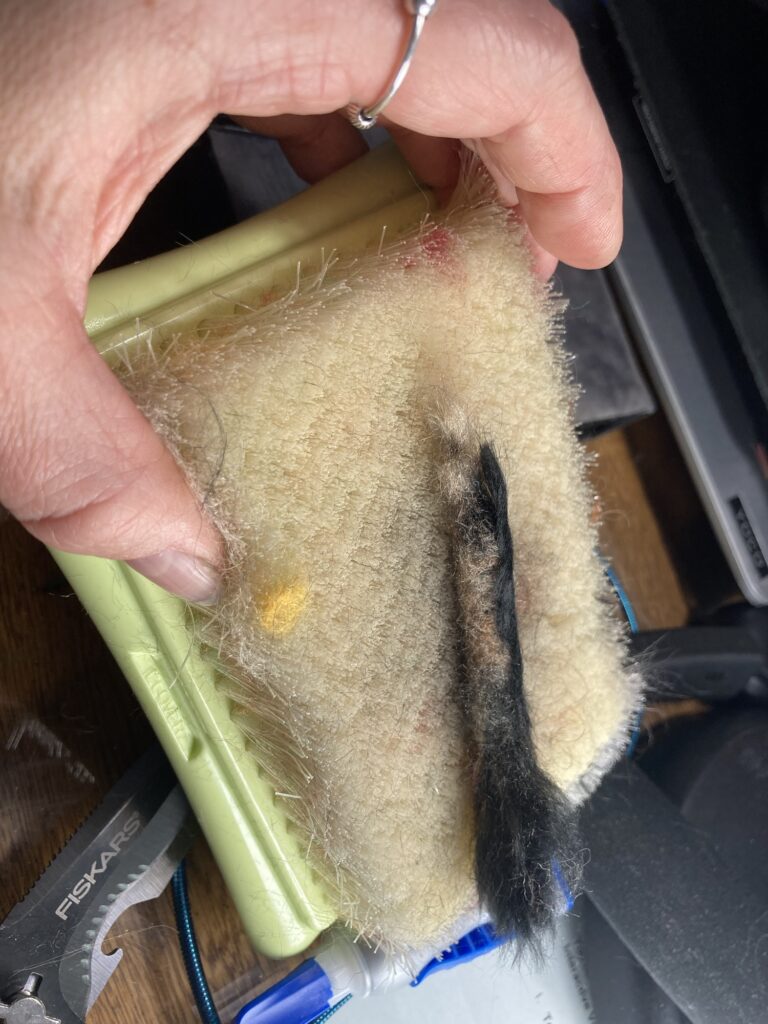
Next I wrapped the core of the tail with some brown yarn that closely matches the color of the donkey body.Then I took my felting needle tool and pummeled the tail to push the fibers together.Here i have the tail looking more like a tail, leaving the tip of it alone so it looks hairier.I added a black stripe down the back.Here is our donkey almost finished, with the tail glued in place.His tail is nice and wispy at the end.
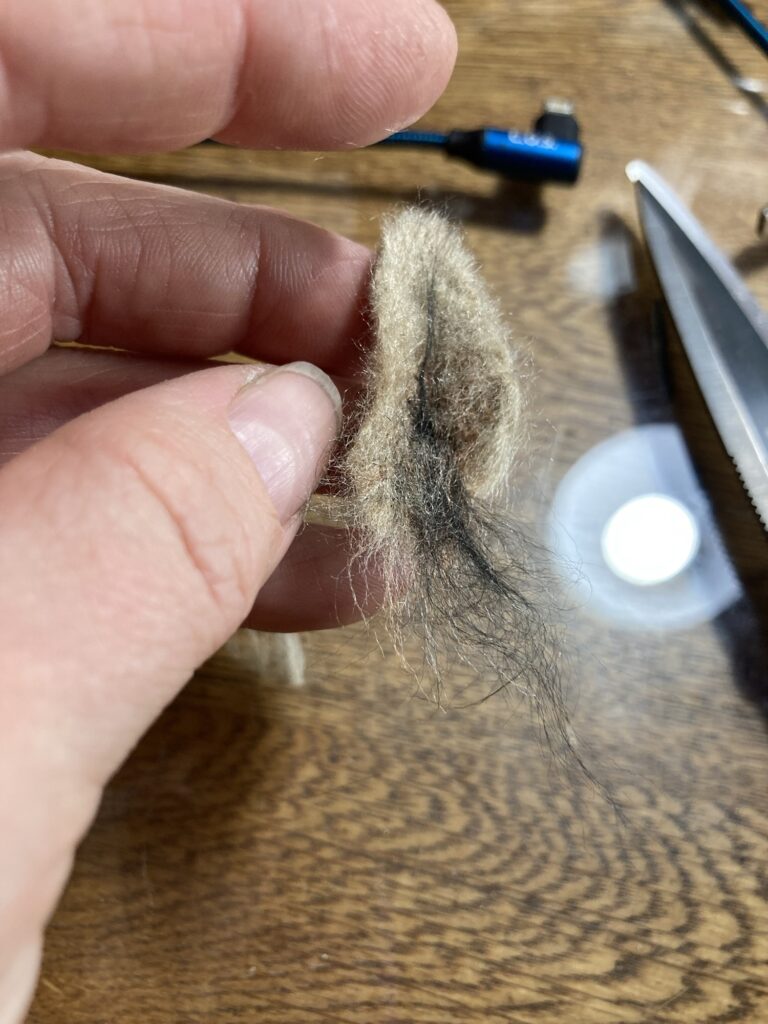
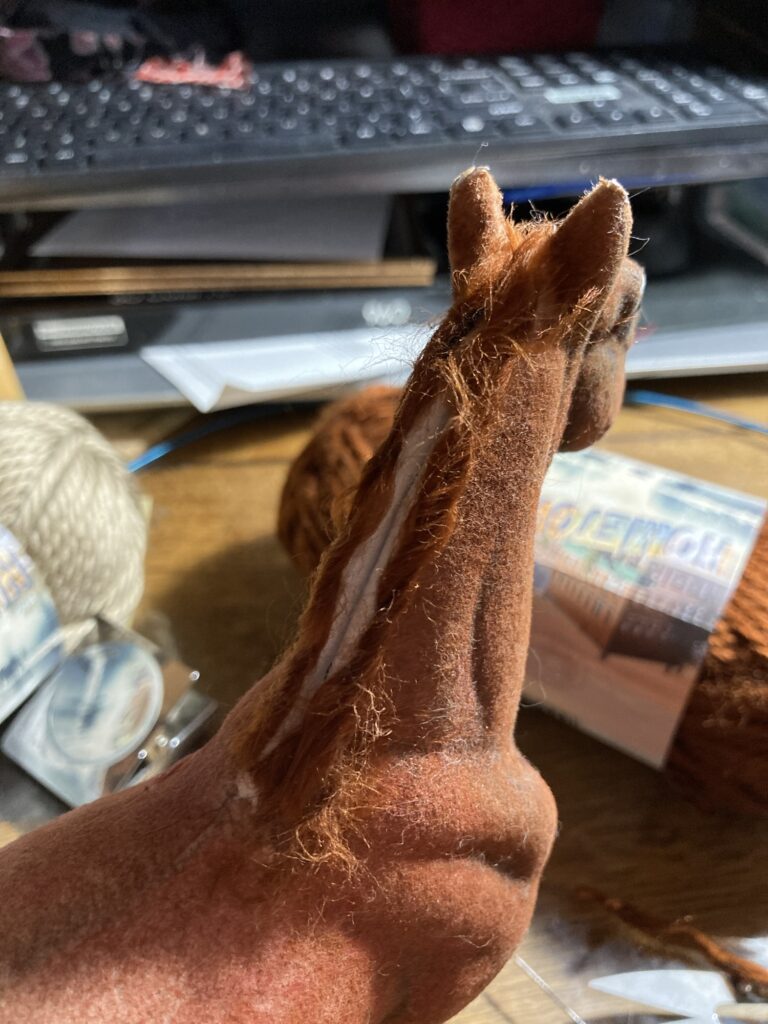
Now i want to work on his ears.
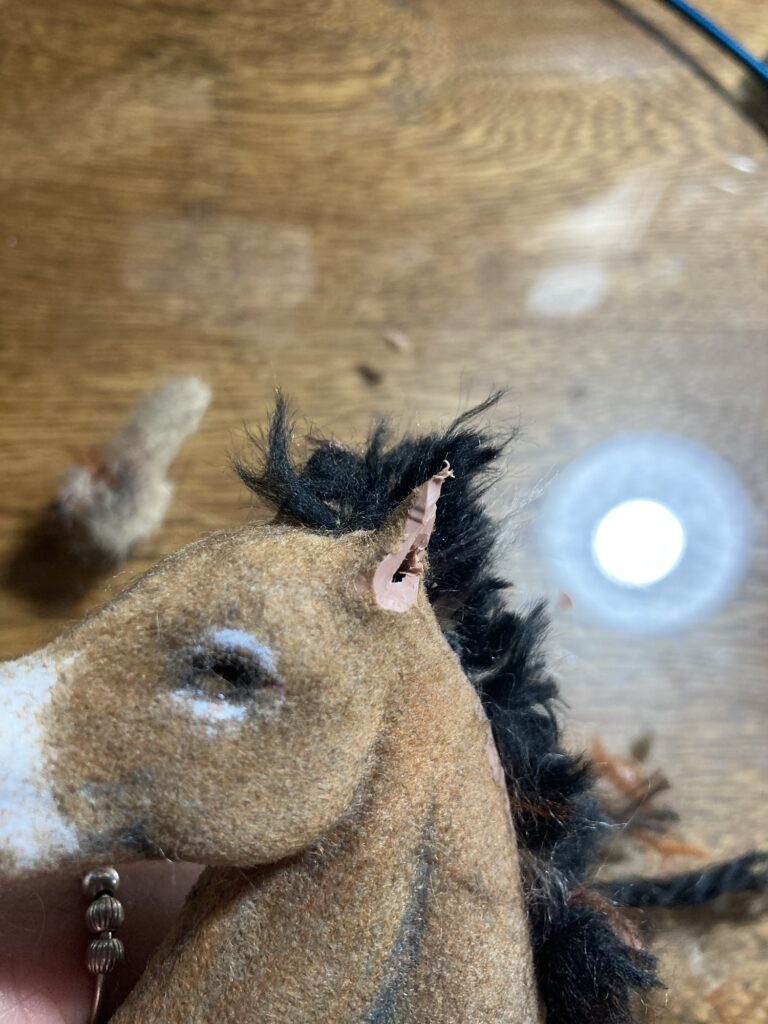
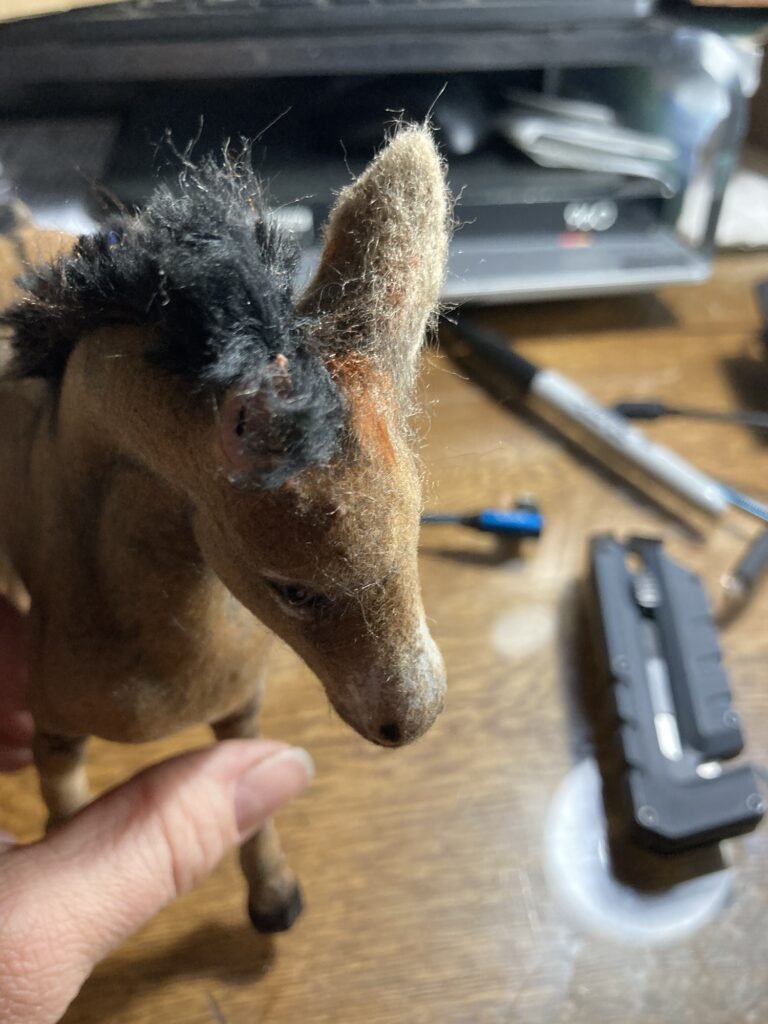
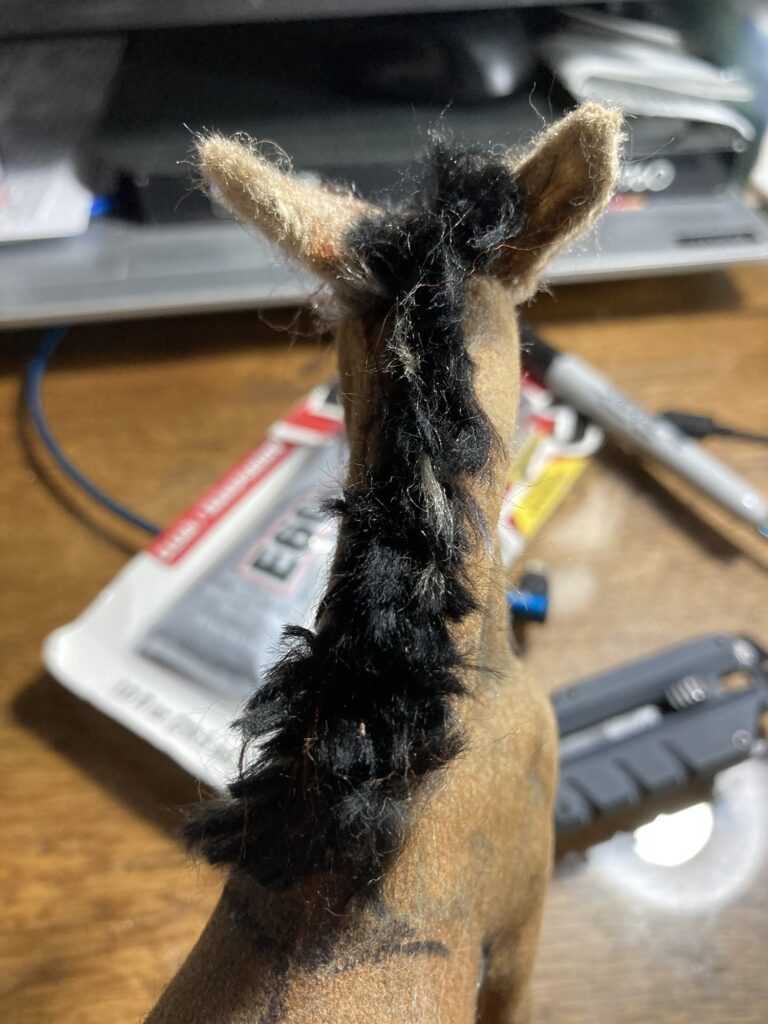
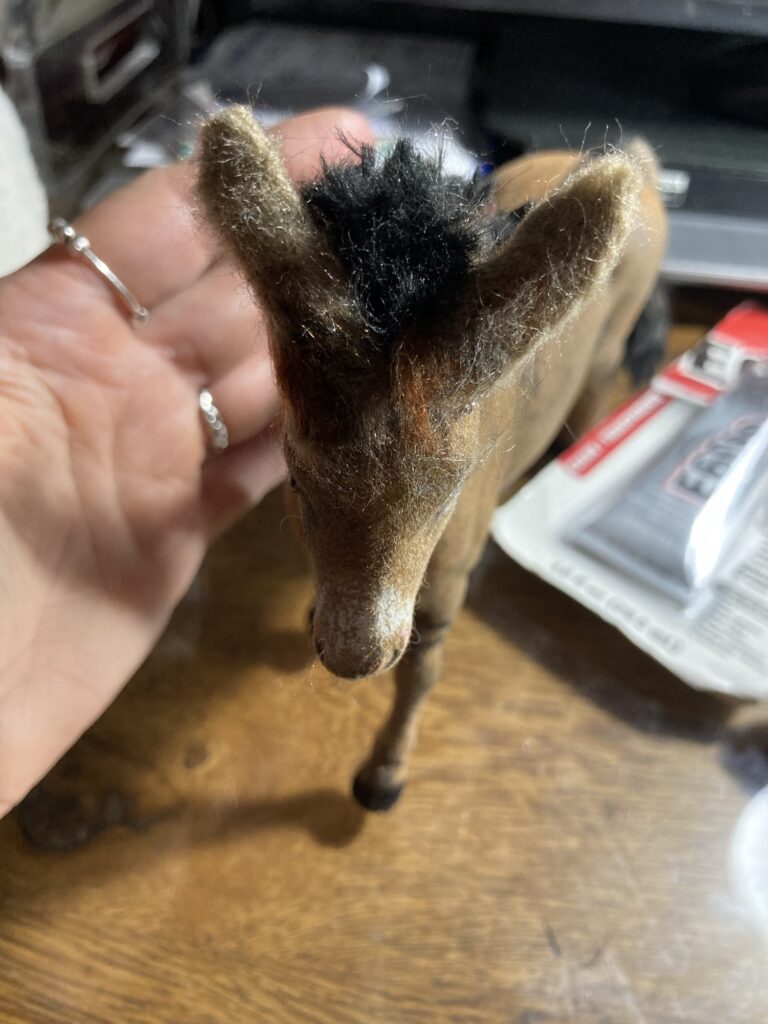
I took a length of yarn that closely matches his body color and snaked it so it is in a basic shape to start with. I just want a flat piece first, and then i can trim it to the shape i want.Here is the first ear. I used the felting needles to create a flat piece of material and then trimmed and folded it around to create an ear shape.I had to use an exacto knife to cut his original plastic ears so that I can make his new ears positioned the way I want, which is slightly backward like he is paying attention to what is behind him.One ear glued in place over the trimmed plastic ear.Both ears in place.
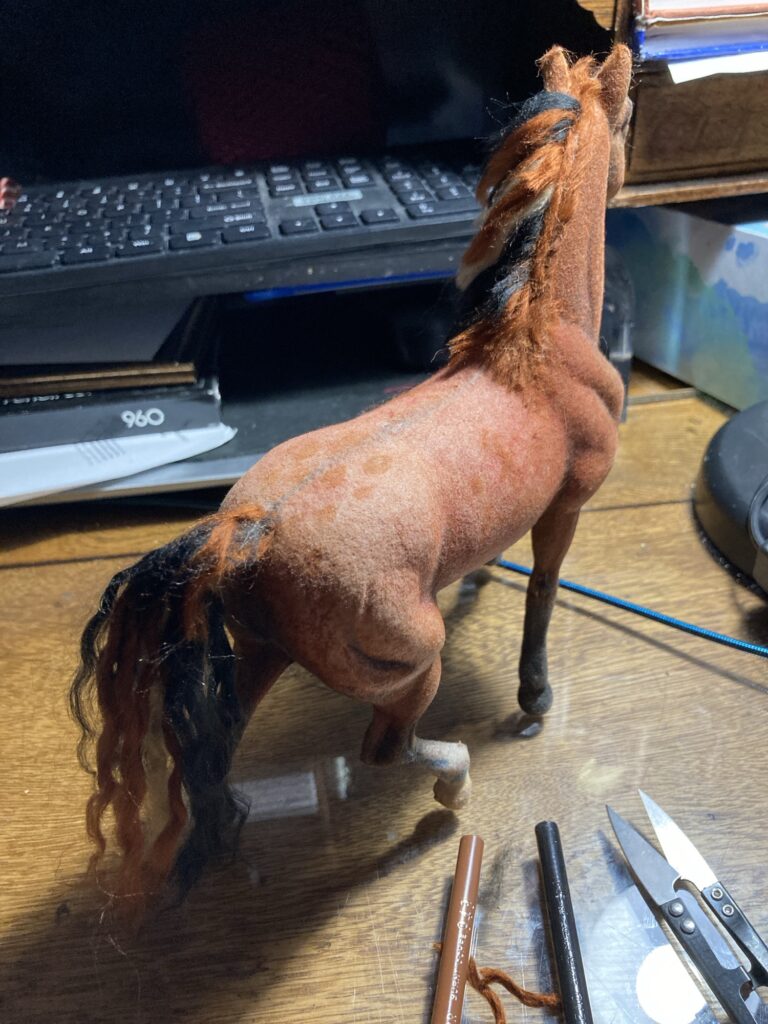
Next i cut some tiny pieces of the yarn that matches his body color and glued them to areas where some of his flocking has worn off.
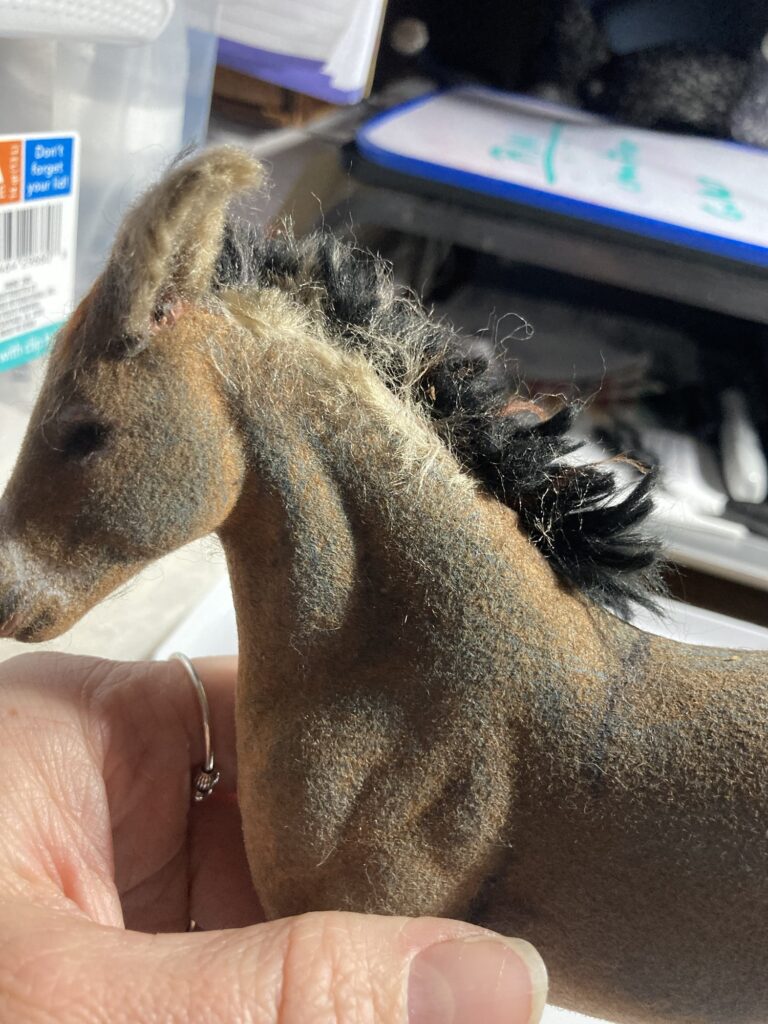
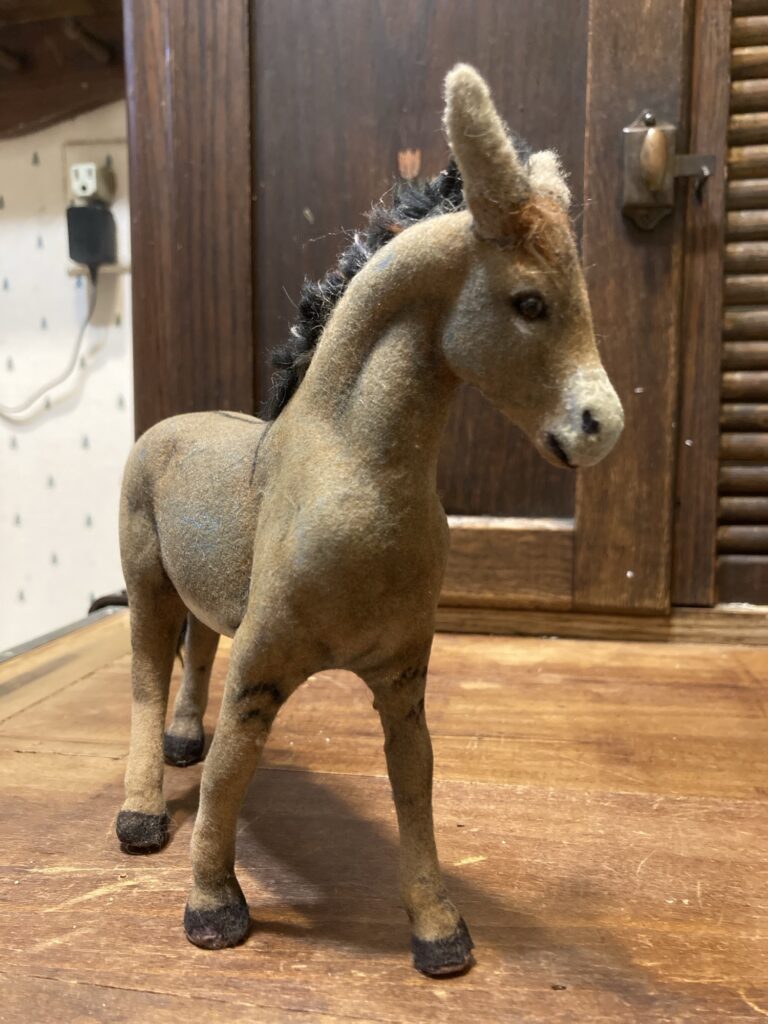
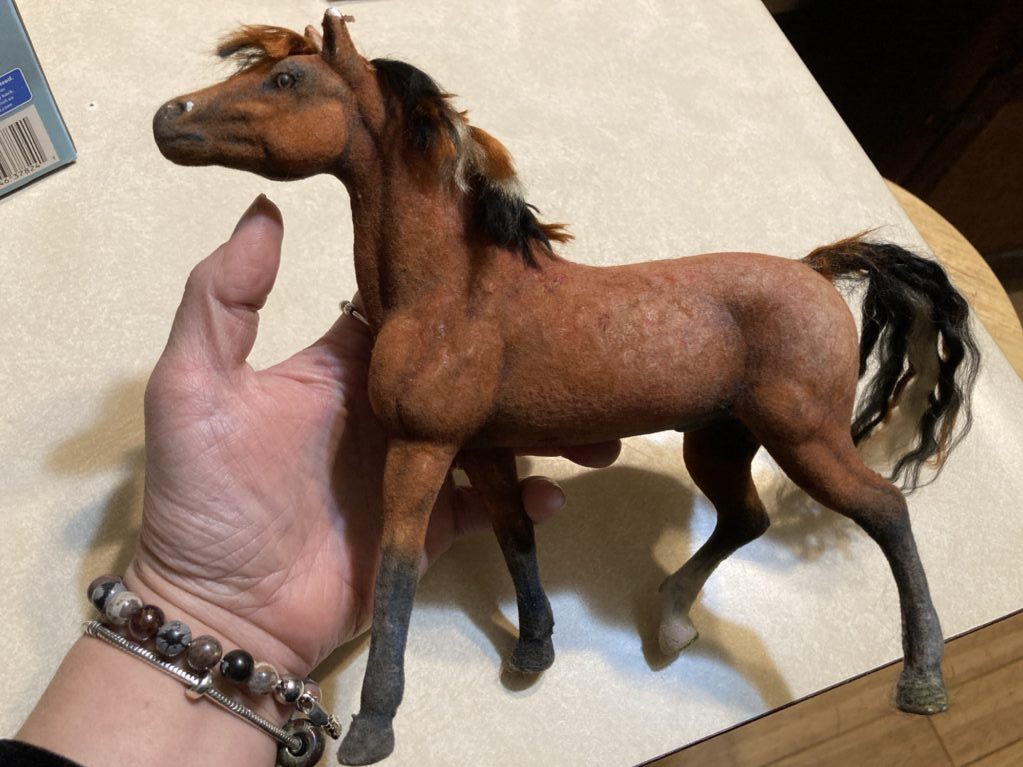
Yarn glued to areas with missing flocking.I trimmed the hair with fine scissors so it more closely resembles the body hair he already had. Completed donkey.
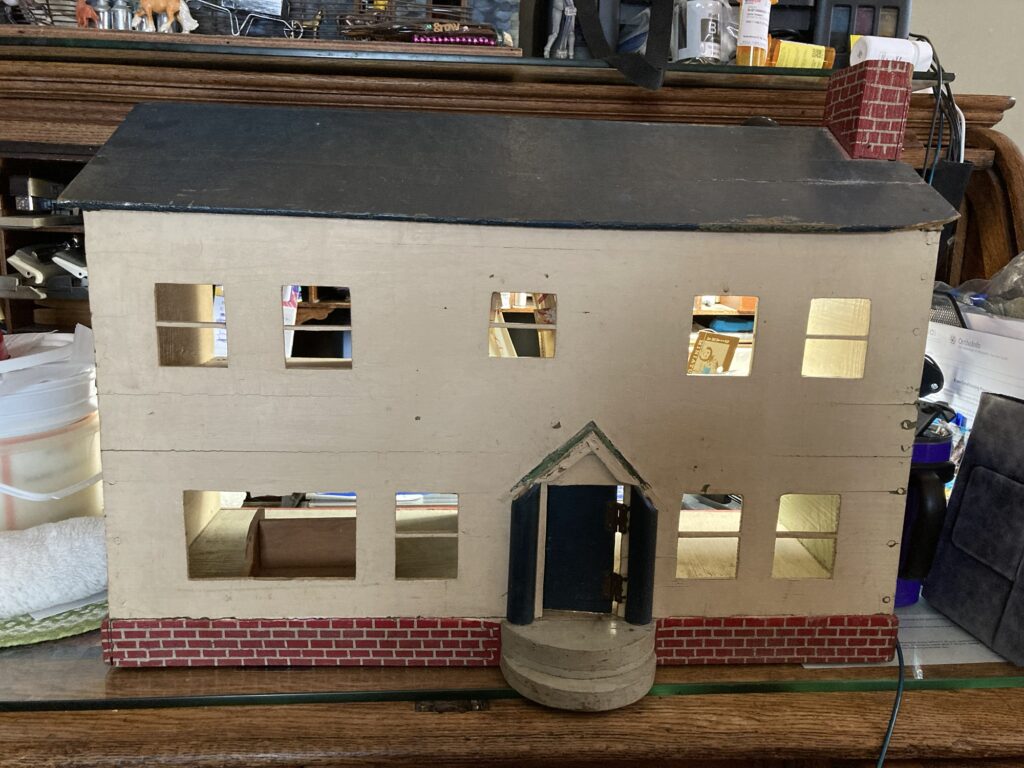
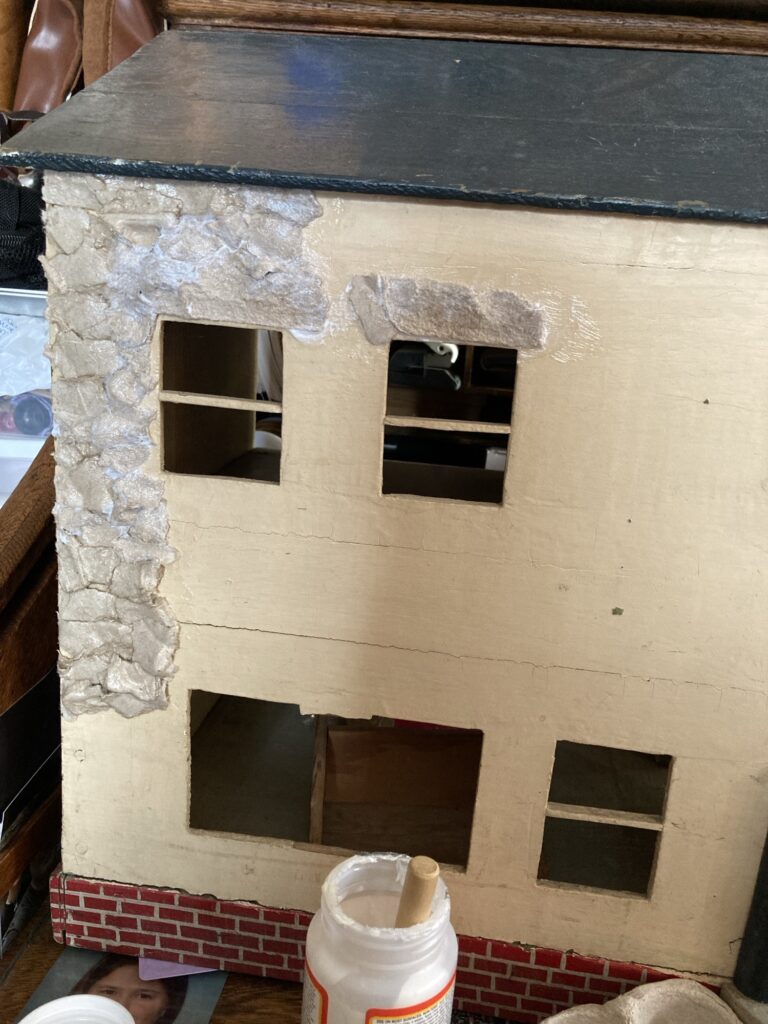
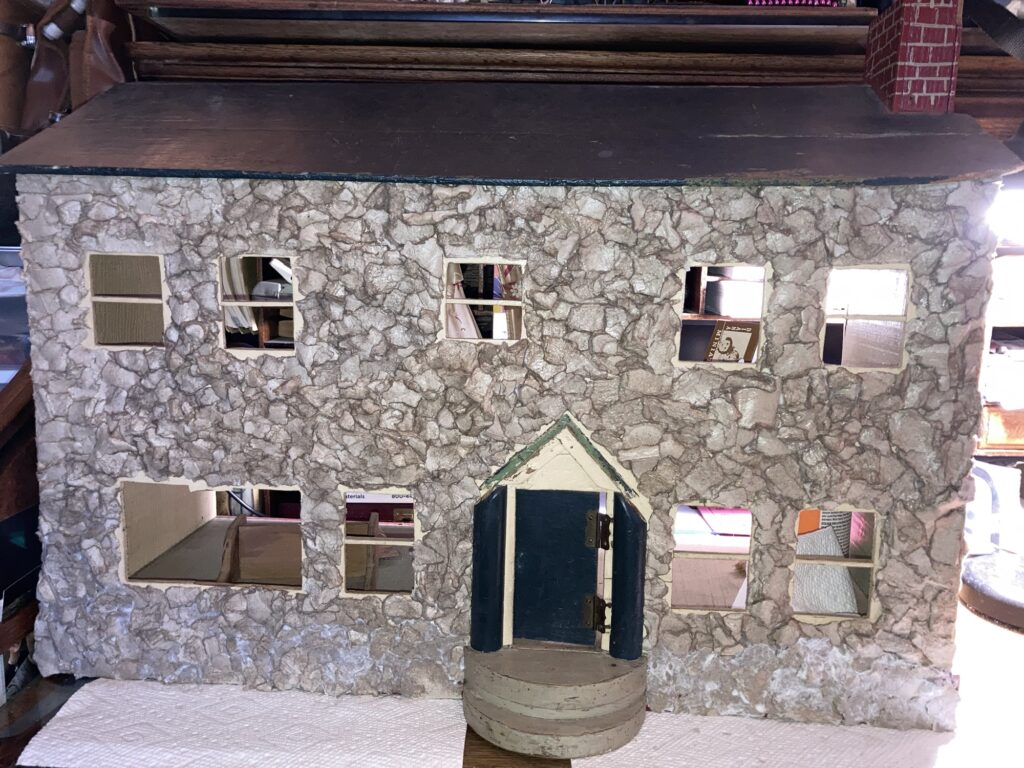
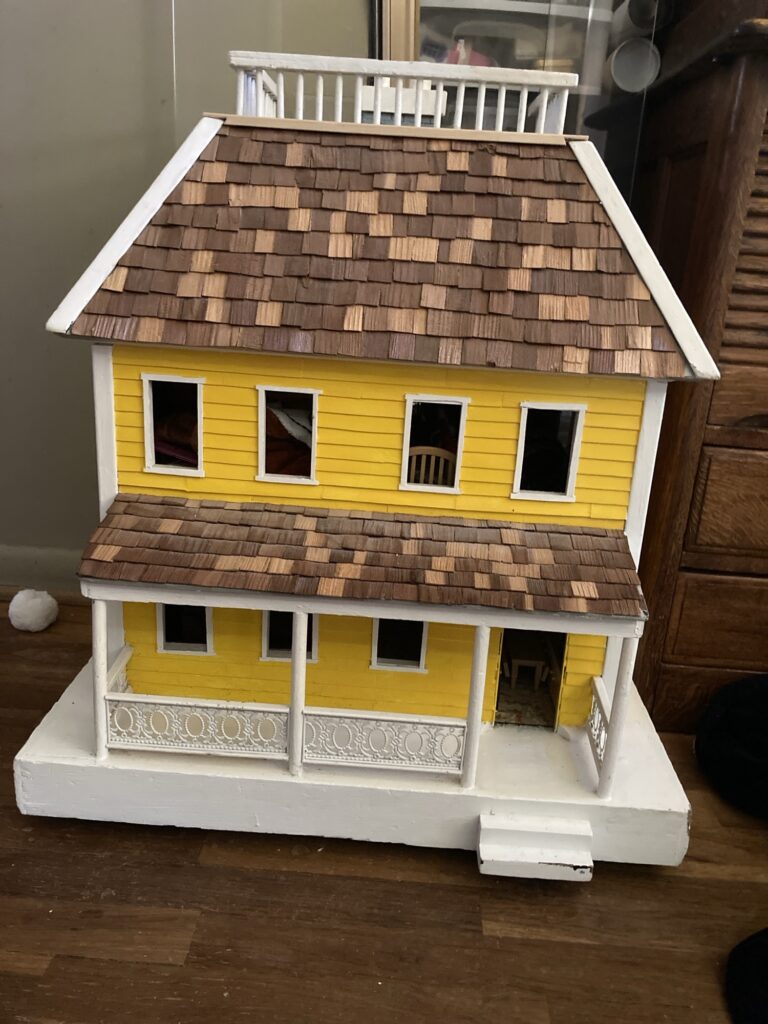
This dollhouse was purchased on Facebook marketplace. It is older and I believe home made probably in the 1950’s. I liked the tall, narrow shape of it for my medieval plans.
First off, I decided to take photos of the exterior for my own personal records. I feel bad altering this 75-ish year old house, but I feel that if I ever feel like changing it back to original condition I think I could without too much trouble.
What I am starting off with. This house would need a bit of restoration if I wanted to make it like new. Instead I plan on adding stone siding and eventually a thatched roof.
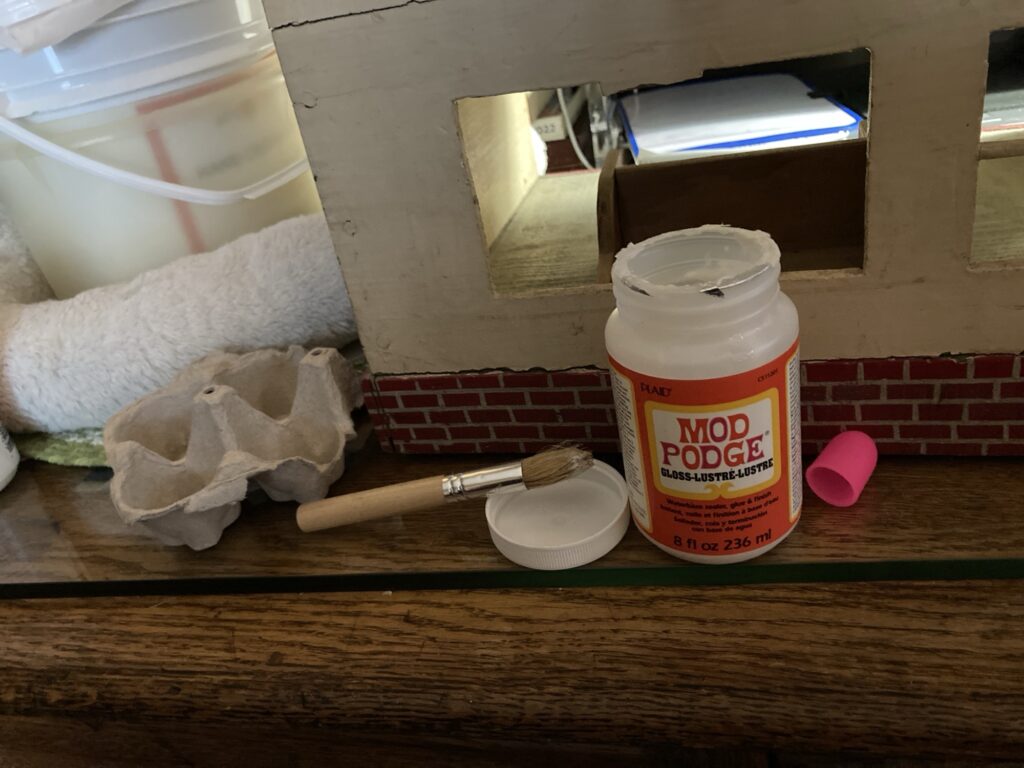
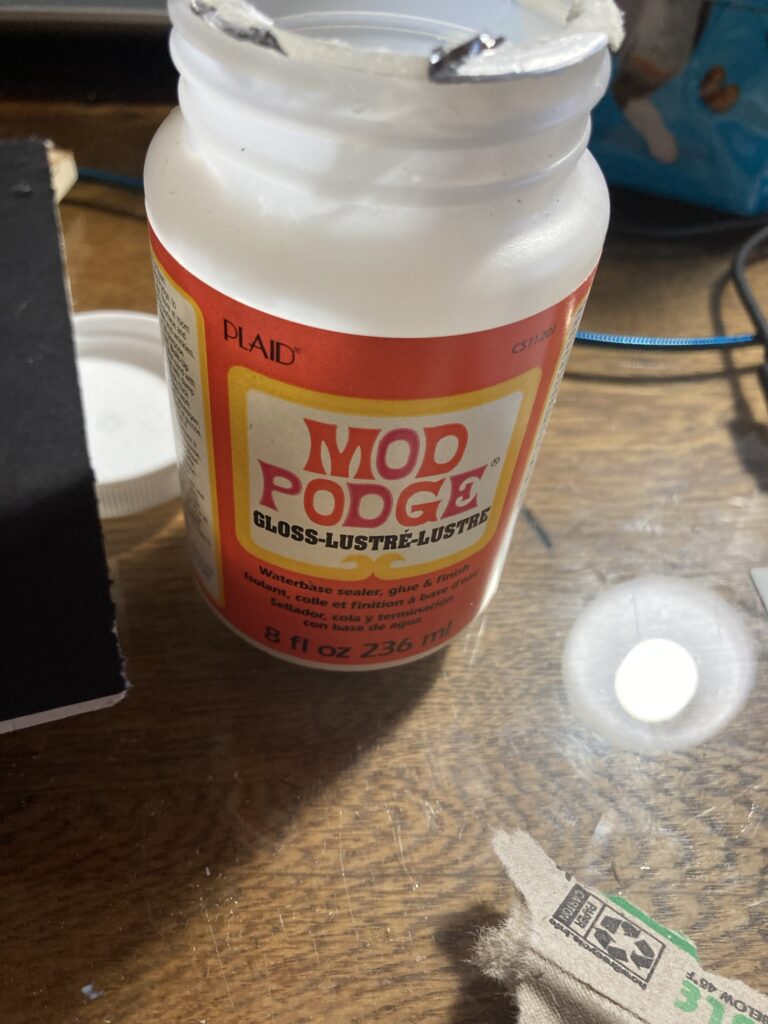
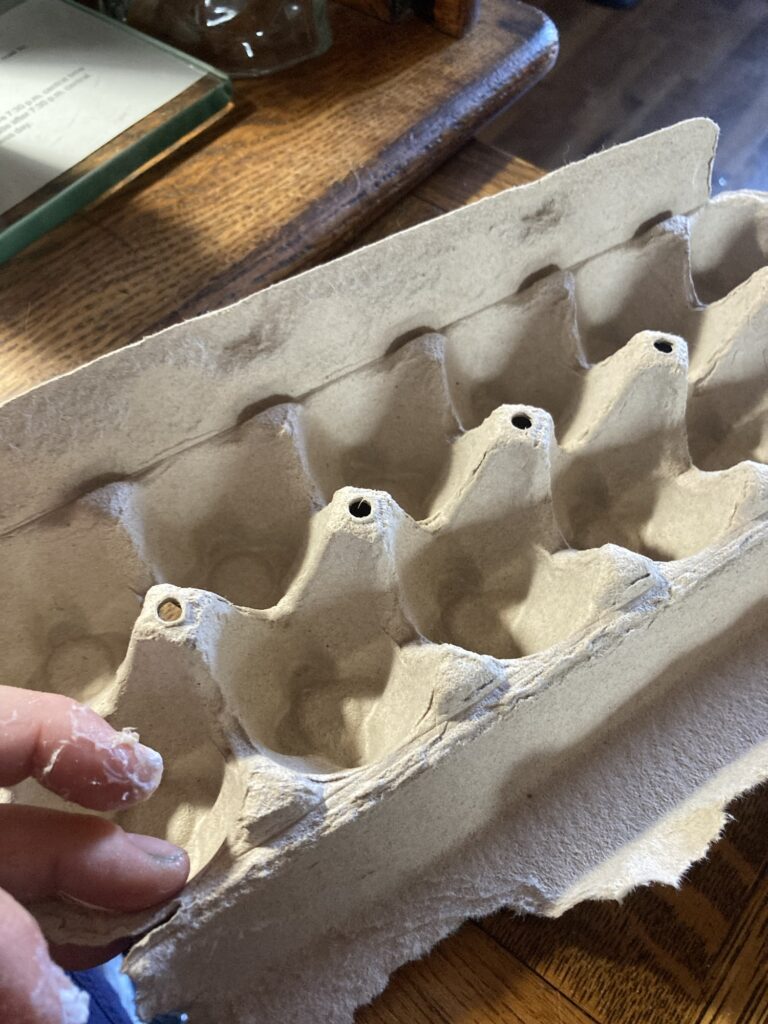
Next I am going to add egg carton stonework to the exterior. I start with cardboard egg cartons and mod podge adhesive.
I am using Mod Podge and a stenciling brush with my cardboard egg cartons.
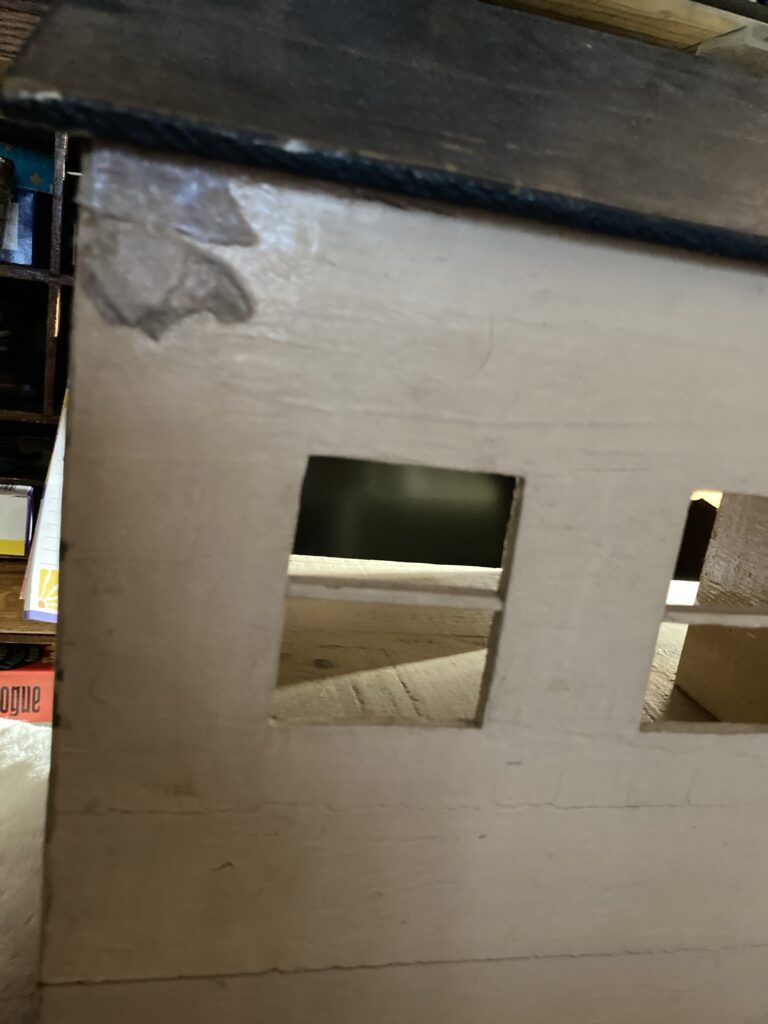
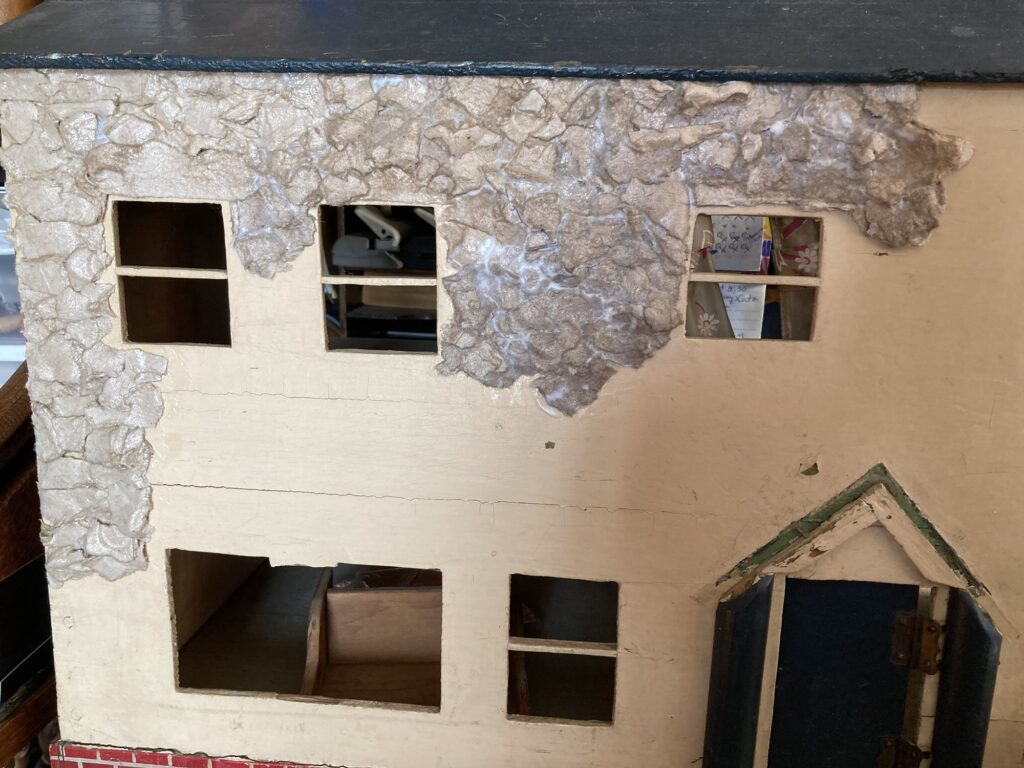
I rip off little pieces of egg carton and, makingsure any writing is on theback of the piece so it won’t be noticed, I glue it with the Mod Podge so it will eventually have a brick texture. I build the pieces up so they are thicker in areas. I cover the front and back with the glue.
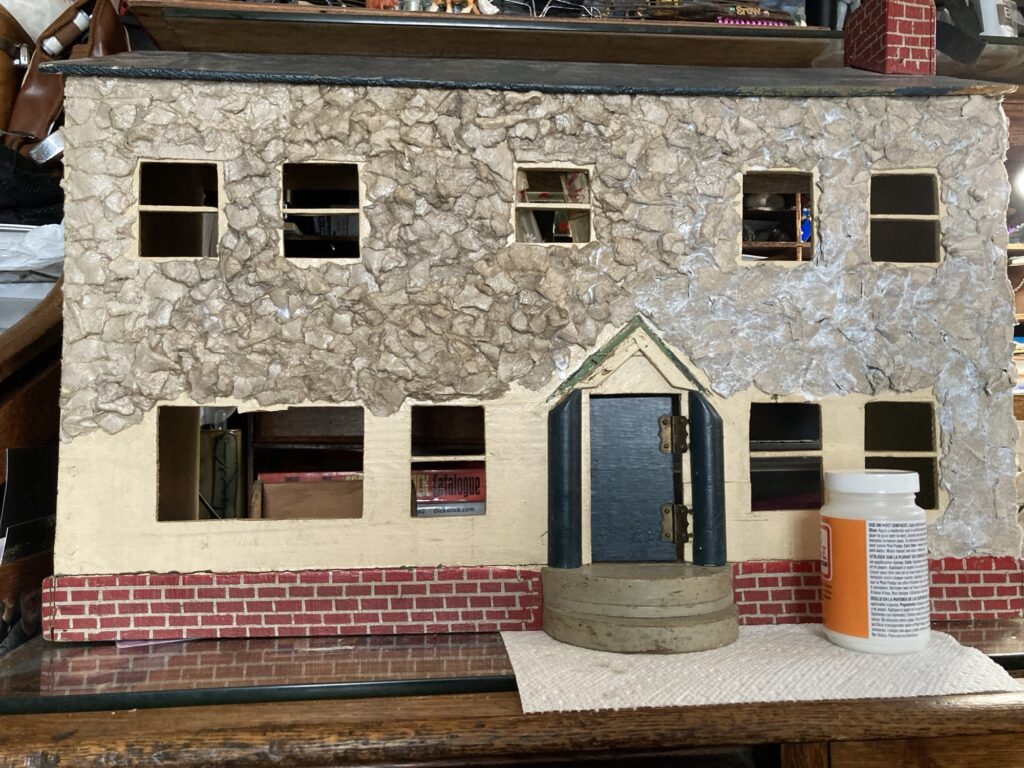
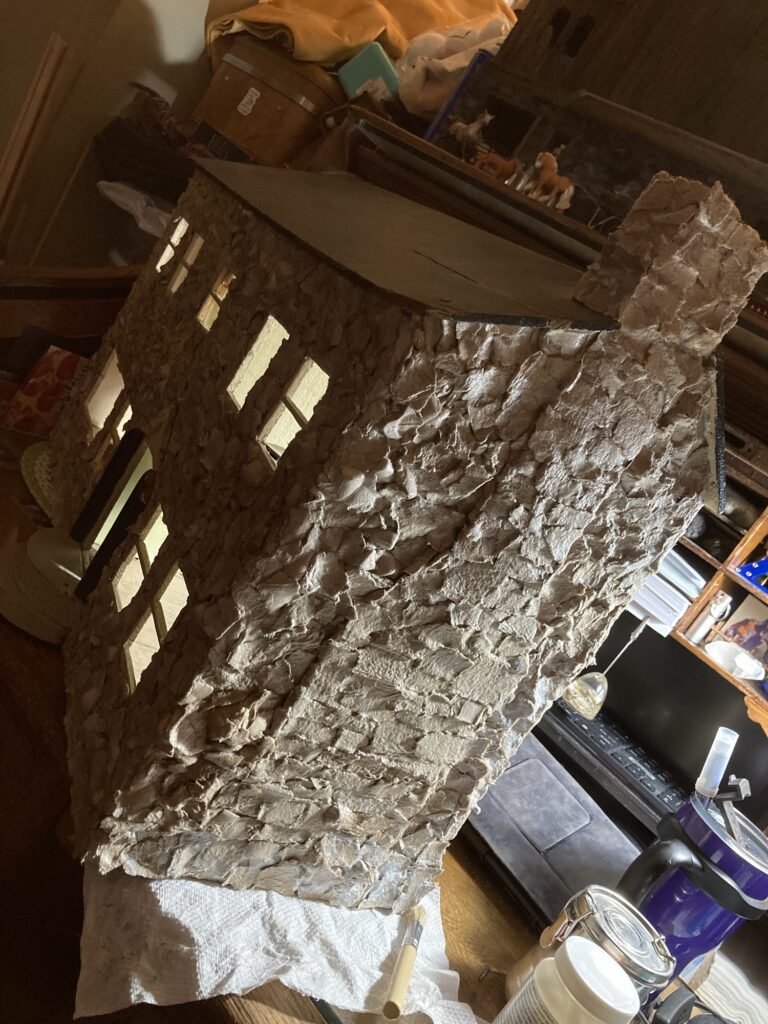
I rip the cardboard egg containers into pieces and then use the Mod Podge to cover both sides of it with glue. I am placing them to cover the whole surface of the house siding to get a stone-like texture. I am layering the pieces to get the best texture I can.
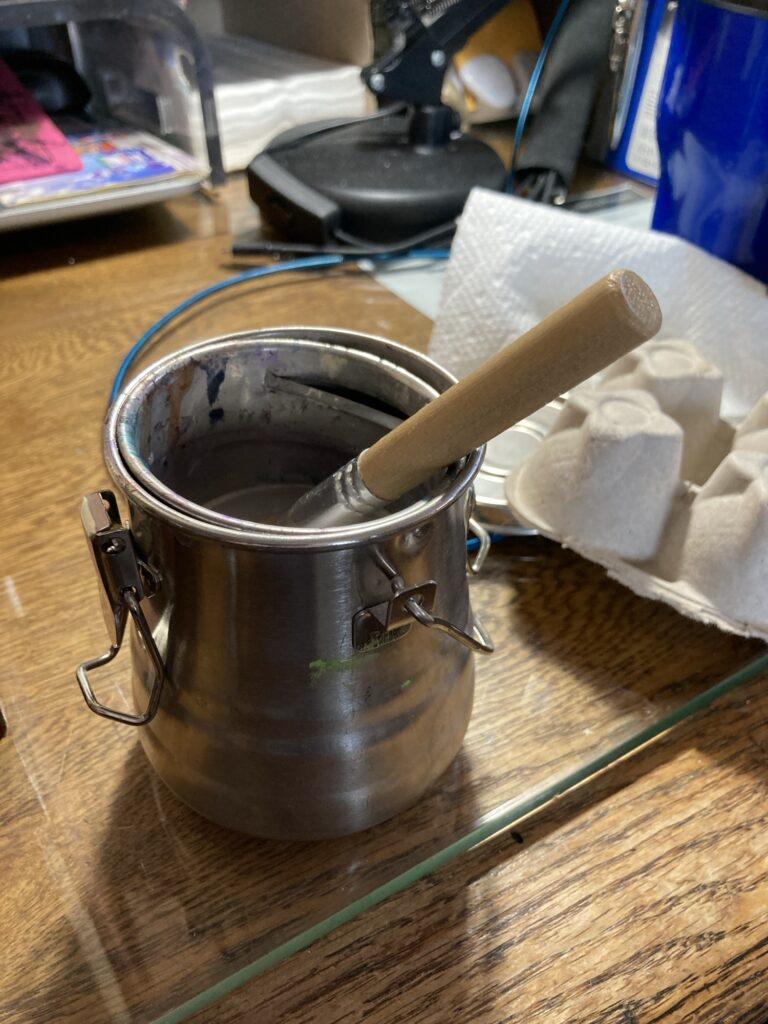
I am also keeping a paint brush can of water nearby to clean the bristles of my brush occasionally so the glue doesn’t dry to it. I wipe off excess water from the bristles on a paper towel so i don’t thin out my glue.
Keep the glue from drying on your brush by cleaning it in water occasionally, and then wiping off excess water to keep the glue from being thinned.
My plan is to possibly paint them to resemble individual stones when it is all dry, depending on how it looks.
I am keeping a little space to the window’s edge for trim to be added later. It shouldn’t be difficult to carefully trim away excess cardboard if I need to in order to make room for the window trim.
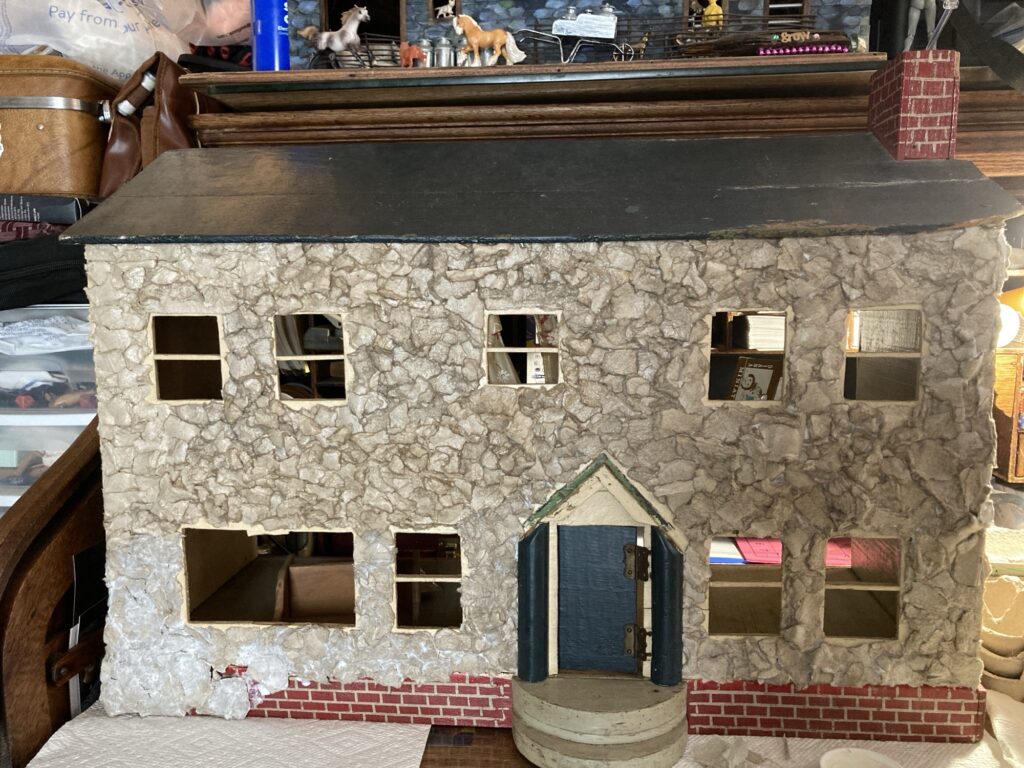
One side pretty much done for now. Still have to do around the doorway better. Another side done. I chose to make the chimney ‘blocks’ more uniform to have a distinction between siding and chimney.
I have been wanting a donkey for my dollhouse livery stable, and decided to try updating another flocked horse toy.
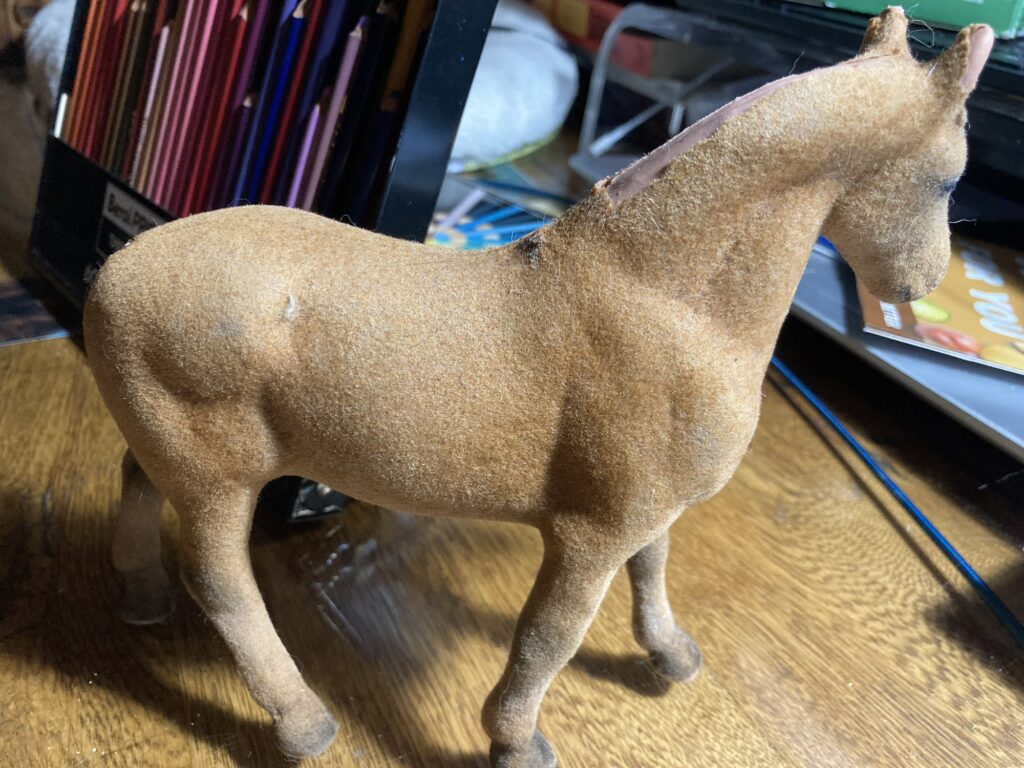
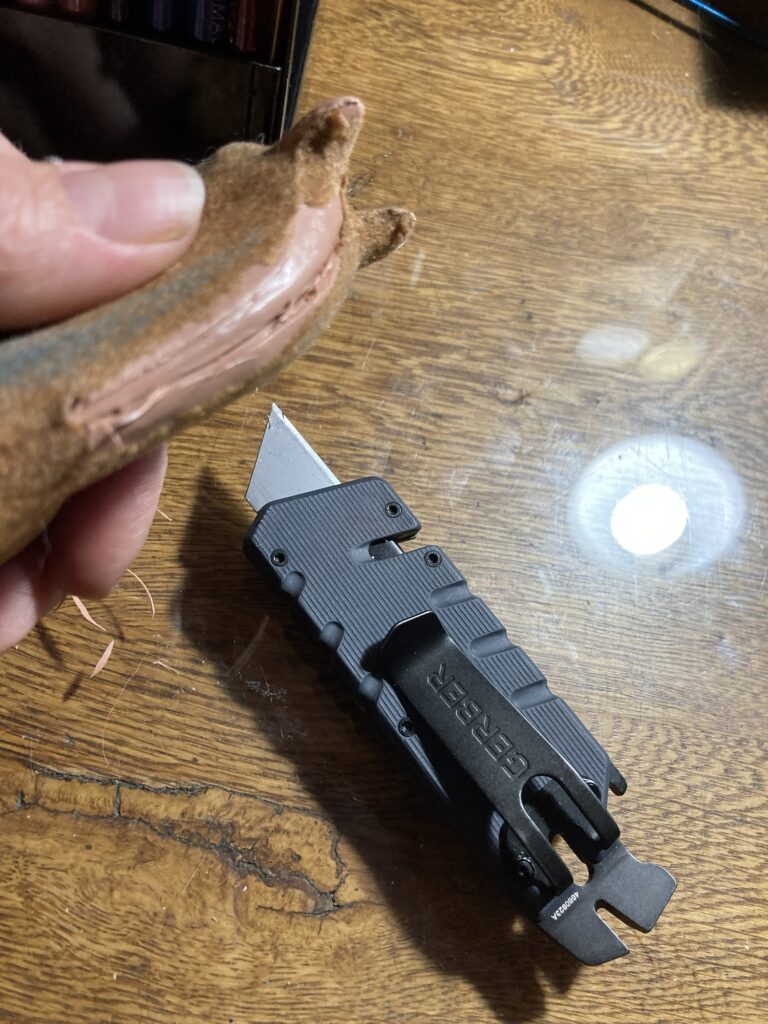
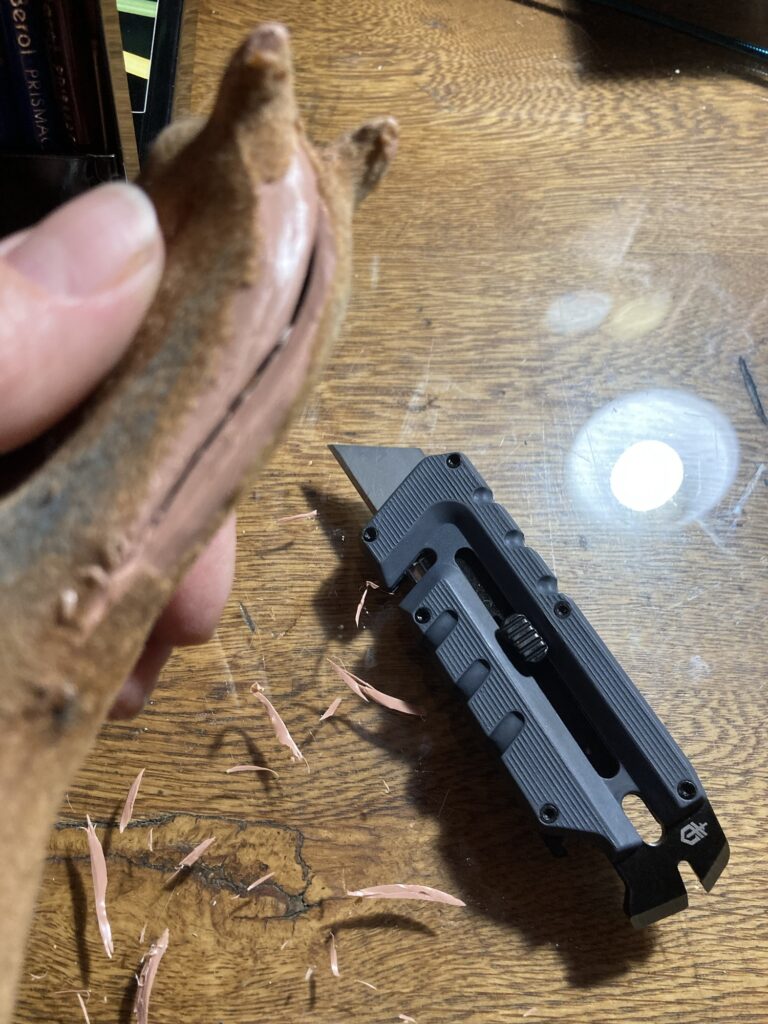
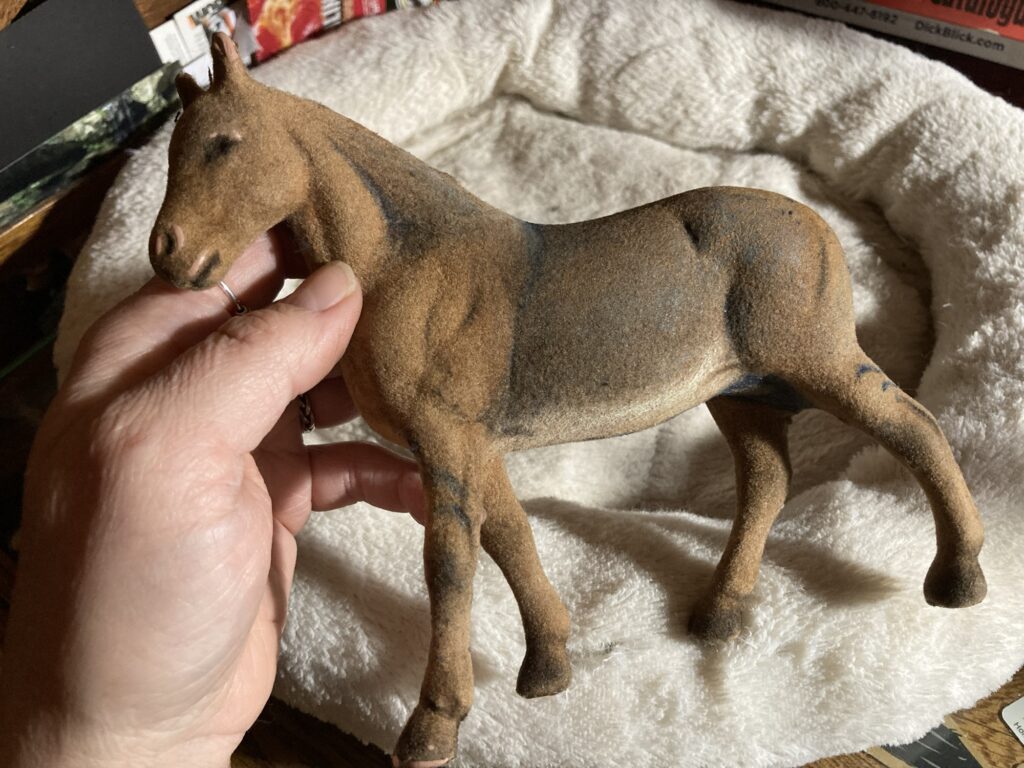
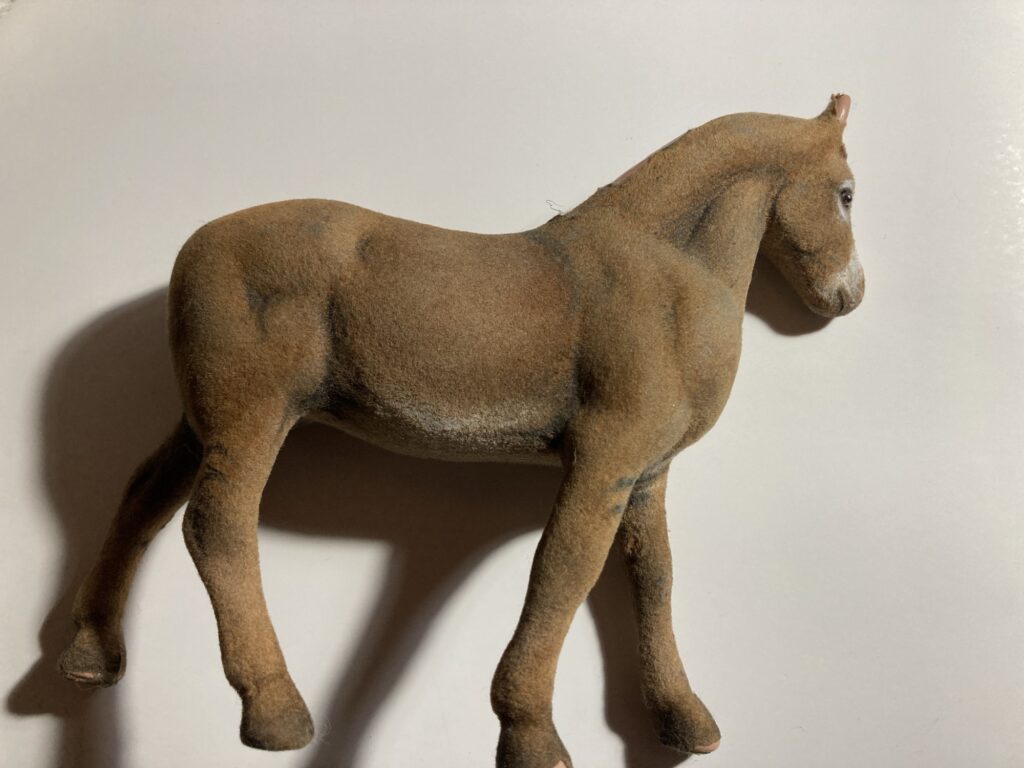
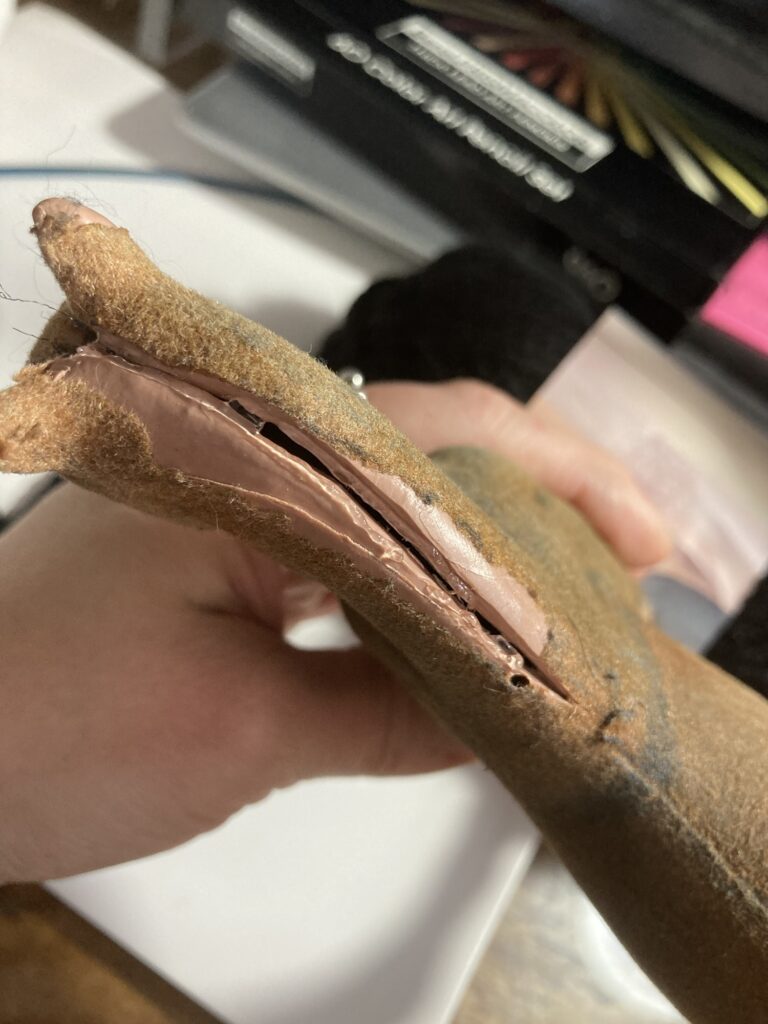
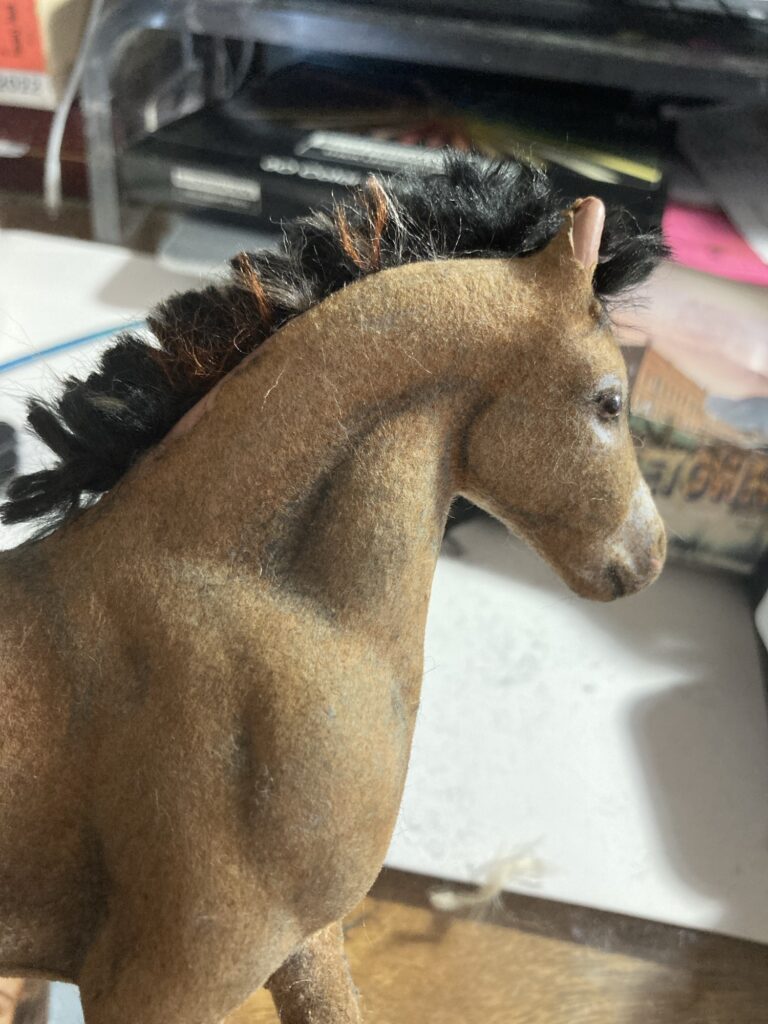
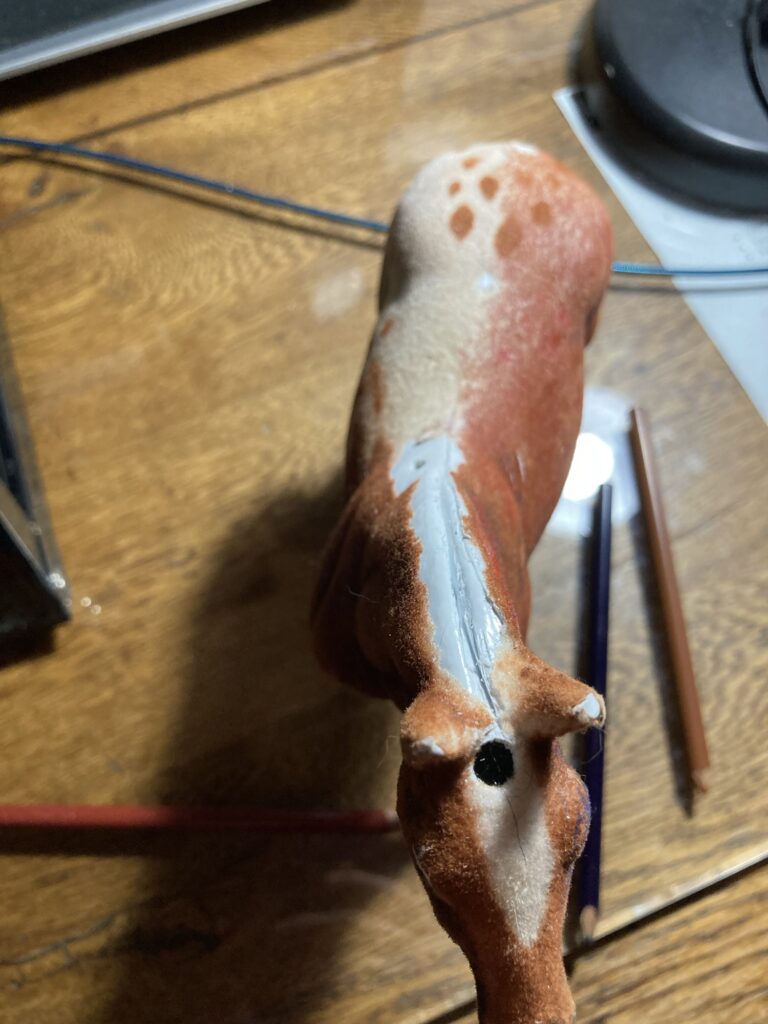
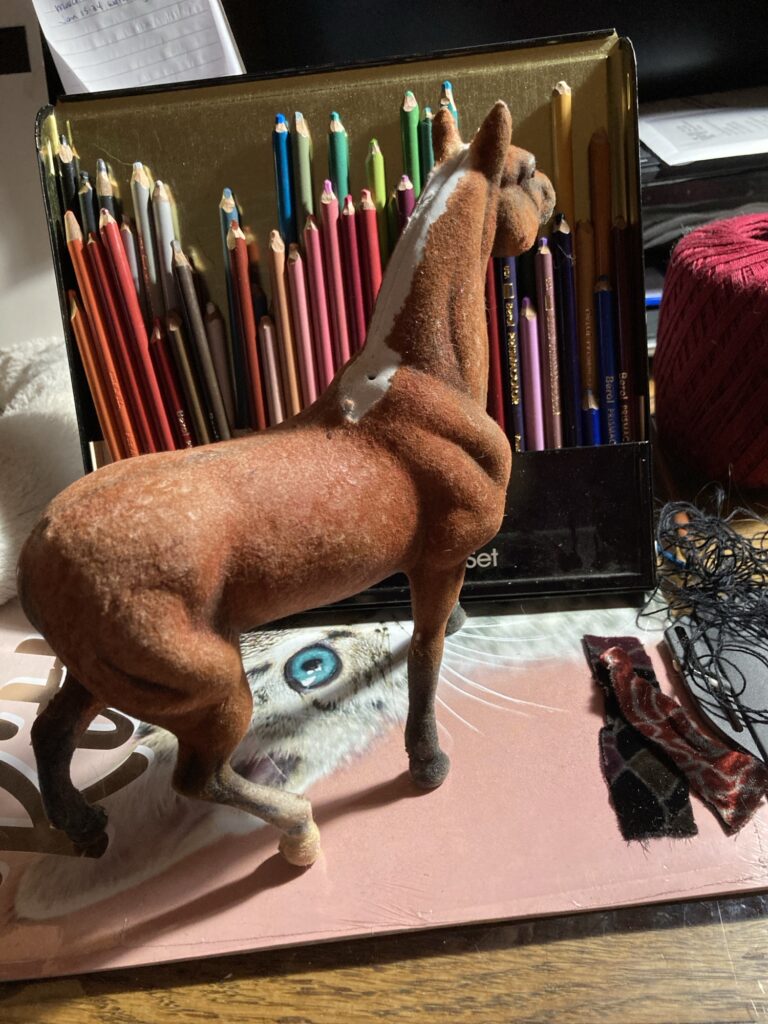
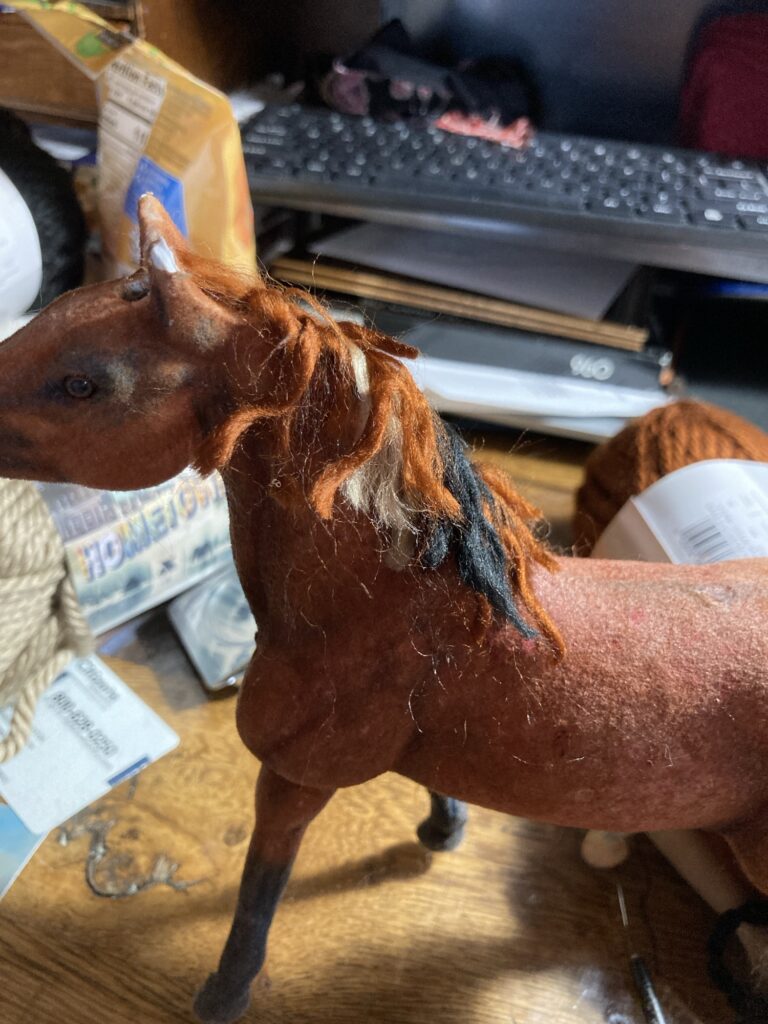
Here is the horse I started out with. I had already removed his mane and tail as they were in pretty bad shape.I used a box cutter (or you could use a craft knife or something similar) to hollow a groove down the back of his neck where the mane will be.Deepened the groove so it goes down into the hollow area of his body.Working on colors.
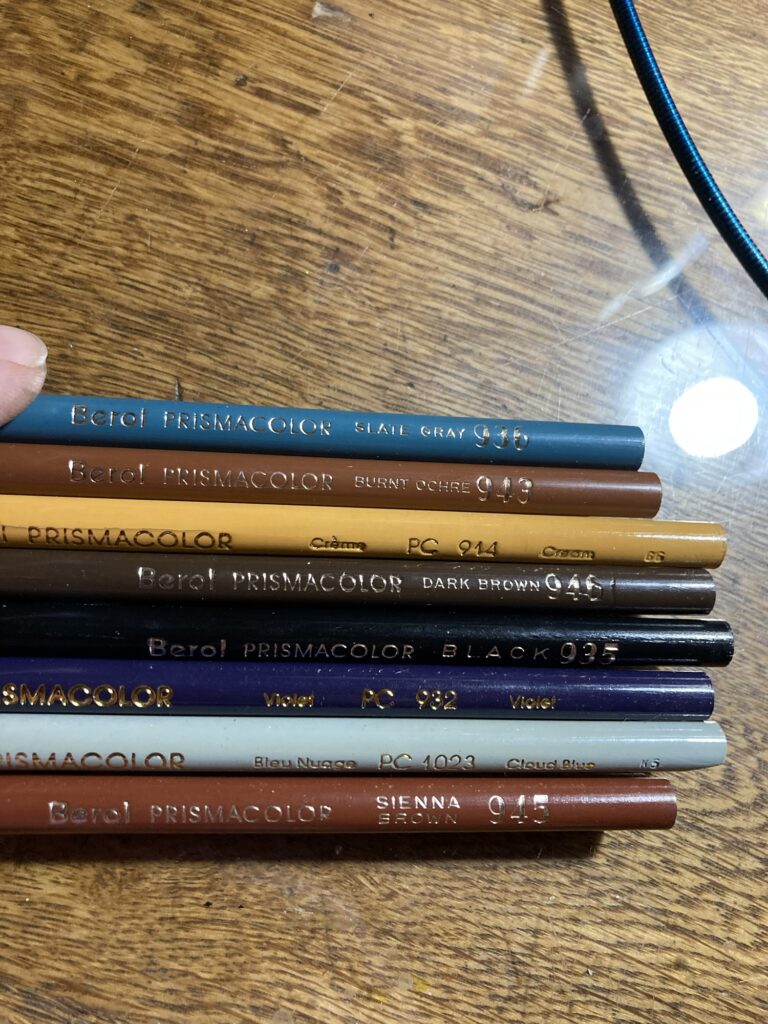
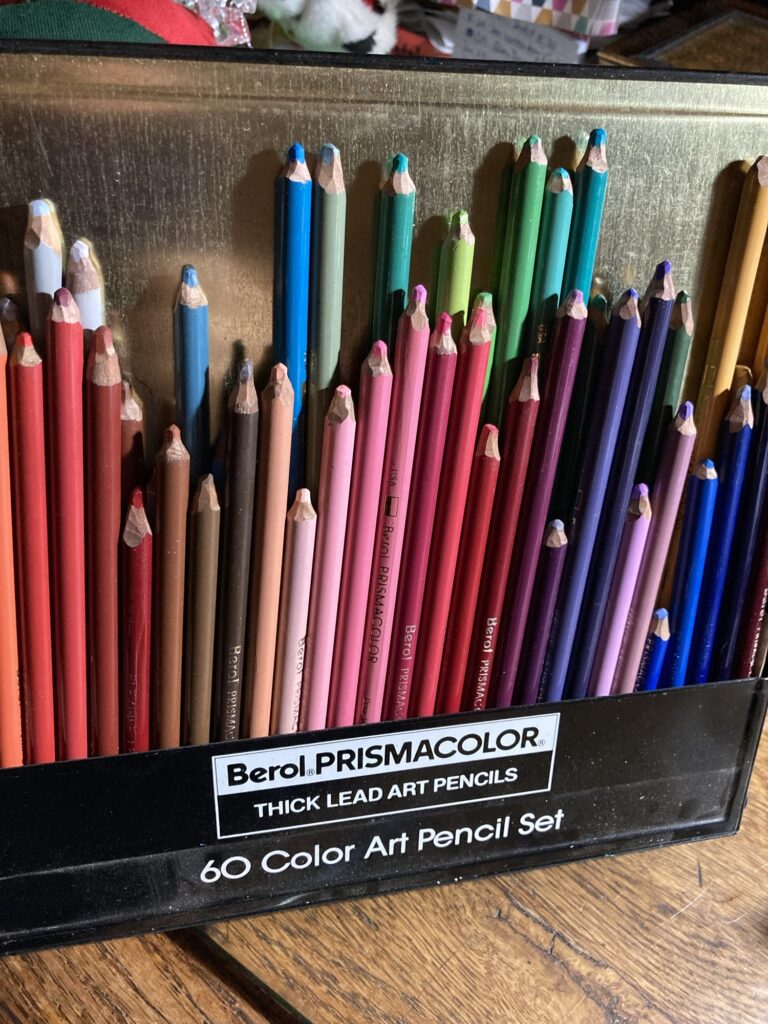
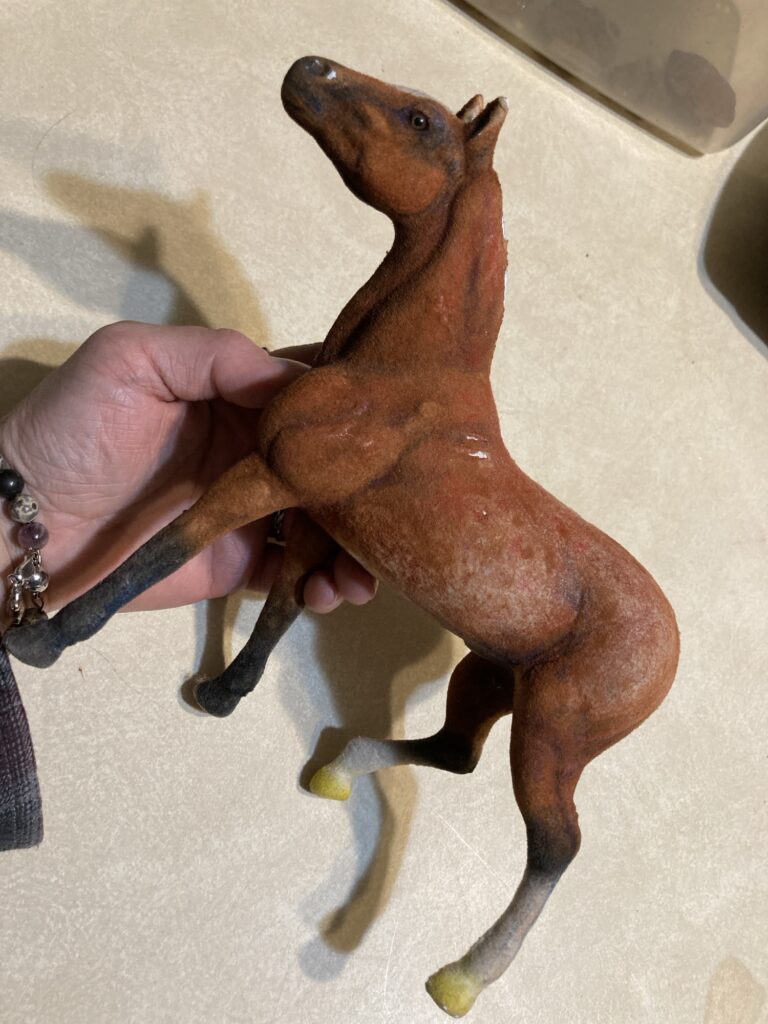
I used different colors of Prismacolor art pencils to highlight areas and darken lines so he has a more contoured feel even though his body isn’t very anatomically correct. I even added some lines and shading in flat areas that I know would have certain wrinkles or grooves.
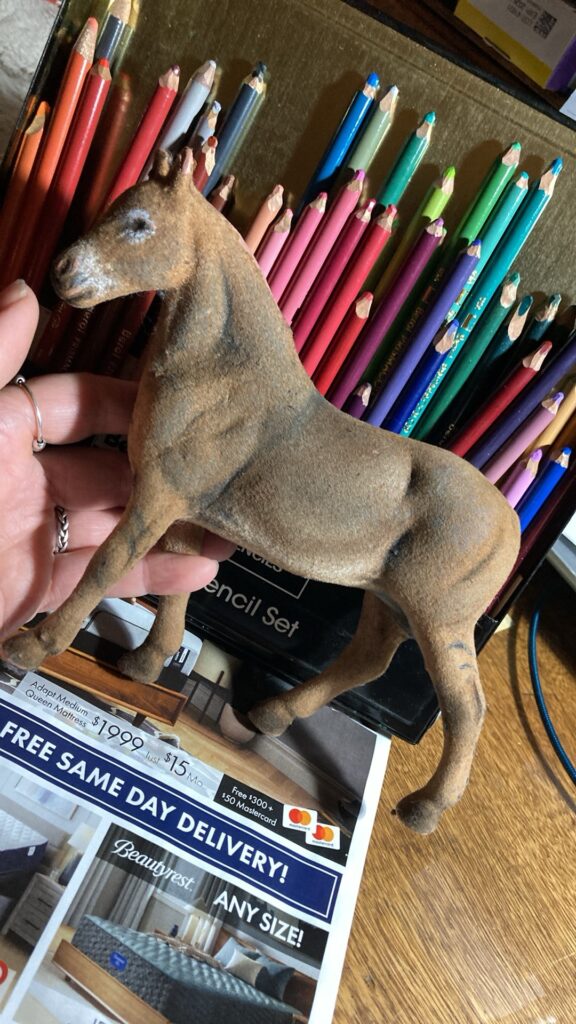
Different colors of pencils that I used on his body.Looking better! I will eventually have to find a replacement eye, or just have him be disabled.His other side
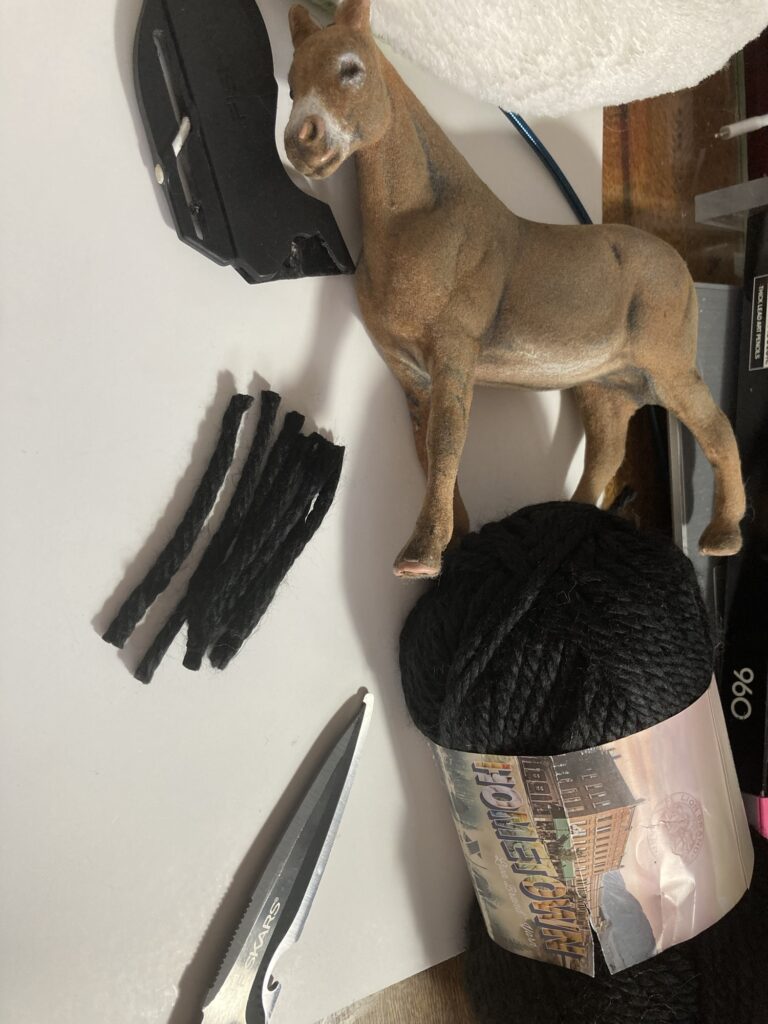
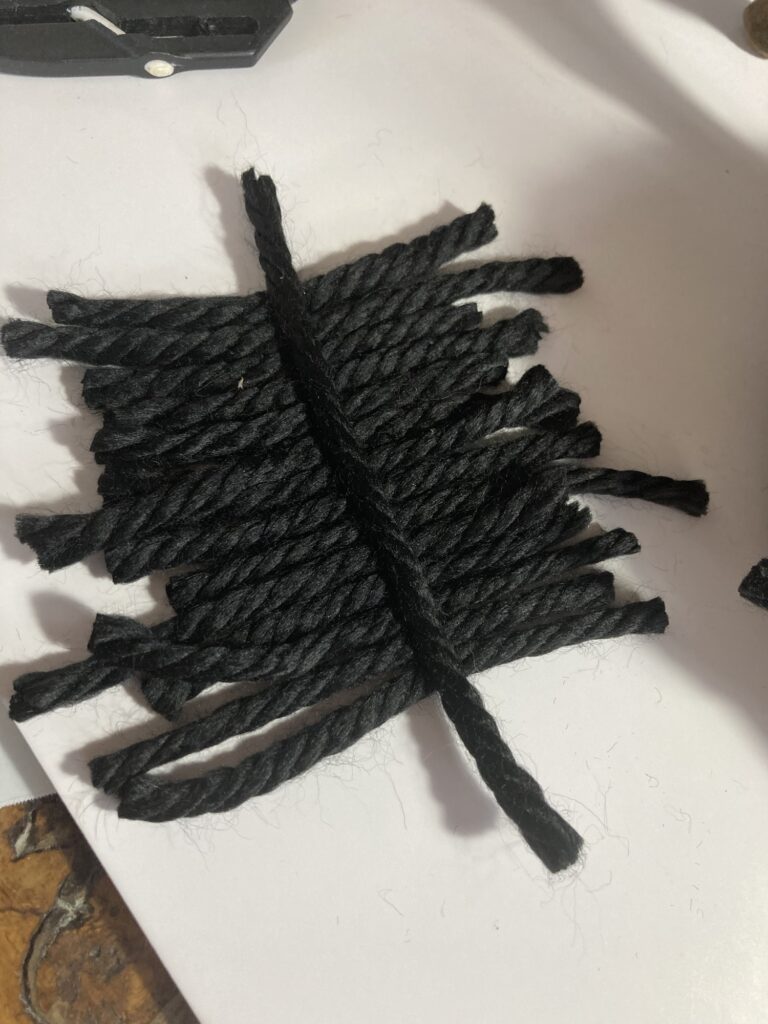
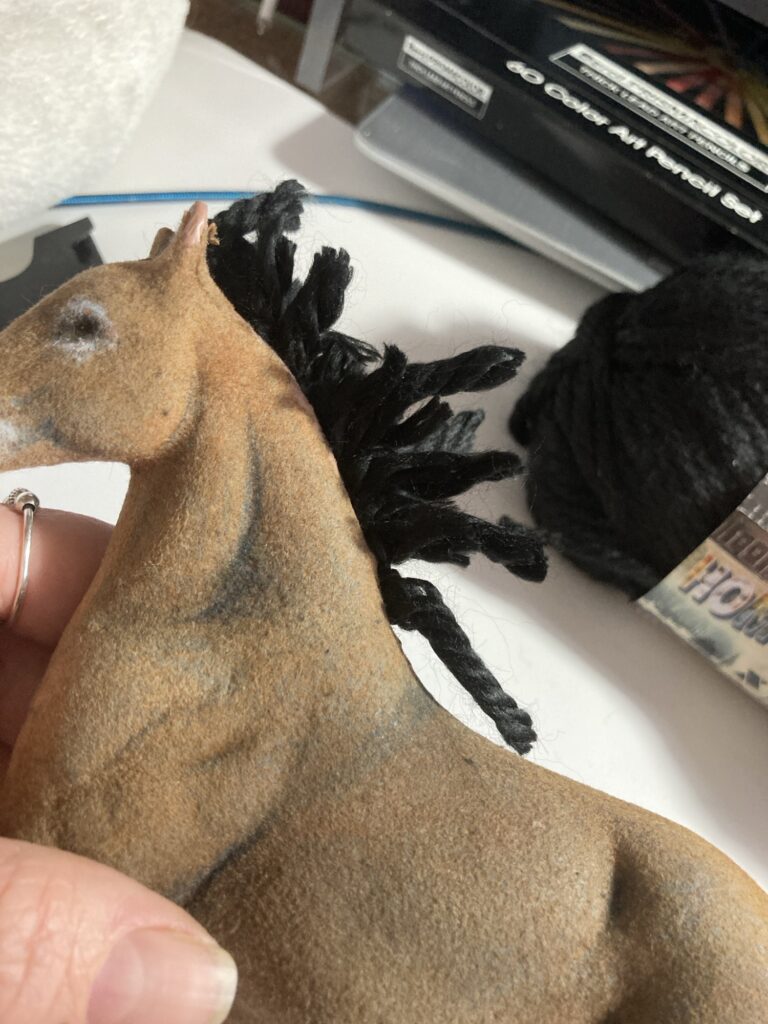
I decided to work on the mane, next. I cut small sections of soft, black, acrylic yarn.
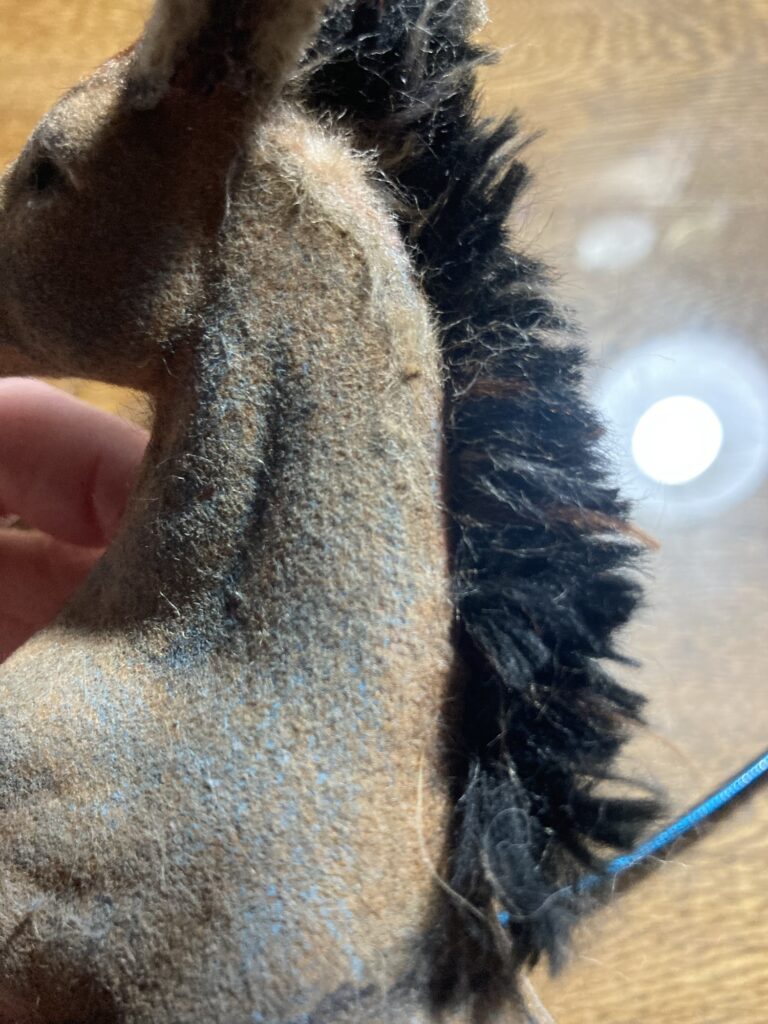
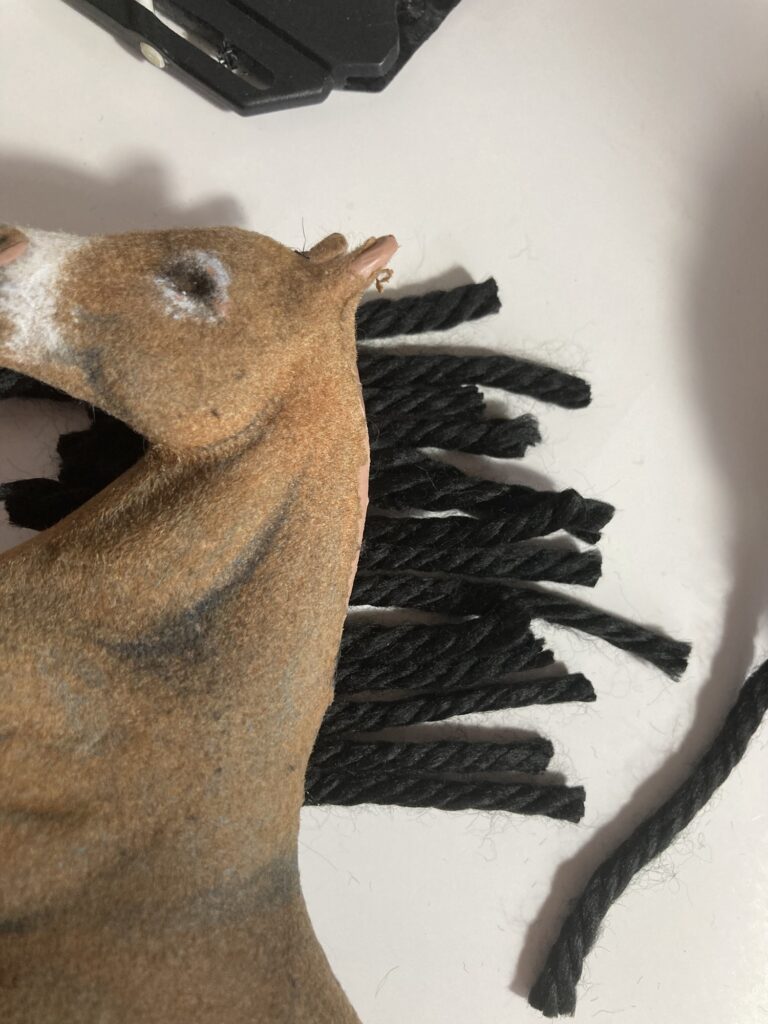
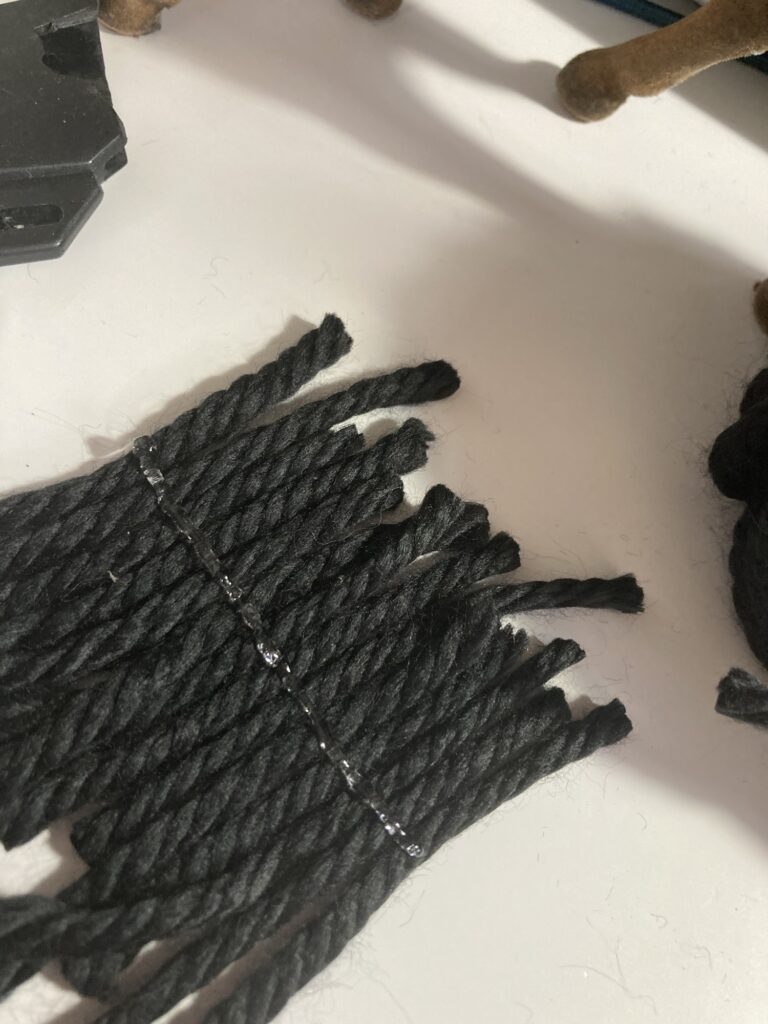
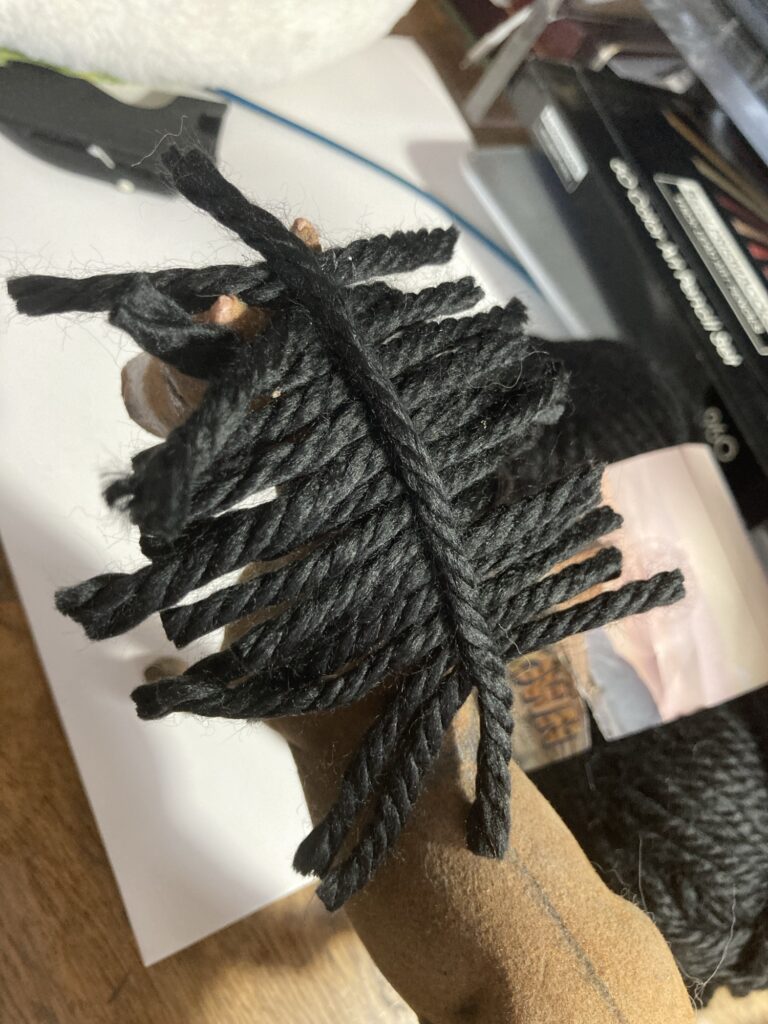
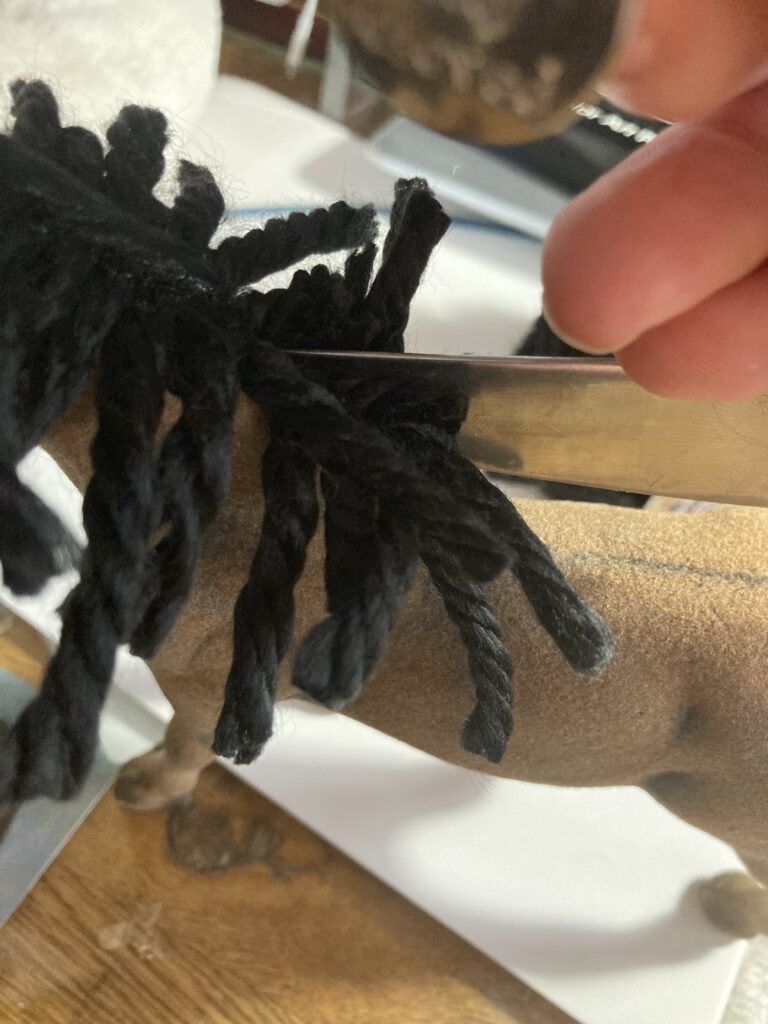
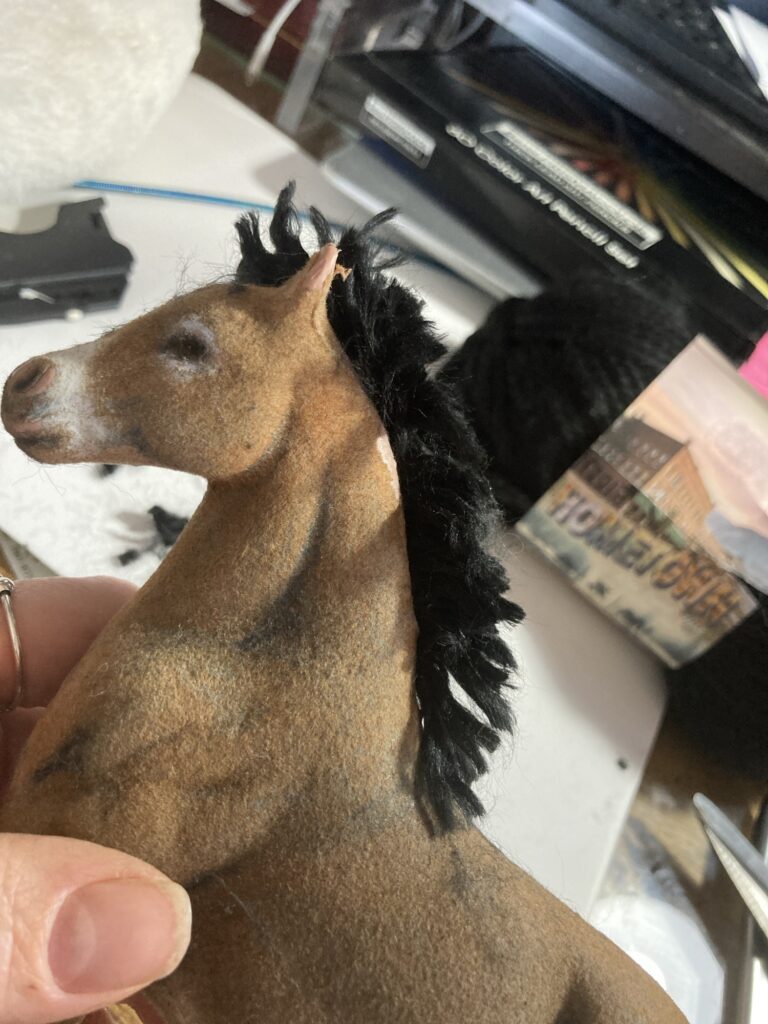
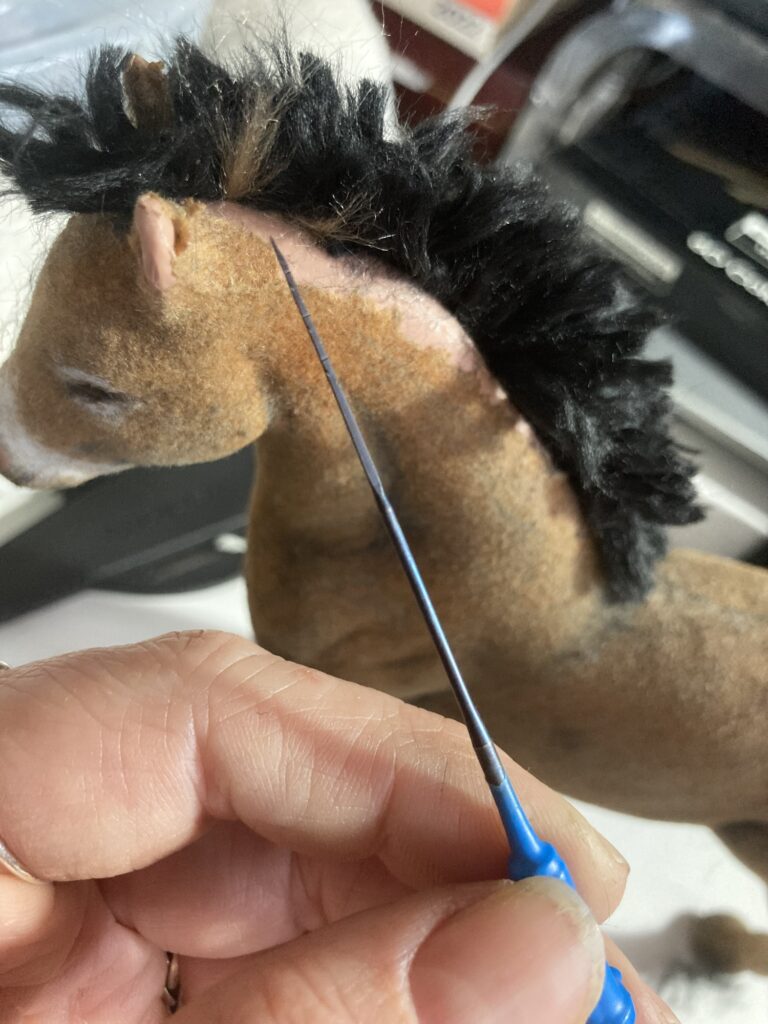
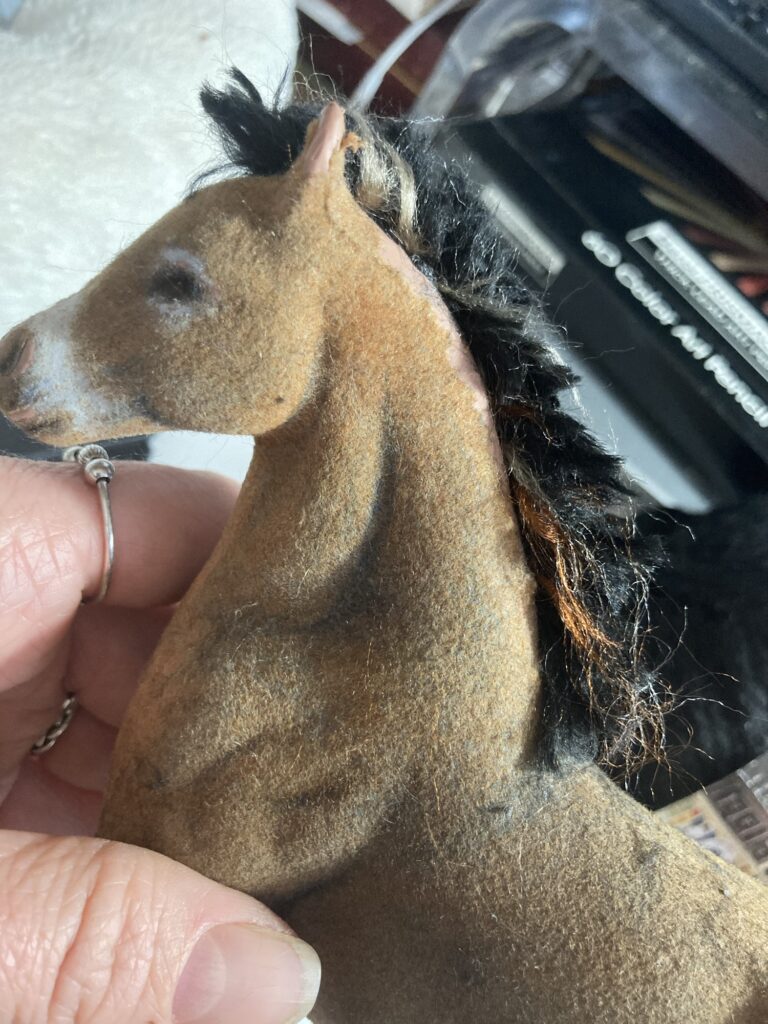
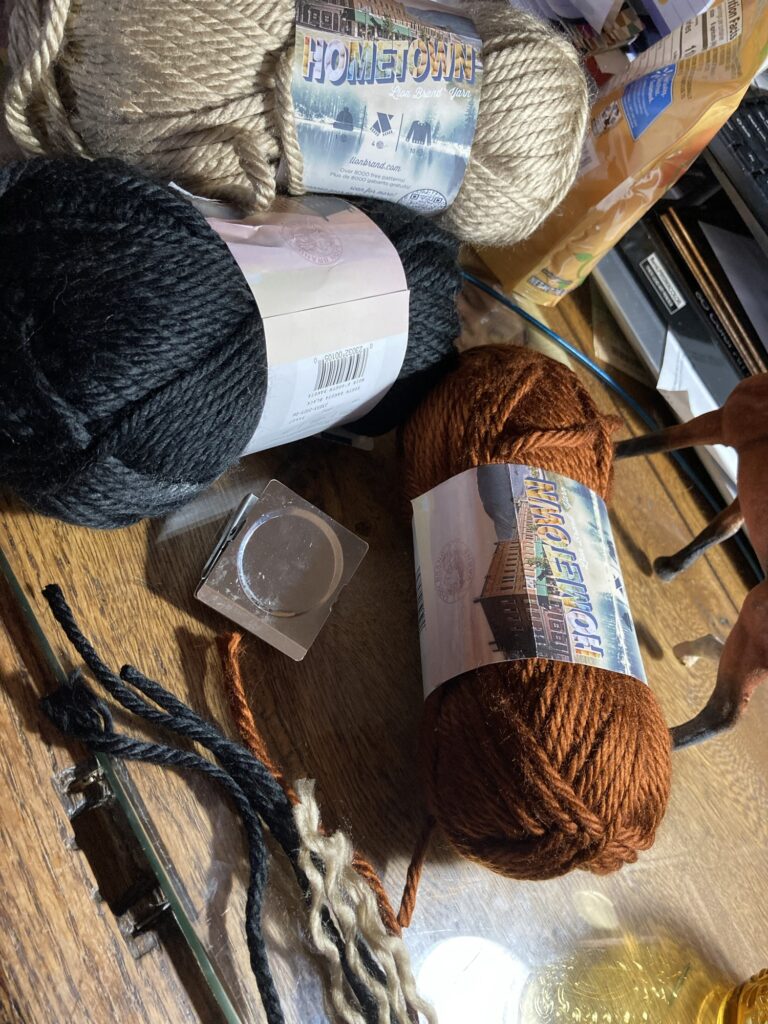
I used Hometown brand acrylic yarn. It is soft, thick, and unravels well.I cut enough pieces so that, when laid out alongside each other, they should be enough to cover his whole neckline.I Lined up the yarns so they were close together, and then made a line of superglue going down the middle.Next I added a longer string over the line to hopefully glue all of the yarns together in a more easily managed section.After the glue on my mane has dried for a while, i put a little glue around the trench on his neck where the mane will be added. It should help keep the mane in place once i push it in.I carefully place the hair on his neck so that the middle strip is centered over the trench.Using an old butter knife, i gently push the ‘hair’ into the trench.Now I gently arrange and trim his hair to be more ‘donkey like.’I decided to add a little more color to his hair, so I took a very few fibers of tan and brown and placed them over the mane where i wanted them to be, and used a felting needle to gently tuck them into the trench with the rest of the hair.After some more colors have been added. I can trim these to match the rest of the hair. I eventually used a little black marker to shade the colored areas to darken them and make them more subtle.Feeling good about how it is turning out for now. I can always come back and alter it later.
In this post, I experimented with an old flocked or velveted horse toy and altered it to be more realistic by adding new mane and tail, changing the colors to be more realistic, and fixing minor blemishes in the flocking. My plan is to use him in a dollhouse setting.
I recently acquired some inexpensive toy flocked horses, and decided to upgrade them for my dollhouse projects.
Flocked horses (or any other toy animal) are ones that have had a fuzzy velvet-like coating applied, so they look like they have real fur. I remember having some as a kid, and I also remember that the flocking can be easily damaged, so they need to be handled carefully. The ones I acquired are not in the best of shape, which is fine for me since I am doing this as an experiment, anyway.
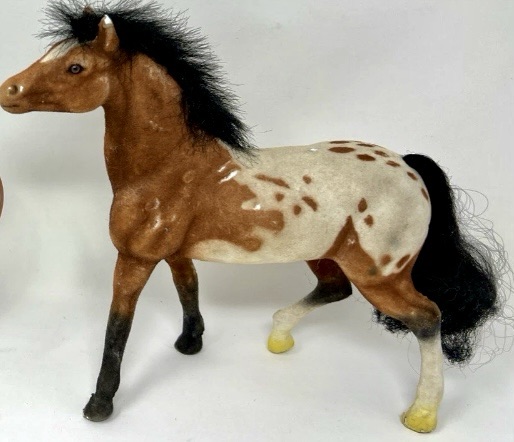
This is a photo from the listing of one of the horses i bought
The first thing I did was remove the mane and tail (i just carefully pulled it off, but discovered that, especially with the mane, you should be more careful as it is glued on and can pull off some flocking skin if you are not careful). I didn’t like the old hair and plan to replace it with something different, so decided that removing it would get it out of the way so I can work more easily.
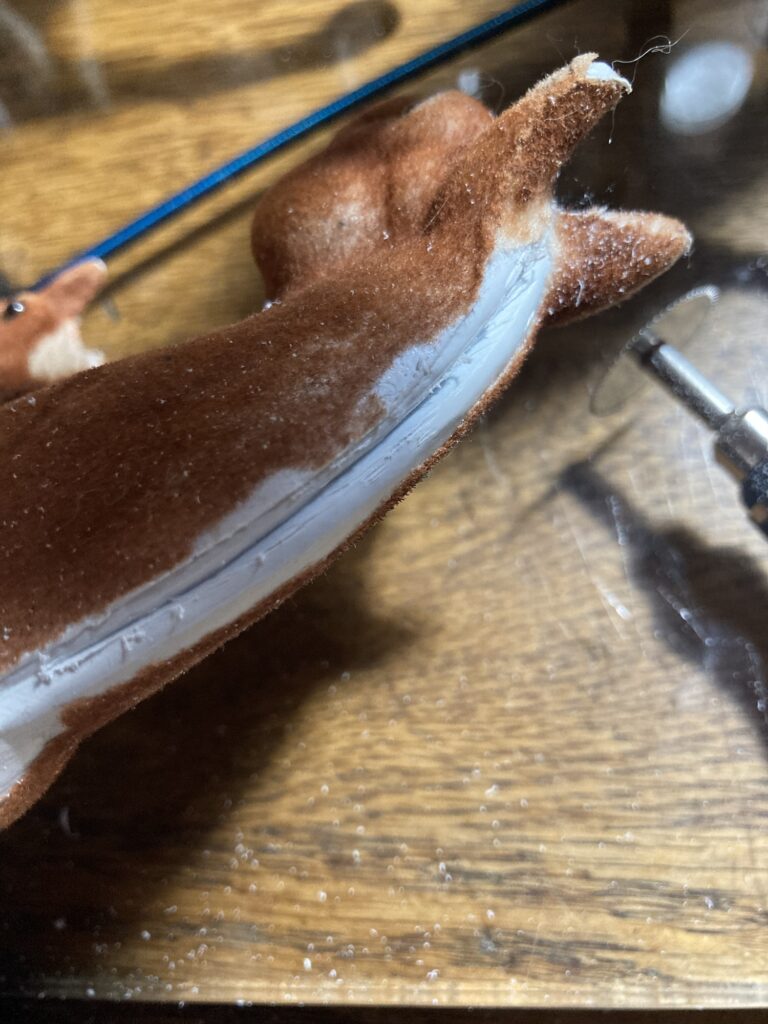
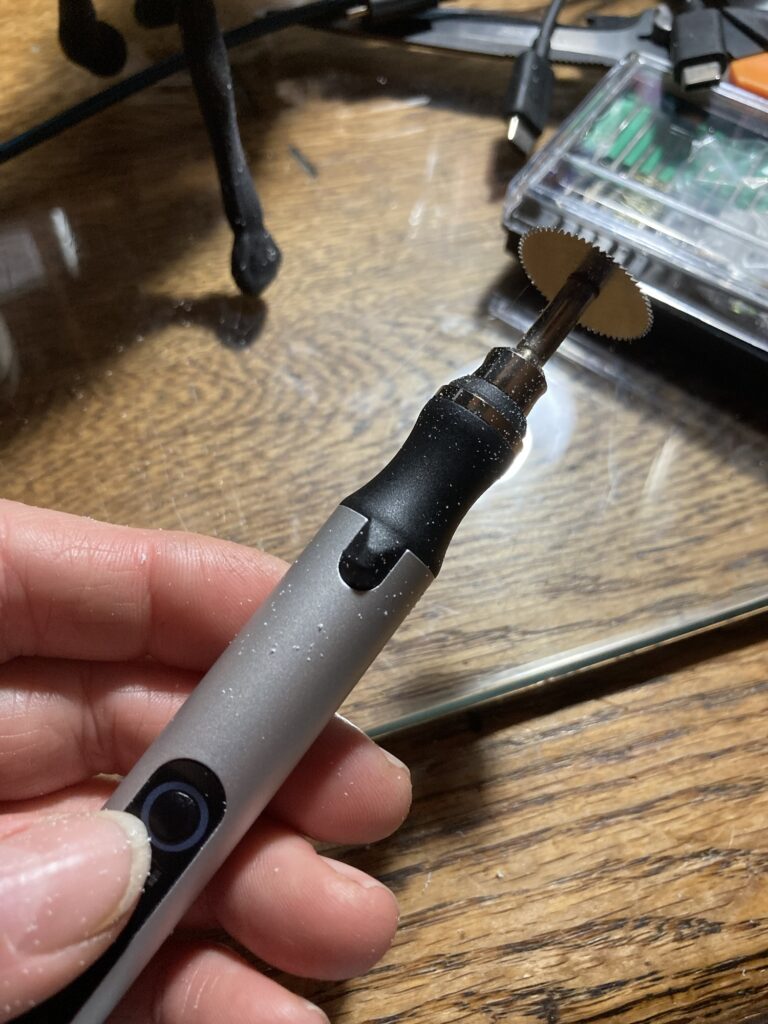
Next I took a small engraving tool with a saw attachment (a dremel type tool would work better, I am sure) and I sawed a small groove along the top of the horse’s neck where the mane will be.
The groove I made. I discovered as I went that it works best to cut right through the plastic into the hollowness beneath, which will help hold the hair better.My little engraving tool with saw attachment. You could even carefully carve it out with an exacto knife.
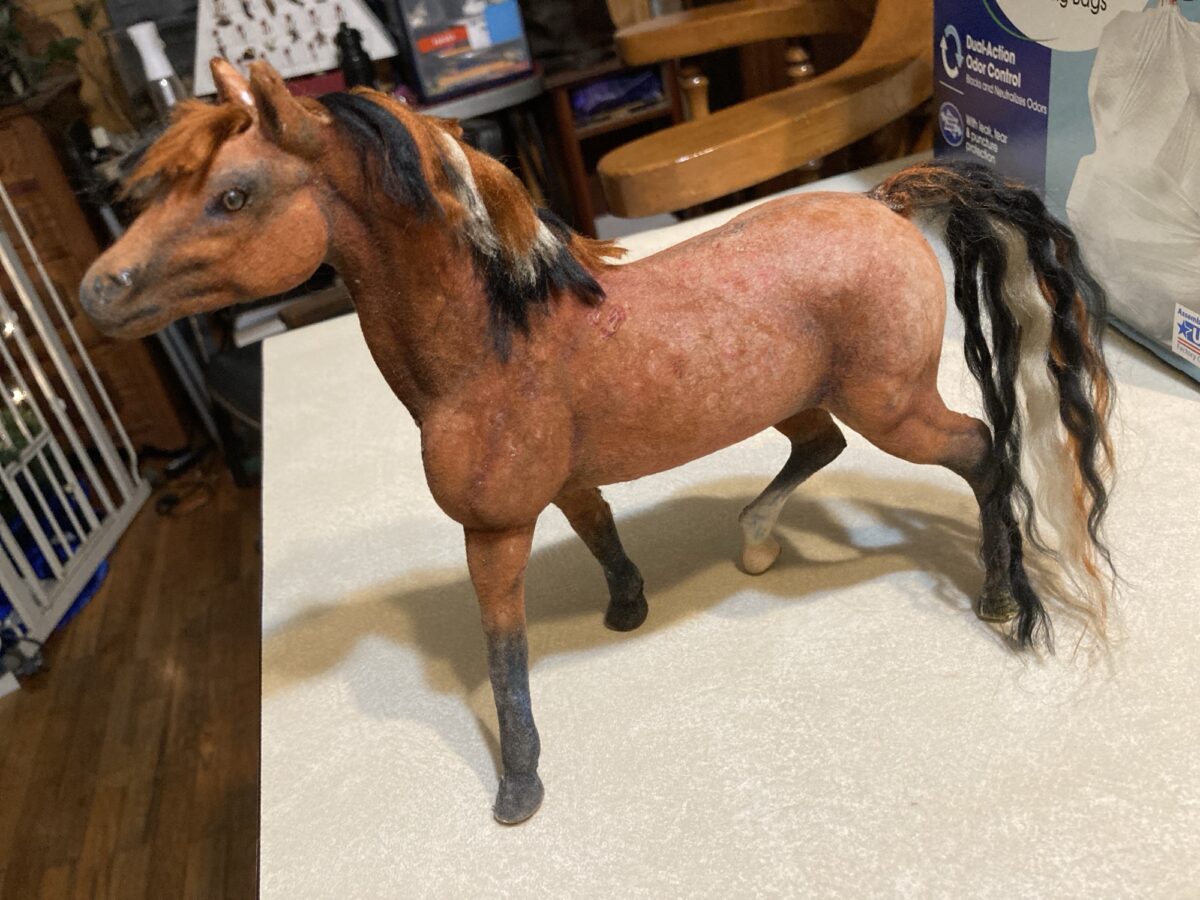
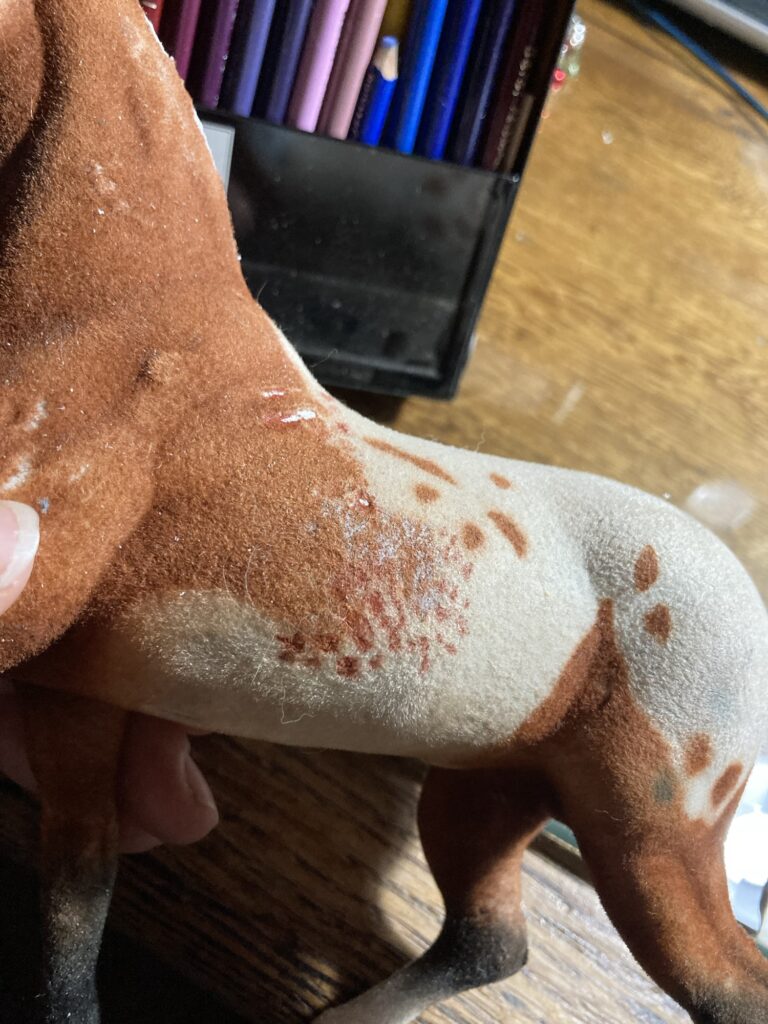
After making a groove, I moved on to experimenting with color. I decided to make this horse more of a roan color, and discovered that my colored pencils worked well. NOTE: I keep my colored pencils sharpened with a knife so that the tips are pretty blunt. I think that if a sharp pencil were used it might damage the fur on the horse. Also, don’t push too hard while coloring as it also may damage the finish. I am shading with light circular pencil strokes and it is working well for me.
These pencils are great! They are soft enough that they give off enough color without damaging the flocking.A few experimental marks turned out well
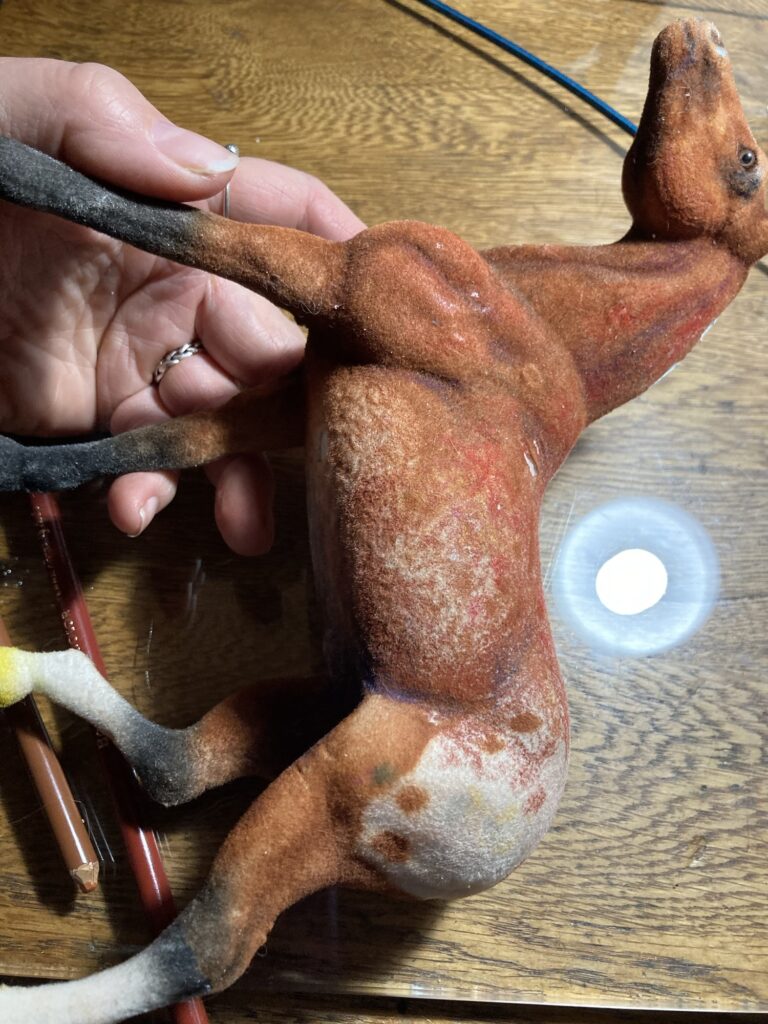
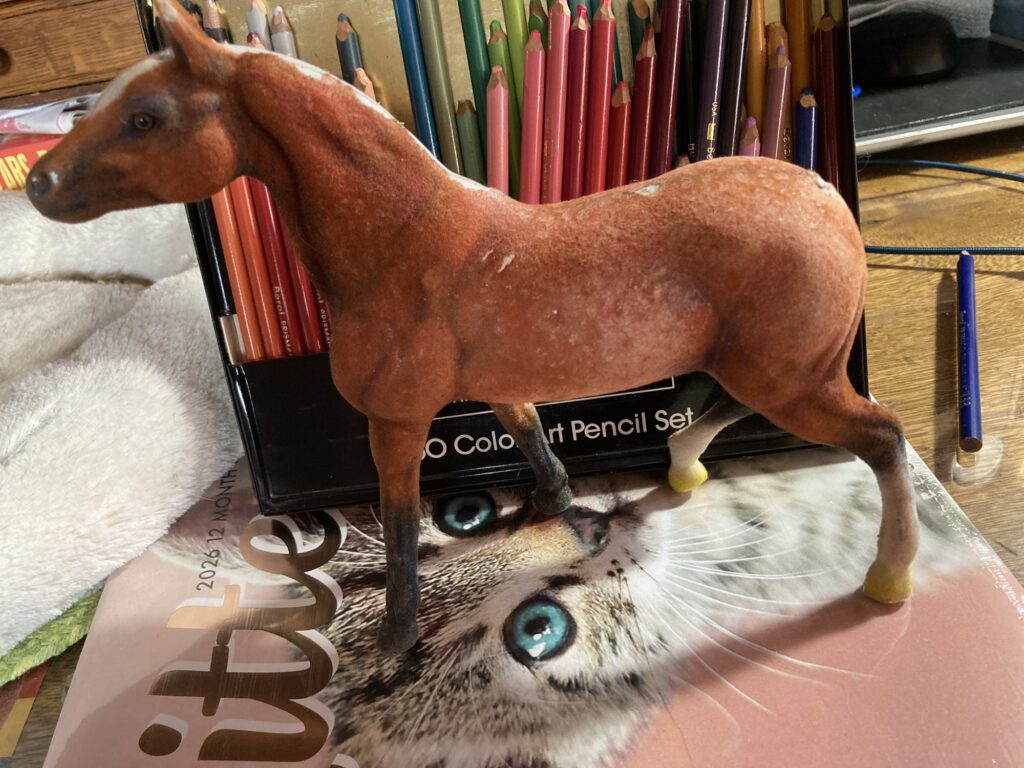
I quickly discovered a color that matched the brown of the main body pretty decently, and now can use that to blend the other colors in better. I found a dark grayish blue that works well for shading, to highlight the muscle tone, add dark patches around the mouth, eyes, undercarriage, ears, etc. There are still some areas that have scratches in the flocking. i have a few ideas in mind for simple repairs. I know that Amazon (and probably some hobby stores) sell flocking kits that could be used to repair my horses, but I think I can make do. We’ll see.
Here he is after a bit of work. I am using several shades of brown, a little blue, some red, and even bits of purple. A top view
I am trying to use shading to bring out or even draw in more of his better details, and also to hide some of the more terrible ones 😆. I tried to find some of the better looking flocked toys that were still inexpensive. Unfortunately they do have some wonky confirmation but it isn’t too bad. Ultimately it would be fun to get some Breyer horses and try flocking and coloring THEM, but it is safer right now to start on the cheap stuff. Also kind of fun!
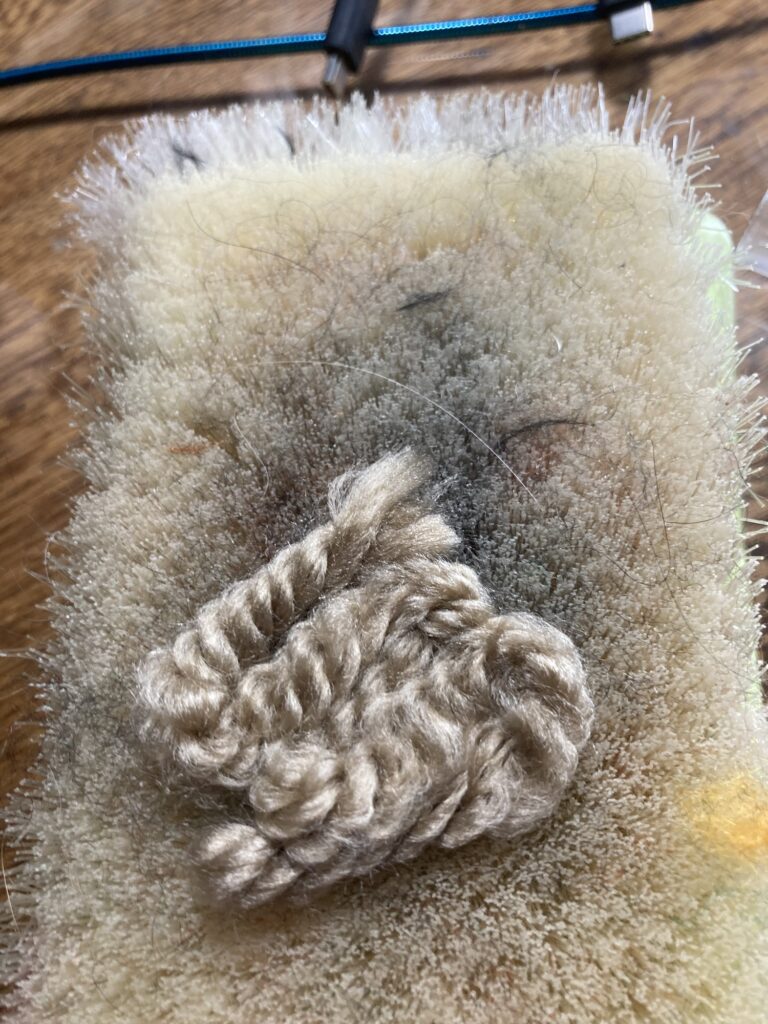
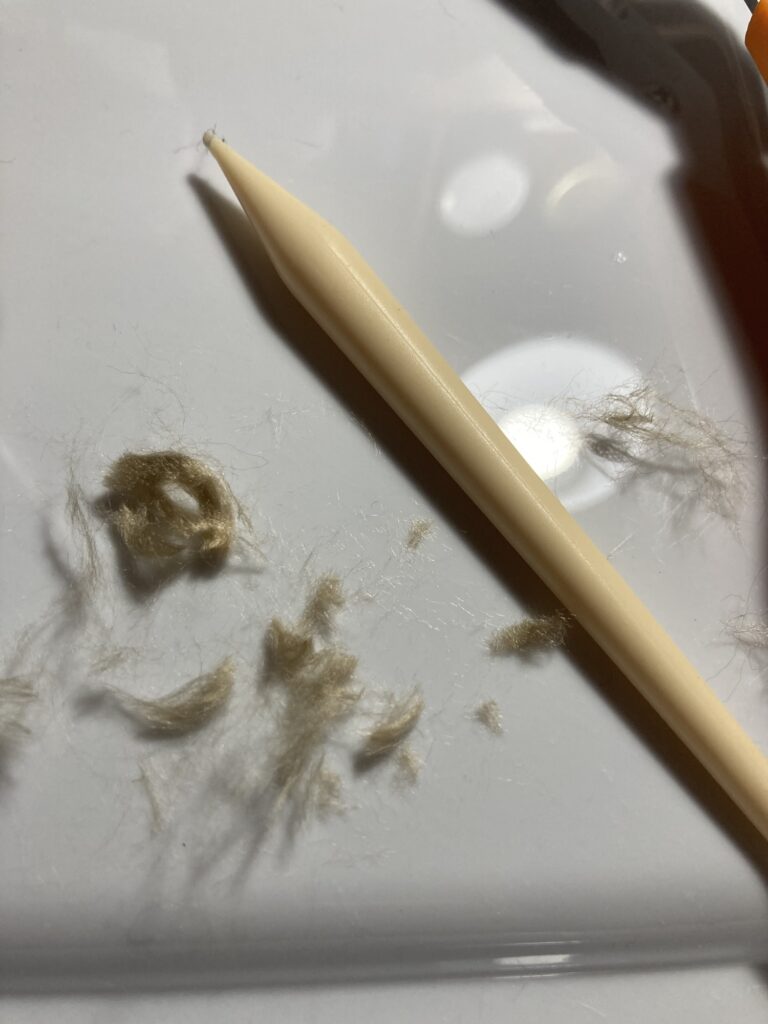
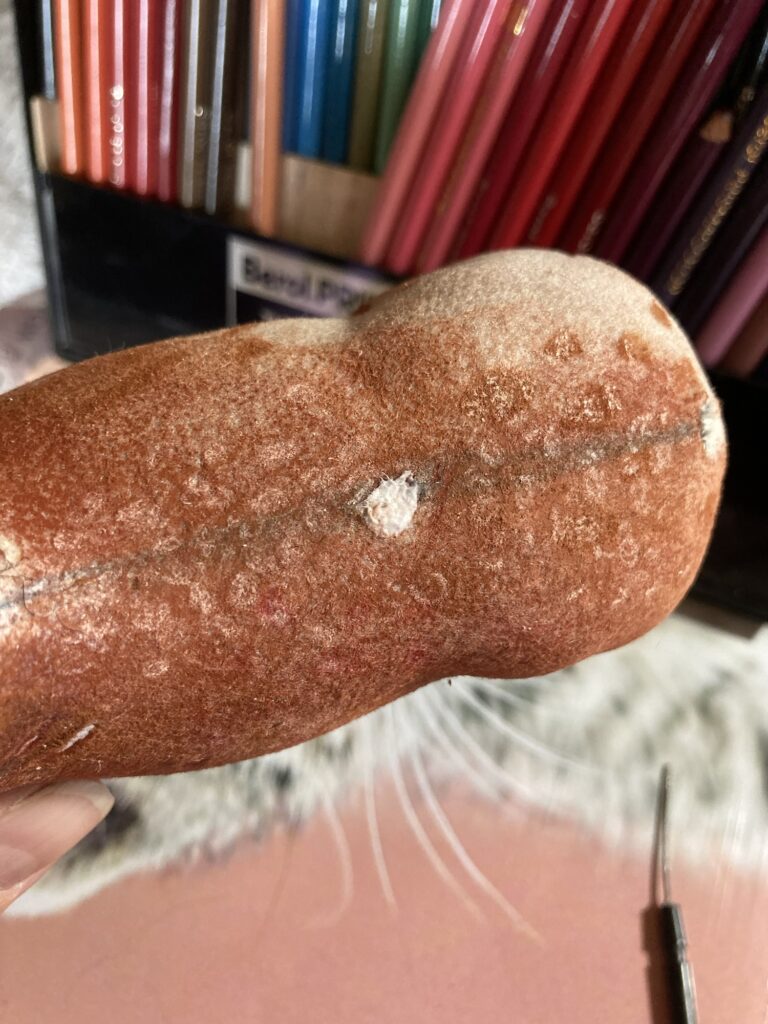
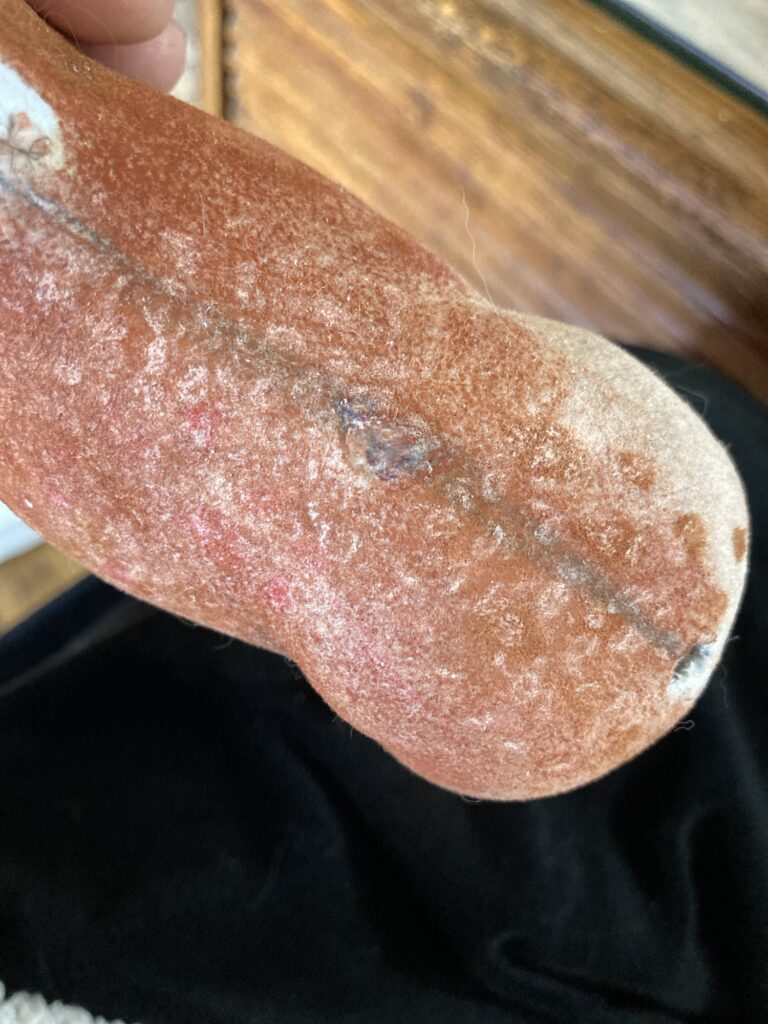
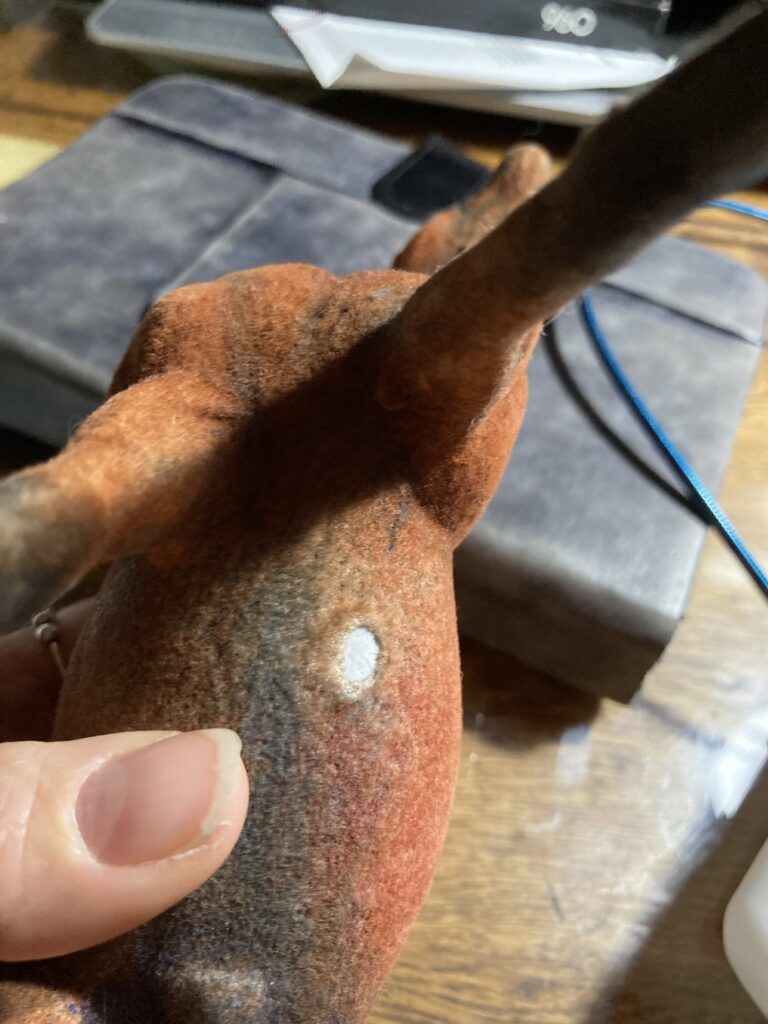
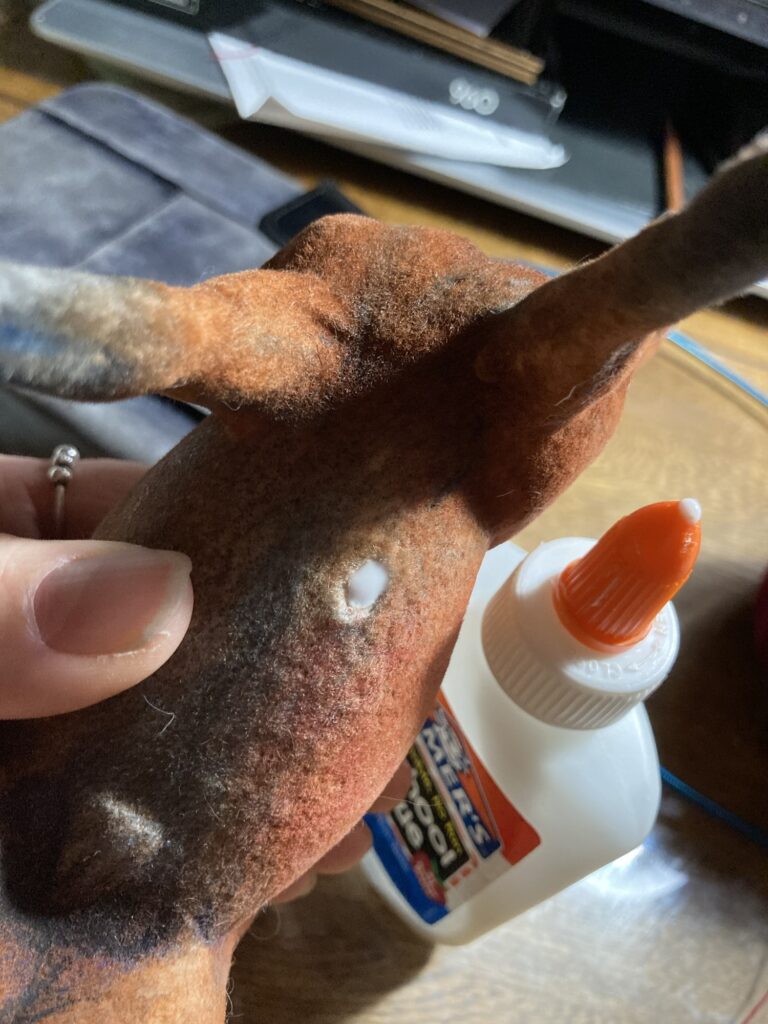
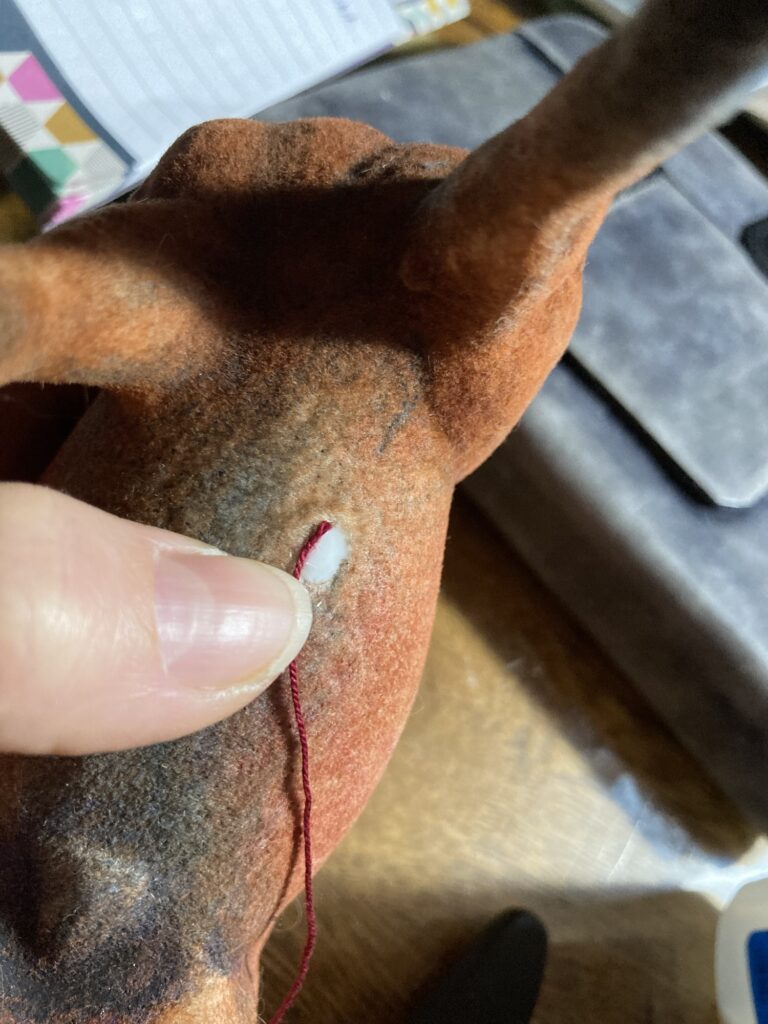
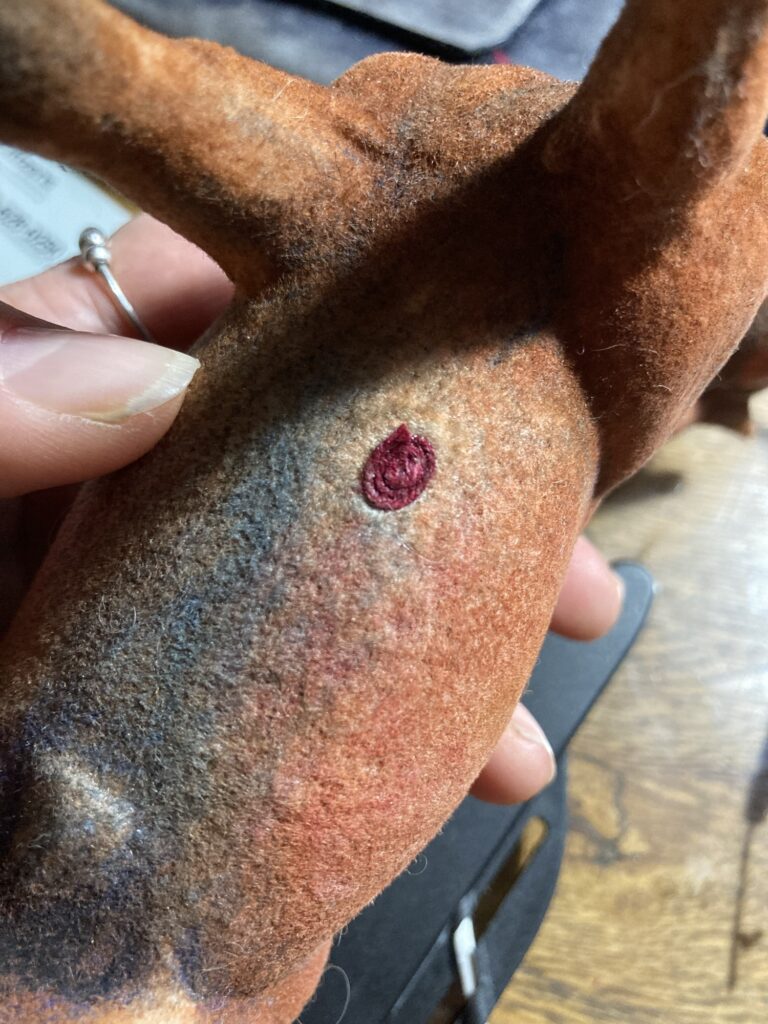
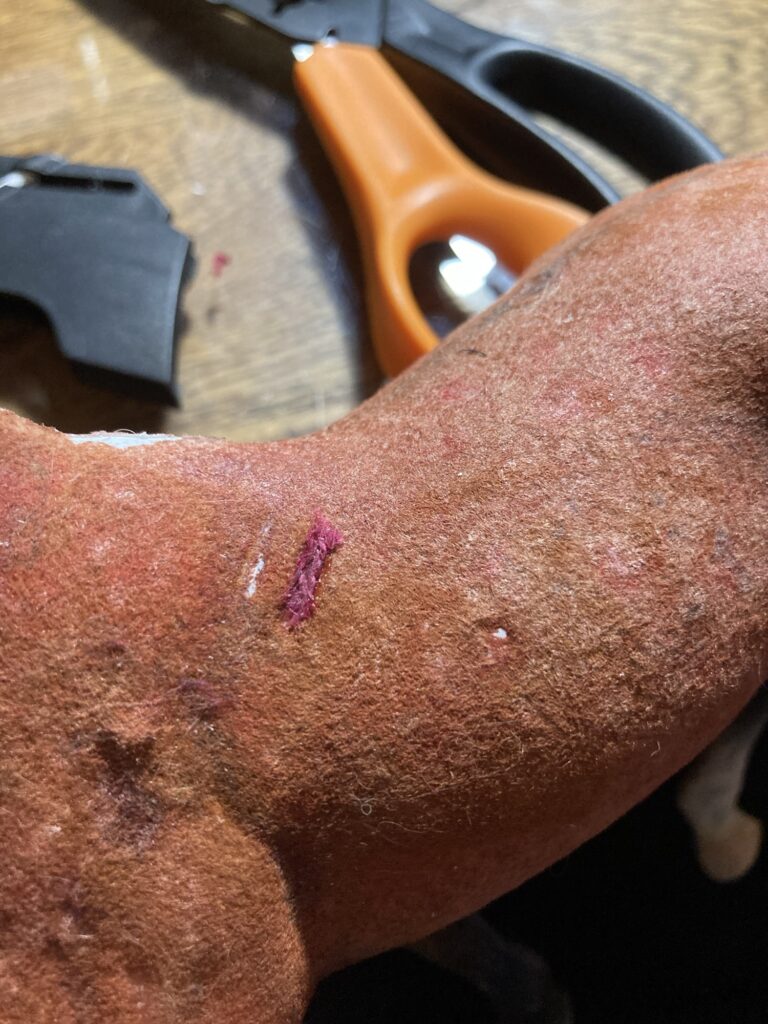
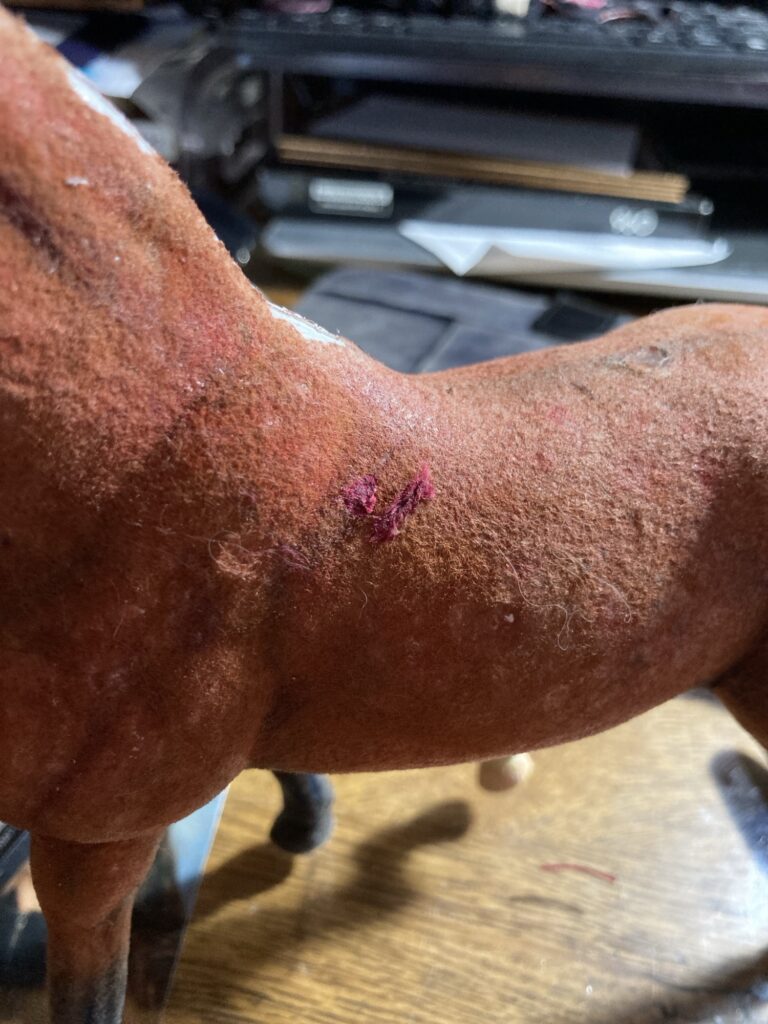
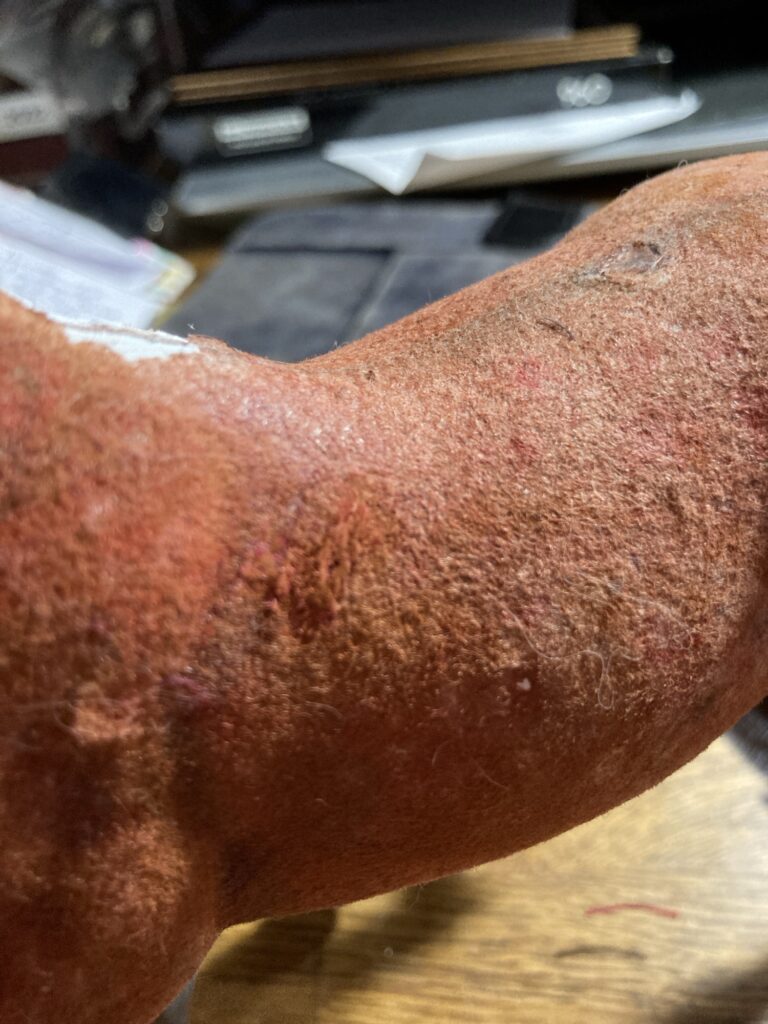
For one of the areas of damaged flocking, i tore off a little piece of paper towel, wet it thoroughly with elmer’s glue, and patted it into the damaged area. While far from perfect, once dried it holds the colored pencil markings enough to not be as noticeable. I have the feeling that too much glue might interfere though. I will probably try small pieces of fabric next.Next I need to fix his scratches and add some hair.Time to focus on this boo-boo. I decided to try string for this fix (it IS an experiment, after all). I filled it with glue. I started out with elmers, but decided that the glue wasn’t strong enough, as the string kept coming back out. I then switched to SUPER GLUE.Still in the process of adding hair.I used crochet string to wind a spiral to fill the hole.Here it is, super-glued in place. Still not sure how this will look, as it is a bit more textured than I thought it might be. Perhaps, if I try this one again, I might break up the fibers of the string a bit before attaching it to the horse. For the next small repair, i took a tiny length of string and pulled the fibers apart a bit before attaching.String glued in place to repair a small scratch in the flocking. I used super glue to attach it, and pushed it down with the butt end of a tool.A few more fibers added to the tiny bare patch above it. Once I color it with my pencils I think the texture will even out more.The same patches colored over with pencil. Not bad!
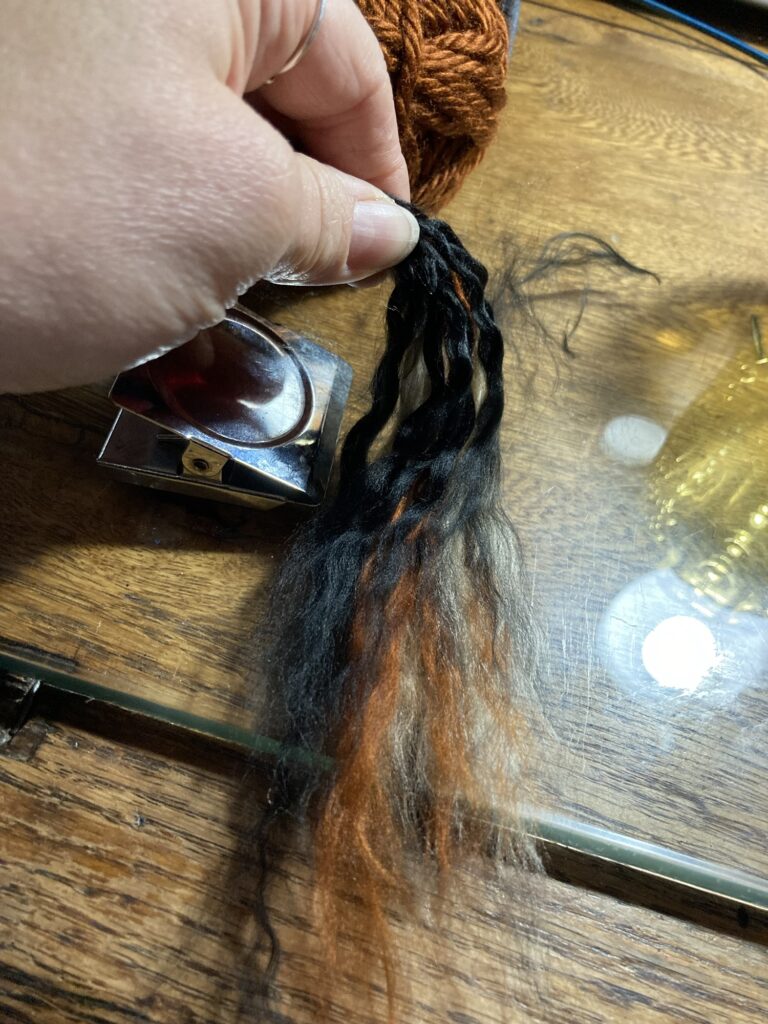
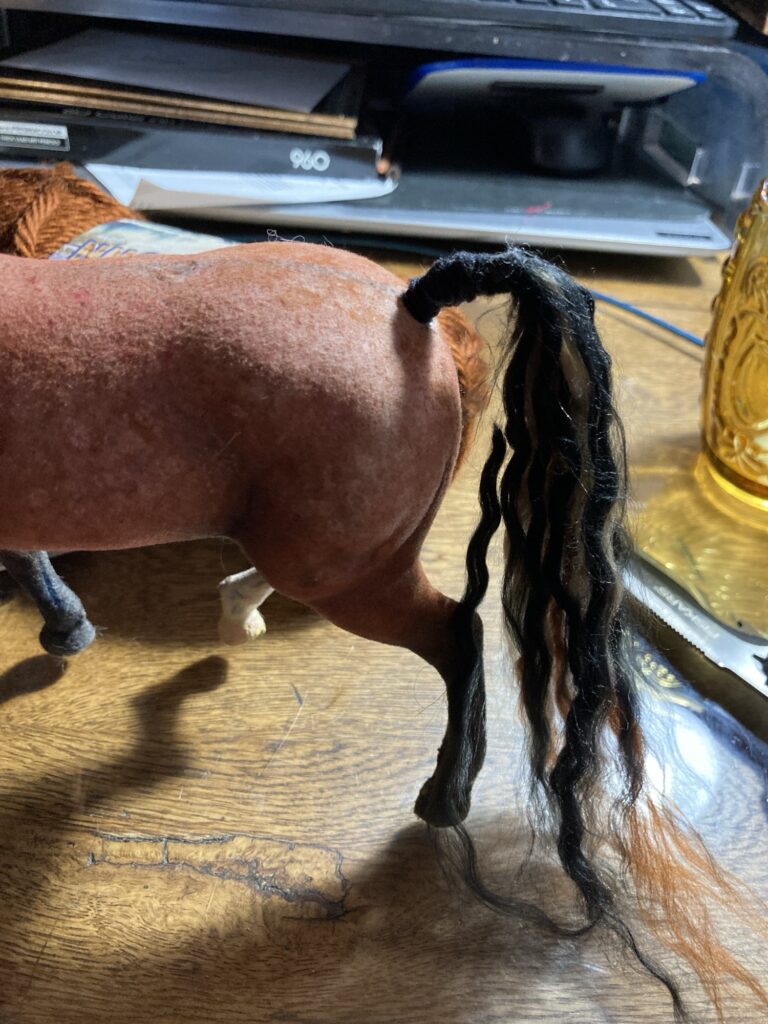
For a tail i decided to use a fluffy acrylic yarn.
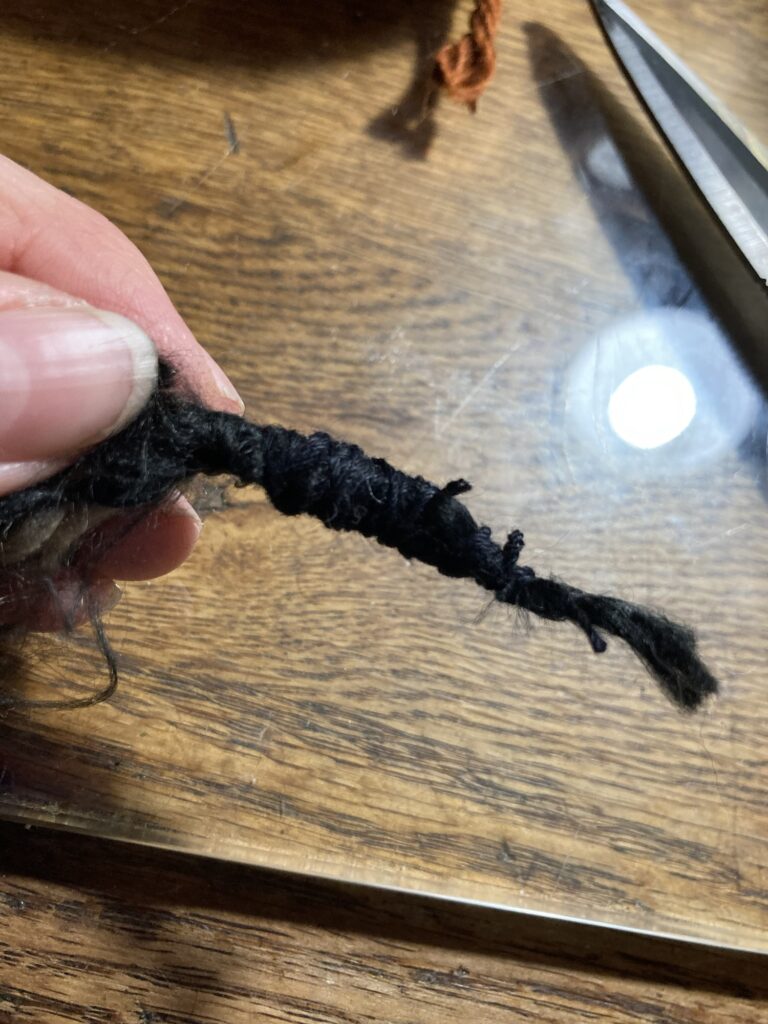
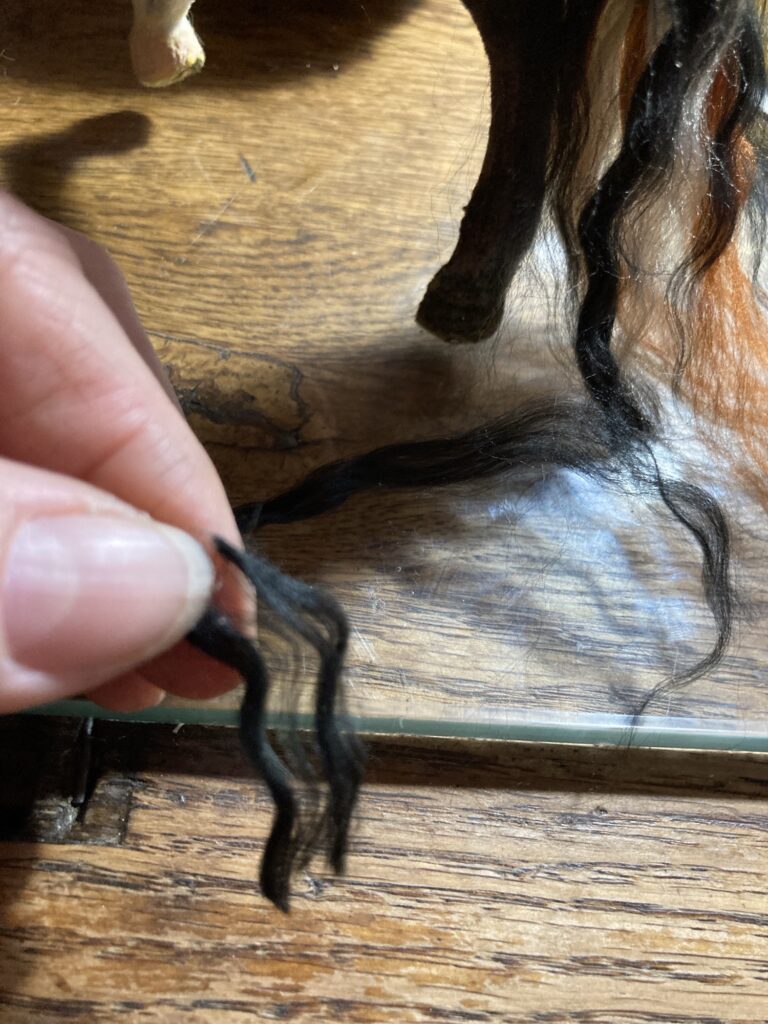
I cut a few strands of different colors that I thought might look well together, and then separated the strands.After giving them a quick little brush out. Don’t overbrush, as it will pull the yarn apart. I wrapped thread around the base of the tail and glued it down to hold. Most of this is going to be inserted into the horse’s body.I used a felting needle to push the tail base into the hole, but I left a bit of the stiff area protruding to give the tail some spine like a real horse’s tail.Next I cut a few shorter fibers for the top of the tail base. I discovered that my felting needle worked well for attaching these fibers to the base of the tail.For the bald areas where the mane was pulled off, I cut and unraveled lengths of yarn that is close to the body color and glued them in place alongside the neck. The body hair alongside the mane is usually a bit longer, anyway, and maybe i can blend it in with colored pencil afterwards.
I cut a bunch of yarn fibers and unraveled them, and made a line of superglue along the trench I cut along the top of the neck. Now I am going to use the back of a knife to push the yarn into the trench.
Now he just has a few more areas of flocking to repair. I discovered that in areas where it isn’t as important to have fuzziness, like around the eyes and nostrils, I can dab a tiny bit of super glue, allow it to dry, and color right over it with colored pencil. It seems to give it just enough texture for the color to stick.While far from perfect, he does look a lot better than when I started, and I am learning different techniques to fix the flocking and make hair that I can use on the next ones.
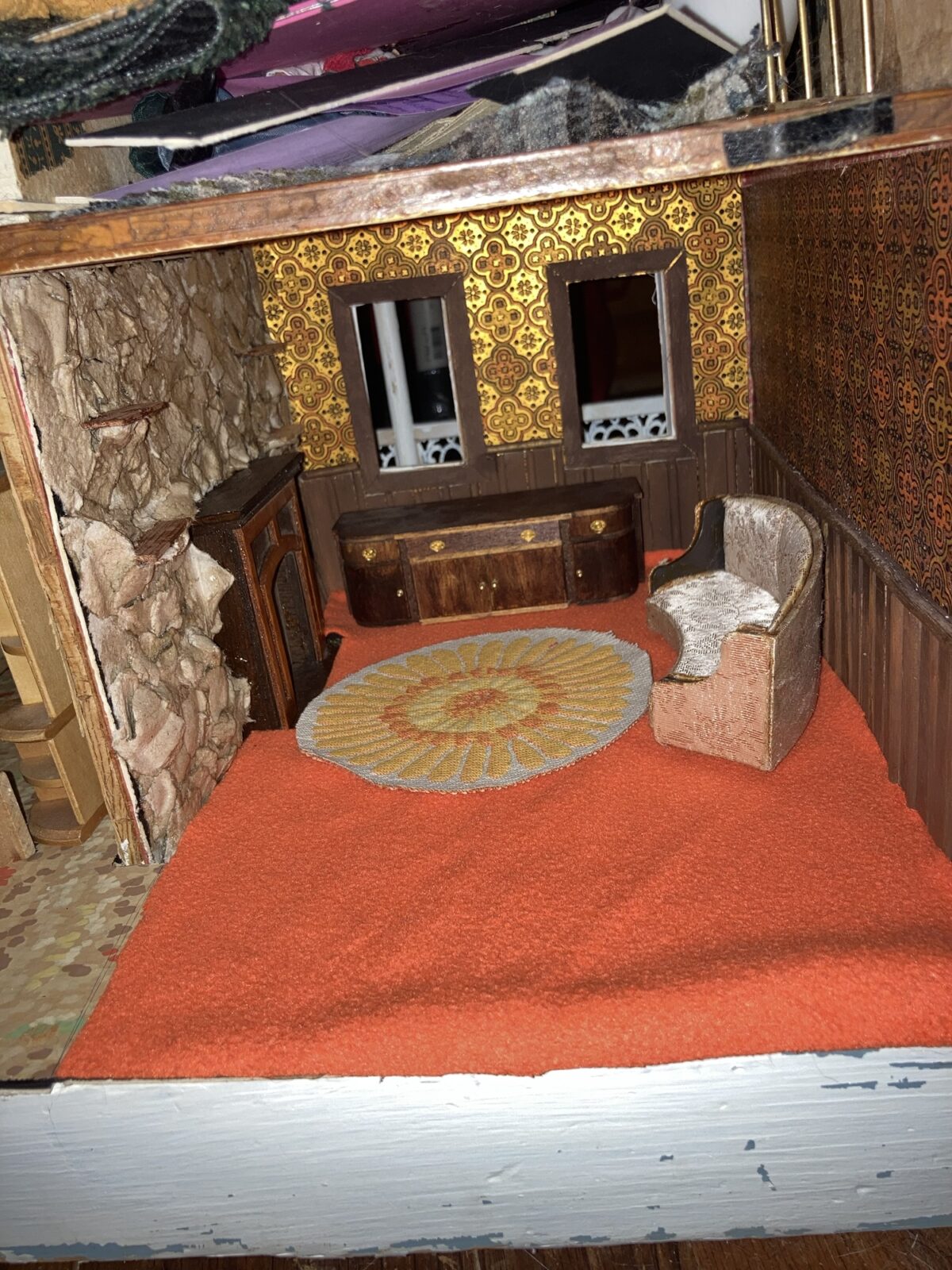
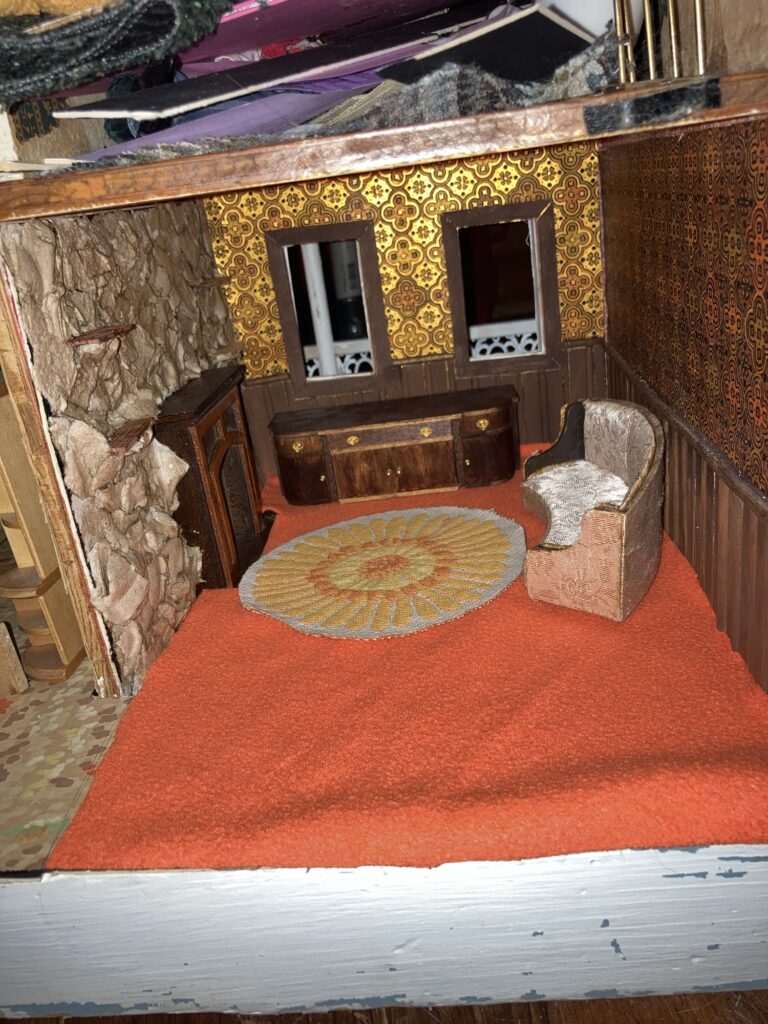
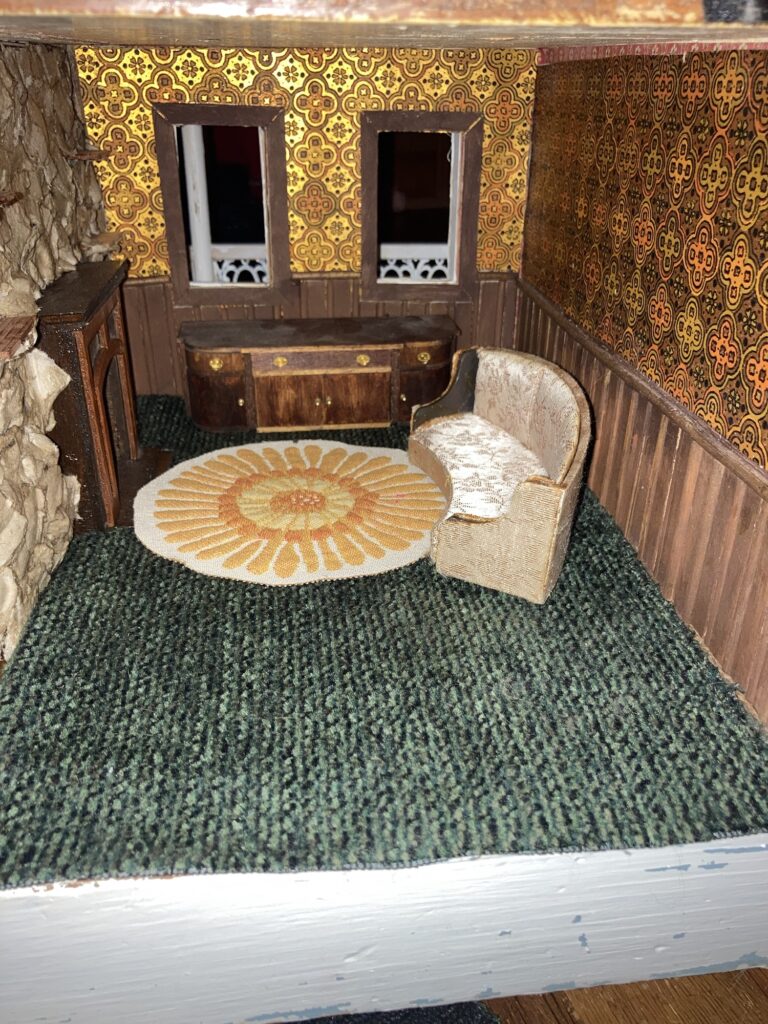
I decided to work on the living room of my 1970’s themed dollhouse. This house was basically gutted when I got it, so I am starting from scratch. I started out with a list of things I wanted in my 1970’s themed house, narrowed that list to what was actually do-able, and then decided on what projects for the house would be going in what rooms.
For the living room, i wanted a stone wall with a fireplace, wainscoting, and some authentic vintage wallpaper that we salvaged from my grandparents’ house before it was unfortunately torn down.
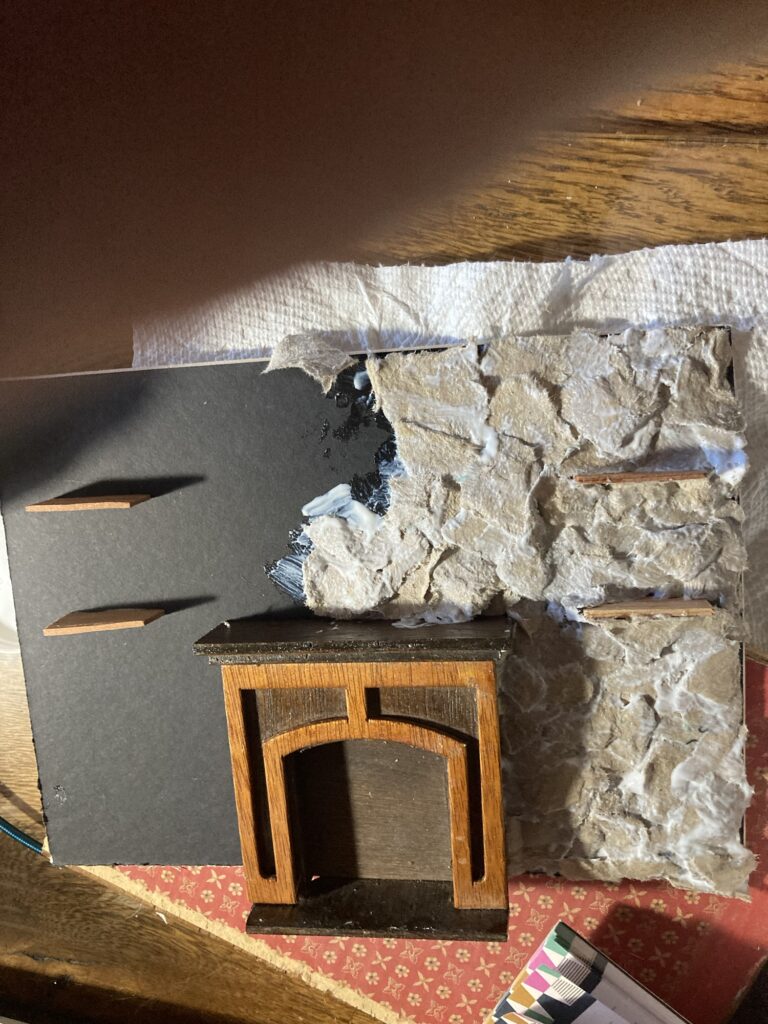
For the stone wall and fireplace, I first cut a piece of sturdy mat board to fit the wall it was going on. After double checking the fit, i attached the ready made fireplace that I chose for it.
I used mod podge to flue the egg carton
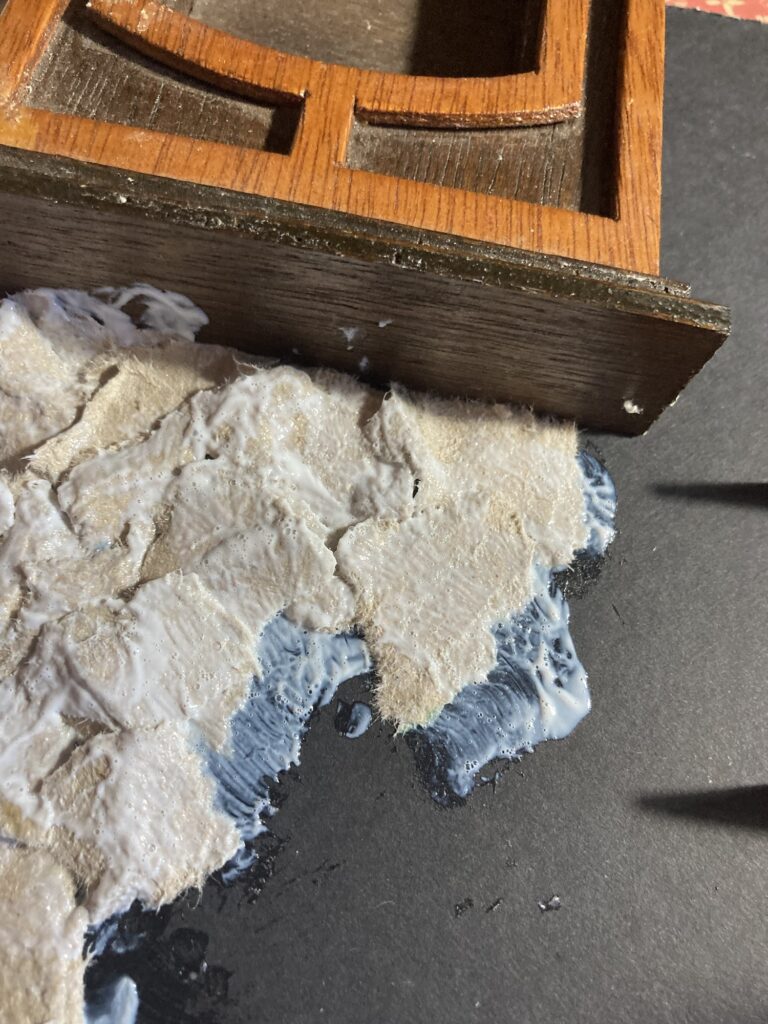
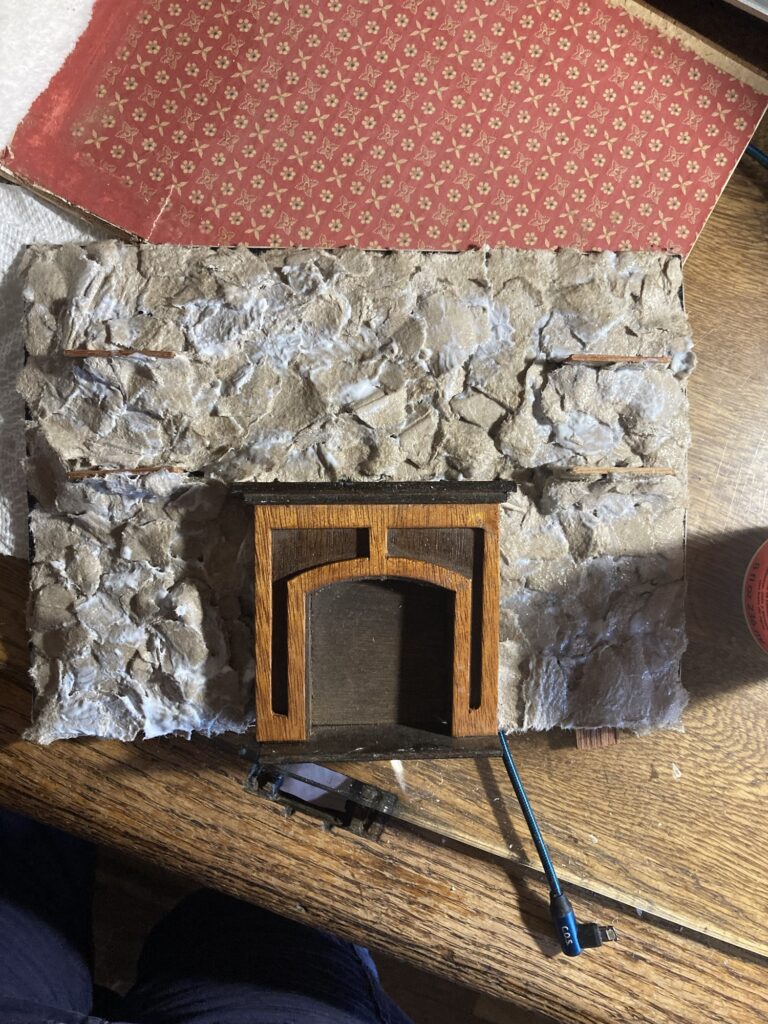
Next I used mod podge to glue little pieces of torn off egg carton (the cardboard type) onto the wall, layering it to form a stone texture. Note- keep the printed side pointed against the wall so it won’t have to be painted over later).
Tear off pieces of cardboard egg carton to use for the stone textureLayer the cardboard to form rough, rock-like texture, glueing it down and coating it with mod podge.I glued little pieces of craft stick on the wall to form shelves before placing the egg cardboard. What it looked like as it was drying.
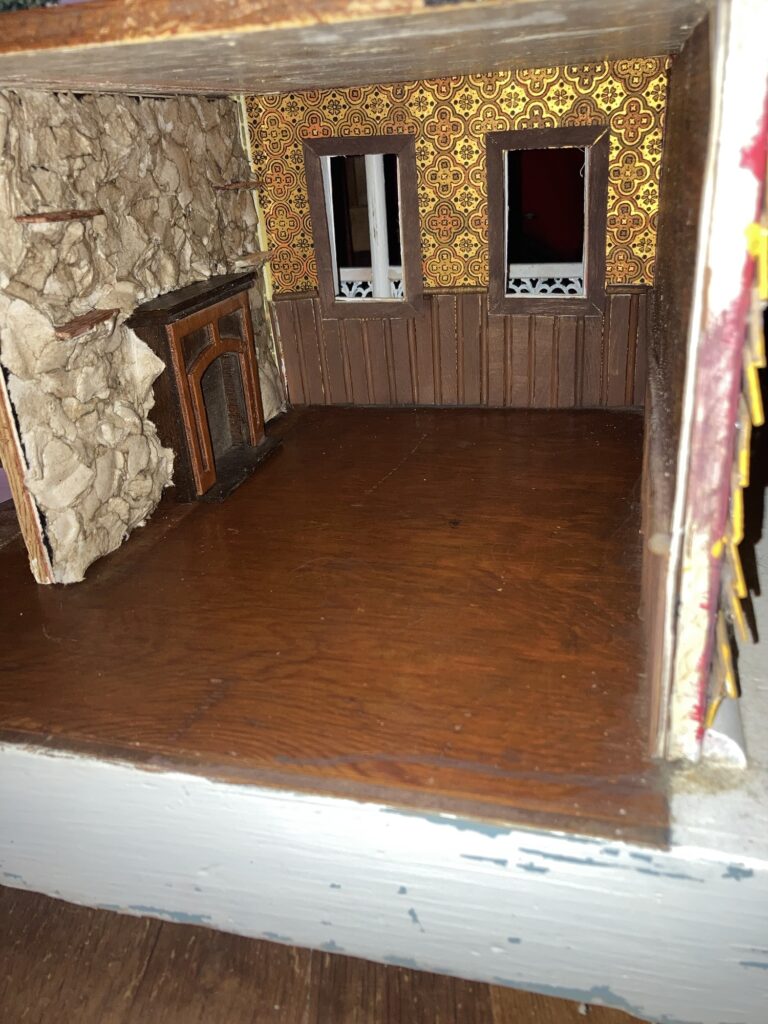
When it was dry, I slid it into place on the wall of the dollhouse, made sure all fitted as it should and looked the way i wanted, and then glued it in place with just a dab of glue.
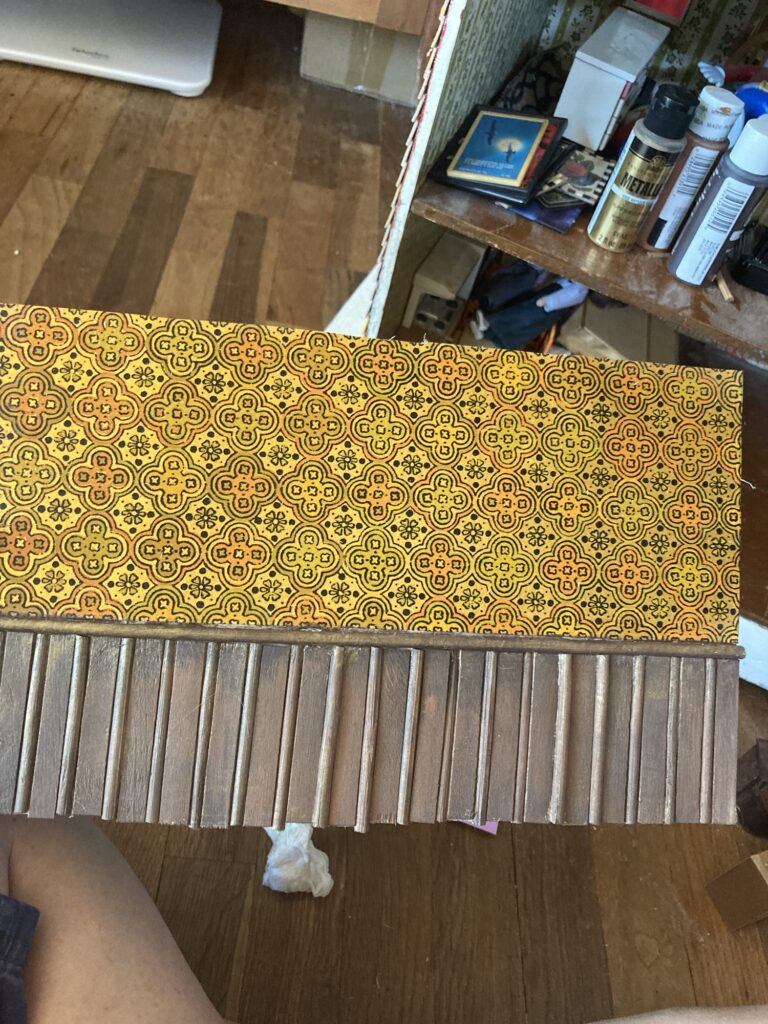
Next I cut another piece of mat board to fit another wall, and glued on a piece of my wallpaper. I cut pieces of popsicle stick and split dowels to create a pattern of wood for the bottom section of the wall, to form wainscoting.
I tinted the wood with thinned out paint so it looked like stain, and made a rail with a long split dowel.
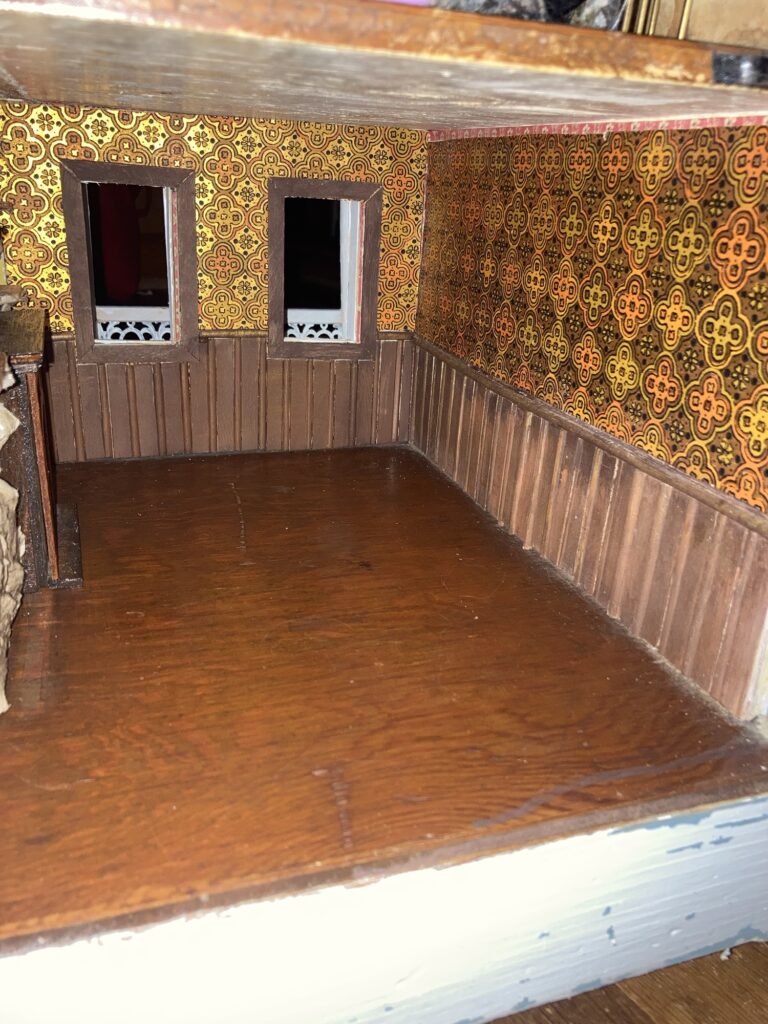
I made sure it fit where i wanted and then glued it to the wall, then did the same for the other wall.
Eventually there will be trim along the ceiling, which will cover the little piece of old wallpaper peeking through.Another view
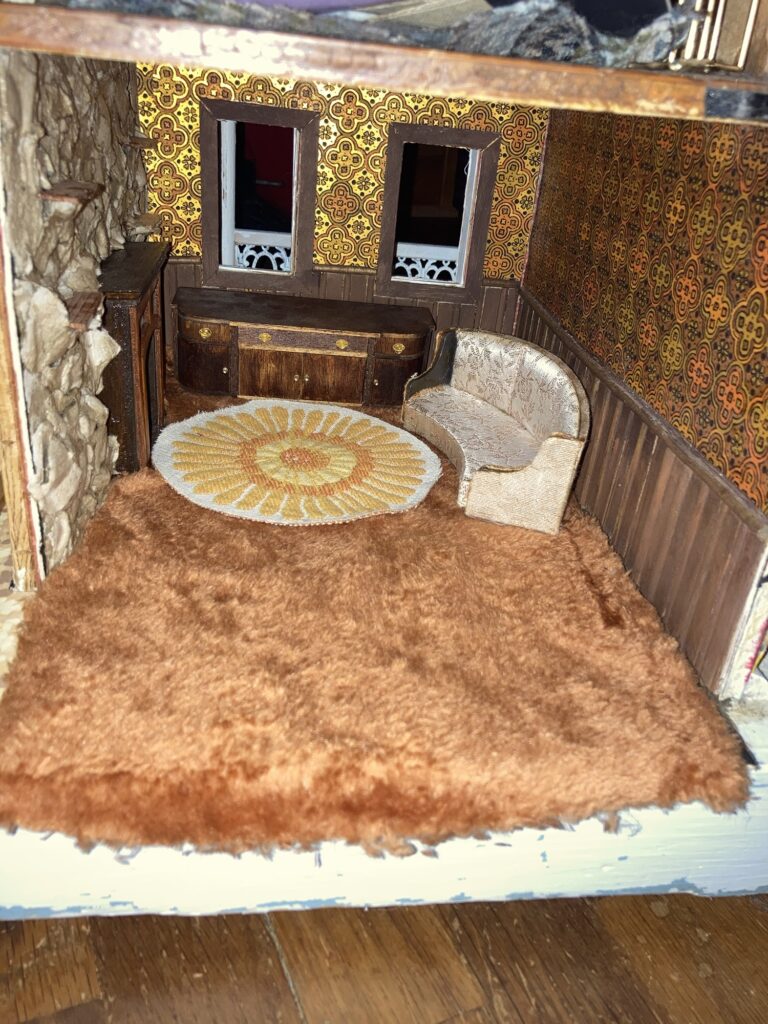
I haven’t been able to decide on a floor color, so I have tried several different colors of “carpet.”
Brown shag. I was hoping this would be a similar shade to the wood of the floor, as I like the rich warm hues, but it seems a little washed out to me now. (This is part of an autumn themed fuzzy pillow from a thrift store)Orange fuzzy (it’s the inside of an old sweatshirt, so it has that worn fuzzy carpet look to it 😆)Green (this is an old carpet sample)
I also tried a puke yellow but it definitely didn’t look good with the wallpaper. I am thinking of sewing an orange trim around my flower rug, and i would love to reupholster my couch to something like the orange flower velvet I used to see all the time, but haven’t found a good material for that, yet. Any thoughts? Which carpet do YOU think would look best? Leave a comment with your thoughts!
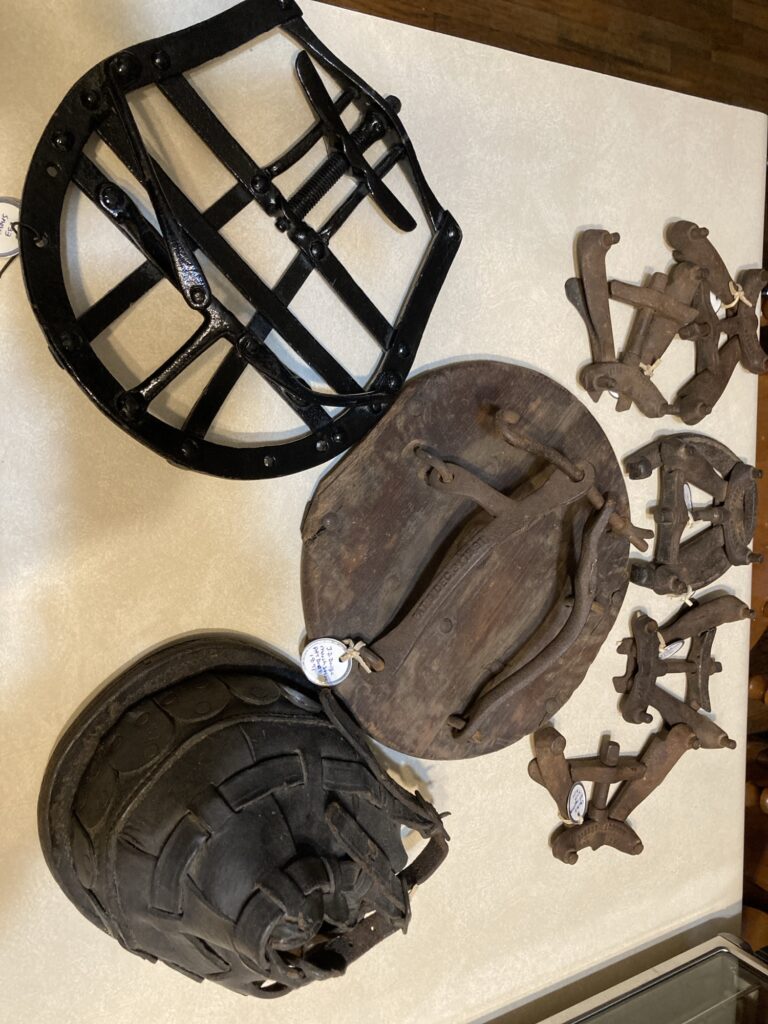
Today I am going to share some specialty horseshoes from my collection. These are all products that can be attached to a regular horseshoe for special purposes. I currently have a bog shoe, a snow shoe, a lawn boot, and ice cleats.
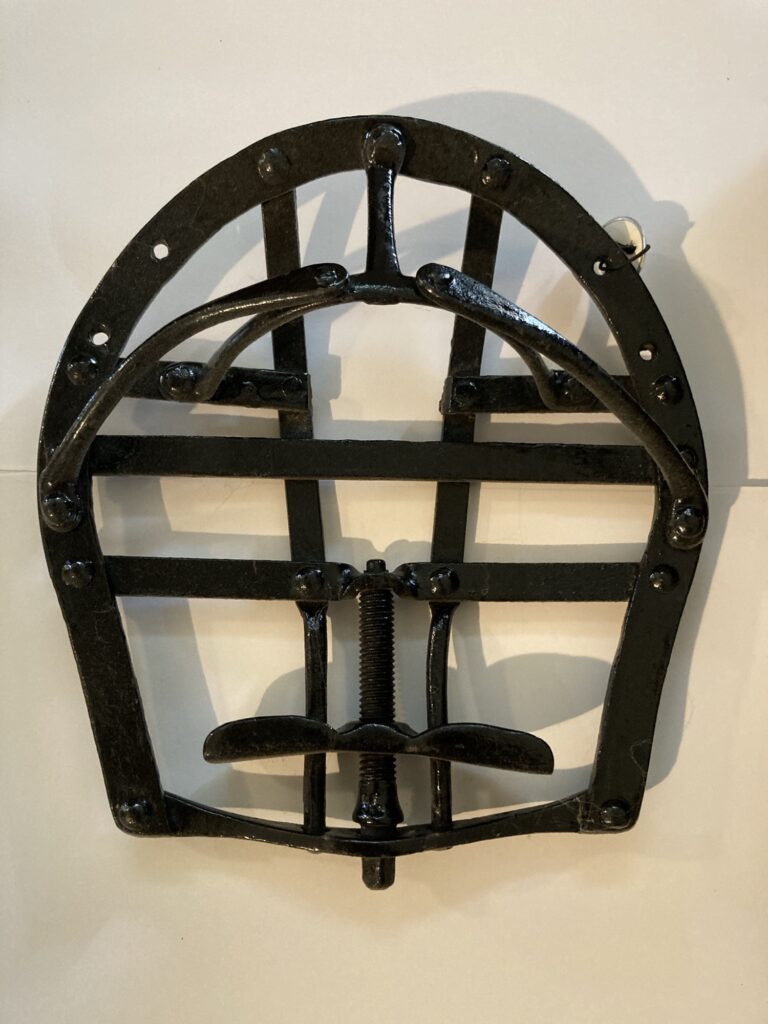
The snowshoe
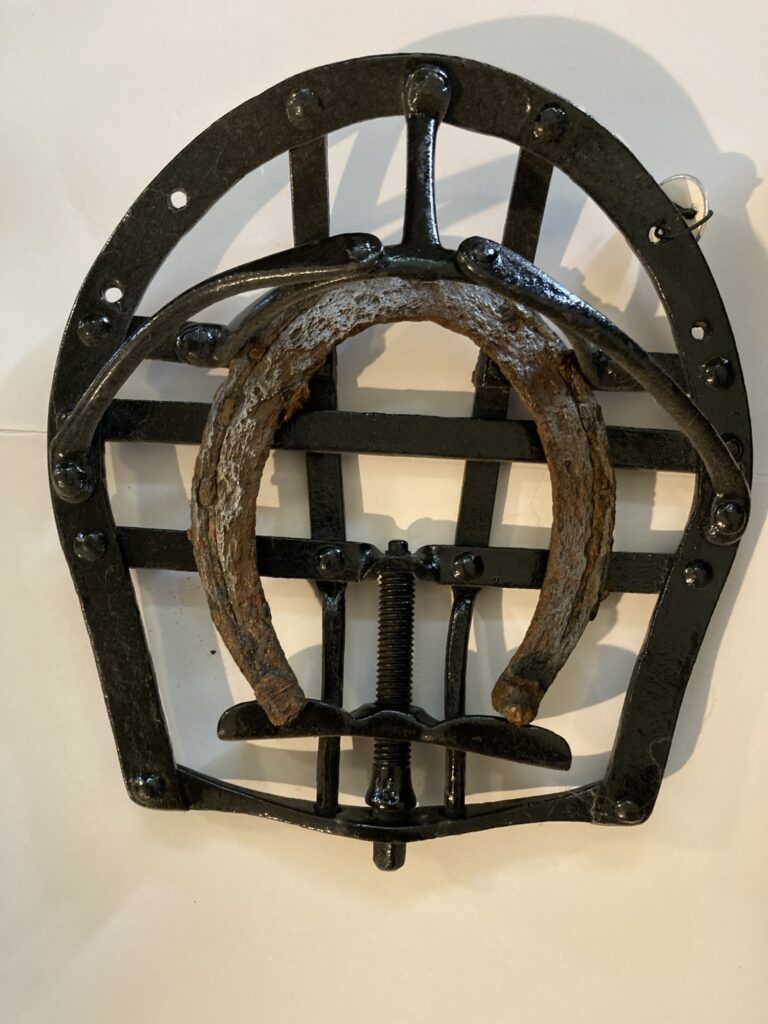
The snowshoe I have is made of steel. They can also be made of wood or even rope and wood. The shoe I have is made for the horse to set their hoof in place, then a screw is tightened at the bottom so it clamps onto the horse’s shoe that is nailed to their hoof.
This is the snowshoe with a regular shoe to show where the horse’s hoof would go.
The metal cage at the bottom of this horseshoe would help distribute the horse’s weight on the snow to help them from sinking in as far. There are also a series of holes around the outer rim, possibly for adding studs for traction. This shoe could probably be used on muddy ground, as well.
The bog shoe
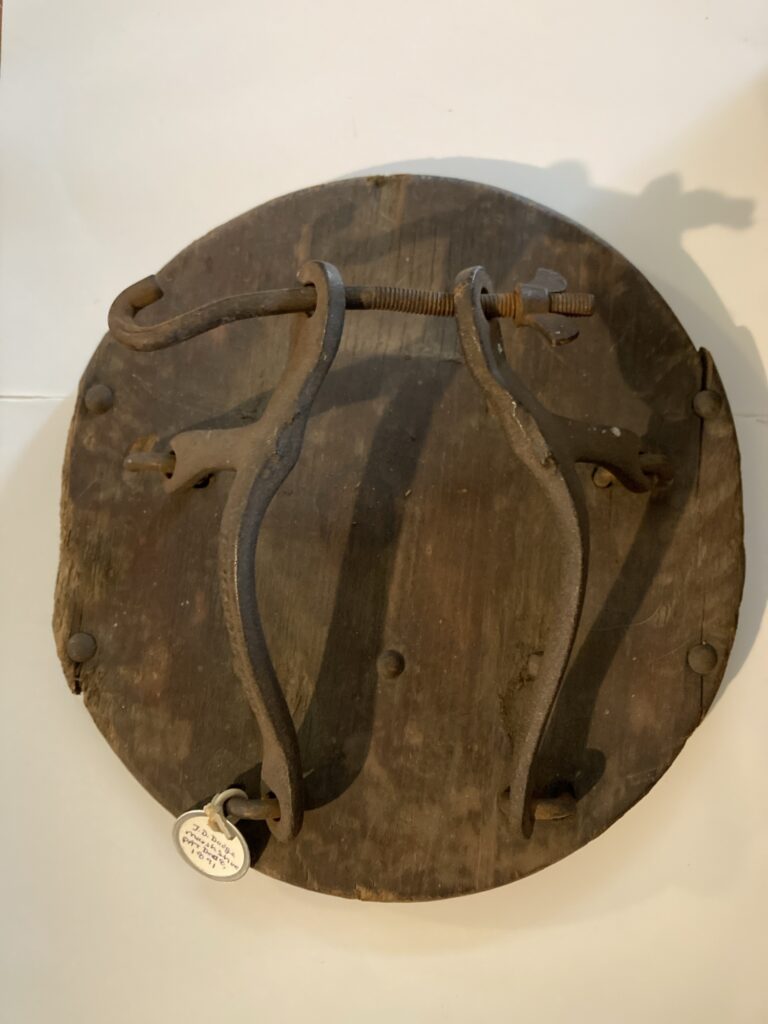
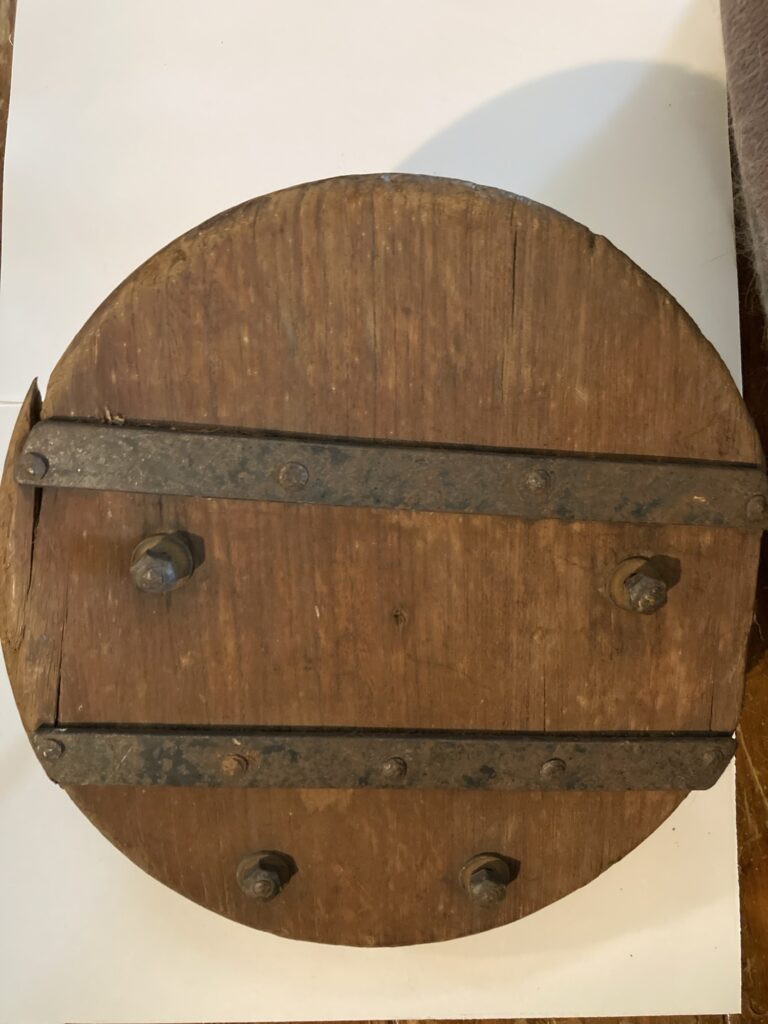
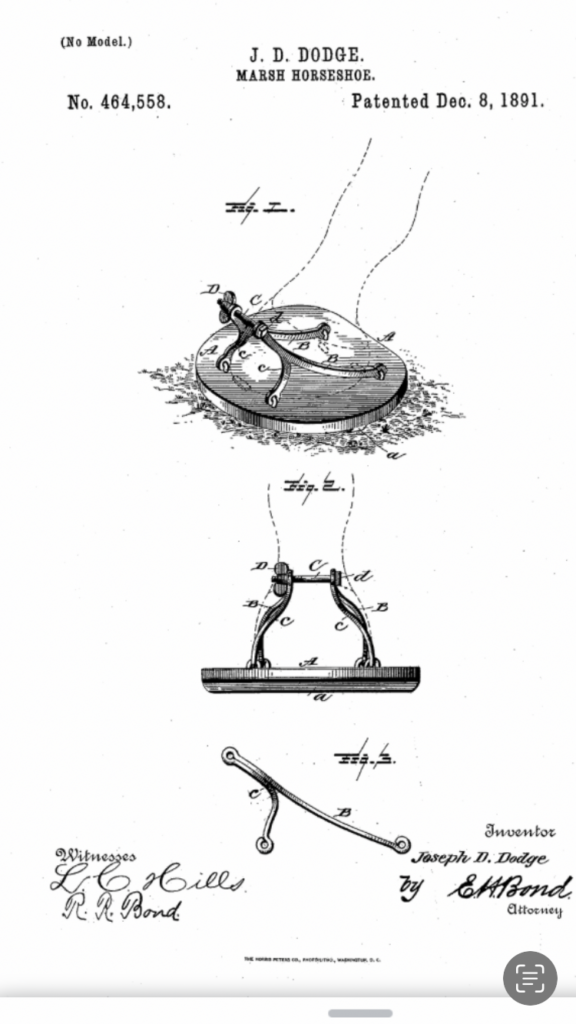
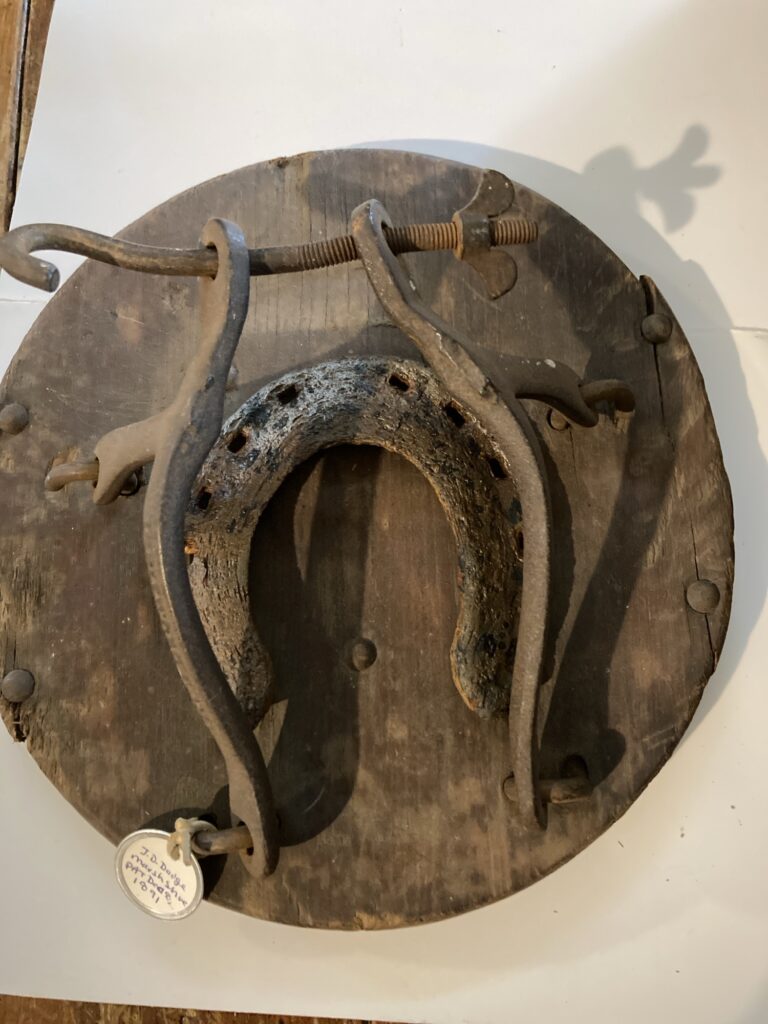
The bog shoe (also called a mud or marsh shoe) works similarly to the snowshoe, in that it makes the hoof surface bigger to distribute the horse’s weight so it doesn’t sink down as easily in mud or even snow. This shoe is made of wood and steel. The hoof is positioned in the center of the shoe and a metal rod with a screw is tightened on it with a wing nut to hold the hoof in place. This particular shoe was patented December 8, 1891 by J.D. Dodge.
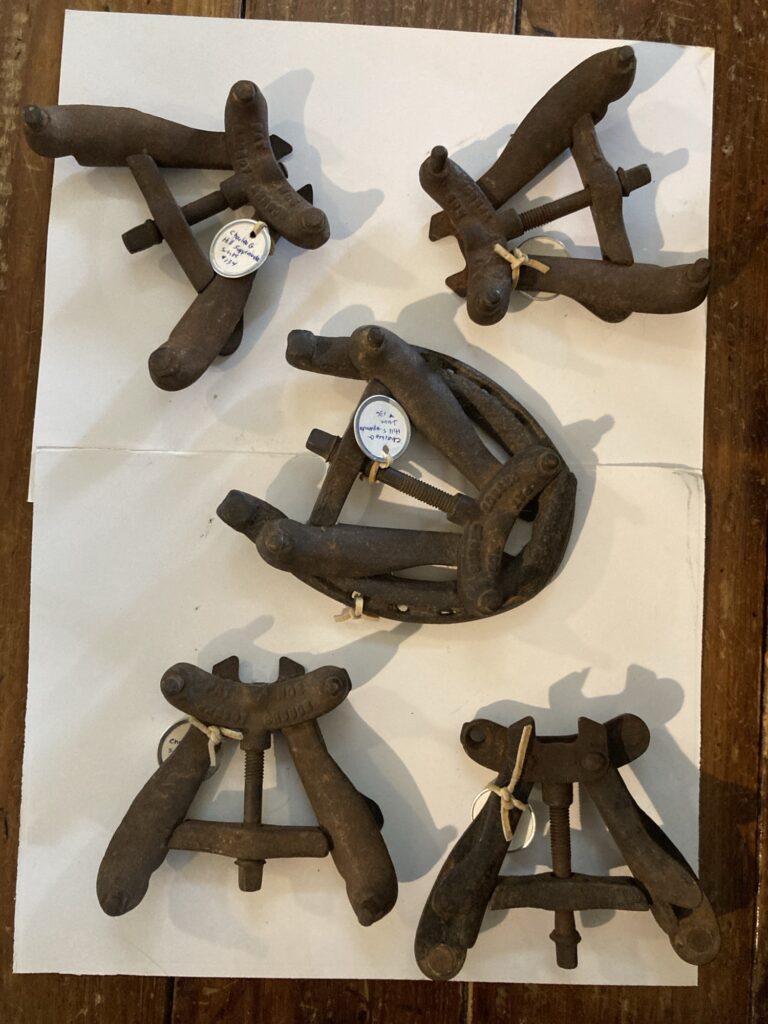
The underside of the bog shoeWith a horseshoe in place to demonstrate where the hoof would sitA set, plus one, of removable snow cleats
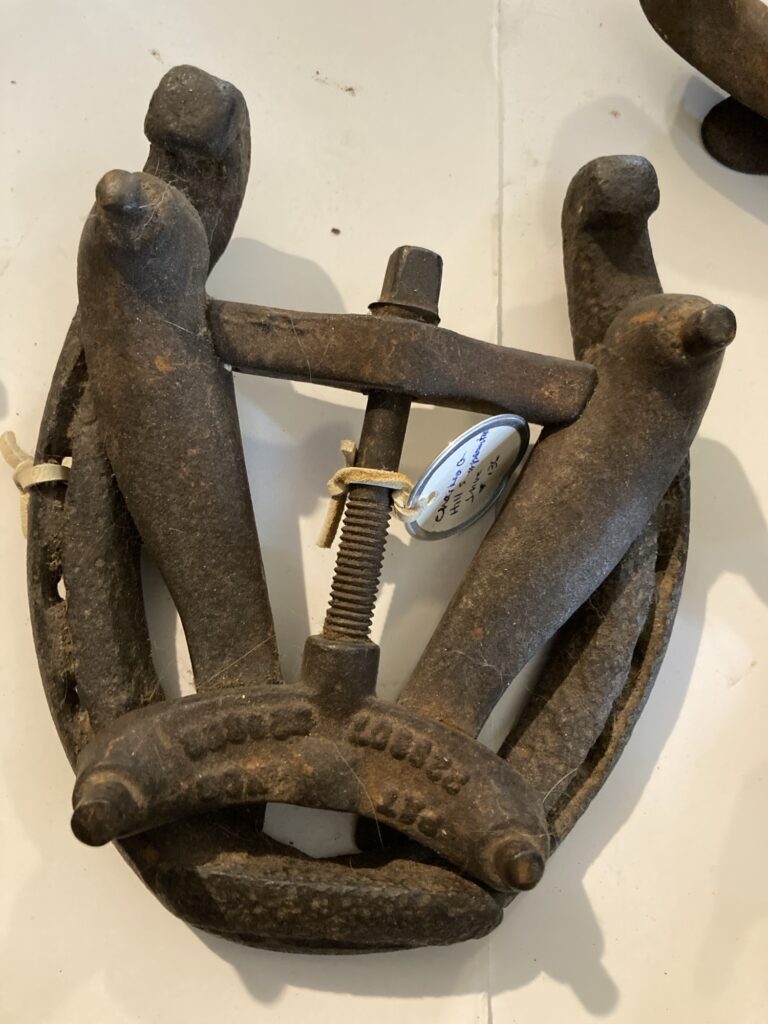
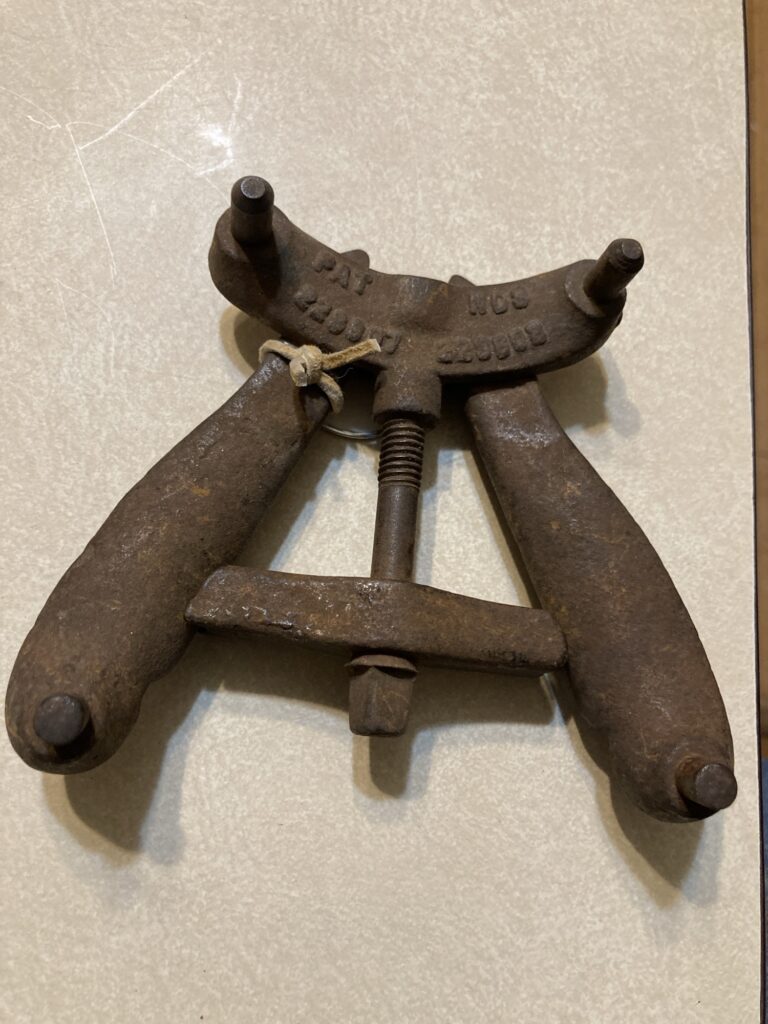
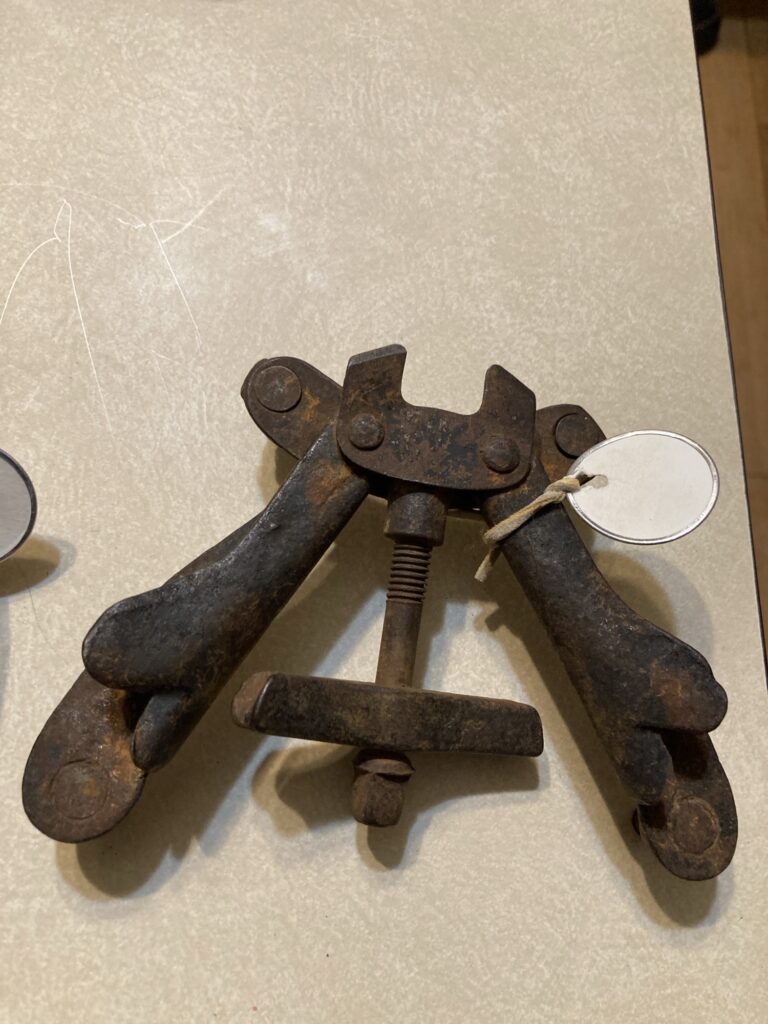
My antique removable ice cleats were patented July 6, 1880 by Chas. G. Hill.
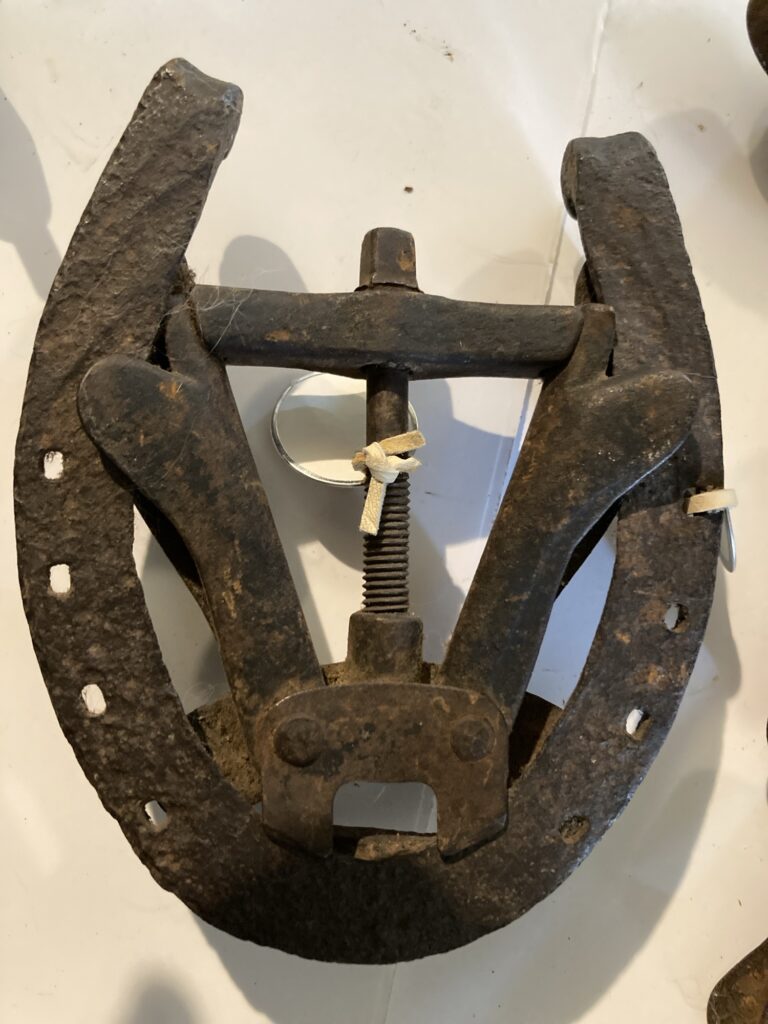
One of the ice cleats attached to a shoe (this is the side that would contact the ground).Attached to a shoe. This is the side attached to the bottom of the horse’s hoof.
These attachments have a large screw-tightened piece that helps it clamp onto the shoe. There are metal cleats on this attachment that help give the horse traction on ice.
Unattached to a shoe. This is the side that touches the ground.Unattached to a shoe. This is the side that slips onto the horse’s nailed-on shoe.This is a lawn boot.
The lawn boot is a thick leather boot that buckles over a horse’s hoof and regular shoe. These boots were used to keep the horse’s hooves from churning up pieces of sod while pulling a lawn mower, back in the day when horses were needed to pull lawn mowing equipment on large estates.
The inside of the boot. The bottom is held together by copper rivets.
The bottom of the boot, which is in contact with the ground.
The back with its buckles.
Of course, this is just a small selection of what is out there. There are many different varieties and types of shoes and attachments that have been invented over the years to help improve footing or to better care for lame horses.