Horseshoe collecting—Shoes with Provenance

While I never did get good marks in History classes (I have to stop and think sometimes to remember important dates in my OWN life, much less others!), I do love seeing and learning about historical artifacts. As a child (and even as a teen) I always wanted to be an archaeologist, digging and discovering.

What I really love is when I find a horseshoe (or other antique) that comes with a story. It isn’t often that you find the history of a lowly horseshoe, but sometimes you will, and sometimes all you have to do is ask, as some sellers don’t think it’s important to say where they dug the shoe up, or how their grandfather was an award winning farrier back in the day and this was one last shoe he kept hanging above his garage door.
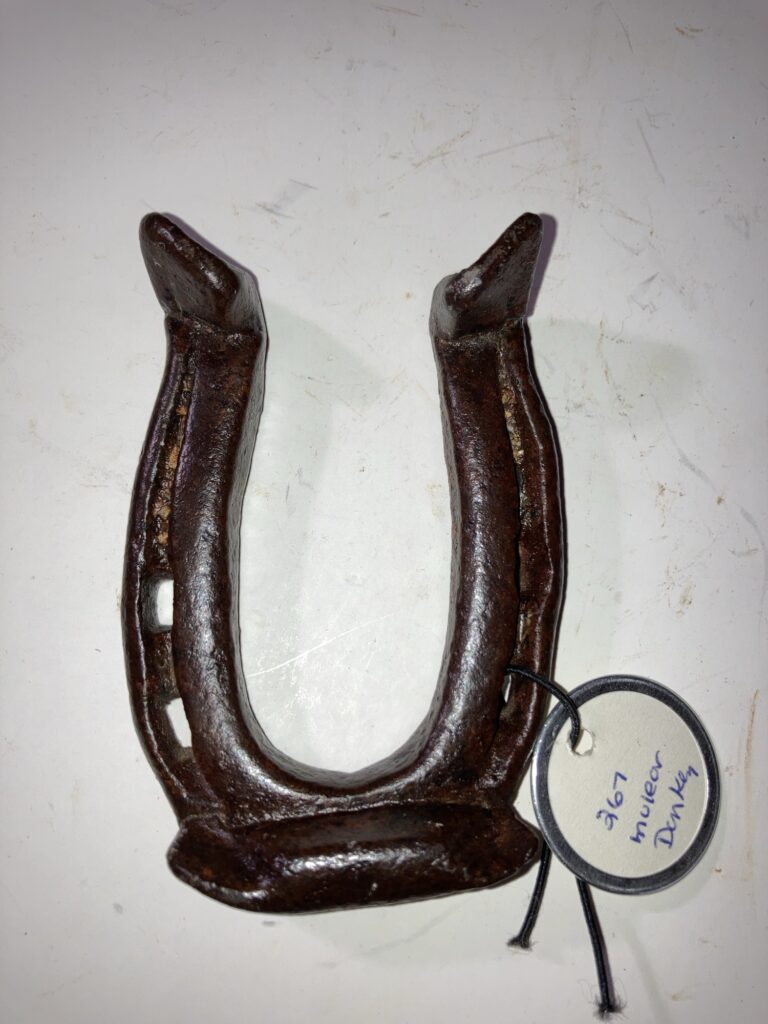
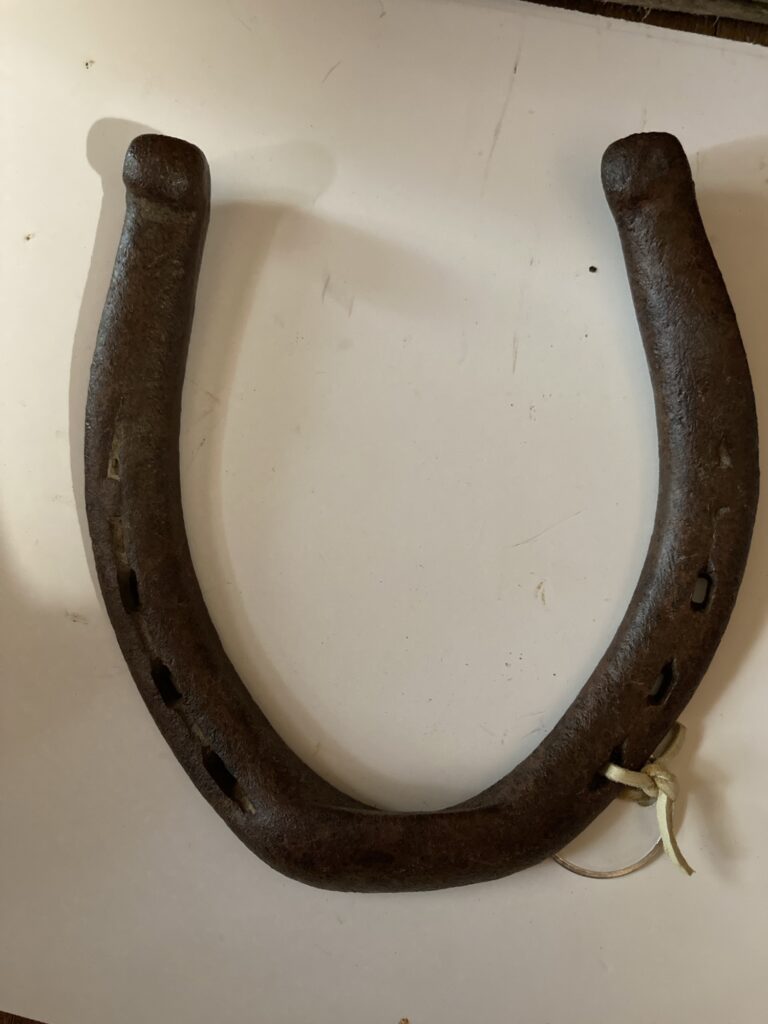
Isn’t it beautiful? The curved toe bar and angled heel caulks?
This shoe, and several others that I ended up purchasing, was found by the seller’s uncle when he was younger. He was fascinated with old logging camps in Michigan’s Upper Peninsula, and spent much of his time searching them out through the woods. He picked up several old horseshoes in such locations, and nailed them all along his fences. Their age and condition testify to them probably being worn by the horses of lumberjacks to haul wood in the 1800’s-early 1900’s. Notice the extra bars at heel and toe, called caulkins, that were added for traction. I see this a LOT in old shoes in Michigan, where farming and logging were commonplace in our history.
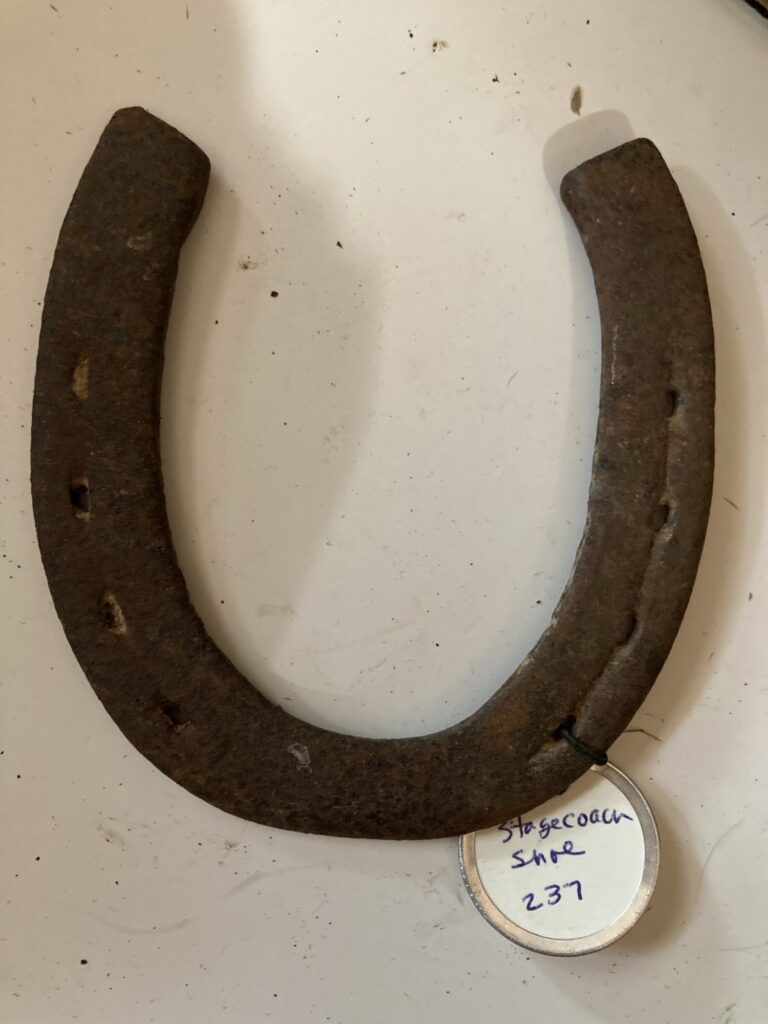
This shoe was found along an old stagecoach road in California.
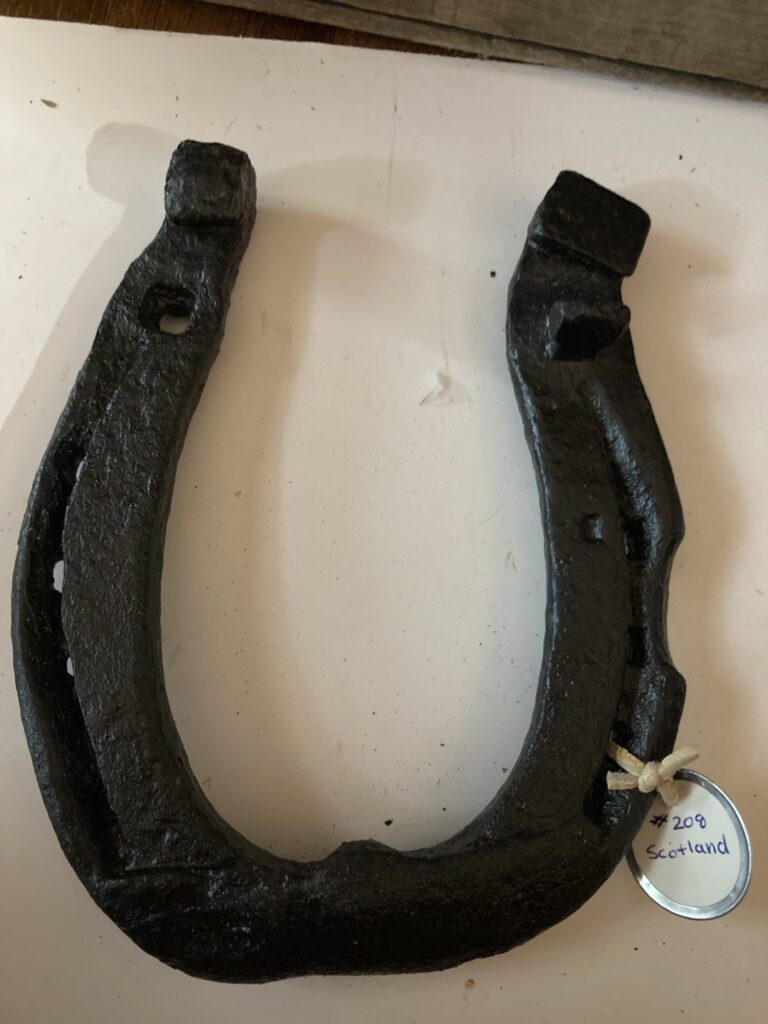
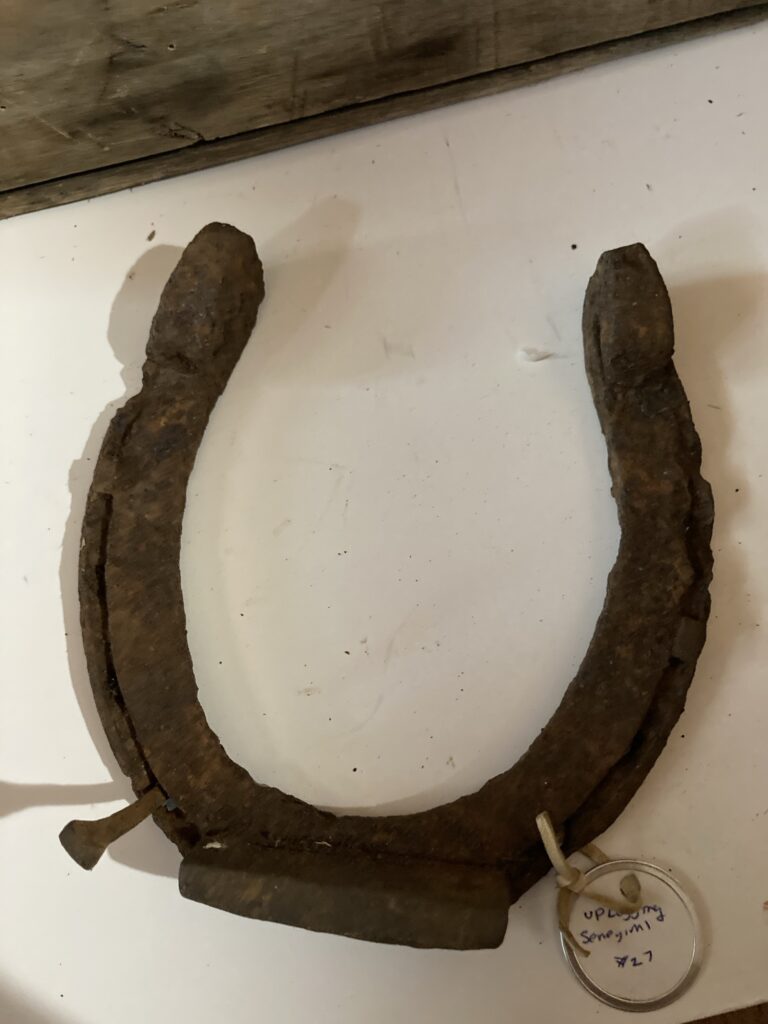
This enormous draft horse shoe was found near the old Smithy in Achafoila on the Aisle of Luing in Scotland. For some reason I can imagine a big old workhorse named Betty wearing it.
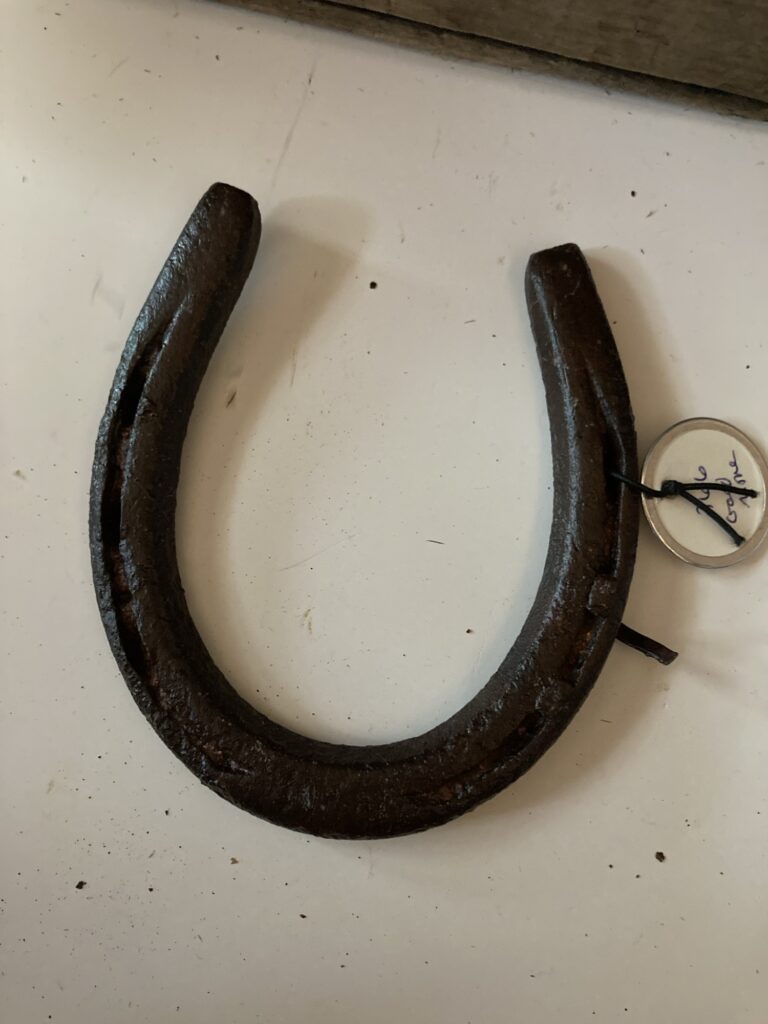
This shoe was found along with a few others near an old gold mine.
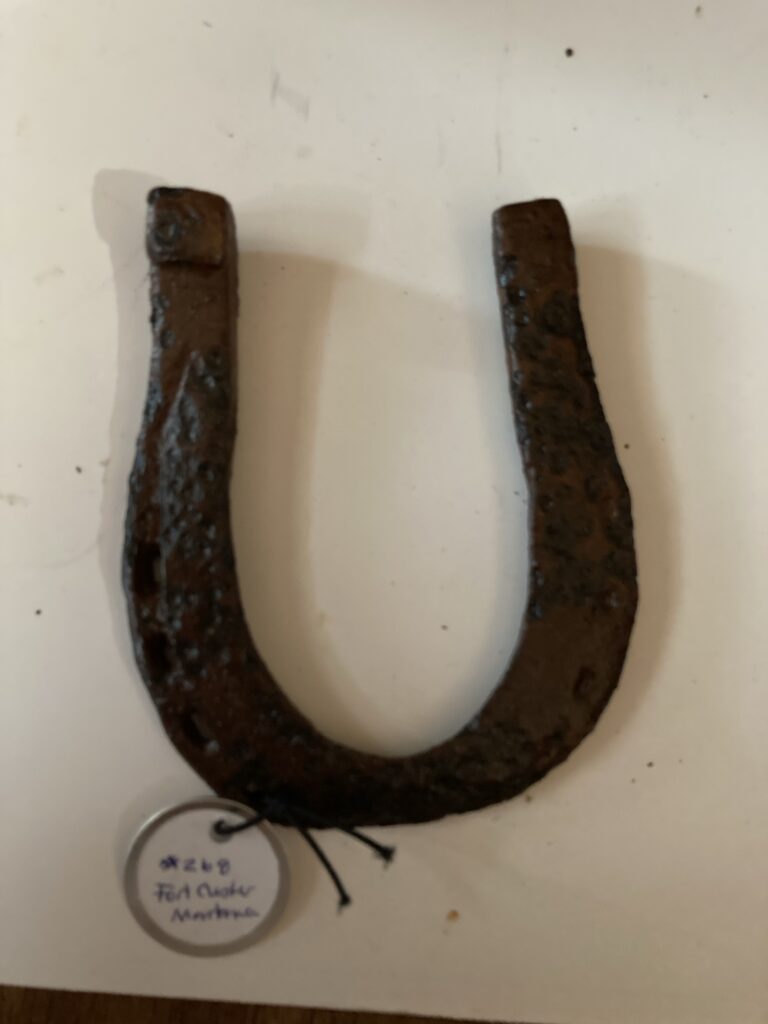
This mule shoe was found around Fort Custer, in Montana. Was it from the Indian Wars?
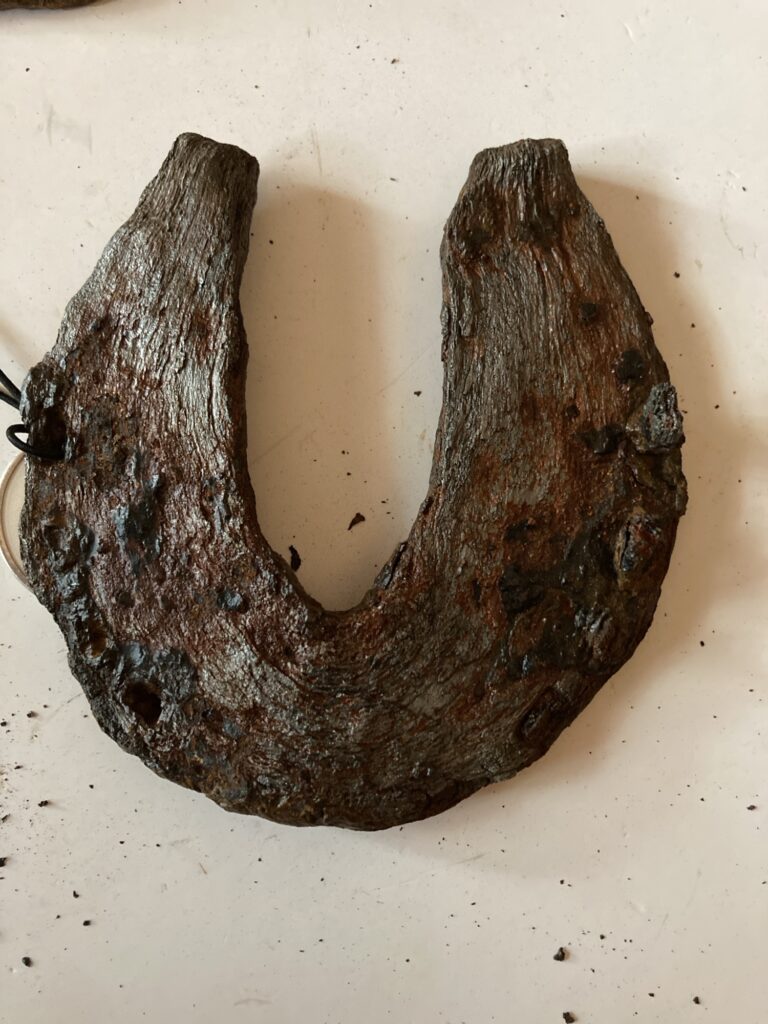
This shoe was found metal detecting along the Oregon Trail in Wyoming. It has so much wear to it!
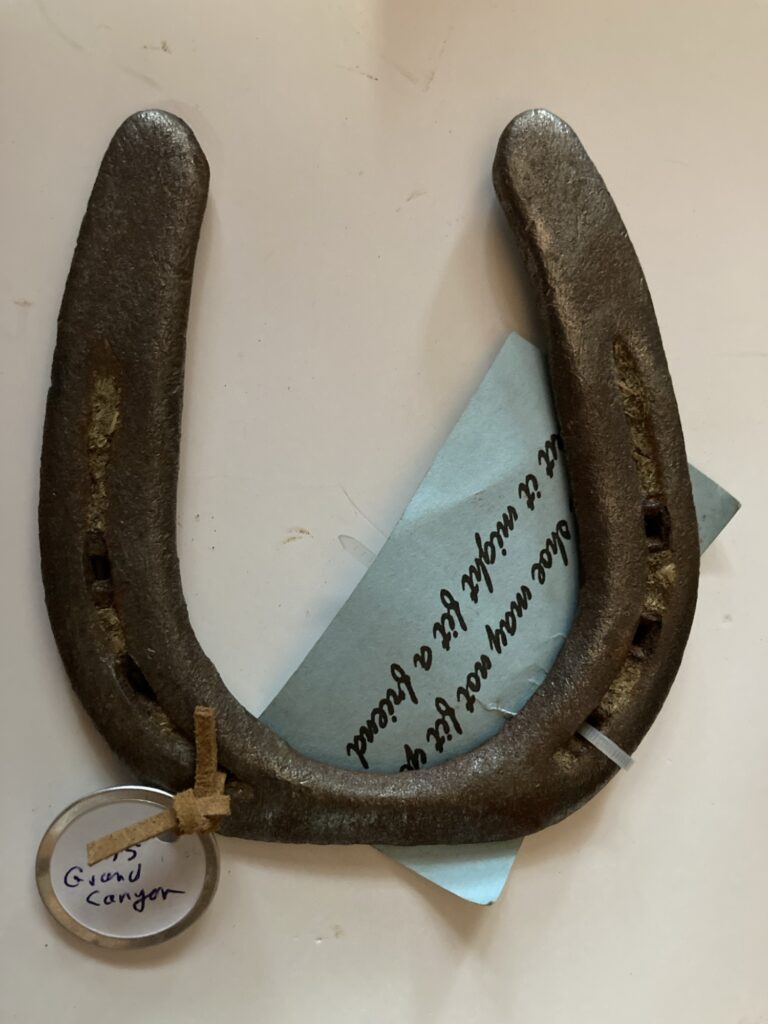
This shoe was from a mule used in tours at the Grand Canyon.
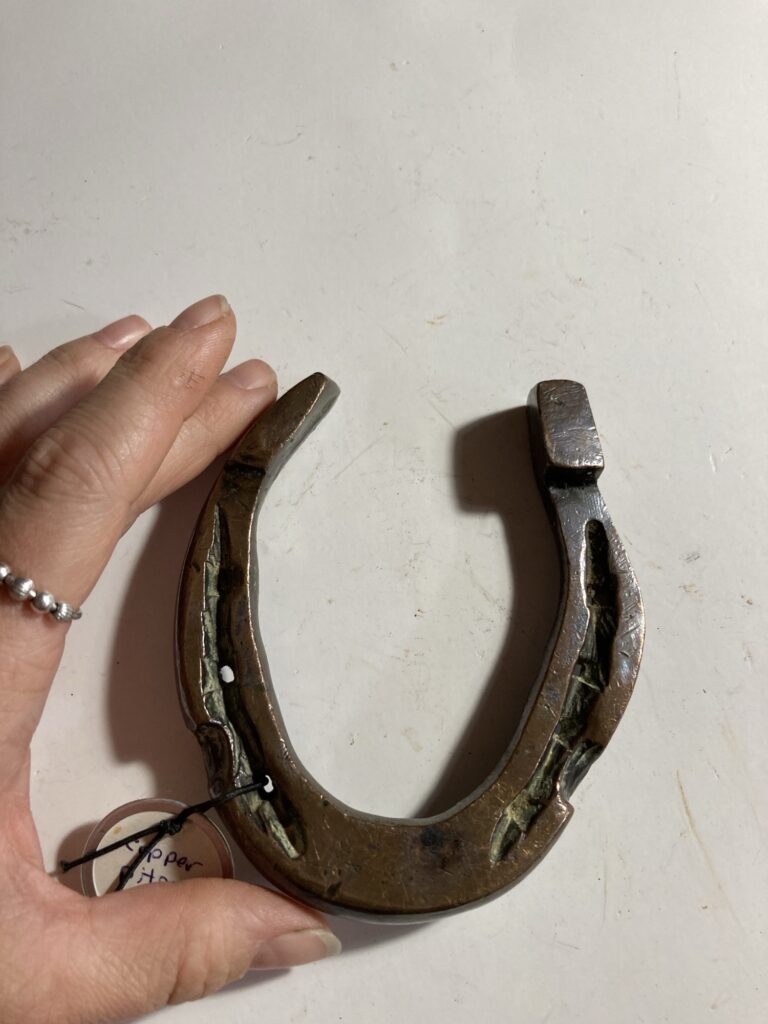
This solid copper shoe was from a pit pony in a coal mine in Wales.

You may be wondering why all of my shoes have tags on them. I tag and number each individual shoe, and write a description of it on an index card so i know where i bought it, everything I know about it, how much I paid, etc. I also draw myself a little picture of it so it is easily recognized when I go to find the individual shoe. I keep the cards organized in a card index.
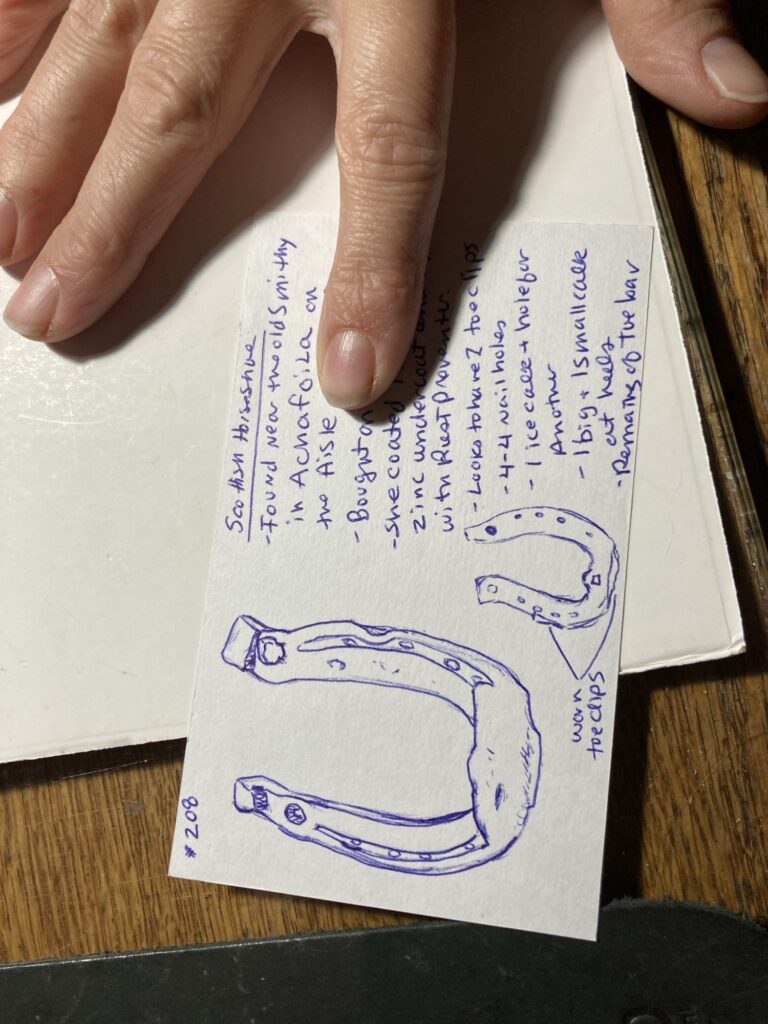
How I record important information about each shoe. The number on the card matches the numbered tag on the shoe.

I hope that with careful record keeping I can safeguard the history of each of my shoes. Unfortunately I didn’t do these things when I first started collecting as a child, but I remember a few details about my favorite shoes.

I have many, many more shoes in my collection (at the moment of writing this I own over 330 shoes). Record keeping helps keep their information organized and readily available. Now if I can just find an easy way to keep the shoes themselves organized 🤔.
Identifying Ancient Horseshoes—Guildhall Horseshoes of ancient Britain

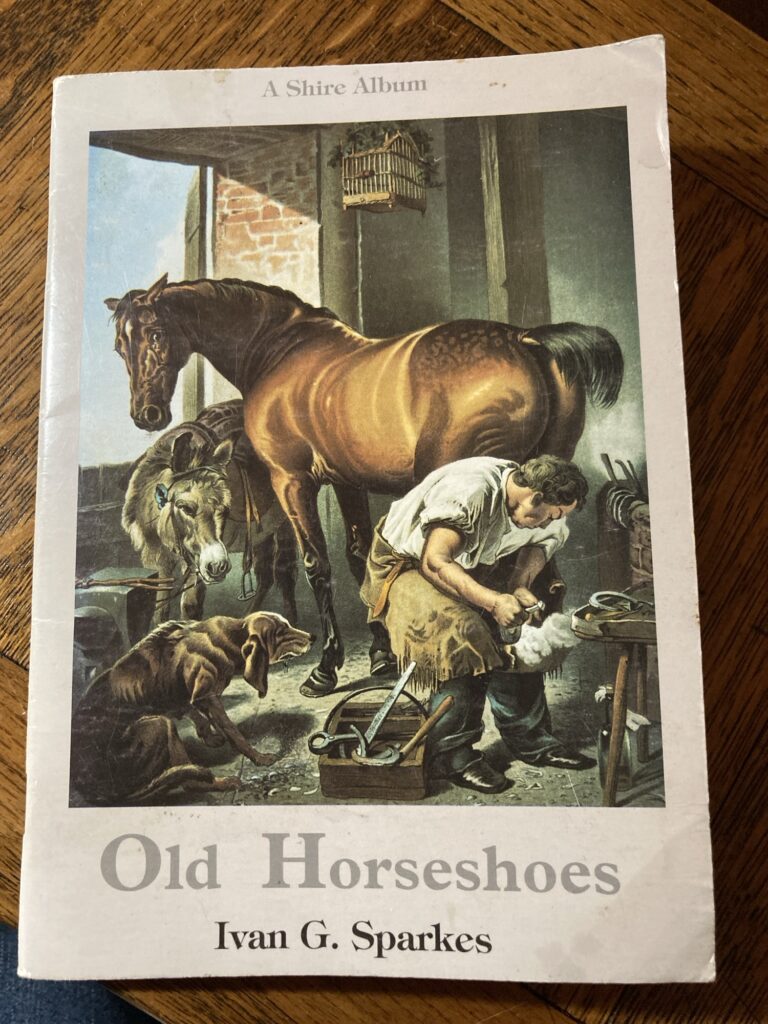
I have been collecting horseshoes all of my life, and have a decent amount from Great Britain. The shoes from this area are much easier to date for me, as there is more written documentation about shoeing practices, much more research has been done, and I have a couple of excellent research books on them. One of the books that I have found is ‘Old Horseshoes’ by Ivan G. Sparks.

This is a great book! It is small but filled with good information!

Another excellent book is ‘The Medieval Horse and its Equipment’ by the Museum of London. The Editor, John Clark, categorizes the different types of shoes a little differently than Ivan Sparks, but gives them roughly the same time periods. Today I am going to focus on the Guildhall shoe (according to Ivan Sparks) or Type 4 (according to John Clark).

Another great source is the Museum of London’s website. They have many photos of medieval shoes and their approximate dates. I often quiz myself on trying to date them according to what I have read in books, and use their shoes to help identify some of my own more puzzling examples.

The Guildhall shoe, according to Ivan Sparks, has a rounded outer edge and an arched inner edge. This shoe is a good example:

These shoes gained popularity around 1350 AD to accommodate the larger breeds of horses being imported to the area. They gradually were replaced by keyhole shoes by around the 1600’s. According to John Clark, they were often found in the 14-15th centuries (around 13-1400’s).

They tended to have just one calkin, but they could have two as well. They sometimes had 6 nailholes, and sometimes 7 (3 on one side and 4 on the other). The shoes are fairly small, maybe about the size of today’s average riding horse. Certainly not as large as today’s drafts!

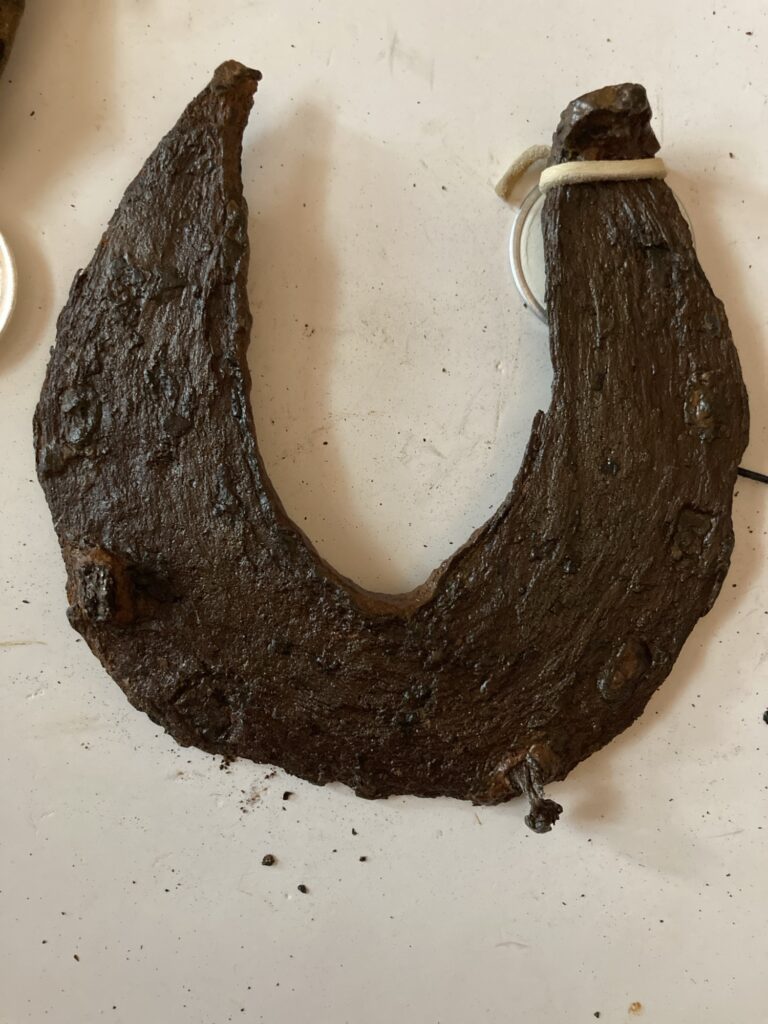
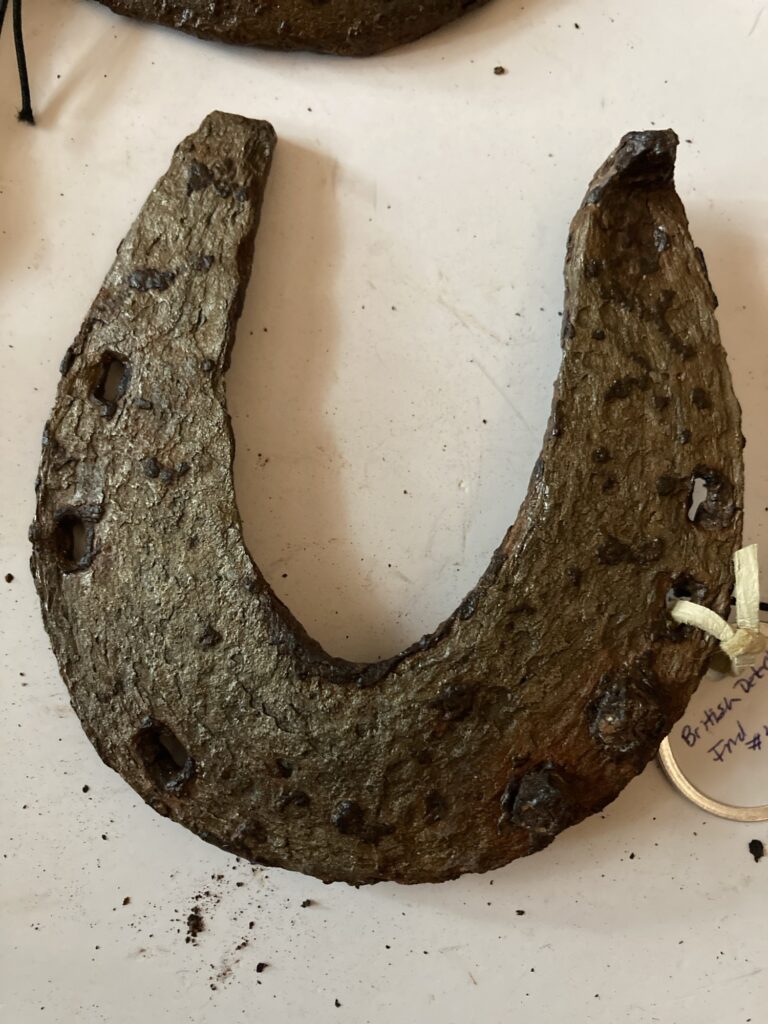
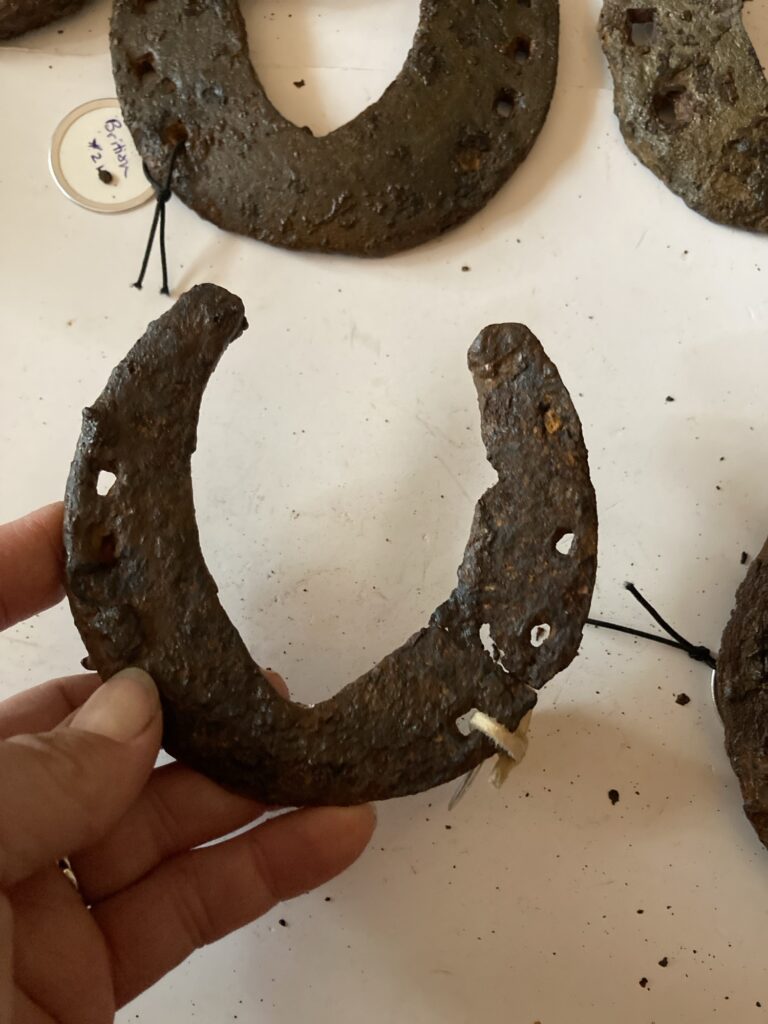
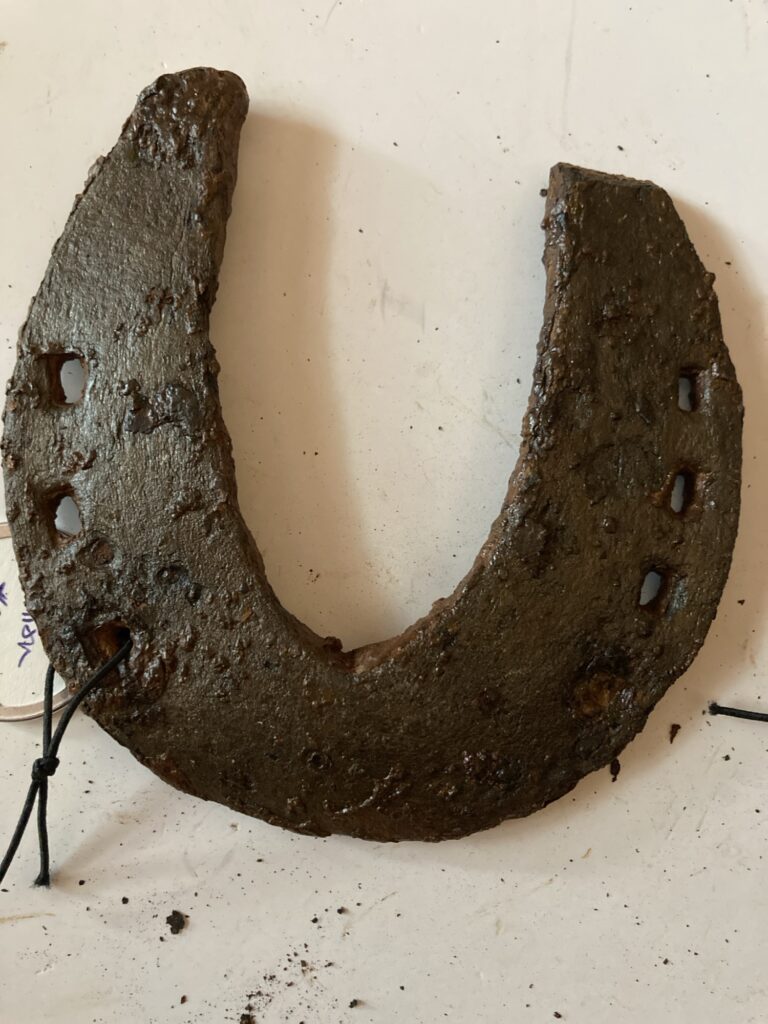
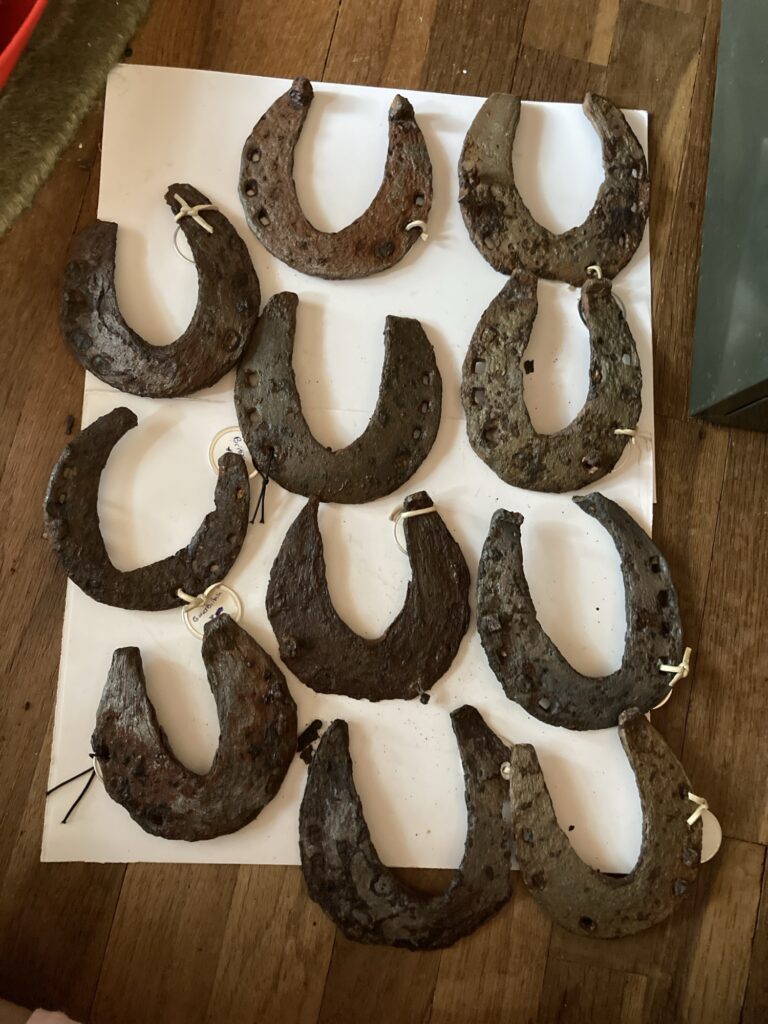
Below are some samples from my own collection. They have been cleaned so I can more easily identify the number of nailholes, special features, etc.

As you can see, most of these shoes are pretty small.
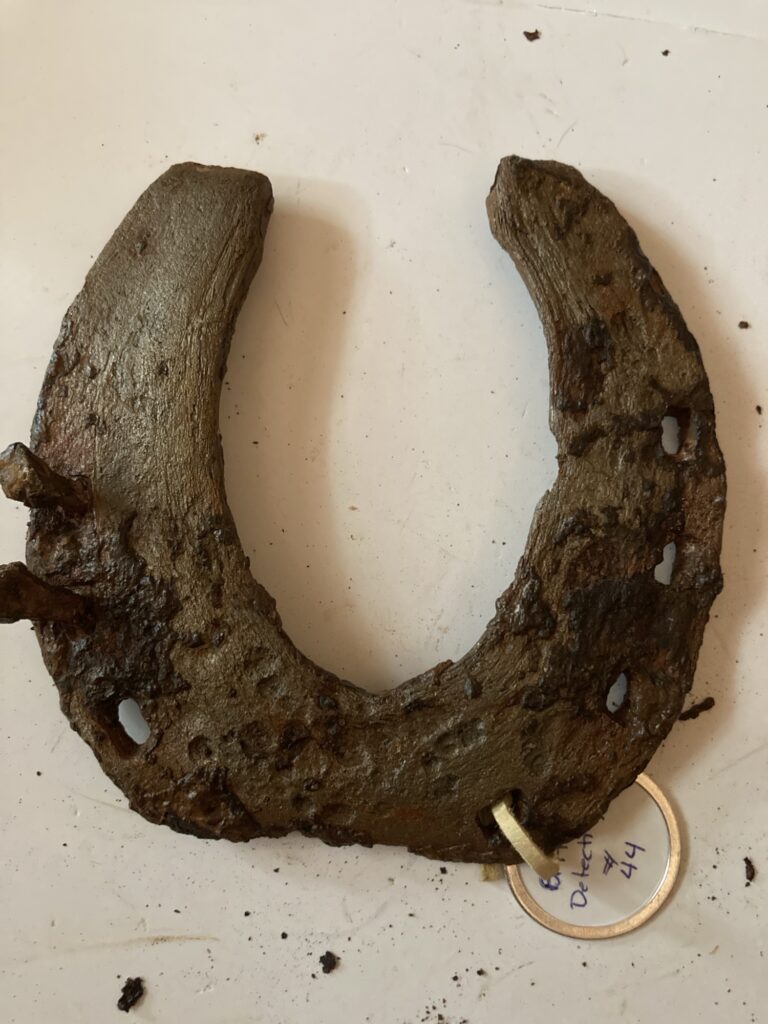
This shoe is quite thick and heavy! I left a rusty patina on it, but they are all coated with clear Rustoleum paint to stop further rusting
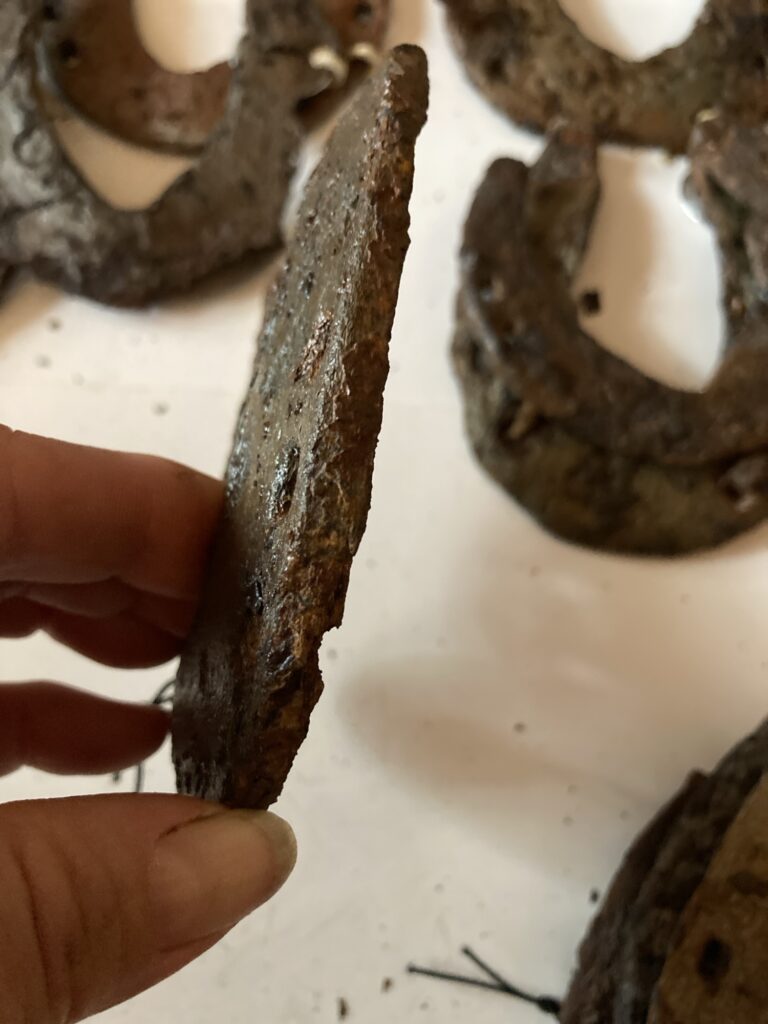
Another photo of the shoe above, to show just how thick it is!
I believe this is a later shoe, possibly getting a little closer to the keyhole variety. It is a bit larger than the others, and the squared off heel on the left seems to remind me of the keyhole heels.
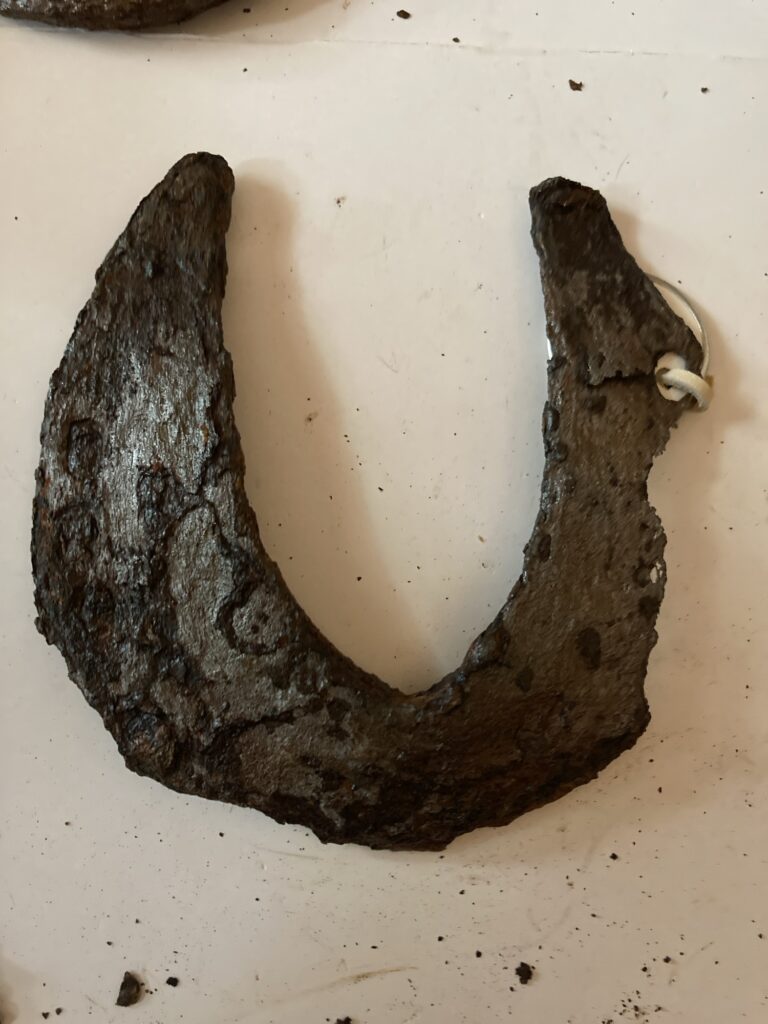
This shoe has a great angular inner profile! It is a bit larger than the others. It also has a lot of damage to the right side.

Wouldn’t it be wonderful if these shoes could talk? To hear all of the stories of the horses that once were, what their lives were like, and all that occurred in the hundreds of years that these shoes were under ground!