Identifying Ancient Horseshoes—Wavy-Edged Horseshoes

Most of my oldest horseshoes were bought from metal-detectorists from Great Britain. I also have a few from the Ukraine, but I can’t find any reliable source of research that is written in english to tell for certain how old the Ukrainian ones are. I will include photos of my Ukrainian shoes as examples here, dating them as if they were from Great Britain.

The resources that I use are

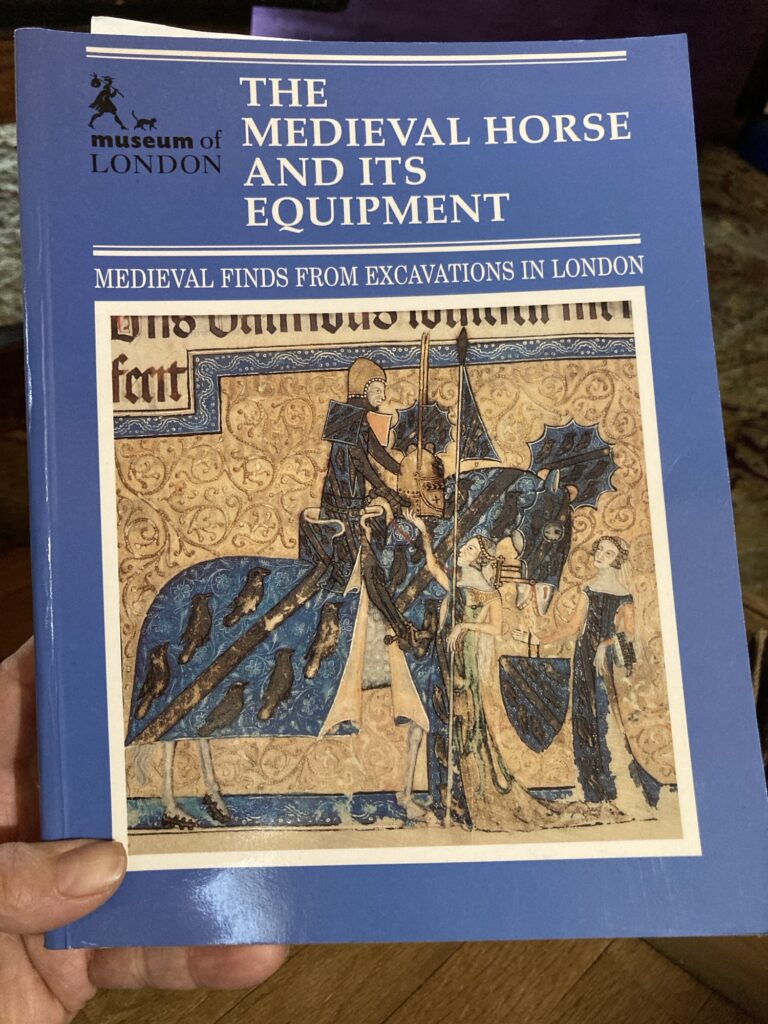
  1. The Museum of London website, as they have excellent photos of their horseshoe collection available online, listing their estimated dates.
  2. This book:

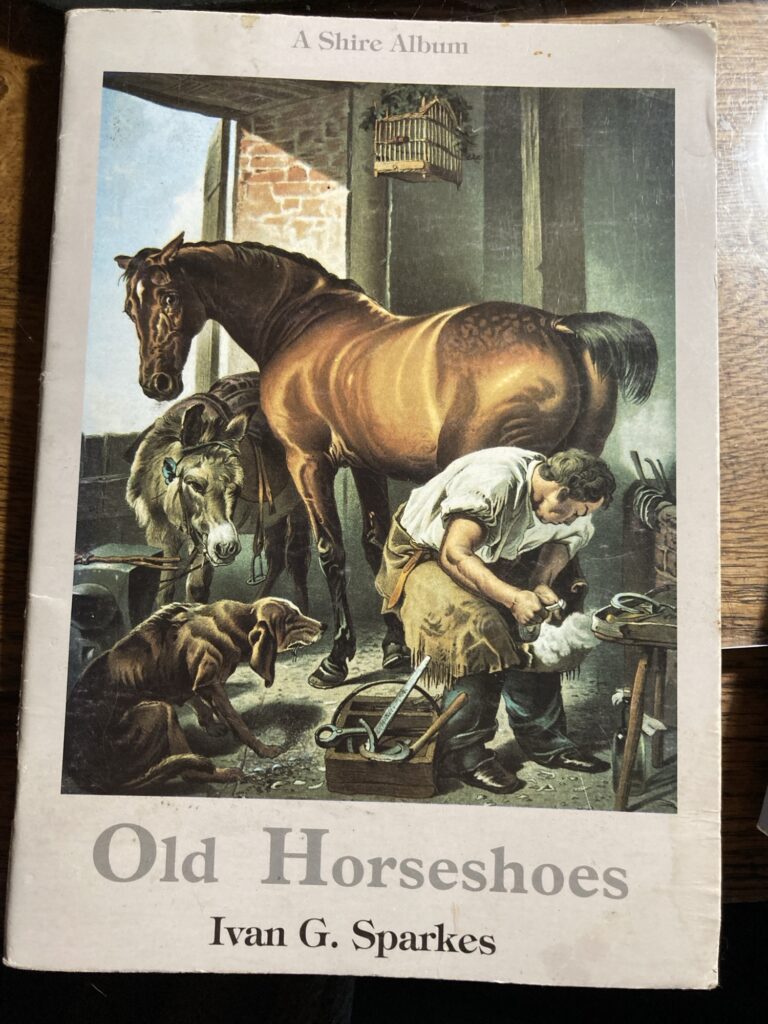
3. This book:

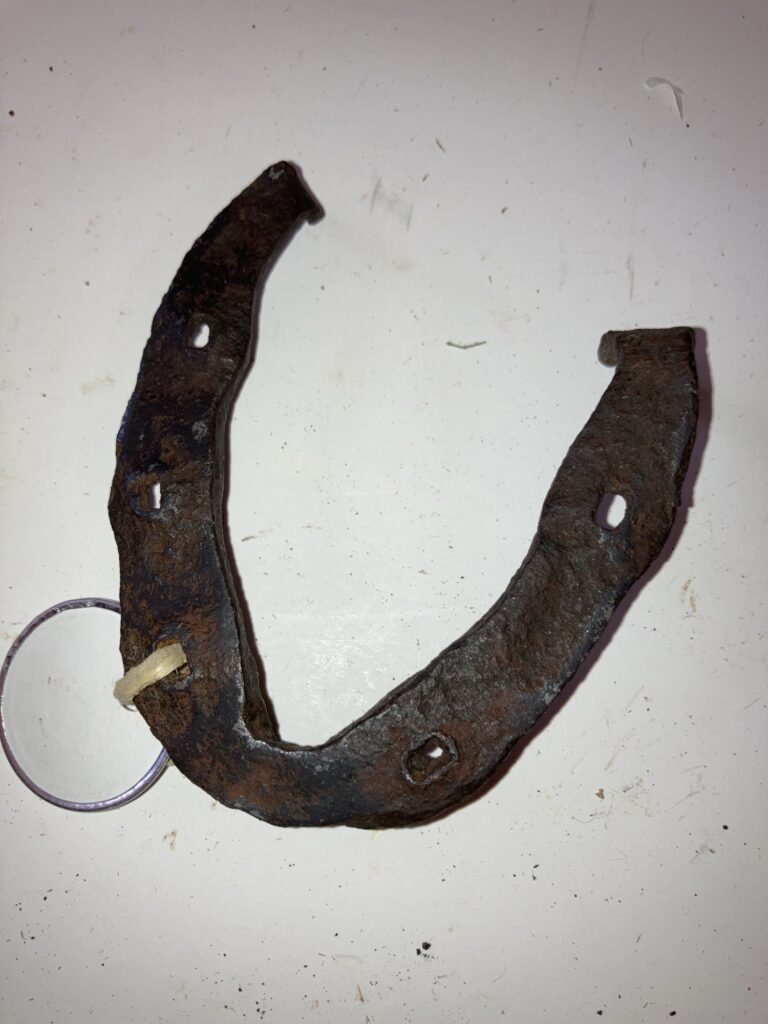
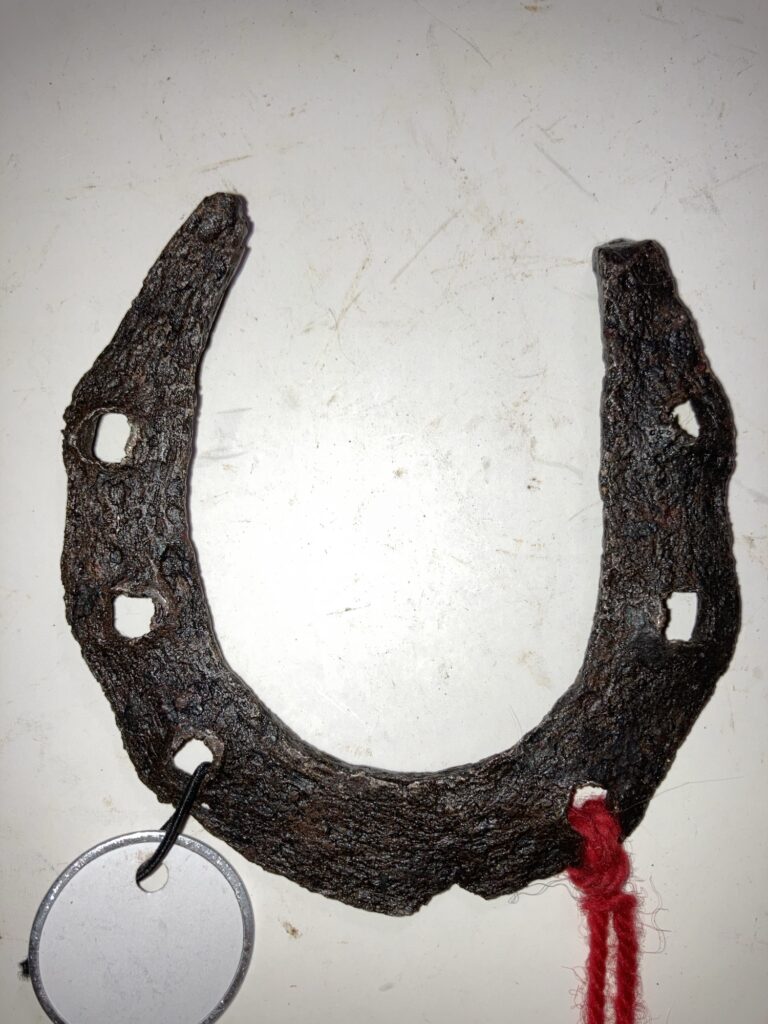
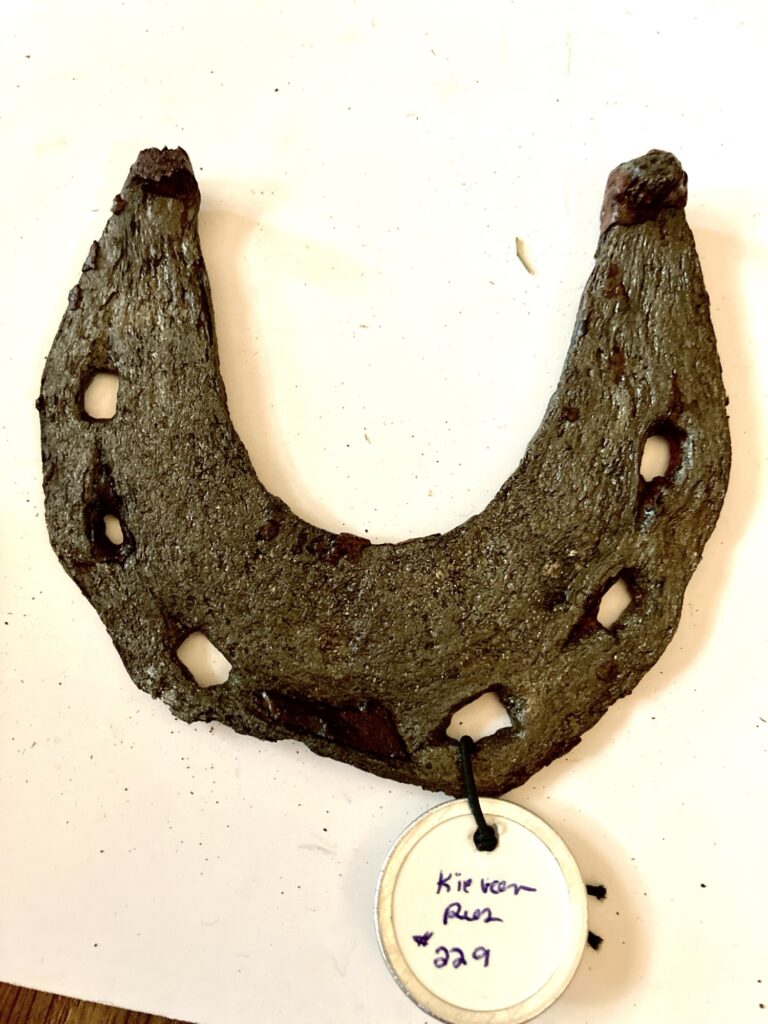
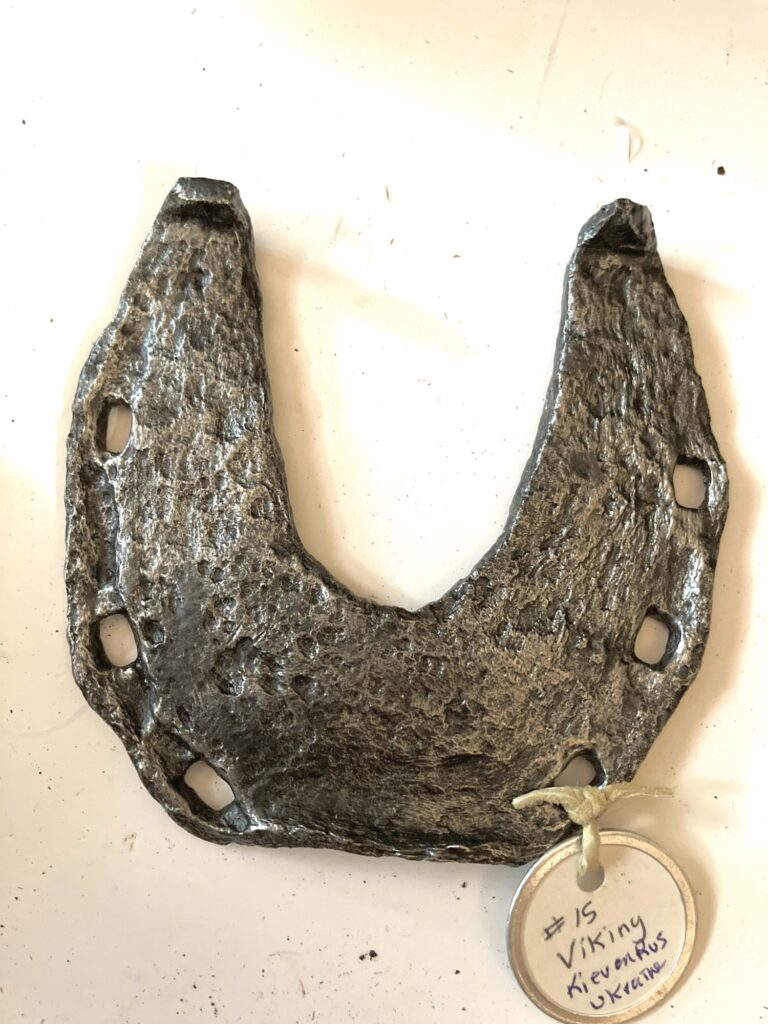
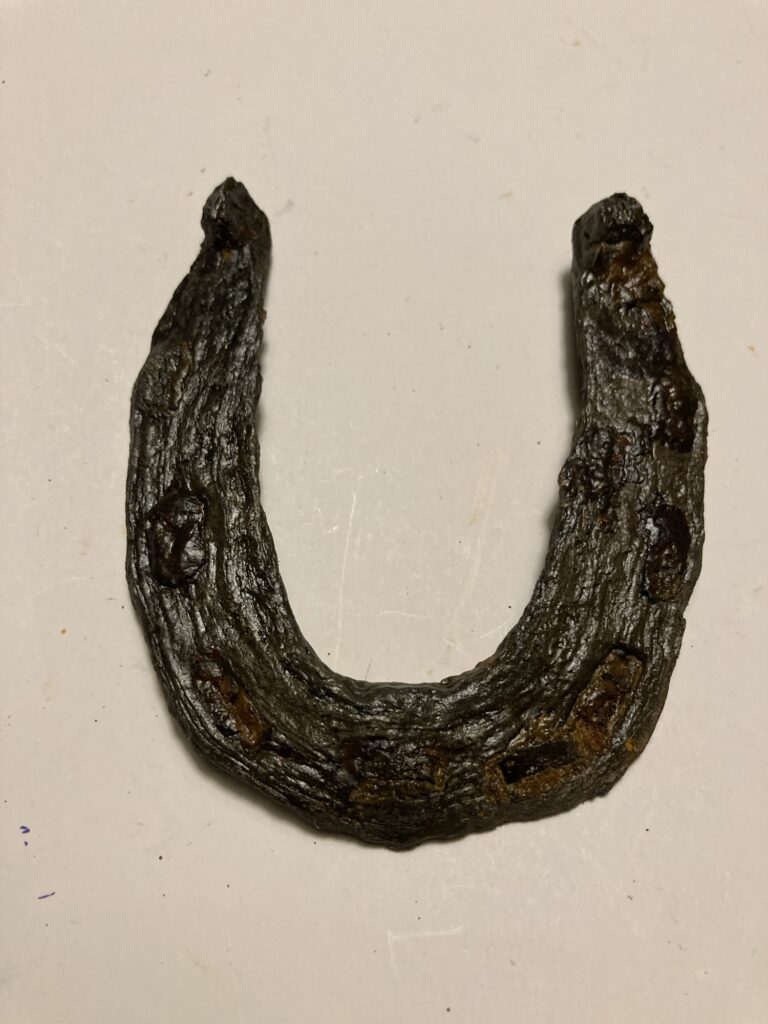
Wavy Rimmed horseshoes have a wavy outer rim. The waviness occurs from when the nail holes were punched into the shoe, so that the outside rim widens around where the nails are. Here is an example:
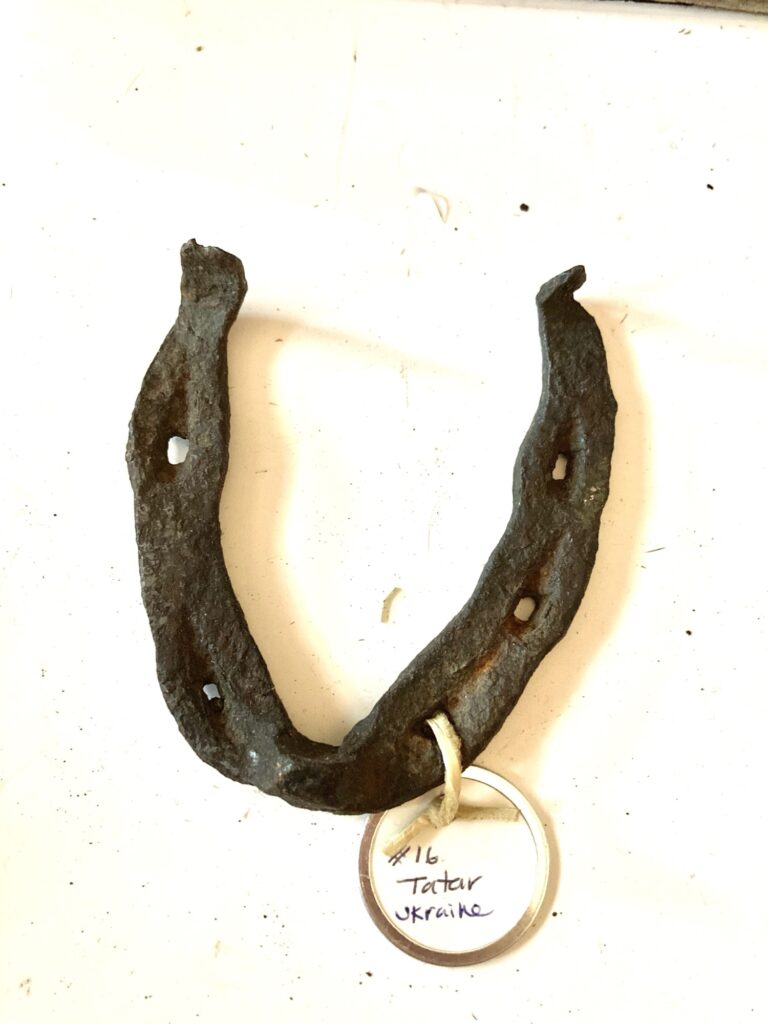
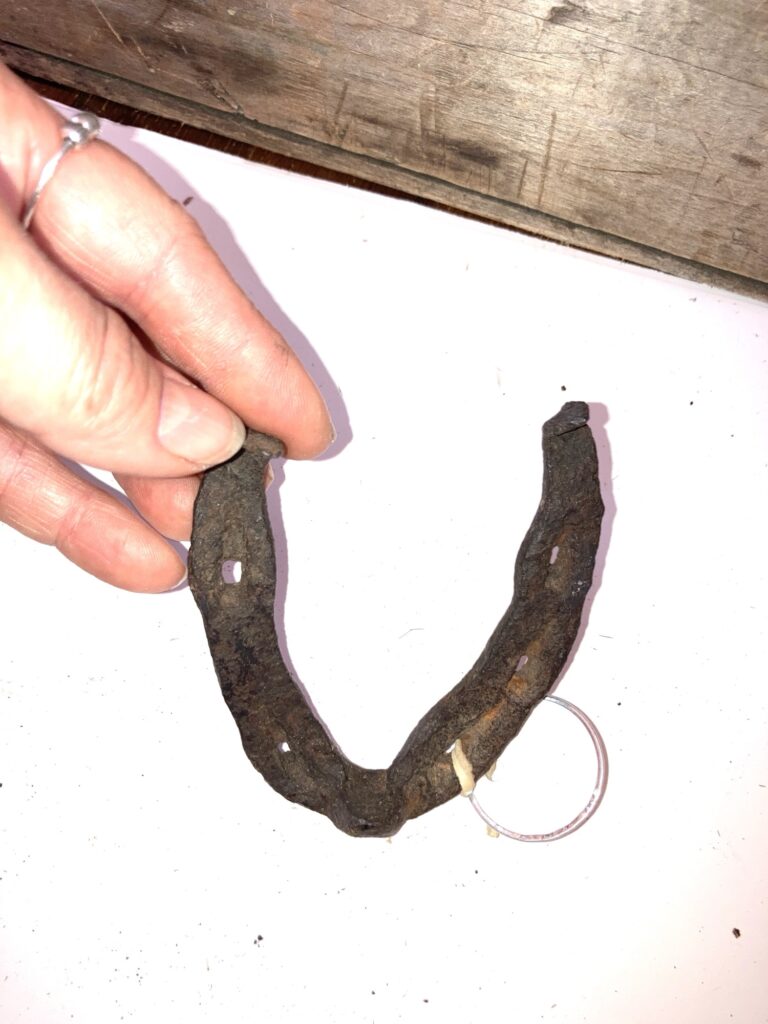
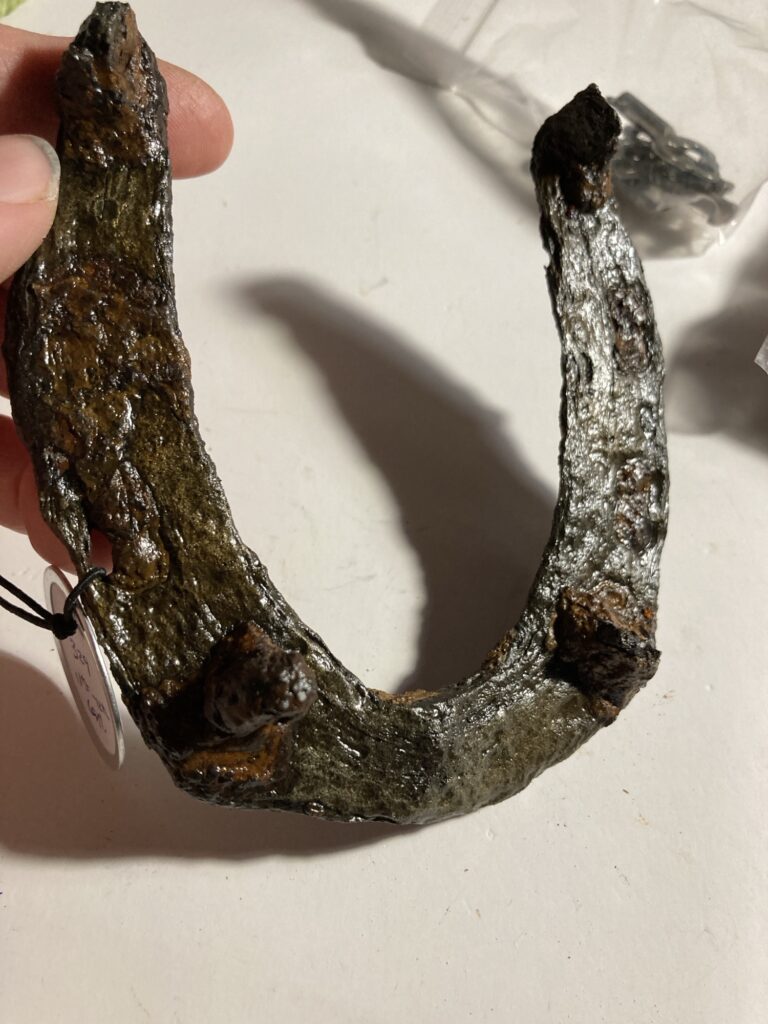
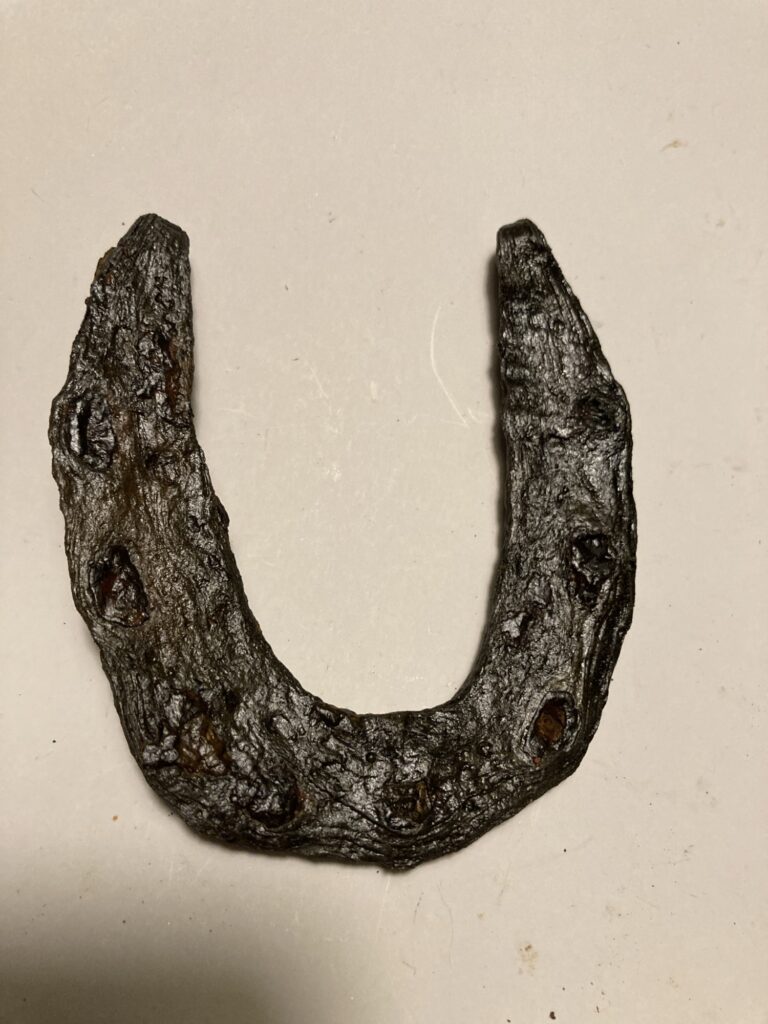
This shoe is actually from Kievan Rus in the Ukraine. The finder says it may have been from the Tartars but we really don’t know. It is a great example of the waviness around the nail holes, though. If dated using the Great Britain books it might be from the 10th-11th century.
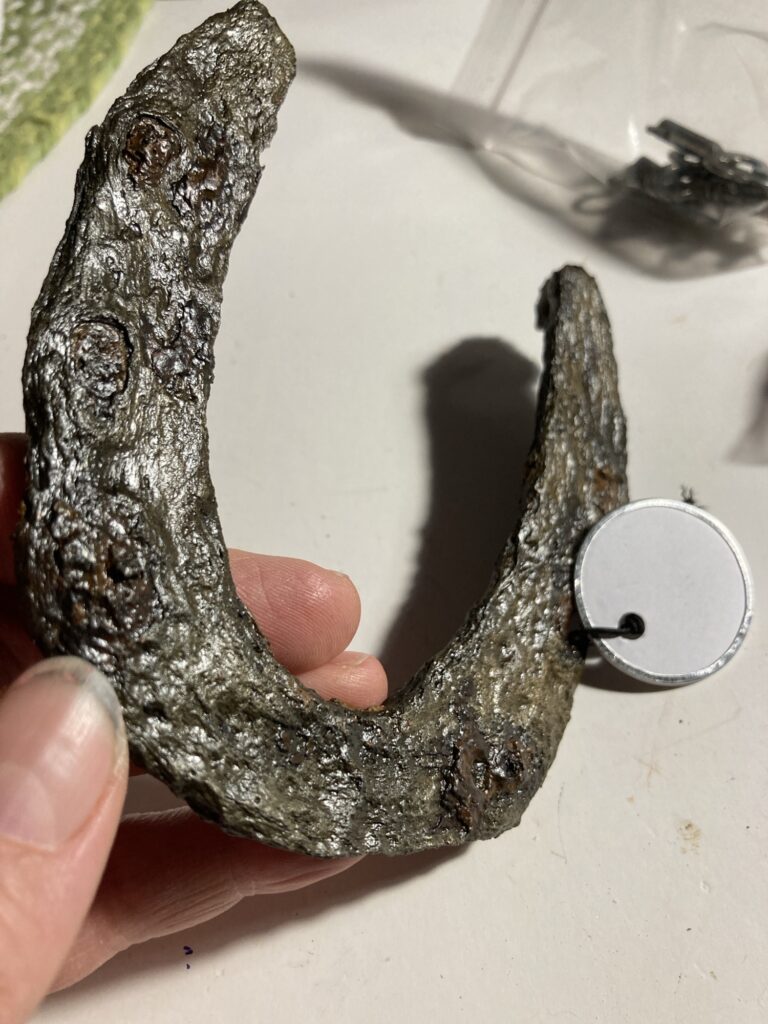
Another view of the above shoe. It’s so small!
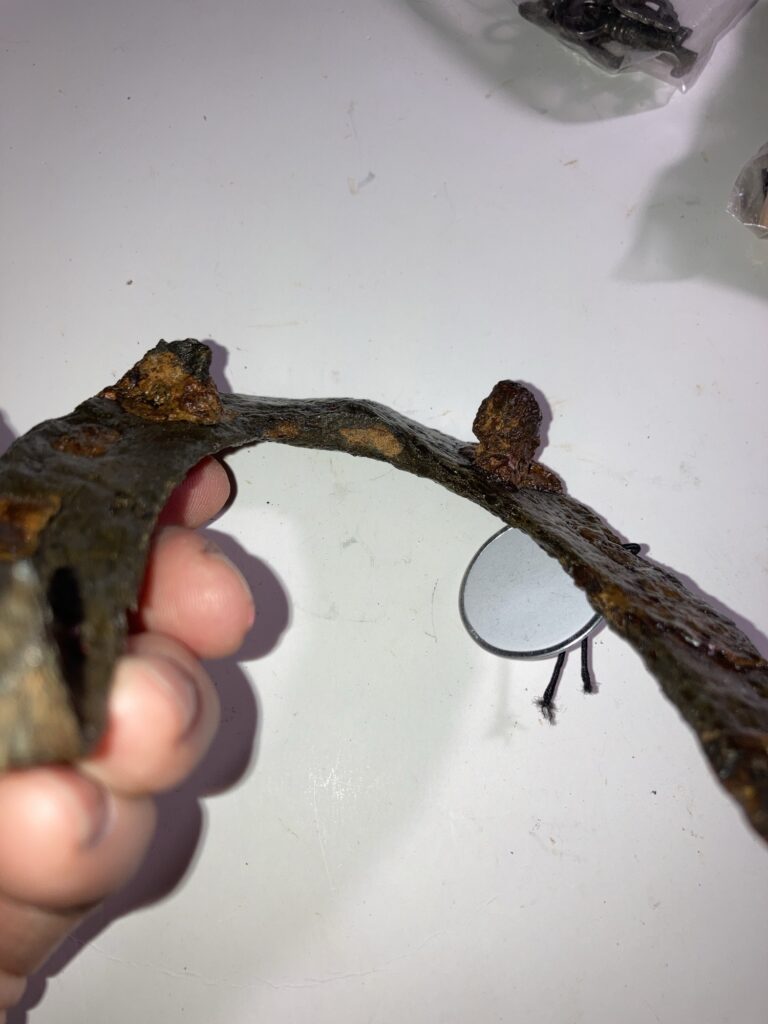
The back.

Older wavy rimmed shoes usually have longer, oval shaped depressions around the nail holes. Nails with T-shaped heads and nails that have a fiddle head appearance were widely used, and aided in traction. The oval depressions around the nail holes helped the nail heads to stay in place and helped keep the shoe on.

There are two main types of wavy rimmed shoe, according to the shapes of the nail holes.

One has round nail holes, and was more popular during the 10th-11th century, and the other has more rectangular nail holes and was more popular around the 11th-12th century.

When there is a lot of corrosion it can be hard sometimes to tell the shapes of the holes, but i will do my best with what shoes i have.
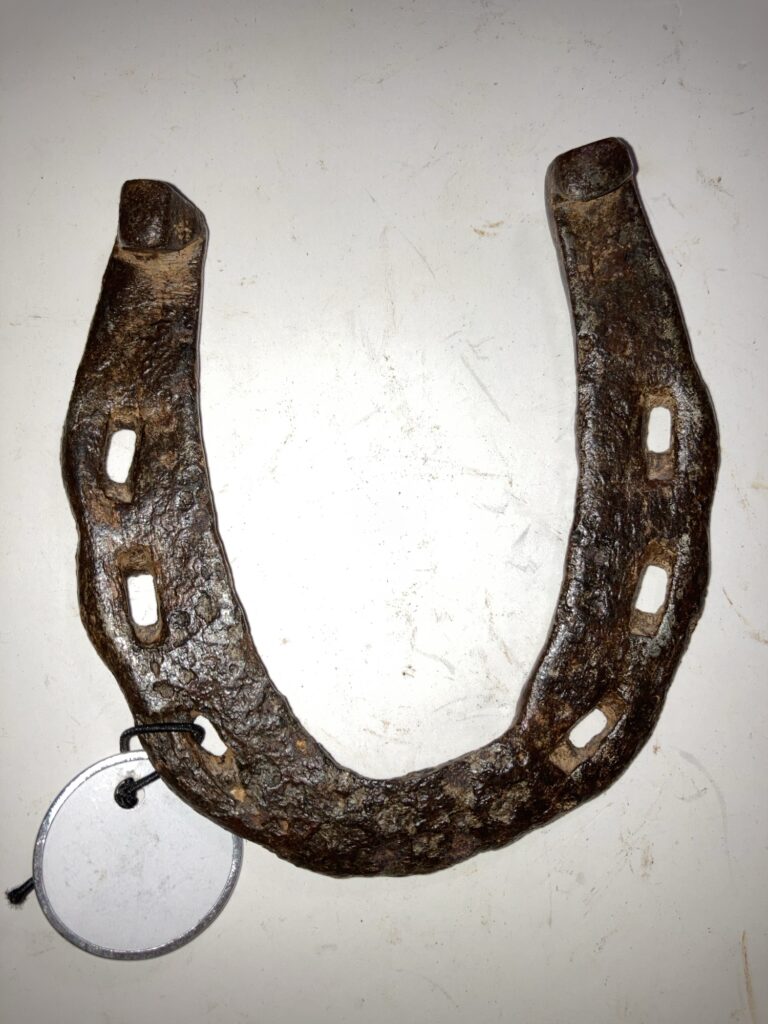
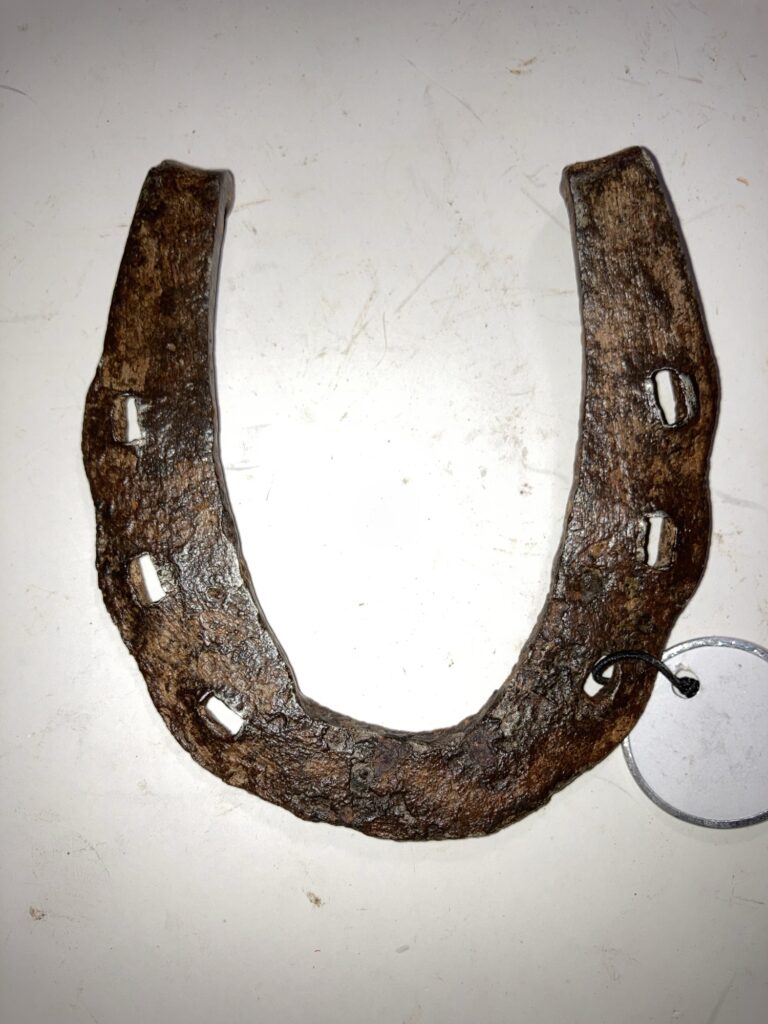
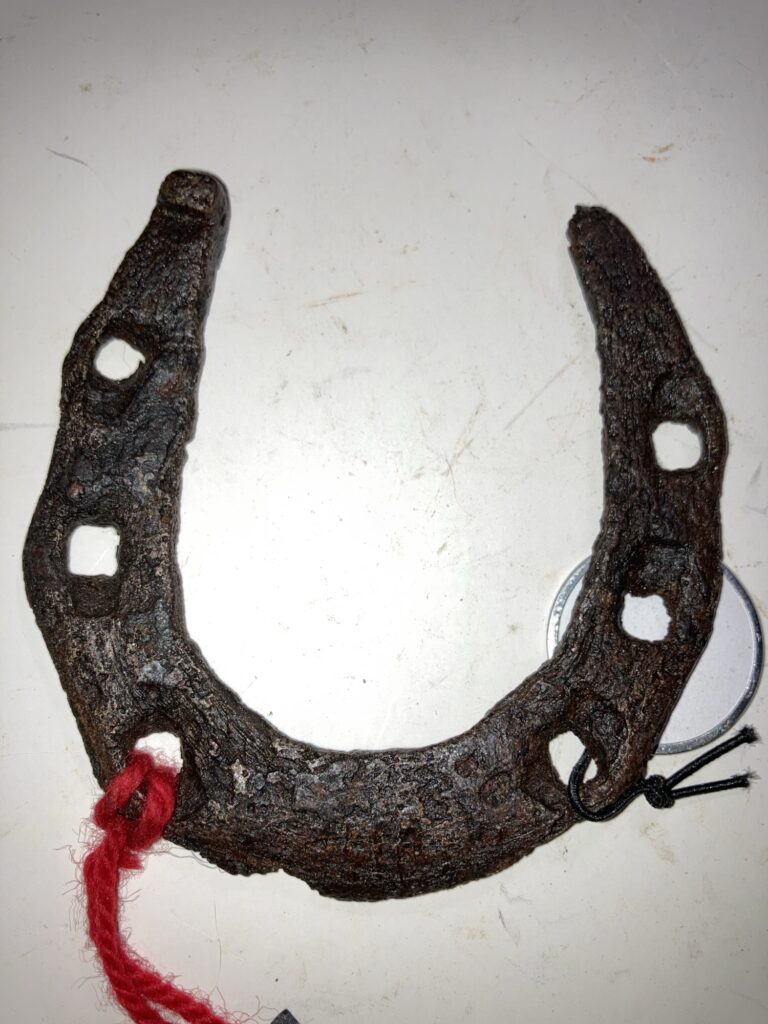
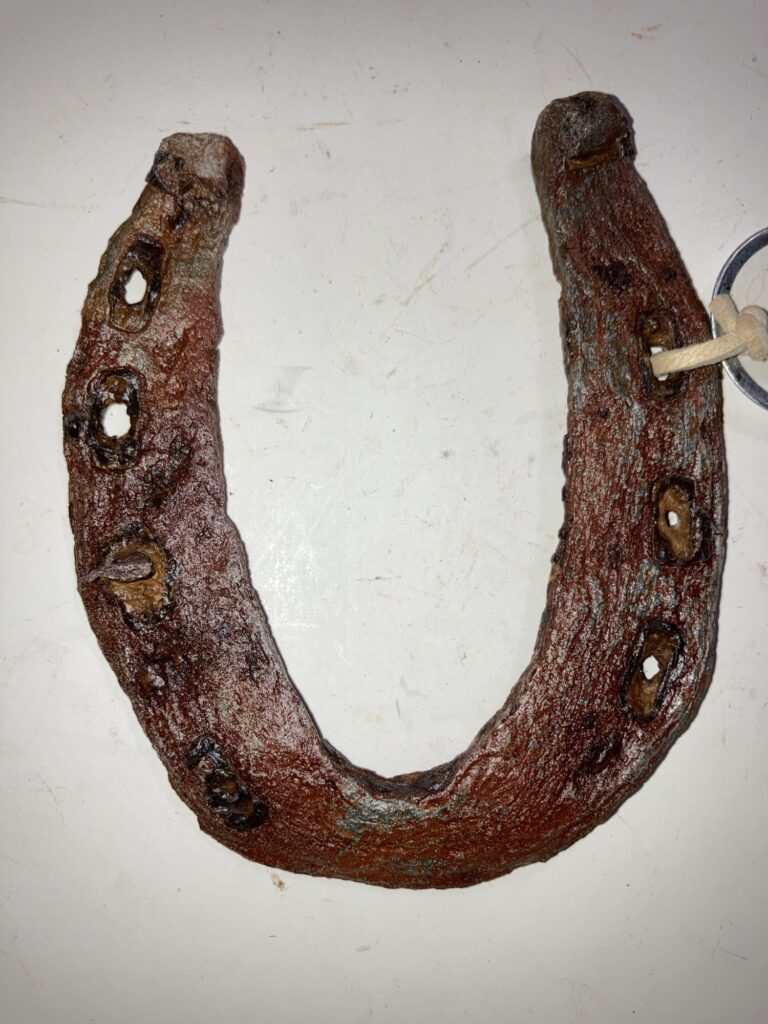
This shoe is a great example of one having rectangular nail holes. The long countersinkings around the holes are also clearly visible. This one is probably from the 11th-12th century (1001-1200 AD).
The back view
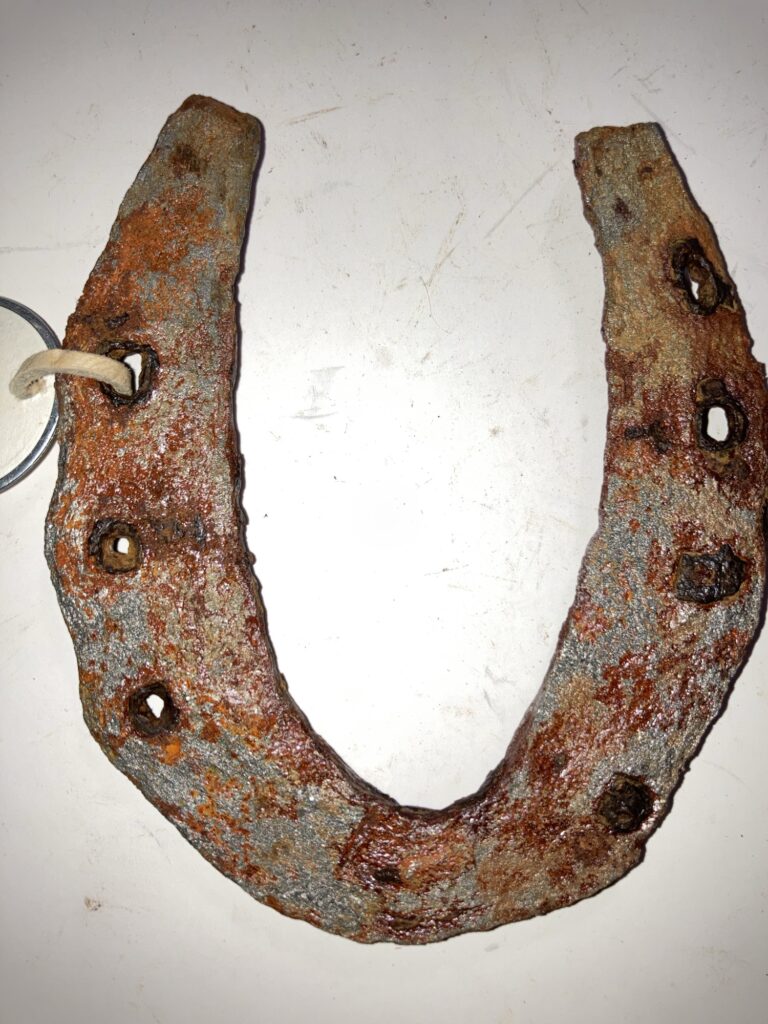
I believe the nail holes on this shoe would be considered round. It might be from around the 10th-11th century (901-1100AD).
The back.
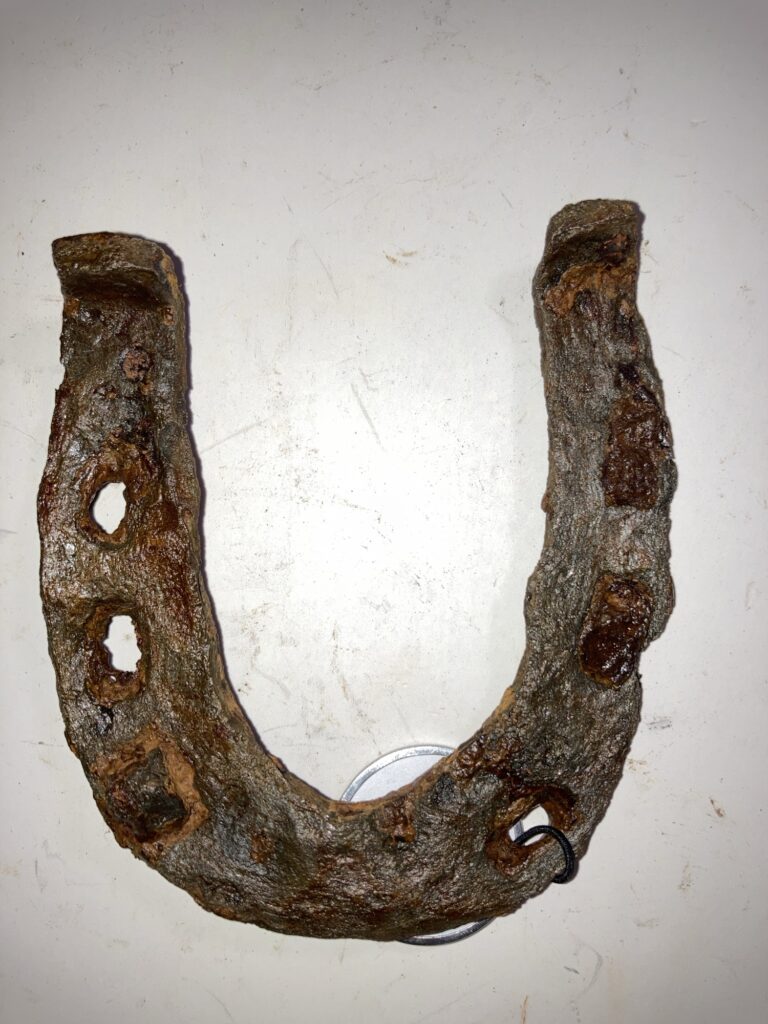
This one is hard to tell. I know it’s an older shoe because of the long rectangular countersinking around the nail holes.
When we look at the back, it looks like the nail holes might be round, so it might be from the 10-11th century.
This shoe has longer holes, so my guess is that they are rectangular and possibly from the 11th-12th century.
The back.
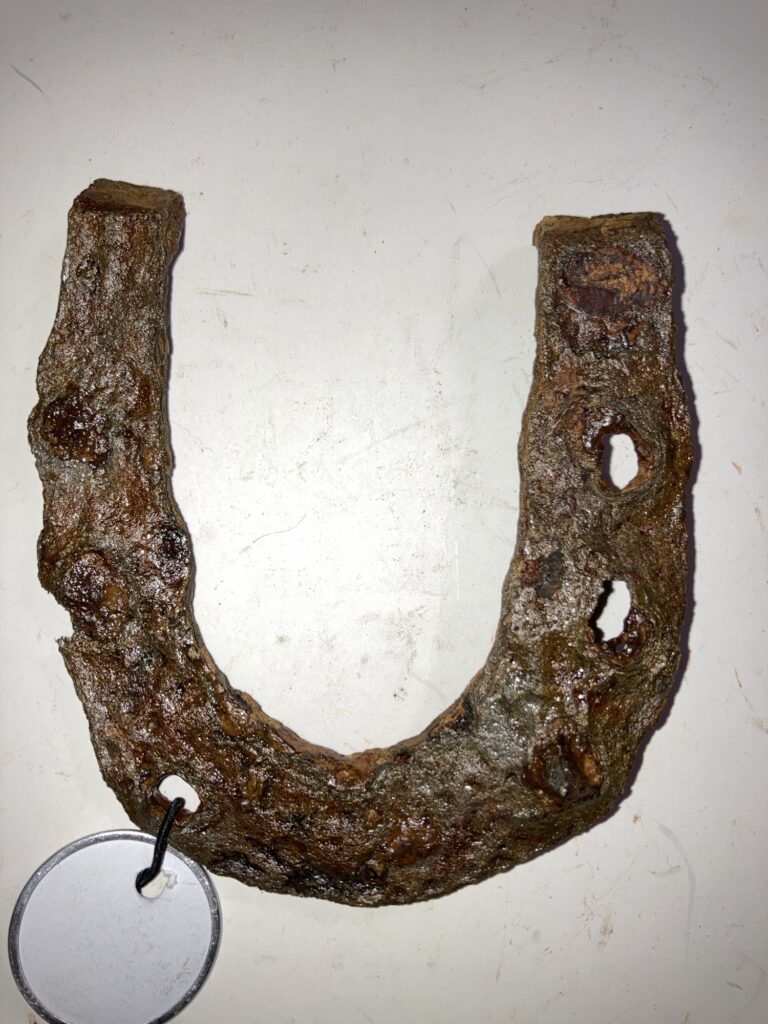
This shoe is unusual in that it has a nail in the toe. Shoes usually don’t have nails in the toe because that area gets the most wear. It has the characteristic long nail holes of an older shoe.
The back shows that the holes are small and probably round, dating it to possibly the 10th-11th century.
This shoe is from the Ukraine. It has longer countersinkings around the nail holes and a wavy outer edge. Are the nail holes round or rectangular? It’s hard to tell. It could be from between the 10-12th century.
Here is another from the Ukraine, in excellent shape and cleaned professionally. It has a wavy outer edge and long countersinkings. I think maybe rectangular nail holes? Possibly 11-12th century.
This shoe is hard to see the nailholes in the photo, but i tried to catch the right light to show the long countersinkings.
A back view of the same shoe. The nails are more round.
Also of interest on this shoe, note the almost fiddle-head shaped nail head. This was a common feature of the very old shoes and served to add traction, as they stuck out a bit at the bottom of the shoe.
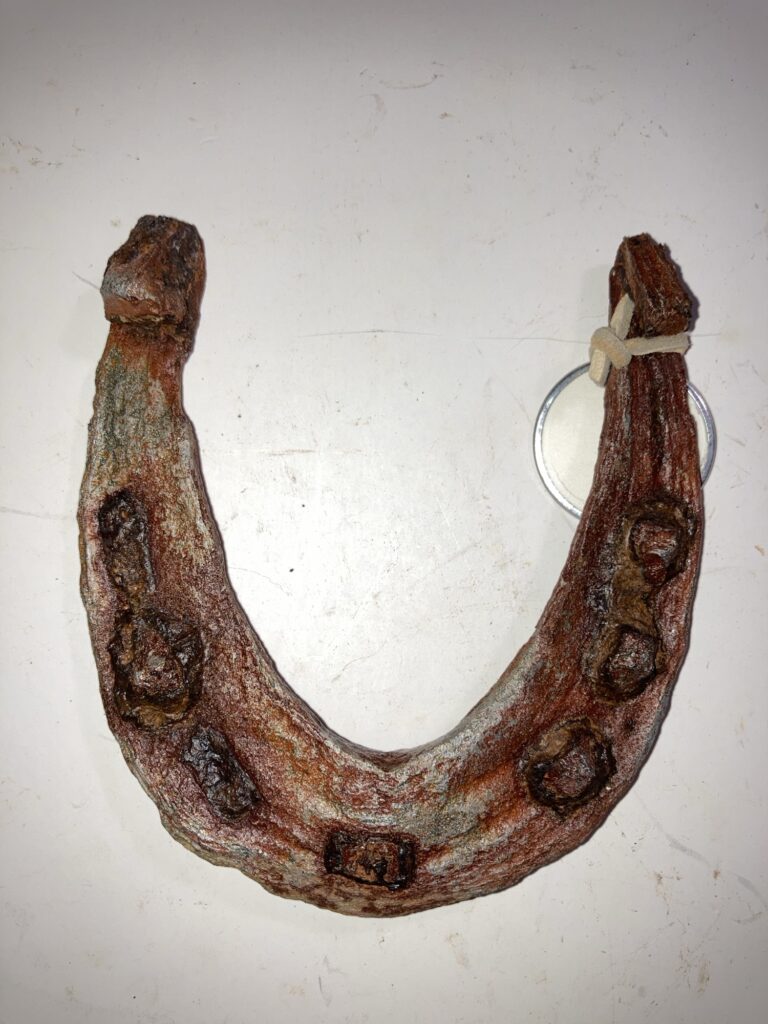
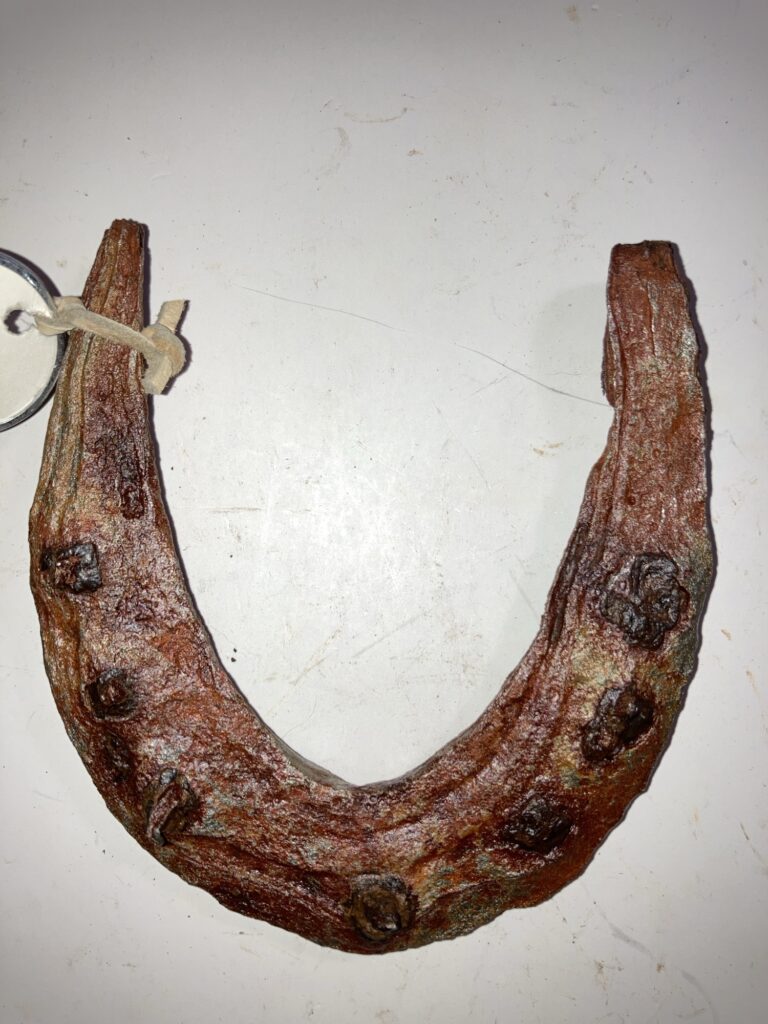
This shoe has 8 nail holes that go all along the shoe, including the toe region. It’s hard to tell what shape the nail holes are, as it has a little bit of stubborn corrosion that I haven’t been able to remove.
A back view of the same shoe.
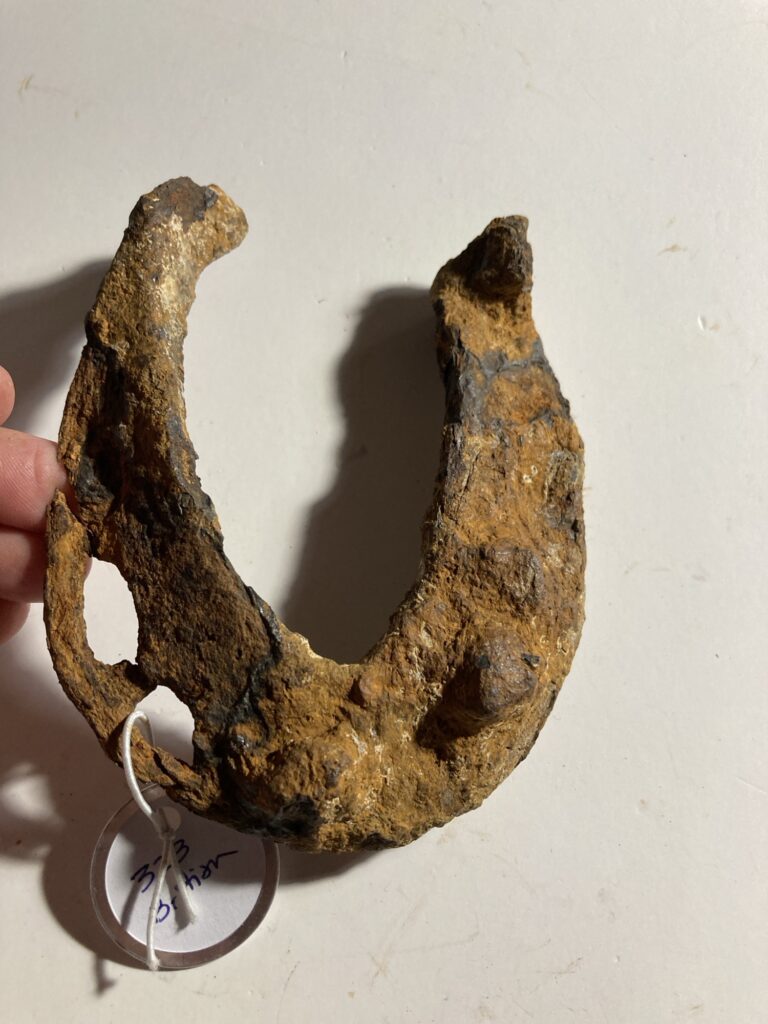
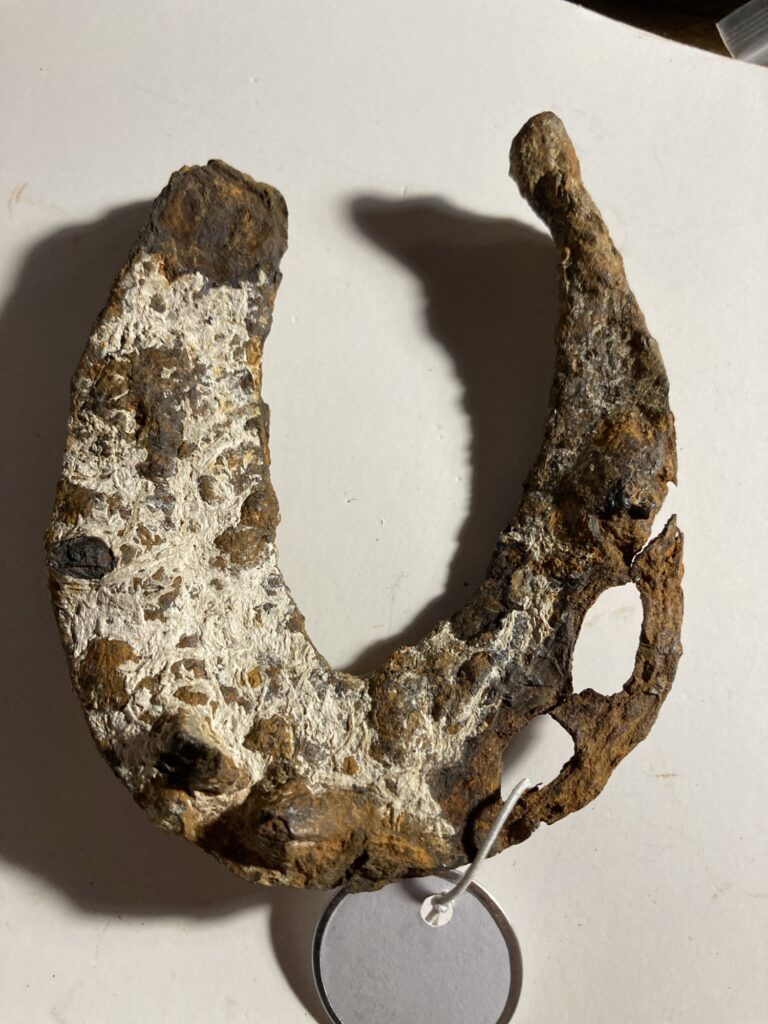
This shoe, I felt, was too delicate to clean properly, at least with the vinegar method that I often use. I kept it in the original condition that it came to me.
The back side. I think that this shoe might also be one of the more ancient ones that I possess, but it is hard to tell exactly what is under all of the rust and corrosion. I believe it is at least a guildhall shoe due to the angular inner edge, but the enlarged nail holes on the one side could indicate an older shoe. They could also just be enlarged from being more corroded there. It’s hard to tell without cleaning it properly. Note the fragile state of its more open holes—an area that bends easily and must be handled with care due to the cracks. I may one day strengthen the damage with an epoxy of some sort so that the piece doesn’t break off and get lost. This shoe is one that I would like to use electrolysis on if I ever get a setup.

Unless there is a recorded history of the shoe, or it was found in a specific location surrounded by specific items from a specific time frame, the ages of most shoes can only be estimated based on what was common for the area it was found in. I try to keep cautious when purchasing shoes that are supposed to be old, as an experienced blacksmith can recreate an old-fashioned shoe. Most of the ancient ones that i have purchased are from reputable sources and i have had to clean off enough layers of rust and corrosion to where I feel confident that they have been in the ground for a few hundred years (lol).
How to Update a Toy Dollhouse Barn to Look Weathered and More Realistic

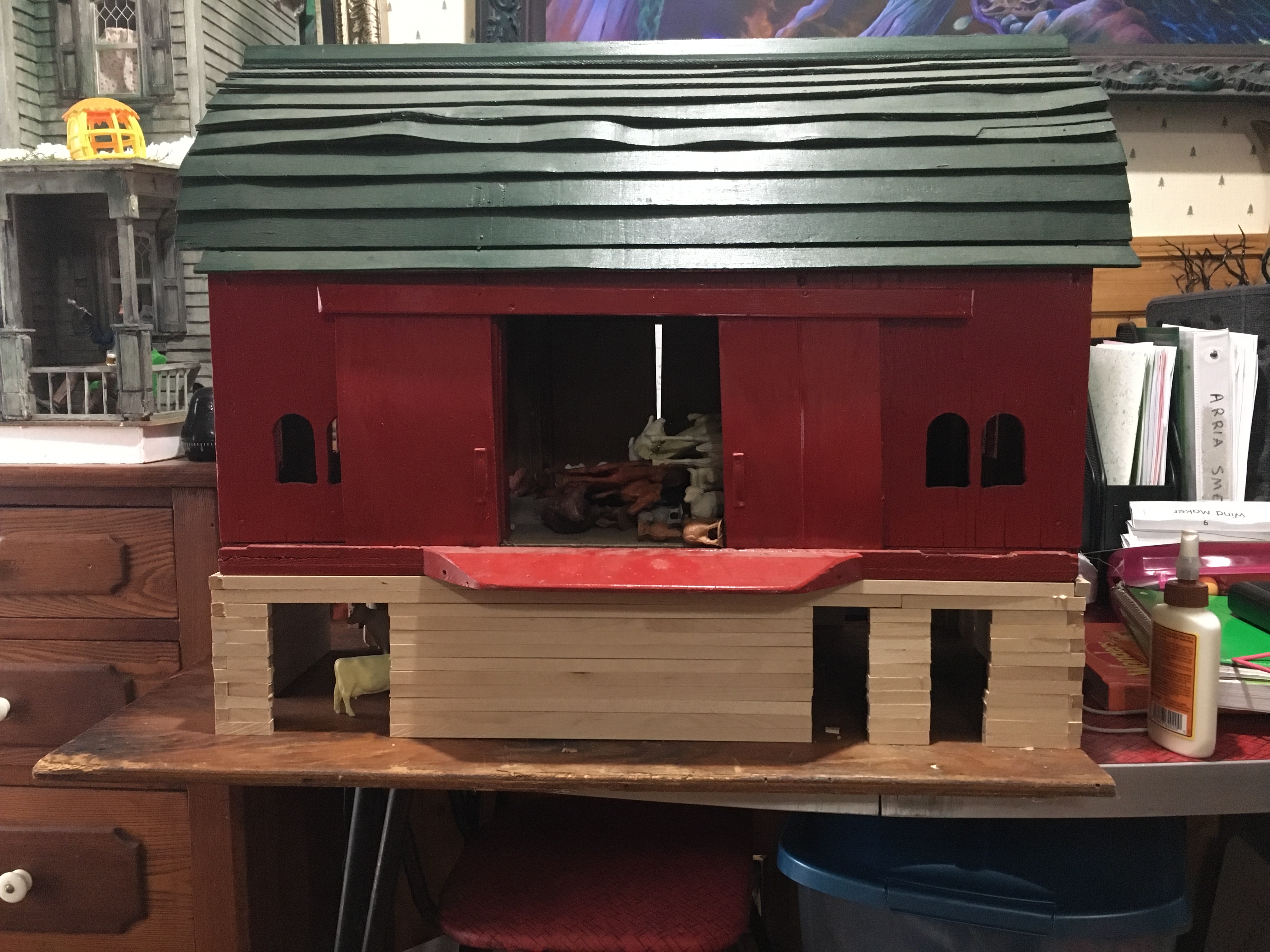
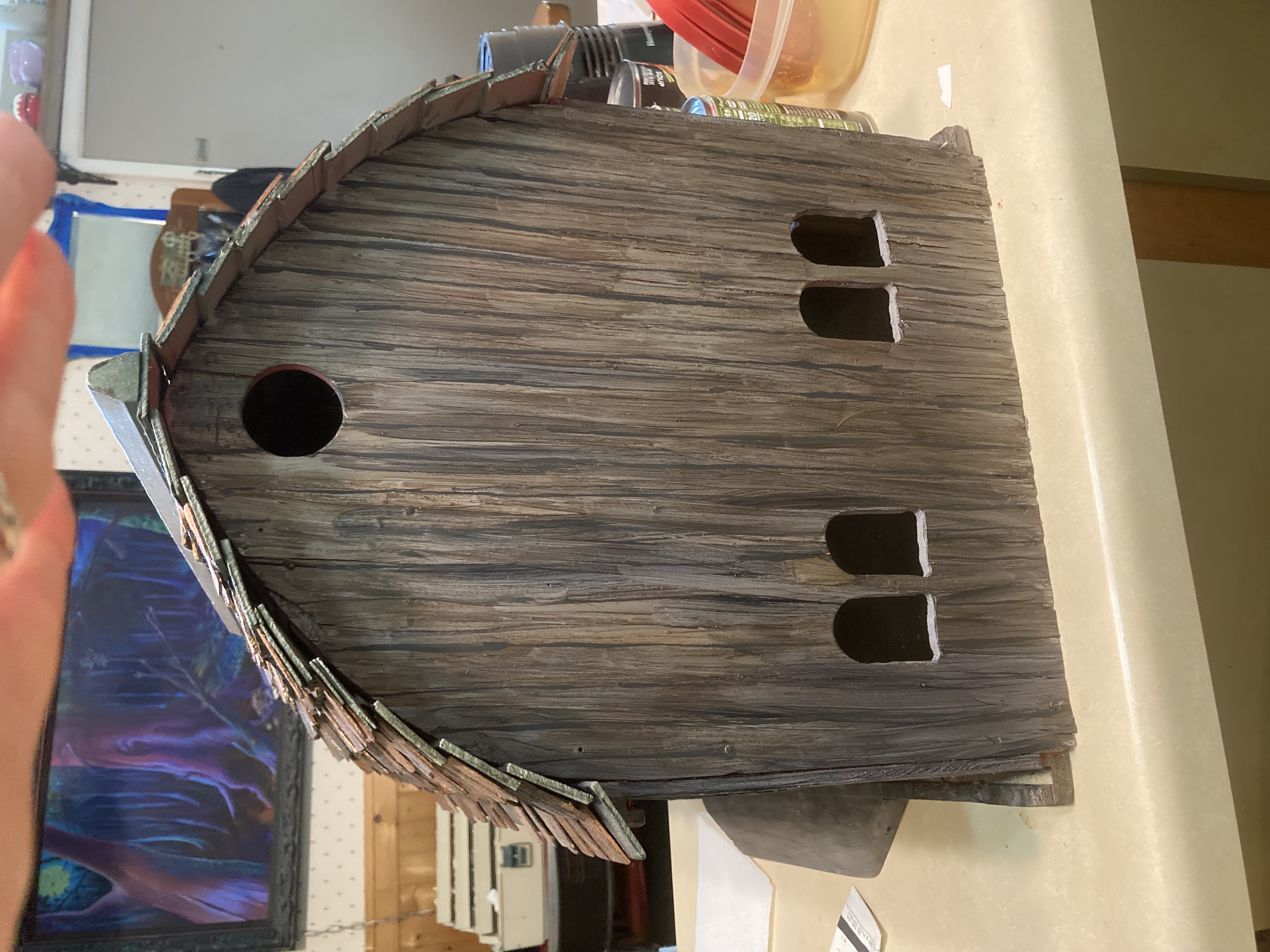
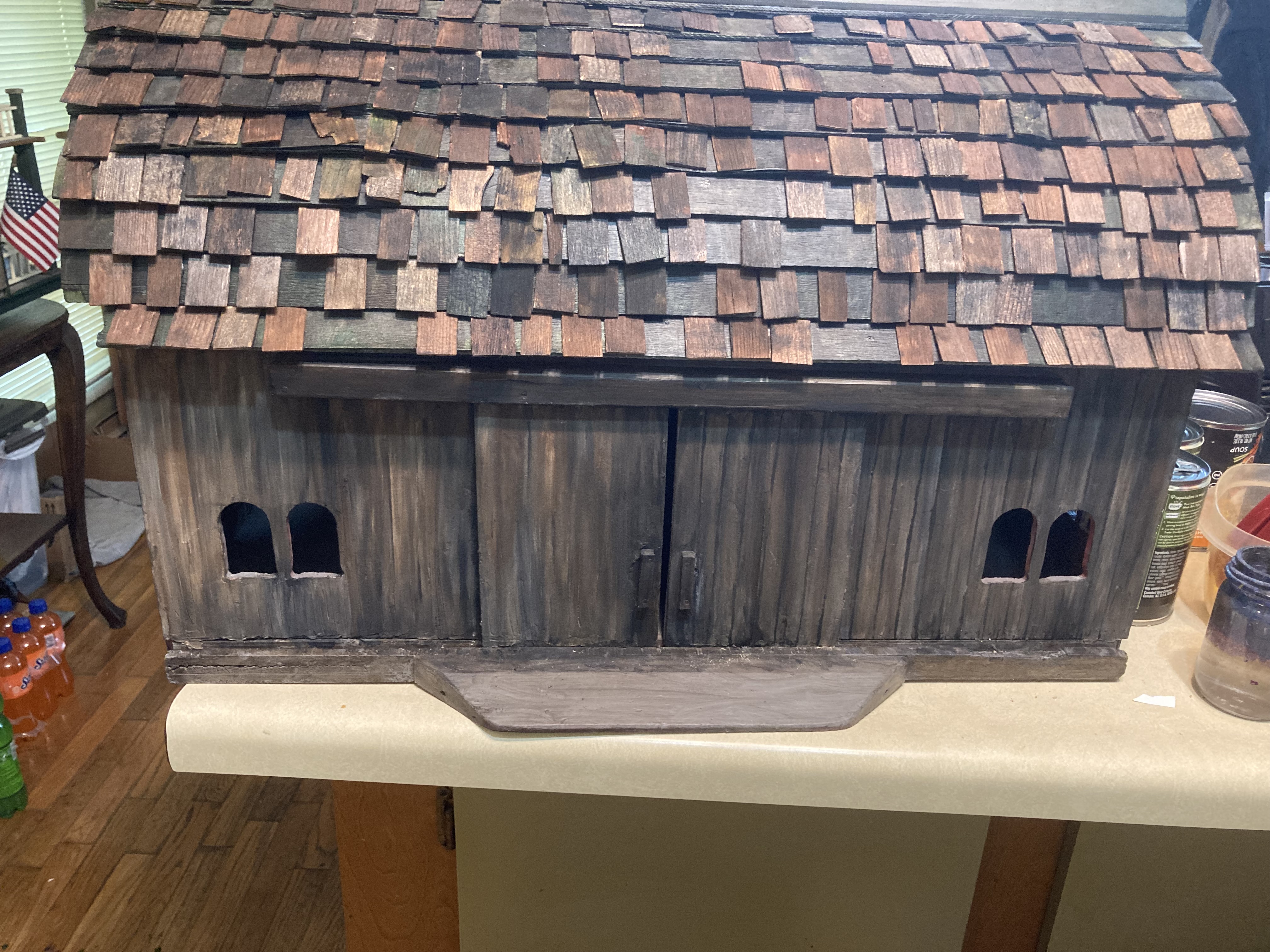
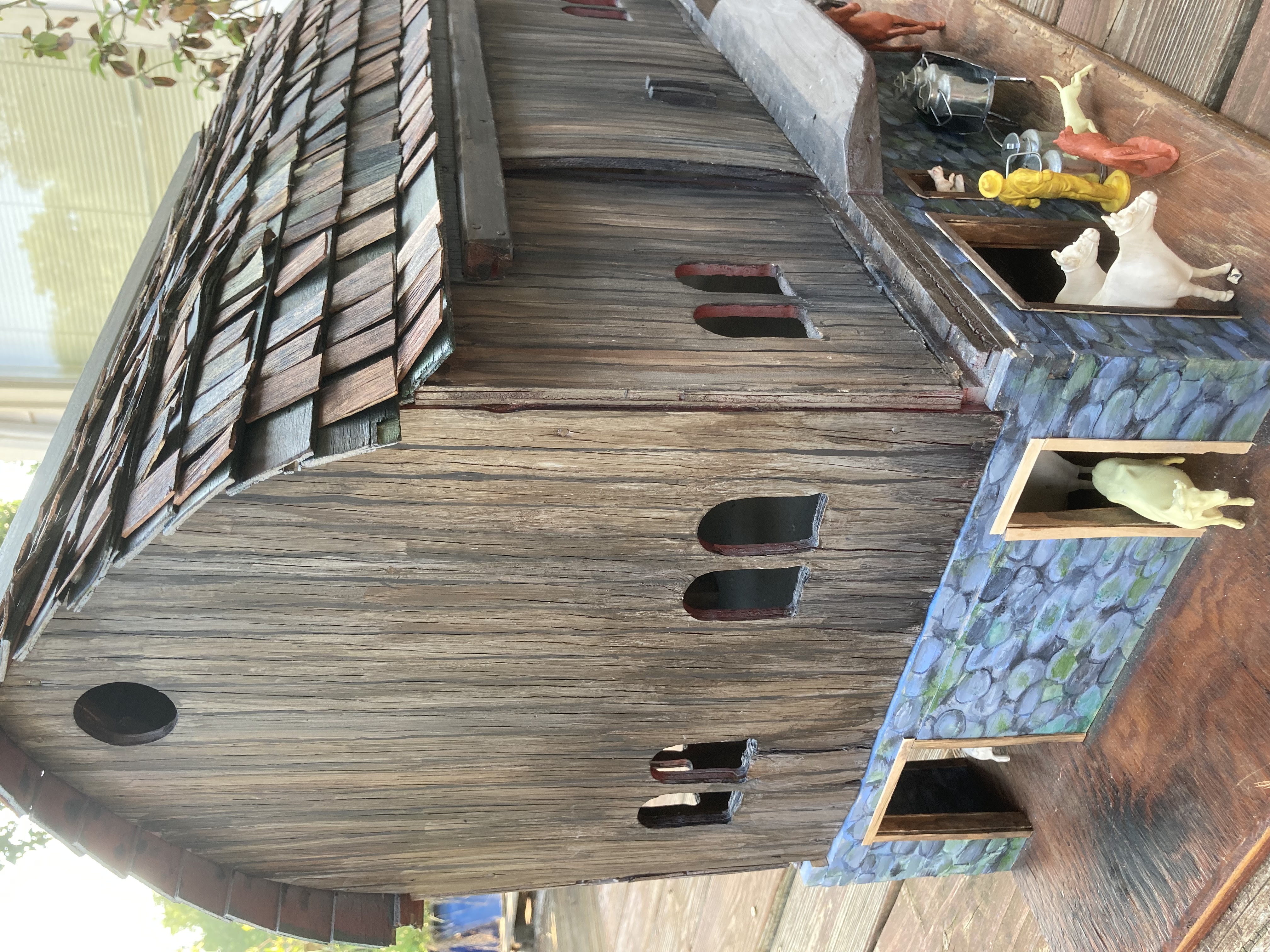
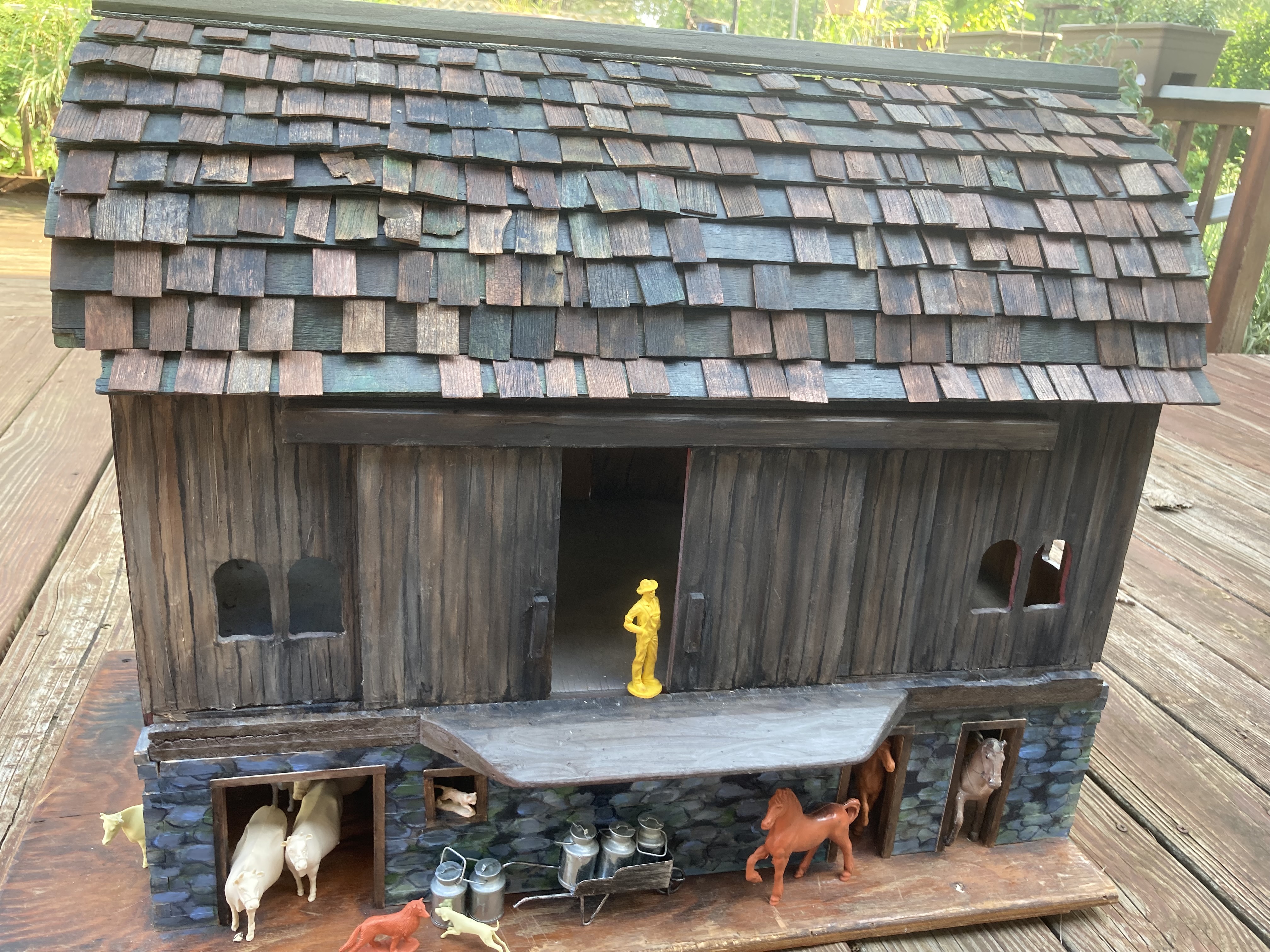
Barn after a lot of modifications.

This barn was once part of someone’s railroad table. I had been looking for a good barn project (I love old farms, especially the barns, especially when they once had horses in them. I am a now-horseless horse-nut).

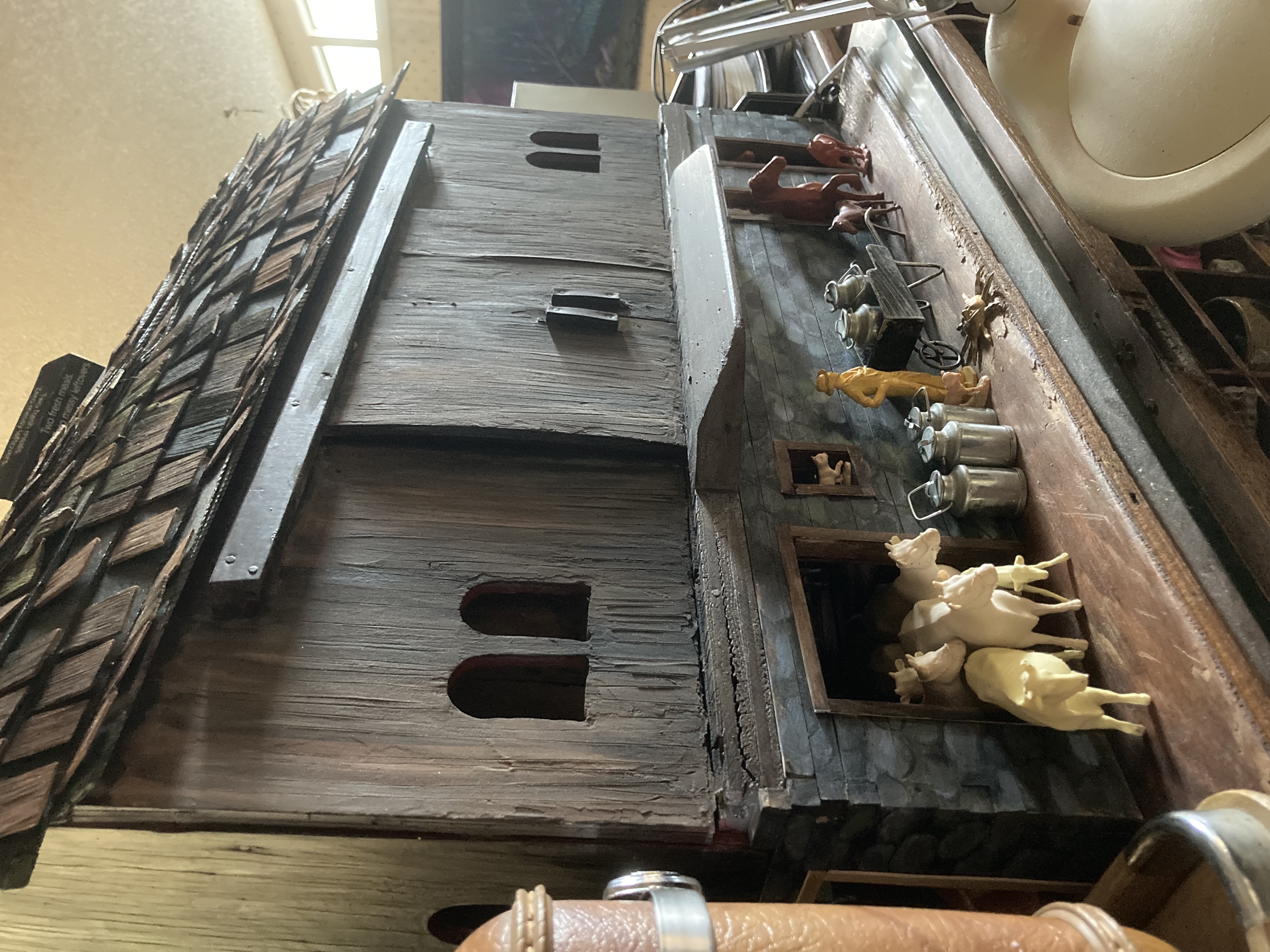
This barn was originally made to sit flat on the ground, but I wanted a lower level with livestock pens, more similar to my grandparents’ bank barn. In order for that to happen, I would have to build a base for it to sit into.

Building the base.

I started with a good plywood board for the base, set the barn on top, in the position I wanted to permanently affix it in. I traced out the barn’s outline.

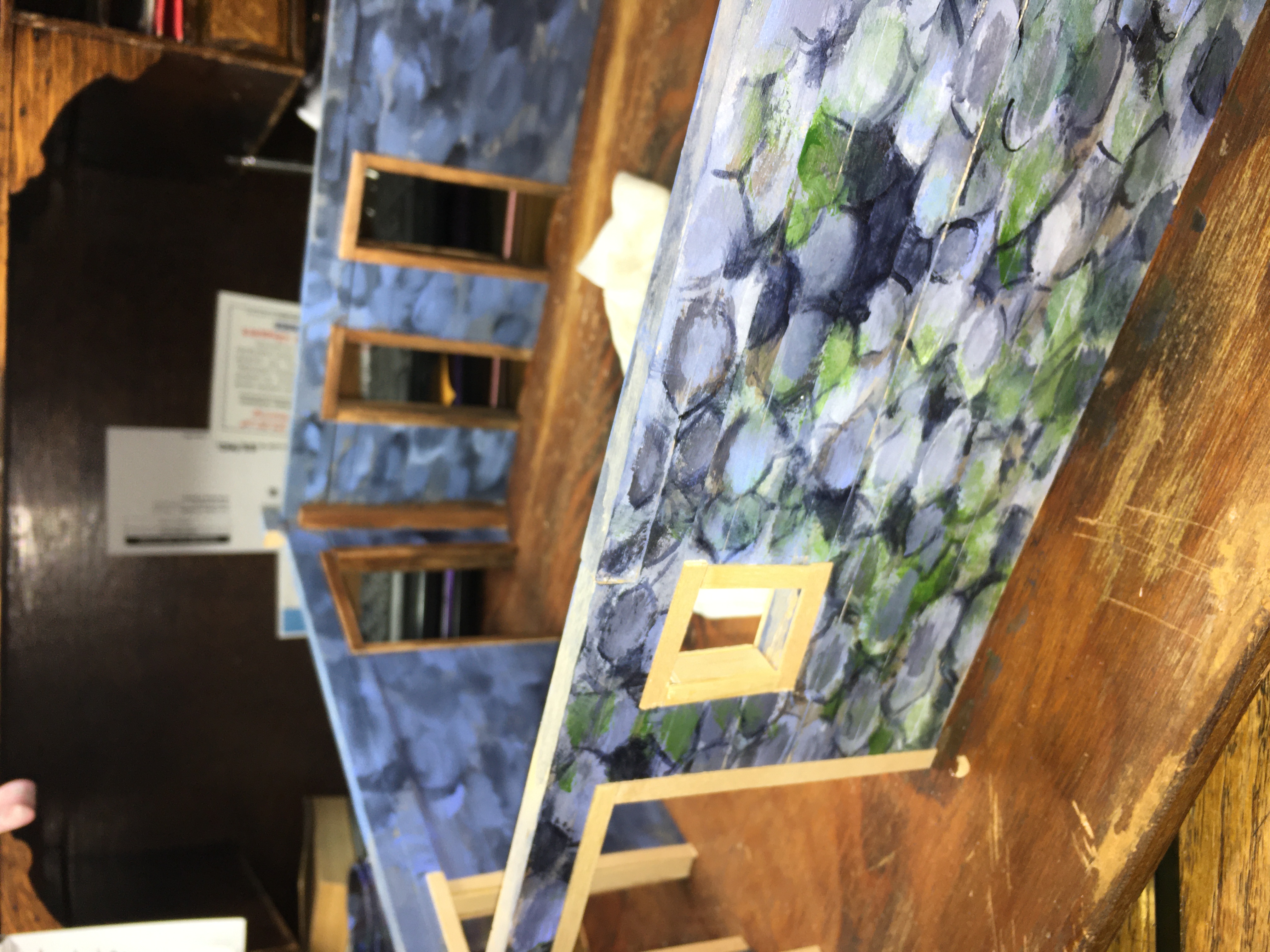
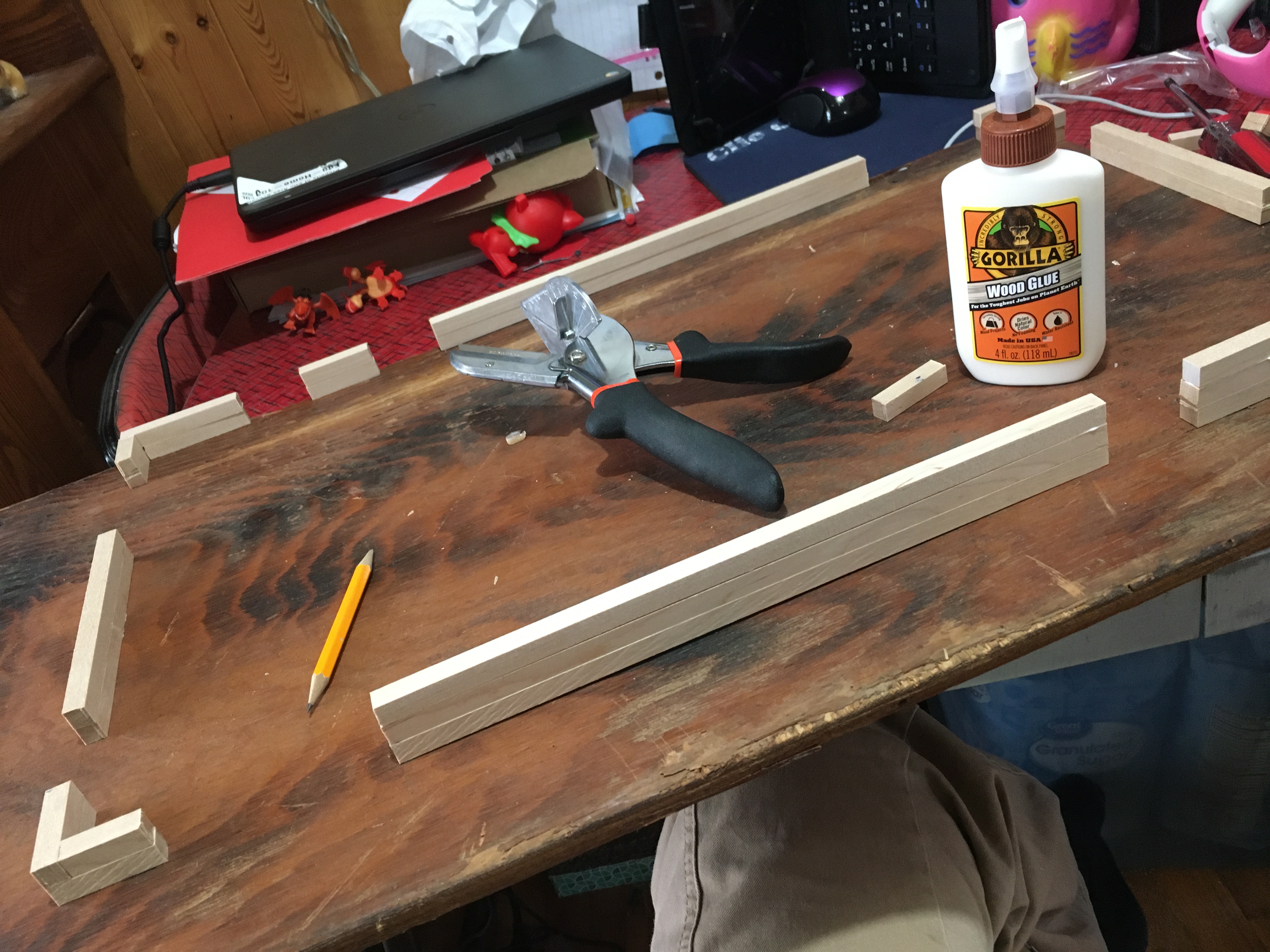
Next I decided on the locations of doors and marked them with a pencil. I then cut lengths of square dowel to fit the walls, leaving open spaces for the various doors. I built up layers of dowel, alternating overlaps in the corners for structural strength, gluing them down as I went.

Original version of barn, sitting on top of its new base. I forgot to make the windows, so I later disassembled a few areas to cut out the windows and then glued it back together.

When the bottom of the barn was as tall as I wanted, I customized the dowel placement so the original barn would sit comfortably on it without moving. The main upper section of the barn is not glued onto the base, so that I can lift the top original barn off and see the inside of the lower level.

With trim on windows and doors and a little paint added.

I used halved craft sticks to add trim around the windows and doors. This helped to give the edges a more finished look.

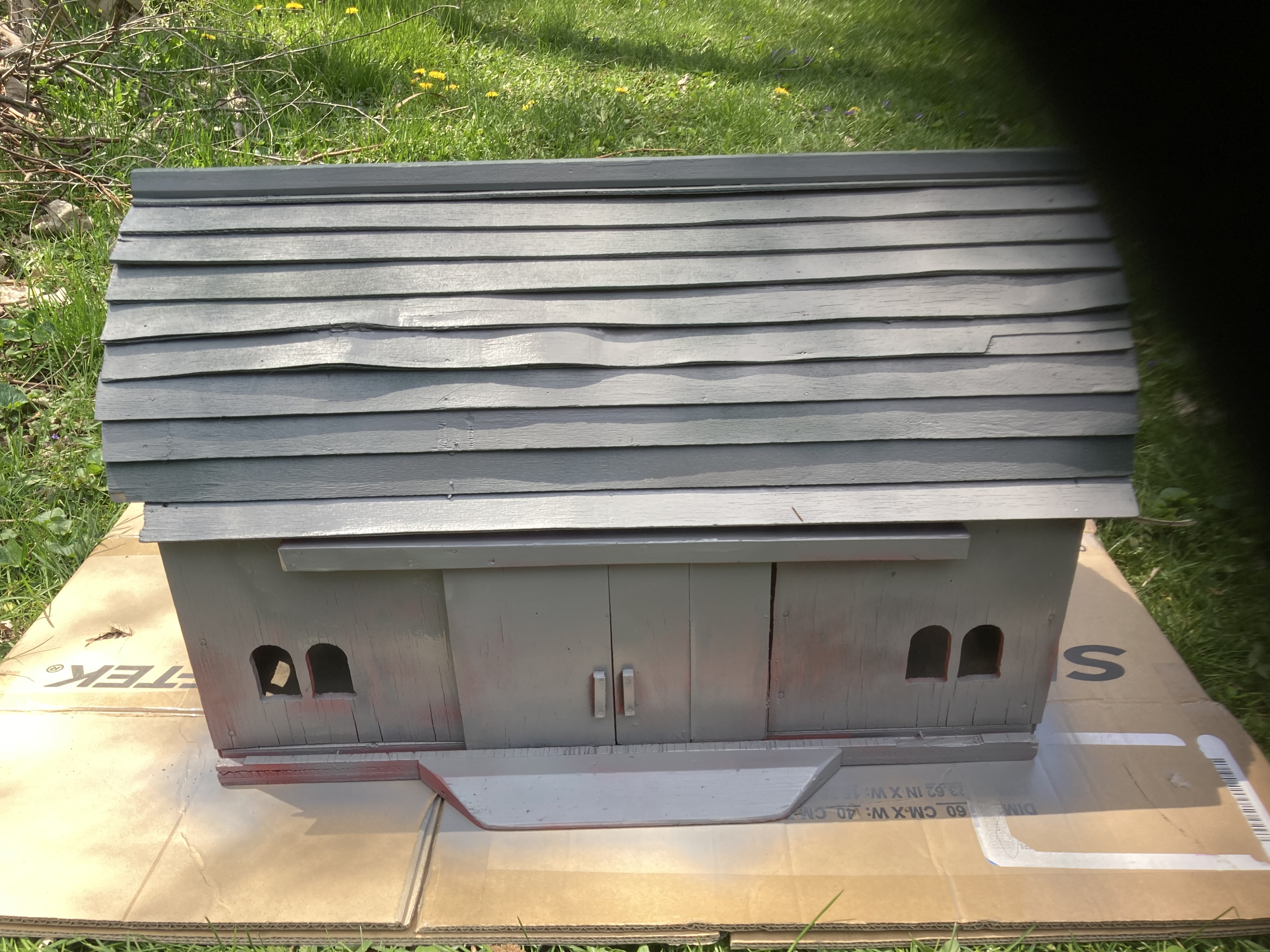
After first coat of primer.

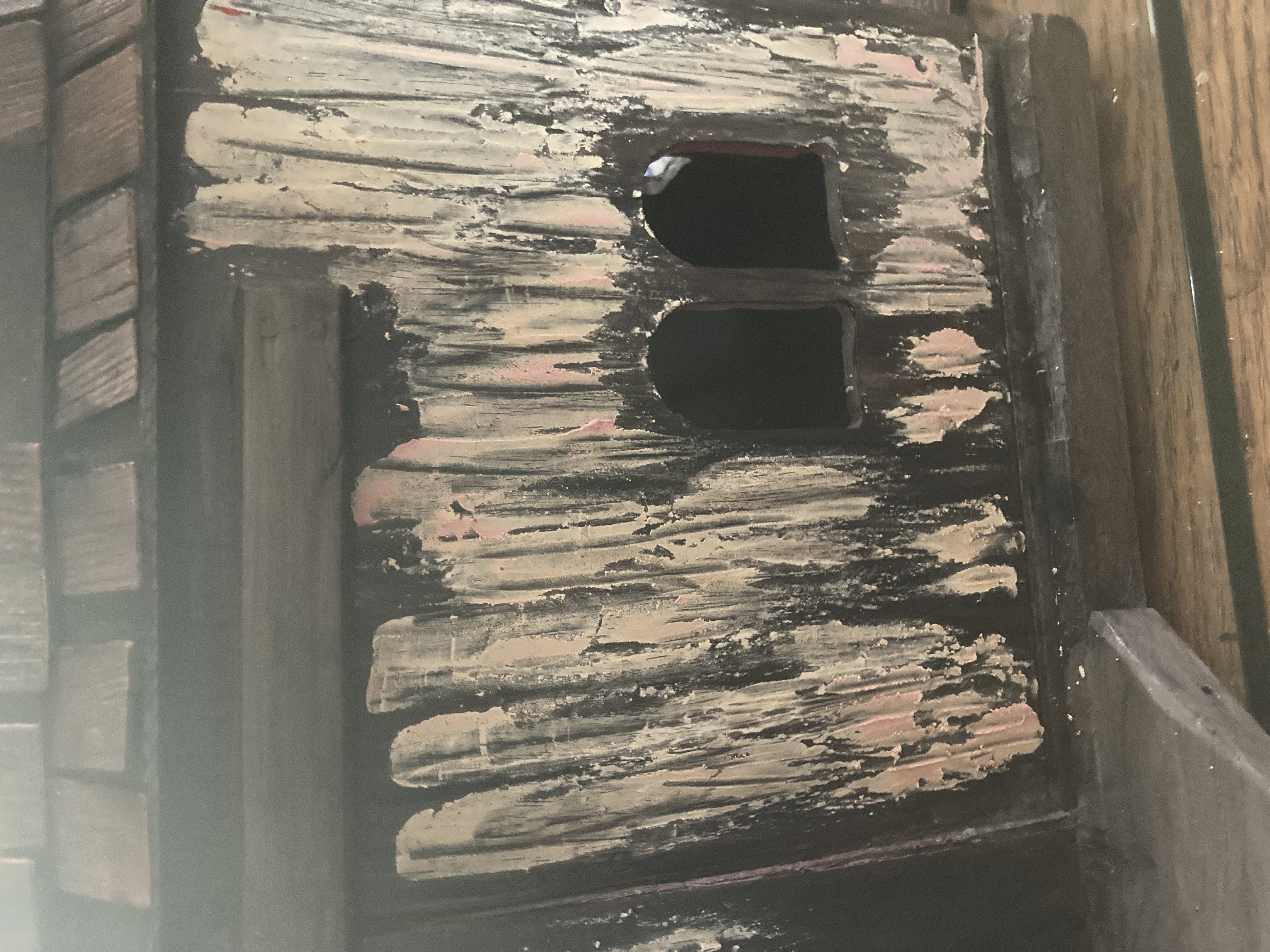
I didn’t like the original shiny red finish, so I sprayed the barn with two coats of Rustoleum 2x gray primer and paint to prepare it for acrylics. However, when I started painting, I discovered that the texture just didn’t seem right. The barn’s smooth wood was too flat to look like real barn wood, even with painted texture. I ended up using a pallet knife to apply a thin coat of wood putty, then scratched into it with the edge of the knife to give it texture.

Adding some wood putty for texture.

One end painted. Also with some shingles applied.
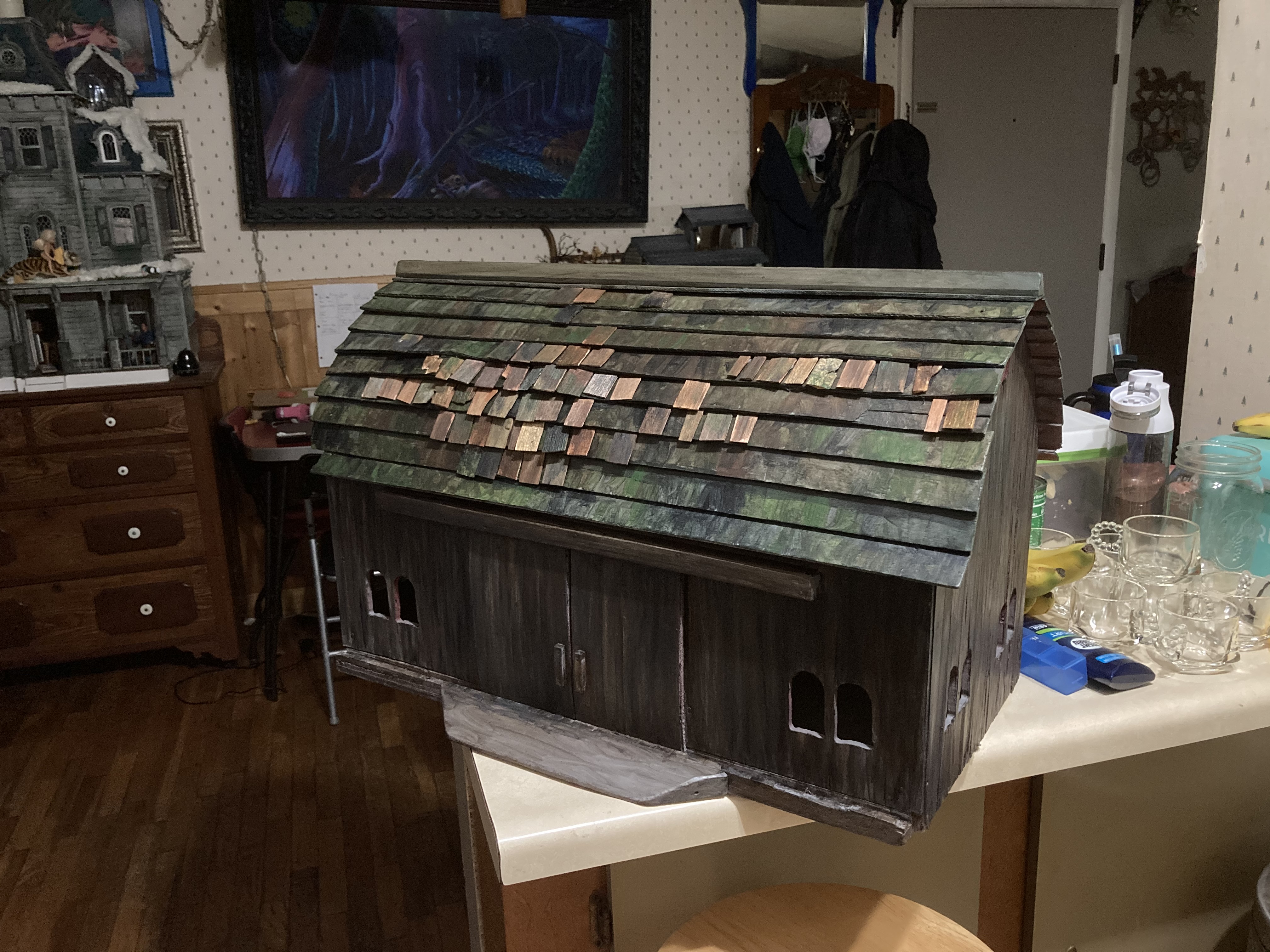
I decided to make my roof look rough, so I staggered the cedar dollhouse shingles on the roof. I started out painting the shingles first, but finally just put them all on and then painted afterwards, as it helped to keep the colors coherent.
Shingles done, front partially painted.

I used a mixture of browns, payne’s gray, and black on the wood, with a tiny bit of green for highlights.

This is a closeup of some of the texture from wood putty under the paint. This was before I was finished painting.

In case you were wondering, the animals are mostly vintage Auburn Toy Company plastic animals. I used to play with similar ones at my grandparents’ when I was a child. When I made arrangements to get this barn, I glanced at marketplace and found these animals for sale, and was able to snatch them up. I almost cried when I found them, as I haven’t seen any like them since my childhood. I have since found others on Ebay.

I have plans for further projects, including a small milk house/barn hill, beams in the hayloft, and possibly some horse drawn machinery. I think it would be cool to make stalls for the animals and milking stations. Stay tuned!