Horseshoe collecting—Shoes with Provenance

While I never did get good marks in History classes (I have to stop and think sometimes to remember important dates in my OWN life, much less others!), I do love seeing and learning about historical artifacts. As a child (and even as a teen) I always wanted to be an archaeologist, digging and discovering.

What I really love is when I find a horseshoe (or other antique) that comes with a story. It isn’t often that you find the history of a lowly horseshoe, but sometimes you will, and sometimes all you have to do is ask, as some sellers don’t think it’s important to say where they dug the shoe up, or how their grandfather was an award winning farrier back in the day and this was one last shoe he kept hanging above his garage door.
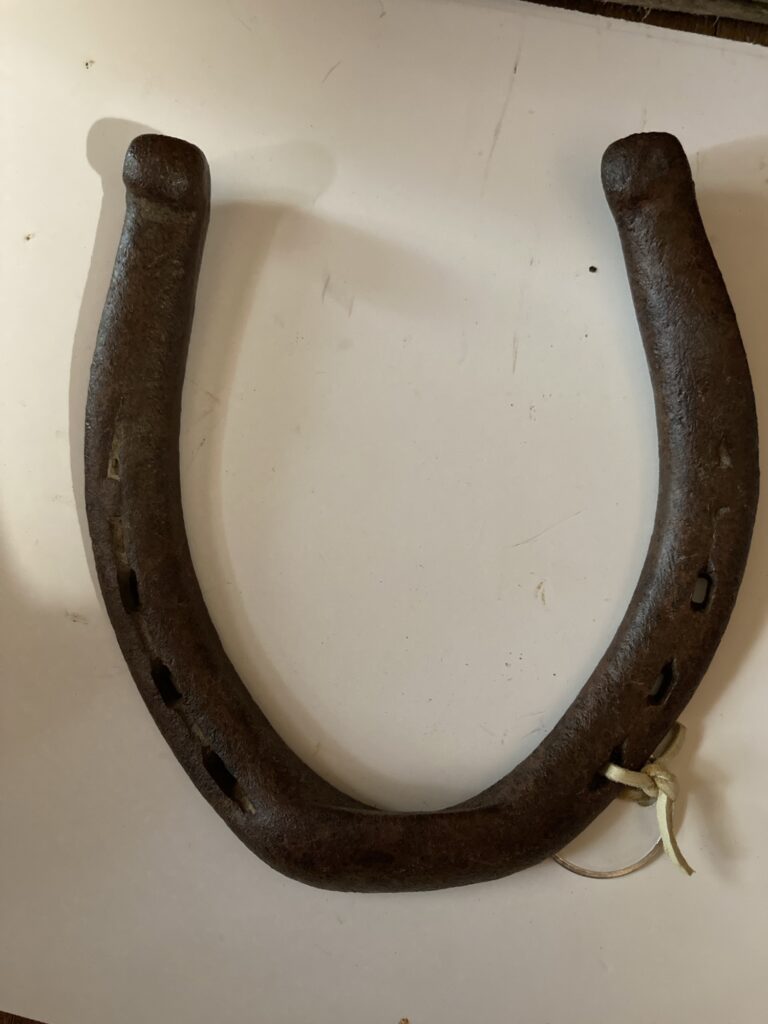
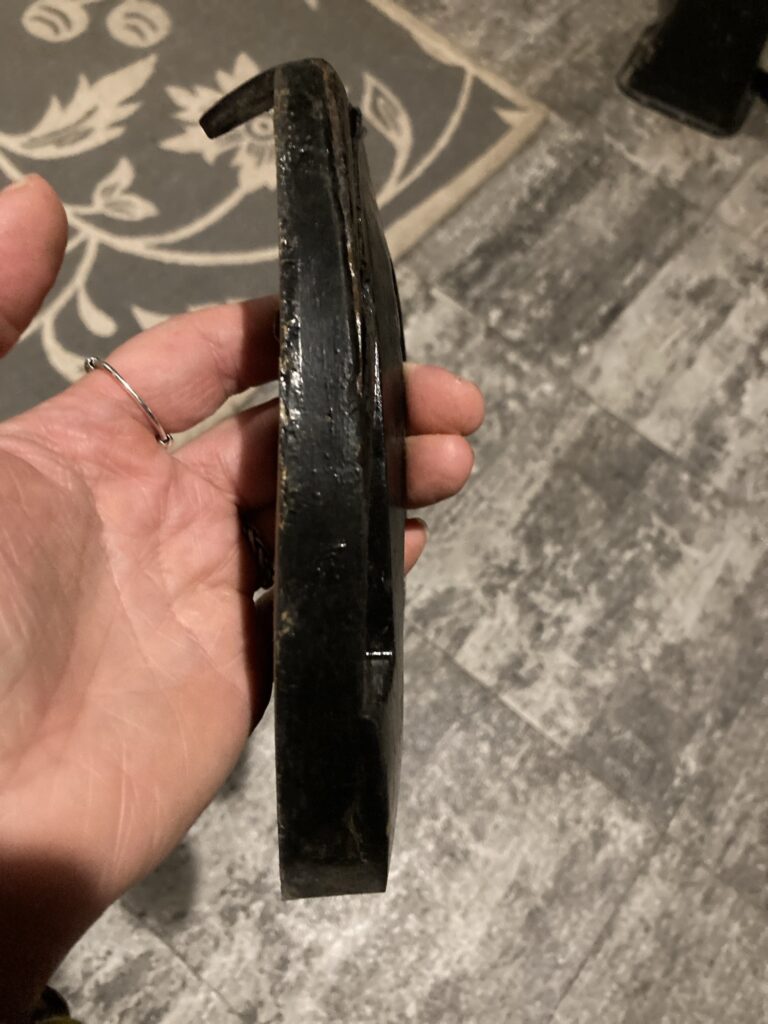
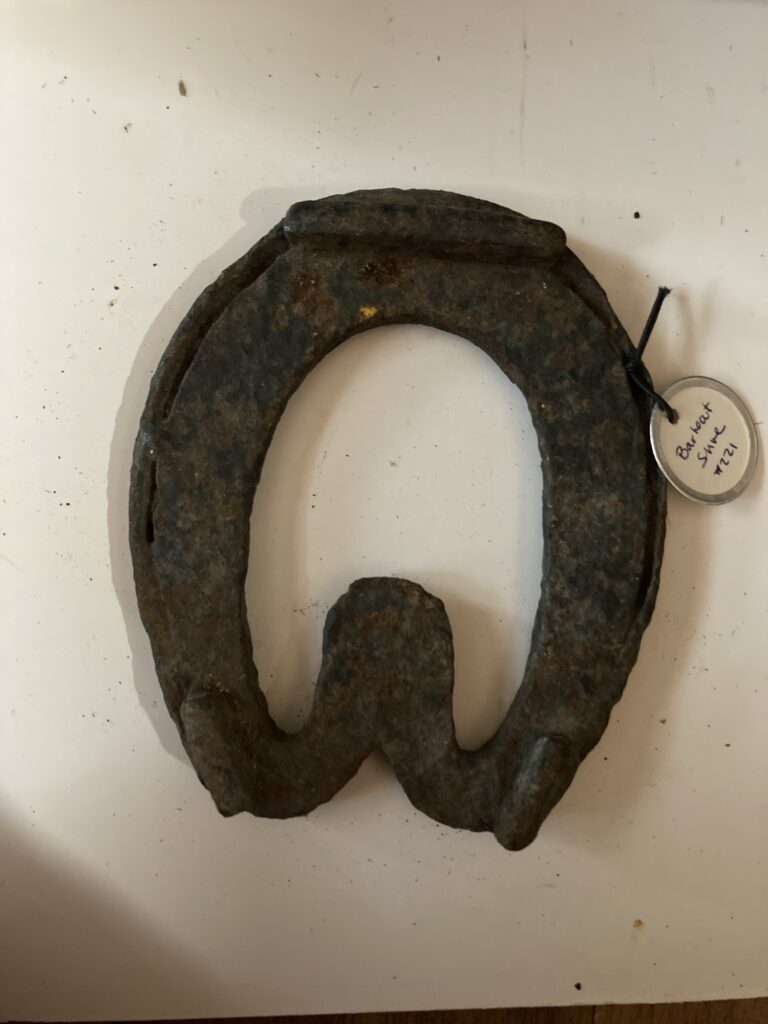
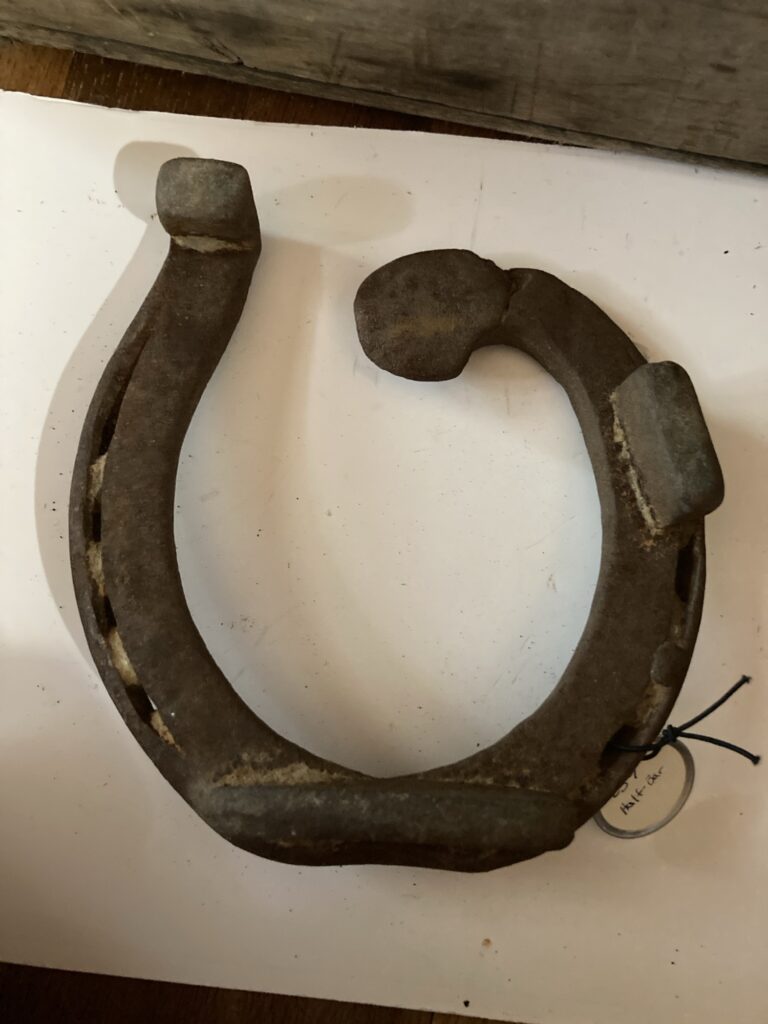
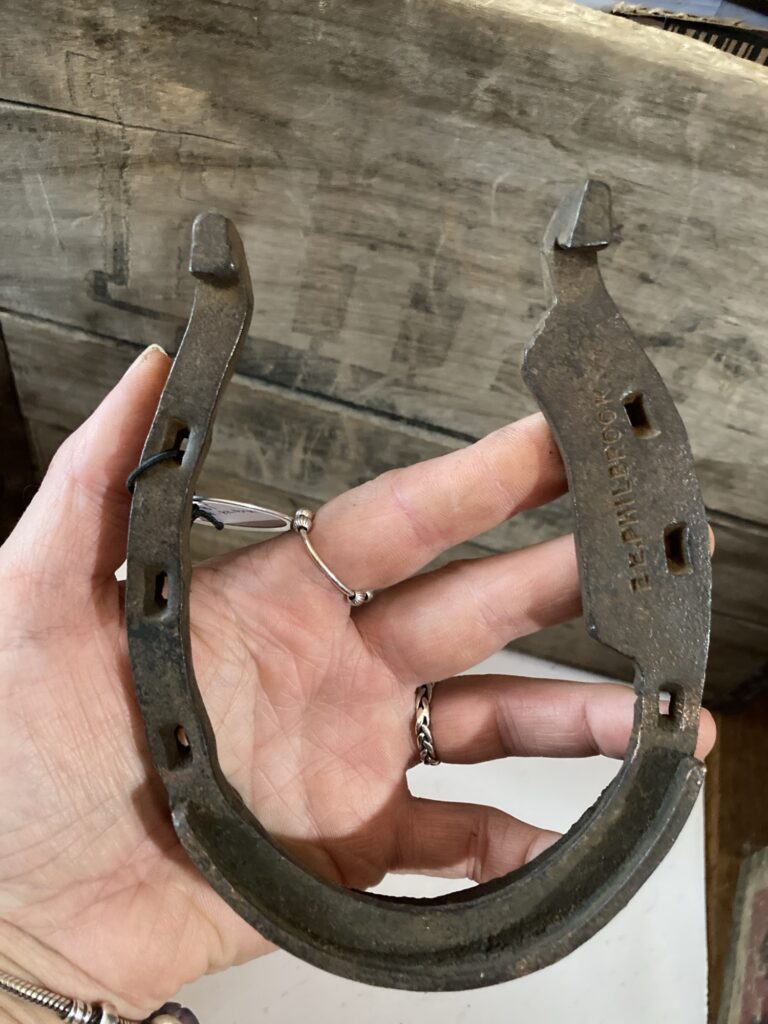
Isn’t it beautiful? The curved toe bar and angled heel caulks?
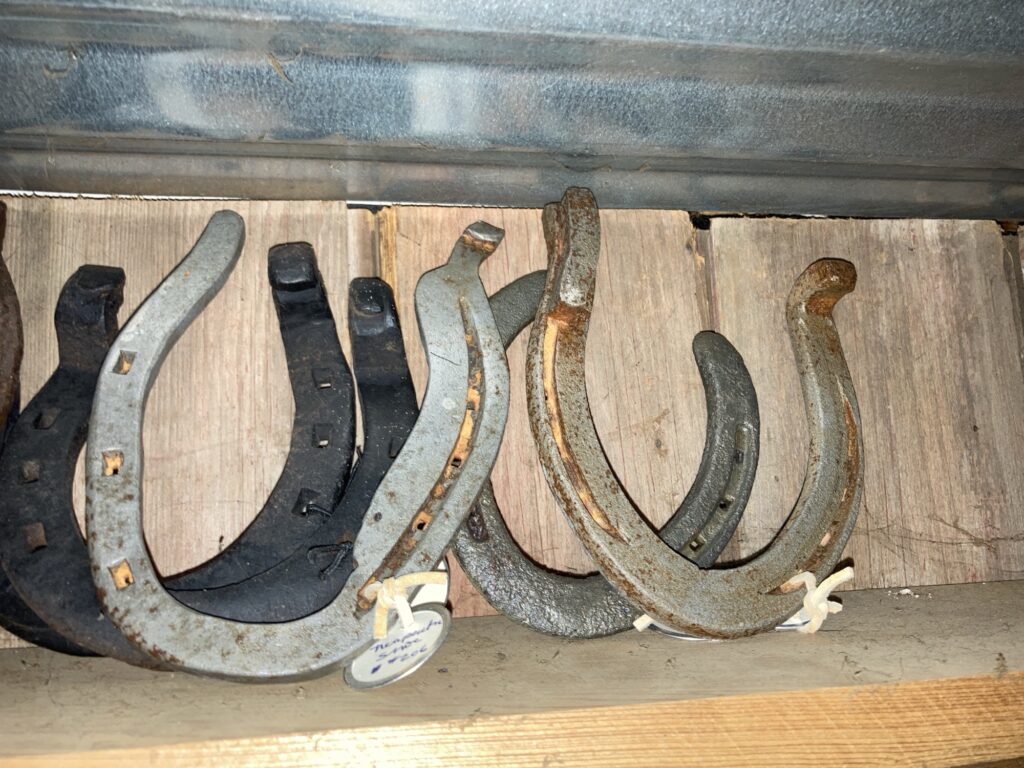
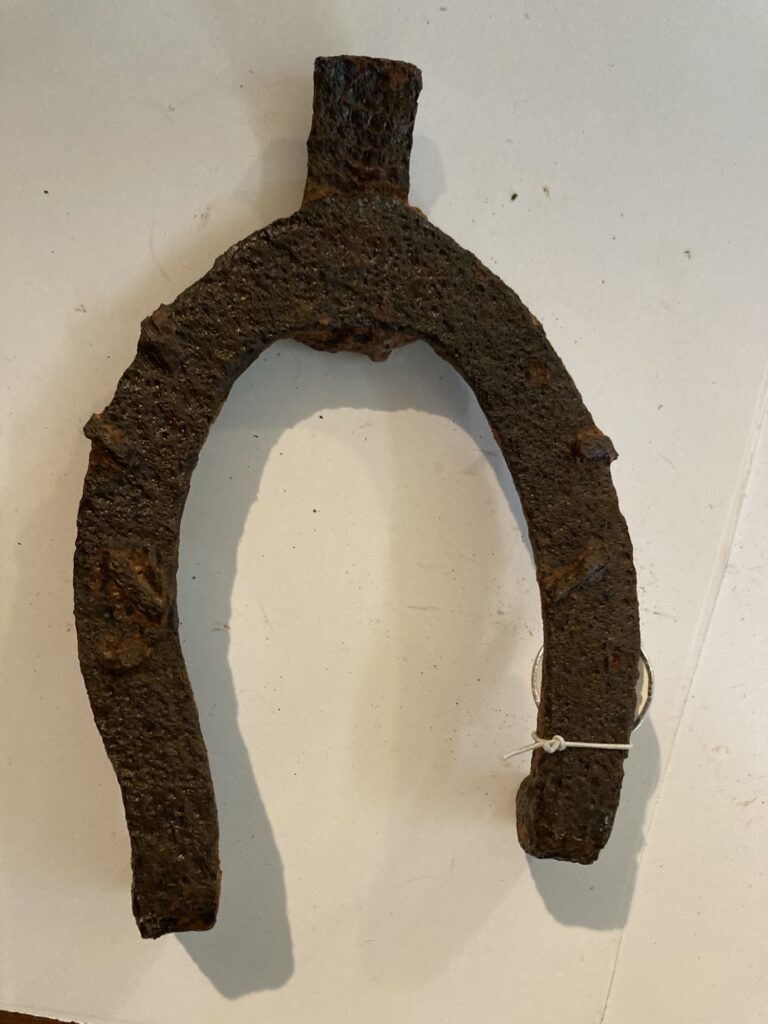
This shoe, and several others that I ended up purchasing, was found by the seller’s uncle when he was younger. He was fascinated with old logging camps in Michigan’s Upper Peninsula, and spent much of his time searching them out through the woods. He picked up several old horseshoes in such locations, and nailed them all along his fences. Their age and condition testify to them probably being worn by the horses of lumberjacks to haul wood in the 1800’s-early 1900’s. Notice the extra bars at heel and toe, called caulkins, that were added for traction. I see this a LOT in old shoes in Michigan, where farming and logging were commonplace in our history.
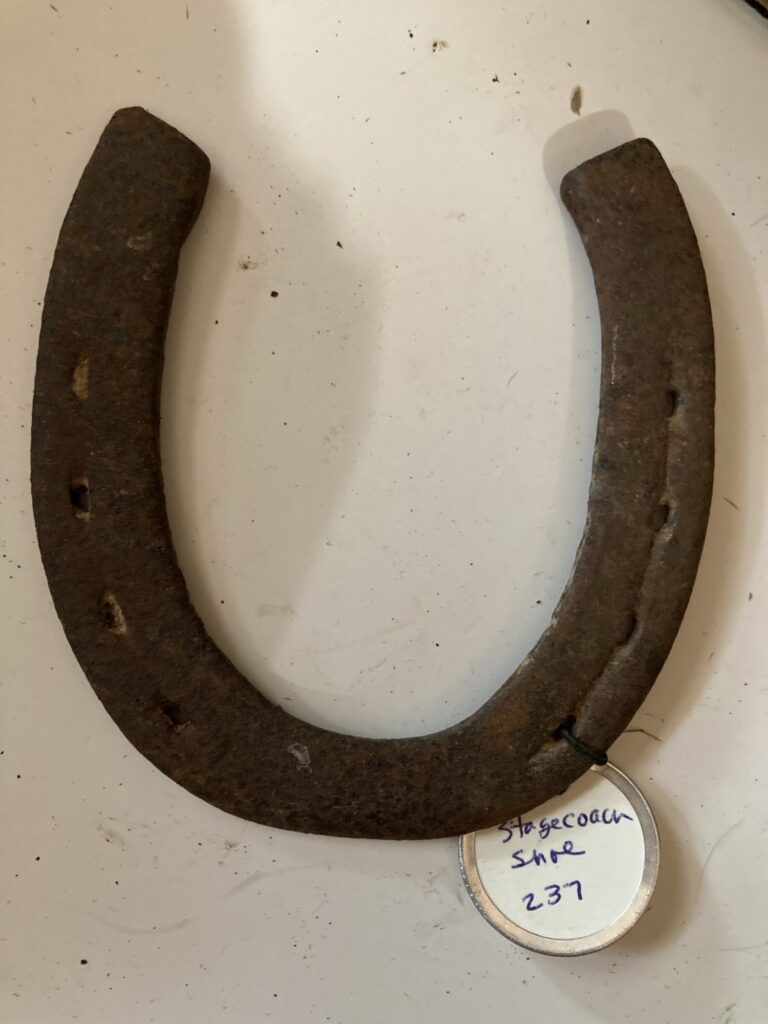
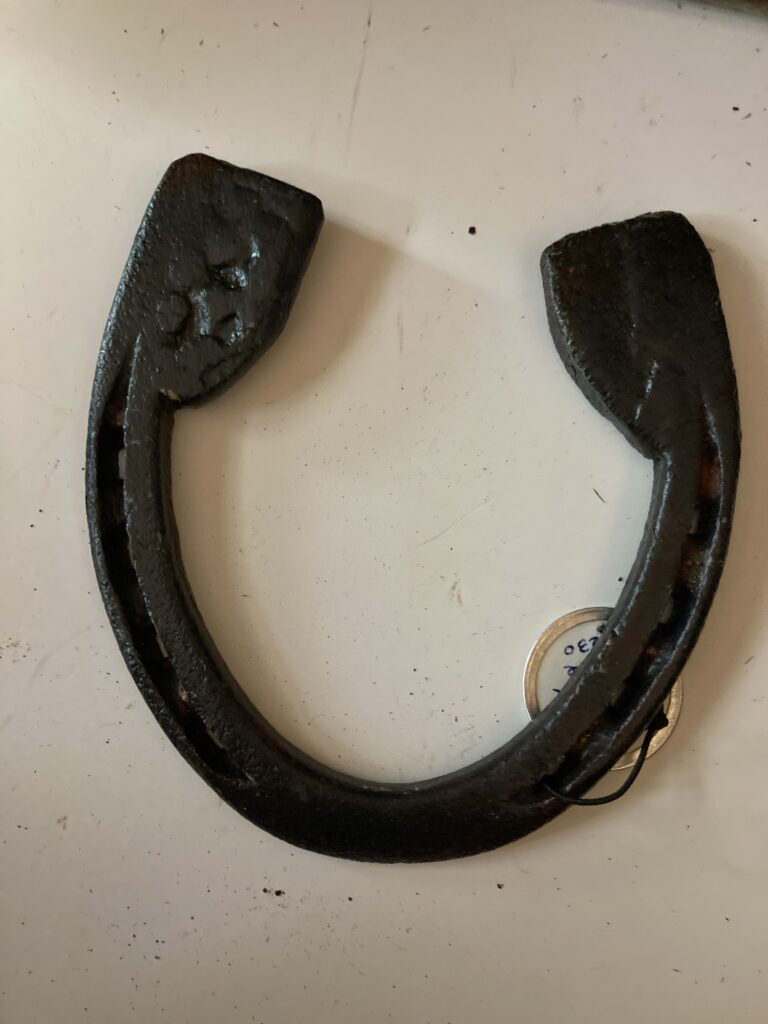
This shoe was found along an old stagecoach road in California.
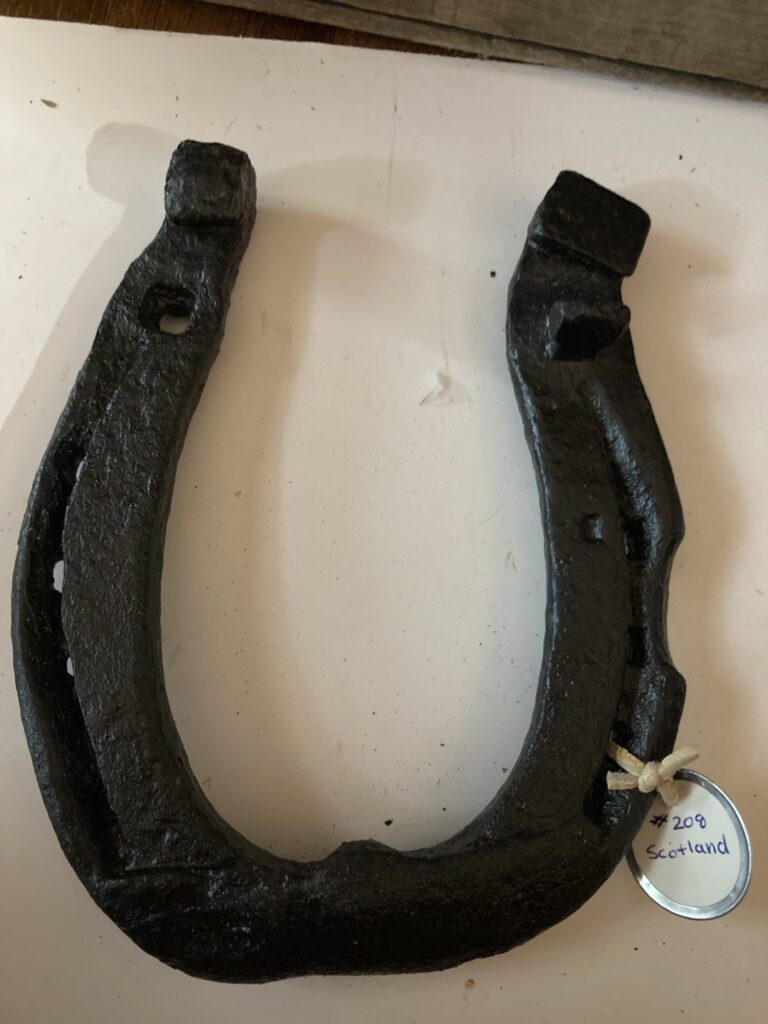
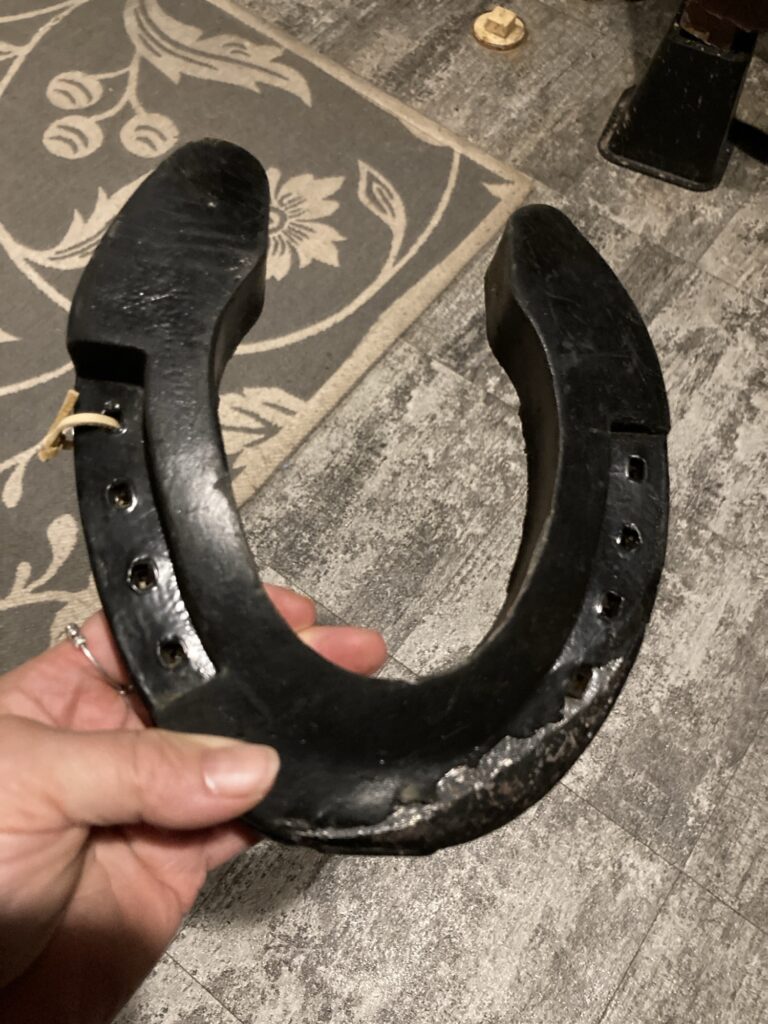
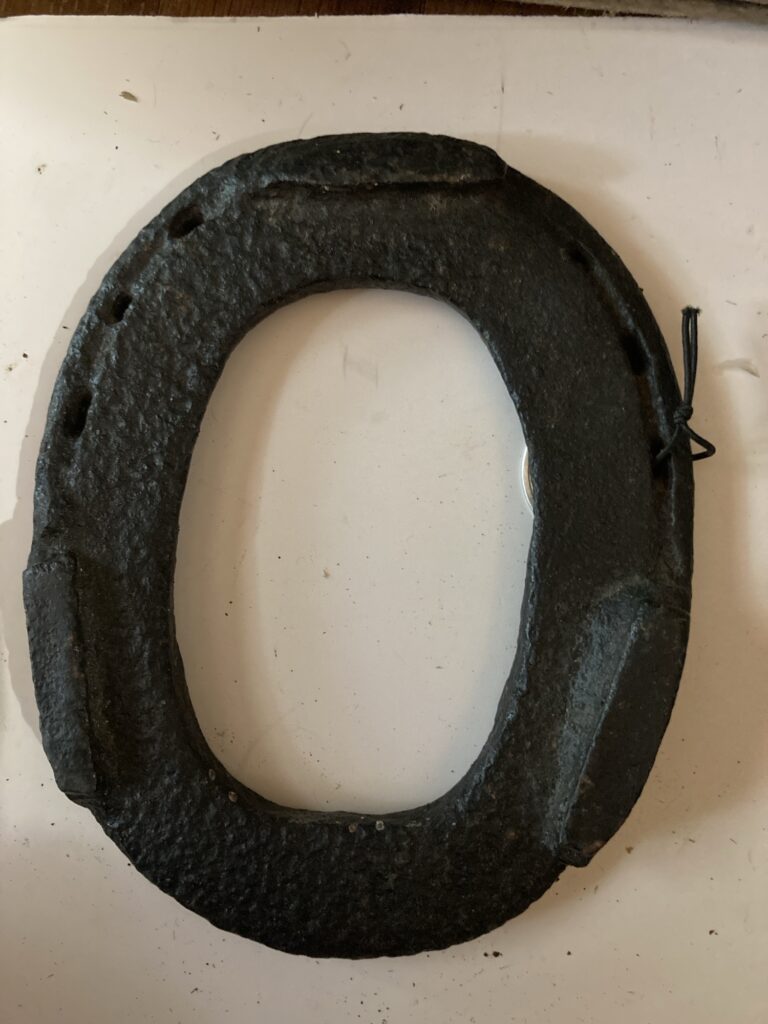
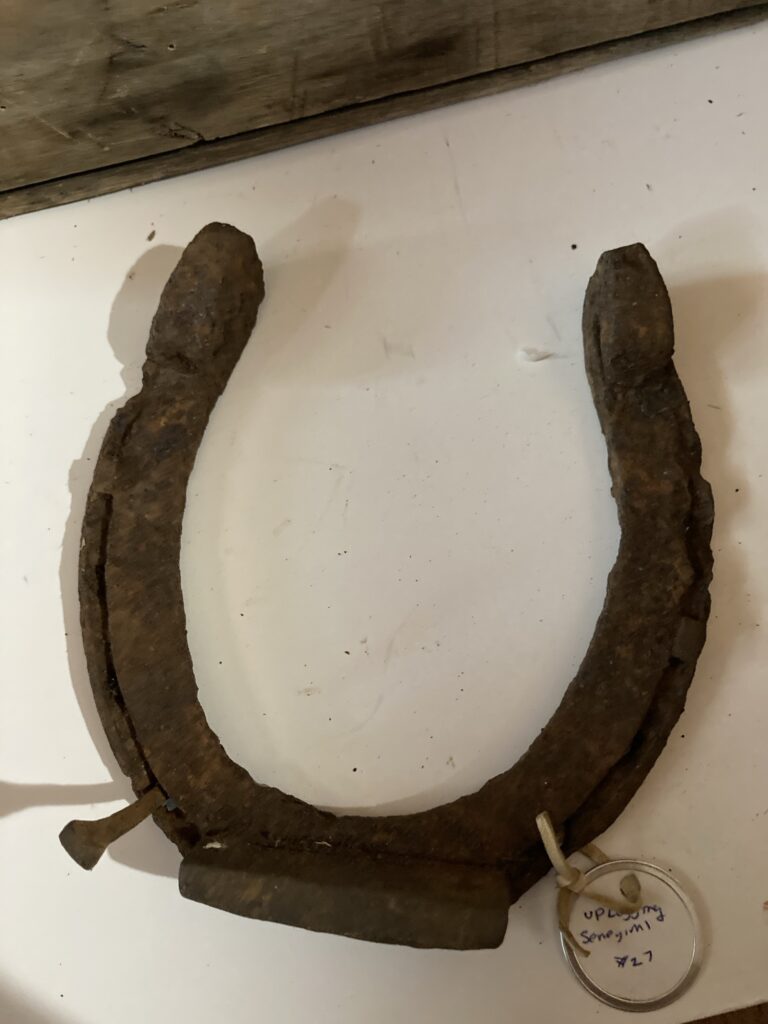
This enormous draft horse shoe was found near the old Smithy in Achafoila on the Aisle of Luing in Scotland. For some reason I can imagine a big old workhorse named Betty wearing it.
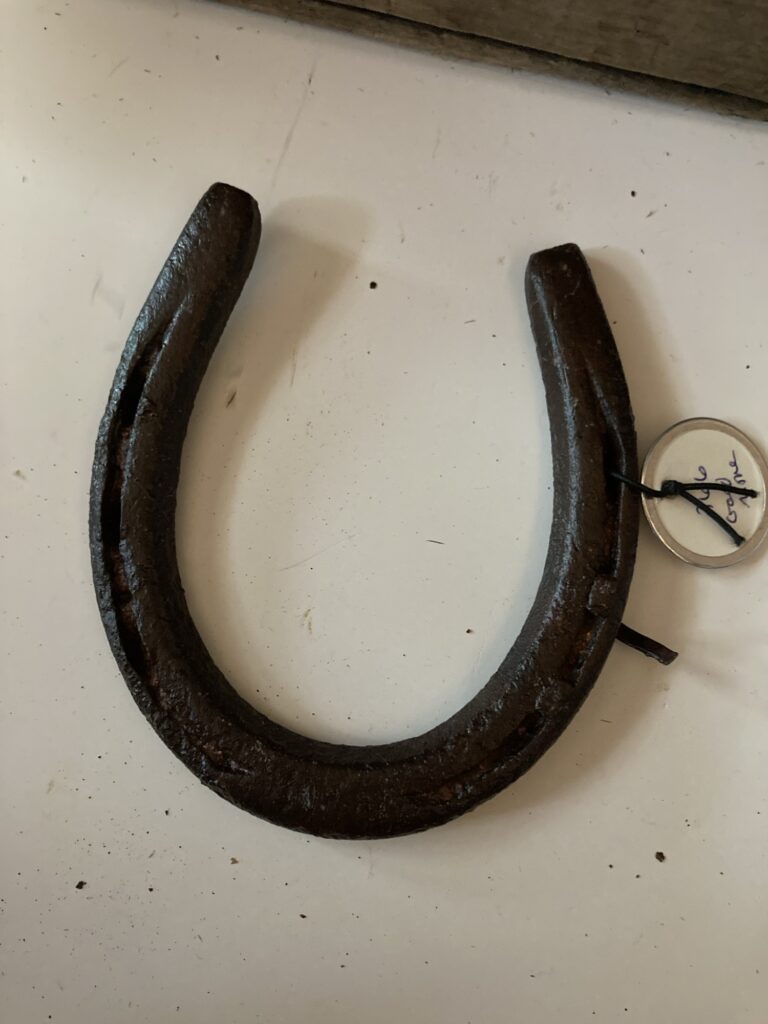
This shoe was found along with a few others near an old gold mine.
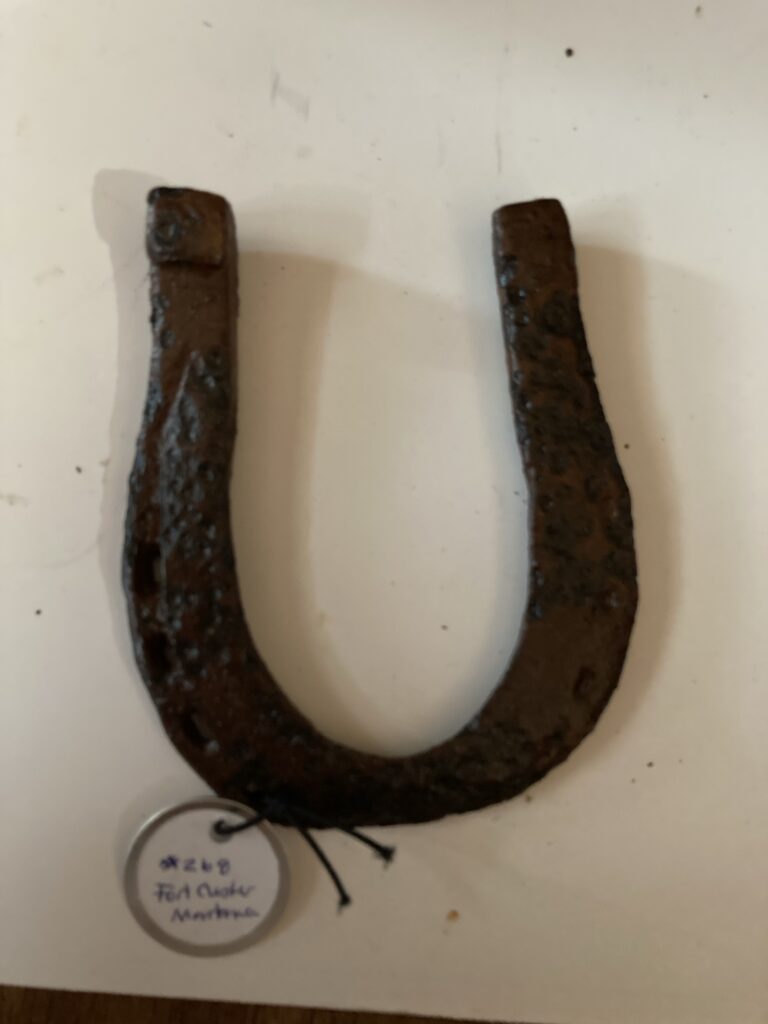
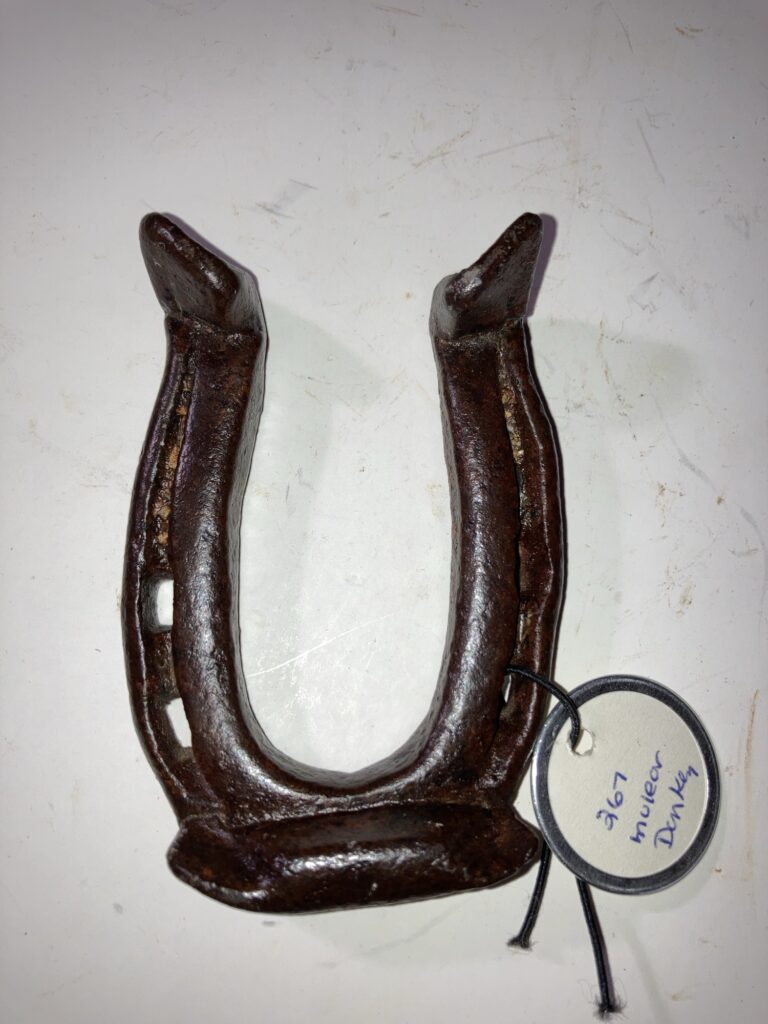
This mule shoe was found around Fort Custer, in Montana. Was it from the Indian Wars?
This shoe was found metal detecting along the Oregon Trail in Wyoming. It has so much wear to it!
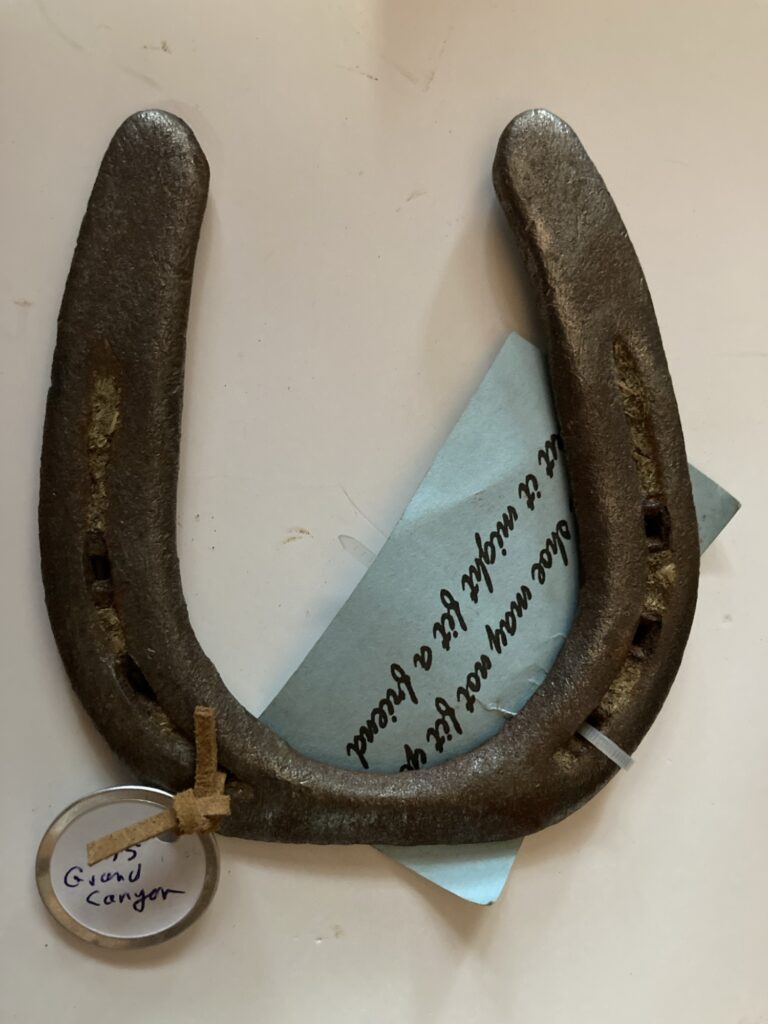
This shoe was from a mule used in tours at the Grand Canyon.
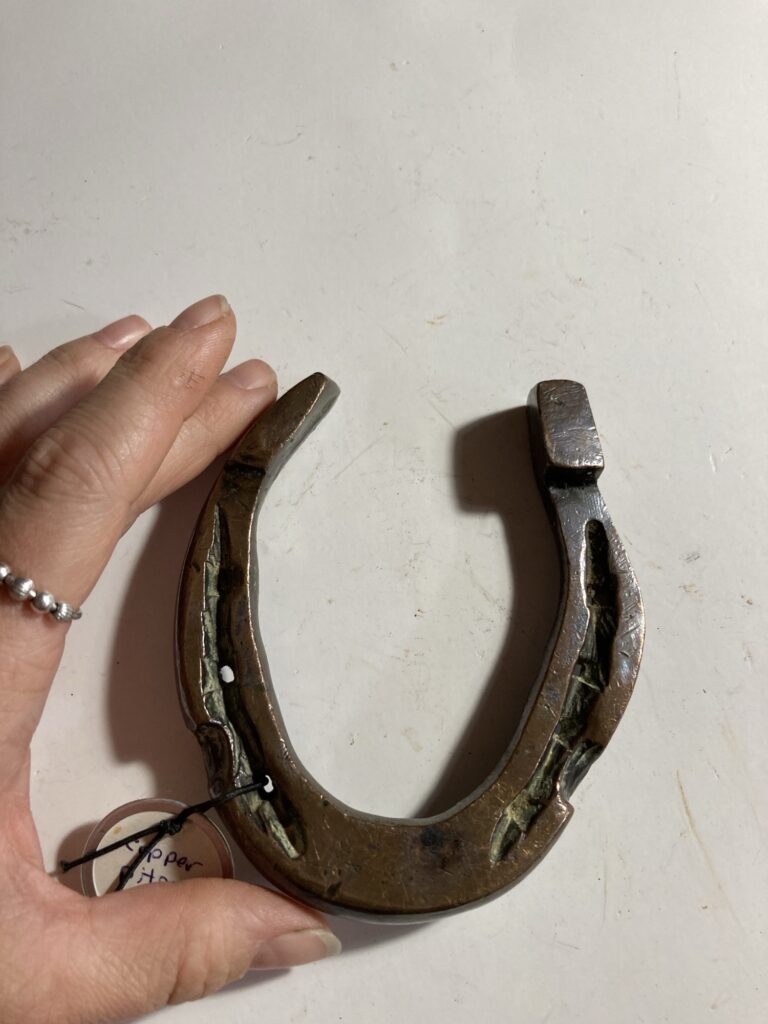
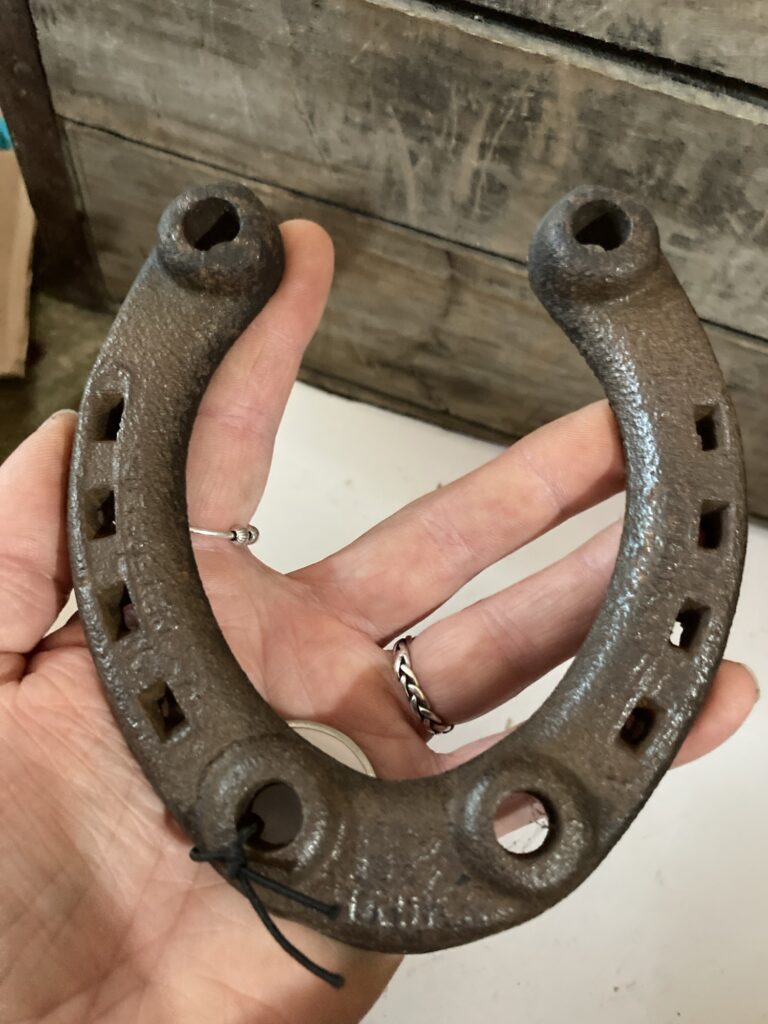
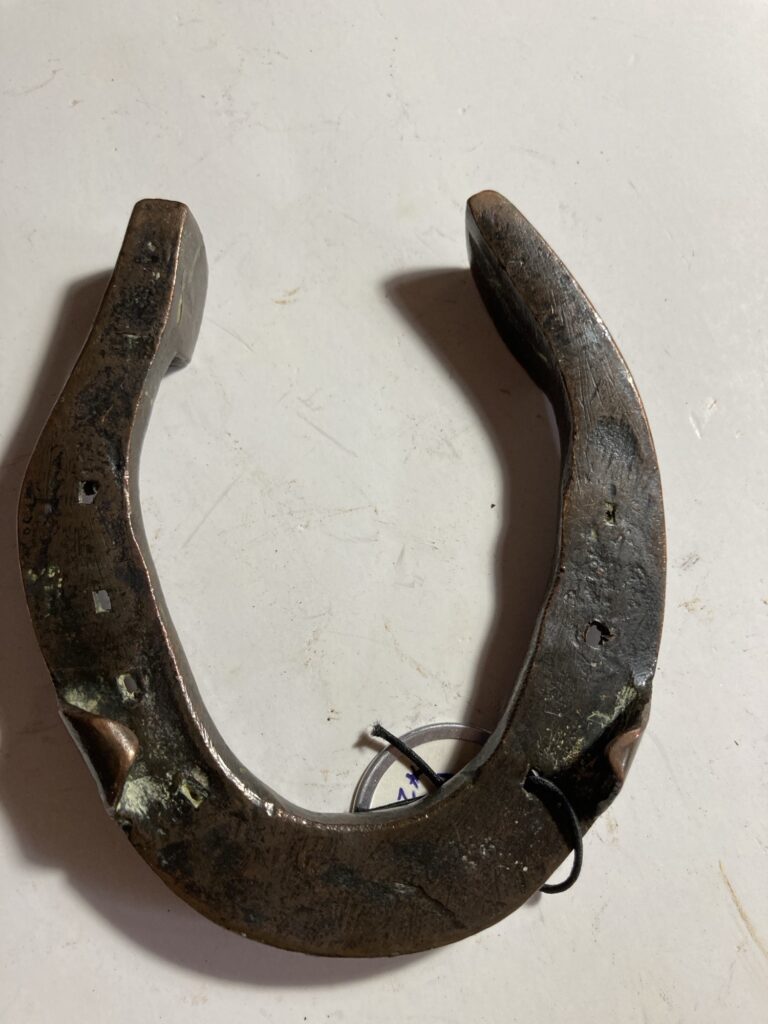
This solid copper shoe was from a pit pony in a coal mine in Wales.

You may be wondering why all of my shoes have tags on them. I tag and number each individual shoe, and write a description of it on an index card so i know where i bought it, everything I know about it, how much I paid, etc. I also draw myself a little picture of it so it is easily recognized when I go to find the individual shoe. I keep the cards organized in a card index.
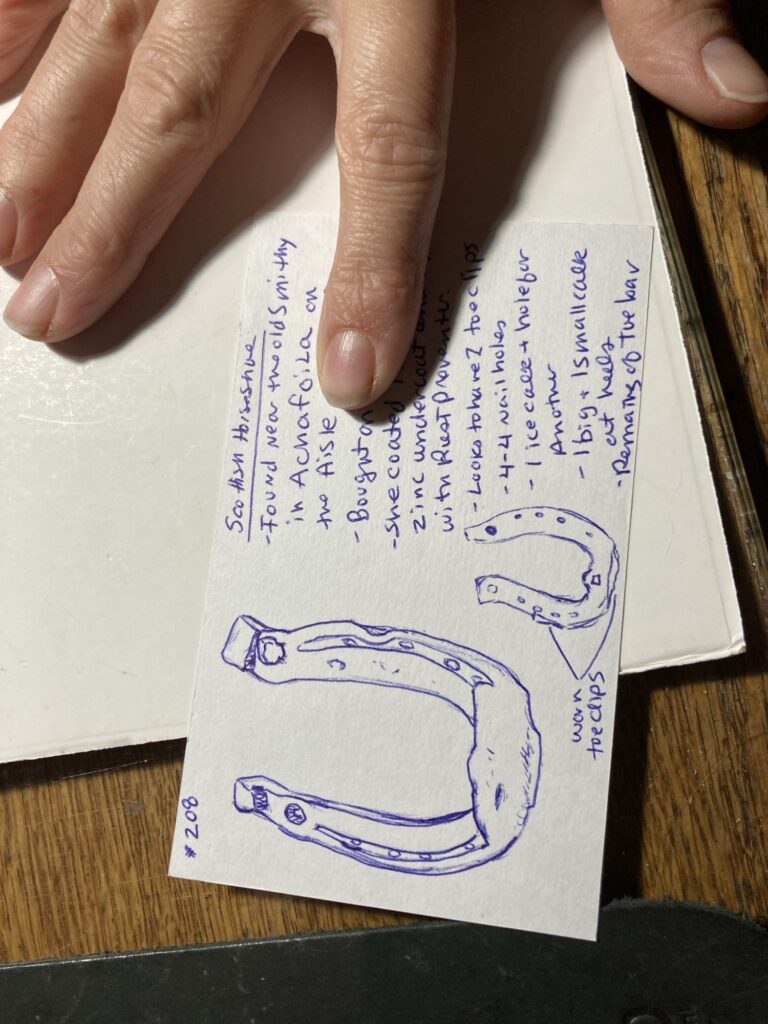
How I record important information about each shoe. The number on the card matches the numbered tag on the shoe.

I hope that with careful record keeping I can safeguard the history of each of my shoes. Unfortunately I didn’t do these things when I first started collecting as a child, but I remember a few details about my favorite shoes.

I have many, many more shoes in my collection (at the moment of writing this I own over 330 shoes). Record keeping helps keep their information organized and readily available. Now if I can just find an easy way to keep the shoes themselves organized 🤔.
Unusual horseshoes

If you collect horseshoes, you may come across some strange ones. There are quite a few variations that were created for different purposes, for hoof therapy, correcting a horse’s movement, or for aesthetic purposes. I am here to share a few from my collection.

This shoe has an extended toe, which is usually used to treat different tendon issues in horses.
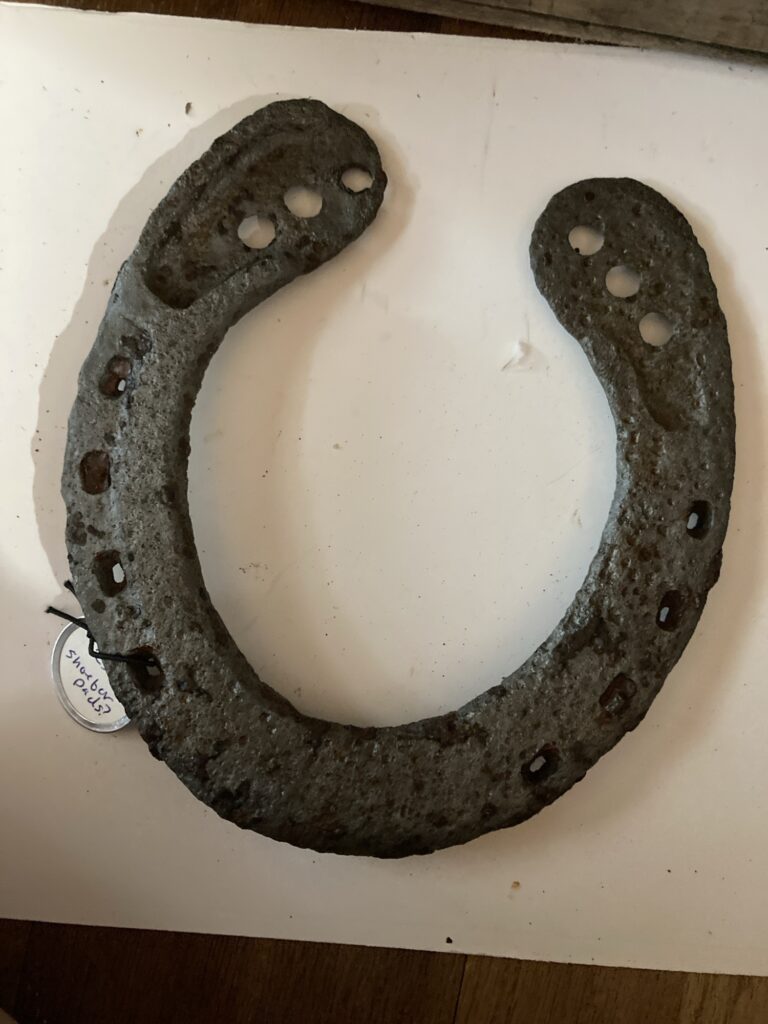
This shoe, while looking quite strange, is actually the metal part of a rubber horseshoe. The rubber has been lost for some reason, and would have been used to cushion the foot like a sneaker, protecting the horse from impacts on hard surfaces such as paved roads.
This is a runner horseshoe from a carriage horse in Frankenmuth, Michigan. The metal part is embedded in the thick rubber or the shoe. I also have another one that was collected by its previous owner in the 1940’s, so they can be older.
A side view. Very thick rubber.
This type of horseshoe, a heart bar shoe, is used to treat different lamenesses by relieving pressure on different areas of the hoof.
Another odd therapy shoe with hand-made extensions at the heels.
Here is another bar shoe. This one is very large—probably a draft horse, and has calkins added to provide traction.
This shoe is very odd. It was probably used to treat several different problems on the hoof.
Here is another therapeutic bar shoe.
Another therapeutic bar shoe. This one has an extension on the heel.
This is one of my favorites. There is a piece of metal almost like a long toe clip, plus a wide branch that might add more support to part of the hoof. It has a manufacturer name on it.
The other side of the above shoe. it looks to be a ready-made shoe as opposed to handmade.
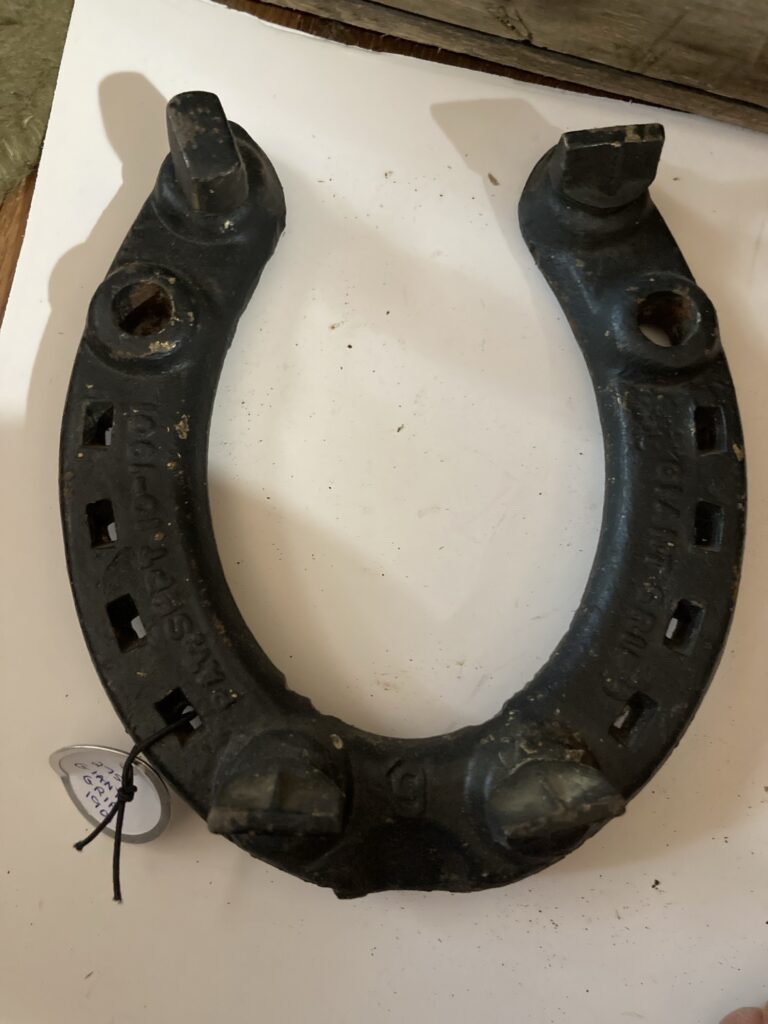
This is a Phoenix Neverslip horseshoe. It was made by the Phoenix horseshoe company, which sold studs that screwed into the large round holes and provided traction in winter. They were popular from about 1880-1940
This is a Giant Grip horseshoe. It is very similar, in fact almost identical to the Phoenix Neverslip, and takes identical studs that screw in. This shoe was patented in 1901, when the company started.
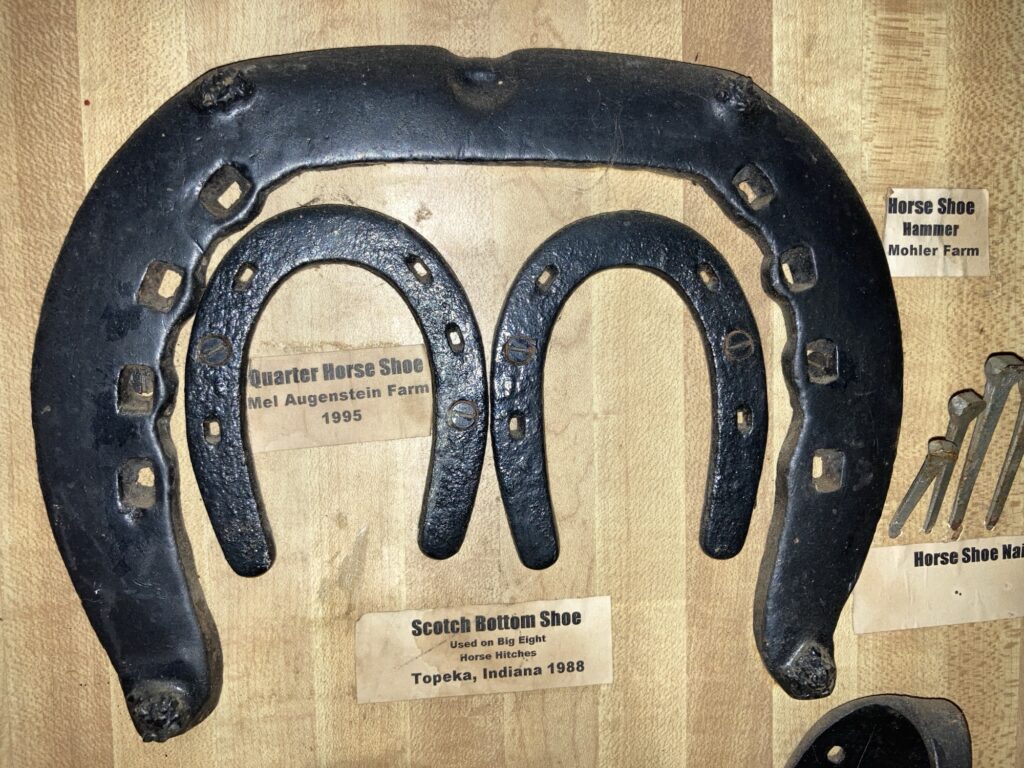
This is an ENORMOUS Scotch bottom draft horse shoe. The smaller shoes displayed inside of it are pony sized (the label says quarter horses but i am guessing they must have been yearlings as they are smaller than normal). Scotch bottom shoes are slightly larger than the hoof, and are used to widen the support of the hoof, alter their gate, and absorb shock.
A patten bar shoe. It is used to rest a limb after a tendon injury.
A side view of the patten bar shoe. The raised part actually touches the ground, like the heel of a high heeled shoe, so i am holding it upside down.
Two more therapy shoes.
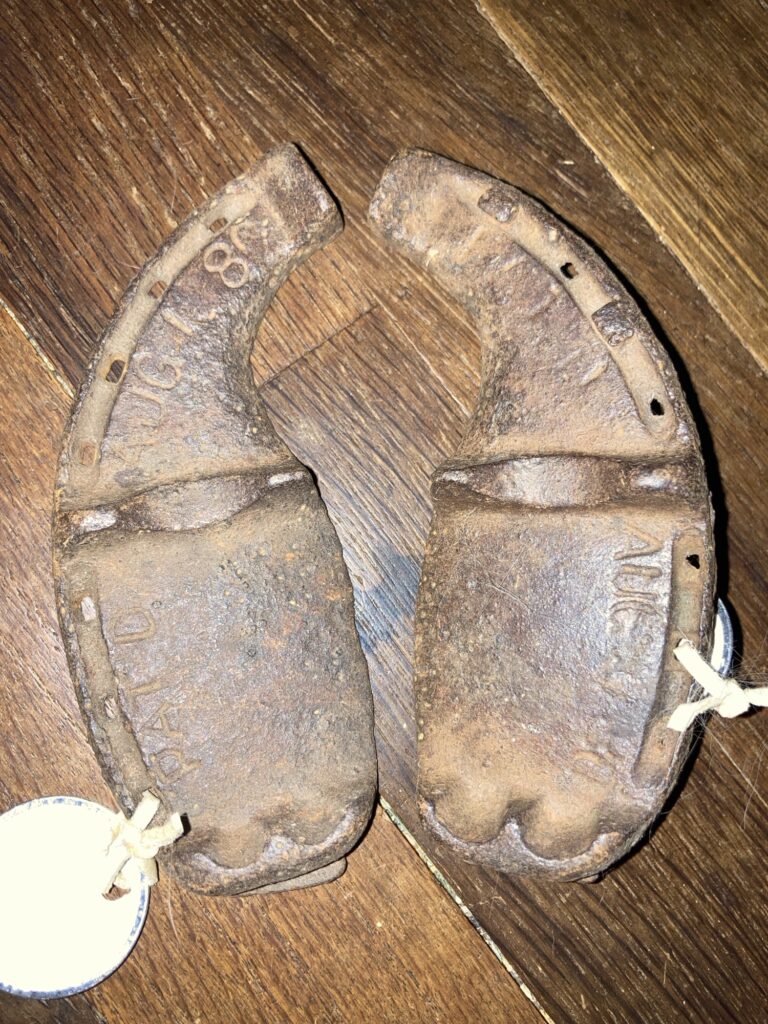
These are ox shoes. Each cow hoof gets 2 shoes, as they have cloven hooves. This particular pair was patented in 1880. Not a horseshoe, but still pretty cool.
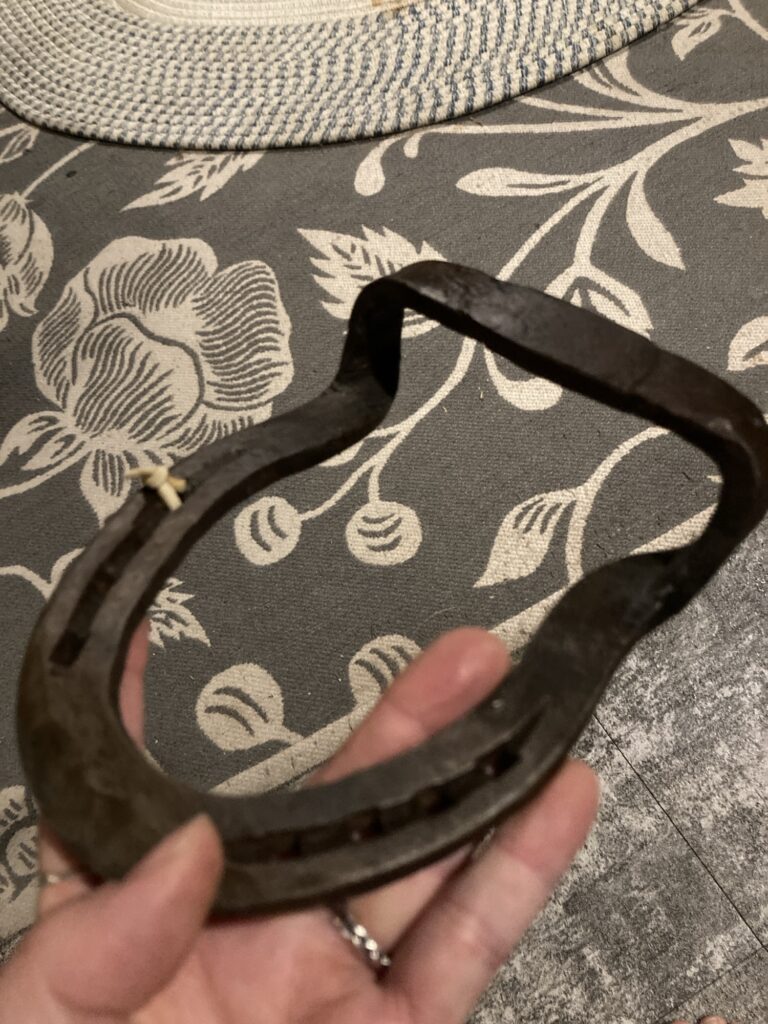
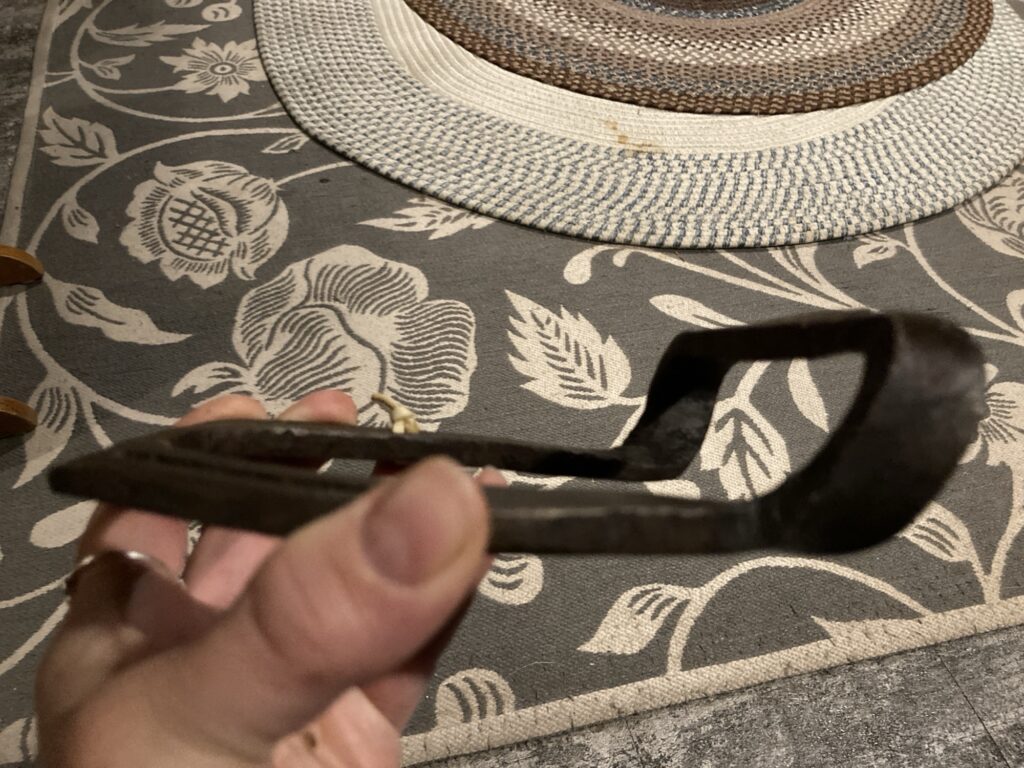
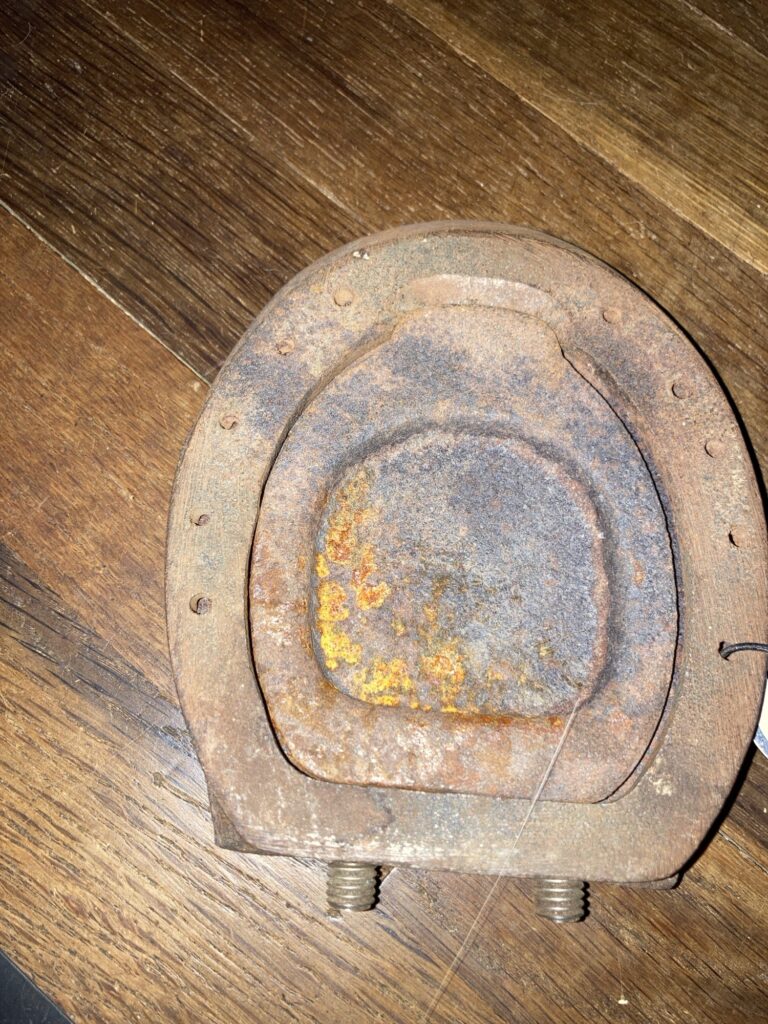
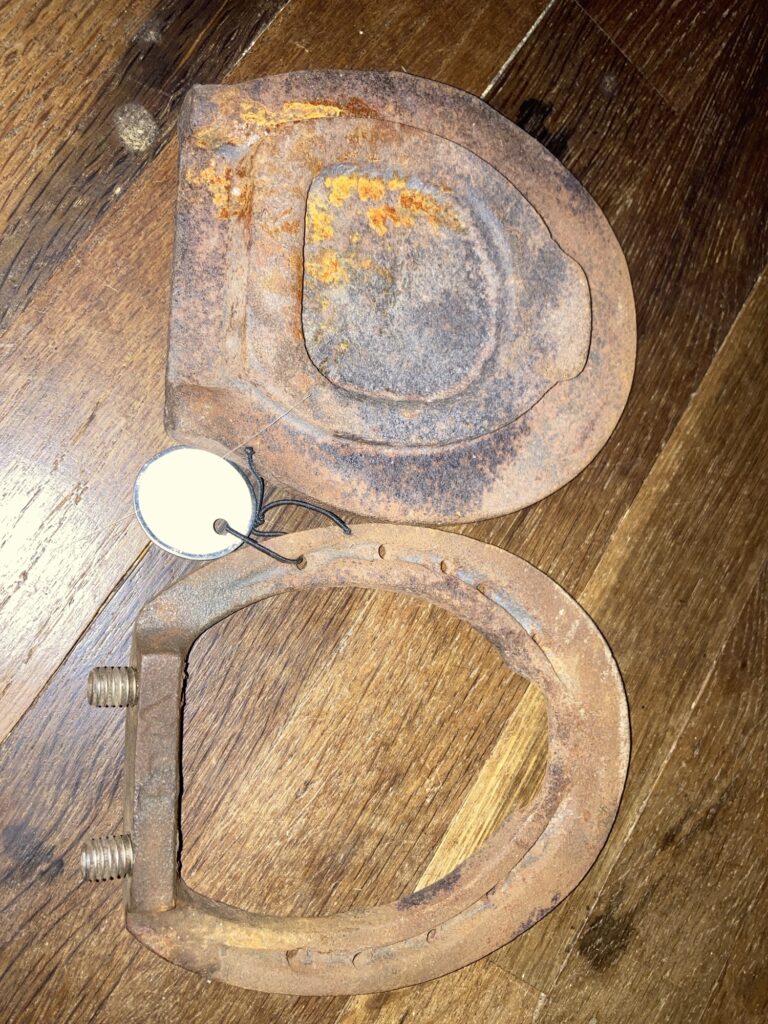
This is an odd shoe that I haven’t seen before. It is divided into to sections. That screw together.
They are definitely horseshoes, but i am not sure on their purpose. The lighter section obviously gets nailed on the hoof like a regular shoe, and the other section, which is much heavier, easily screws onto it. My best guess is that they are used to weight the feet, possibly to overemphasize the horse’s gait (which I don’t agree with). Another fuess is that they could be used to medicate the hoof, but i doubt it as they a very heavy.
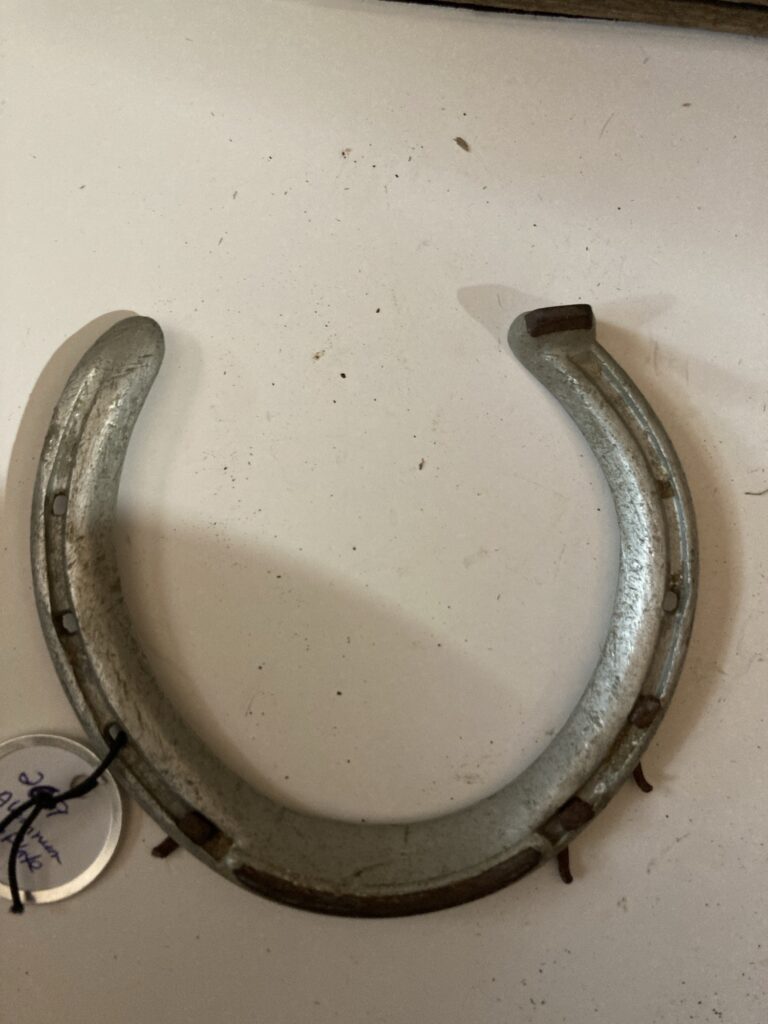
This is an aluminum horseshoe, usually for racing.

As you can see there are many different shoes out there. Most farrier books on horseshoeing will have examples of different types of shoes and what they are used for. Also check the internet. I feel that i have only just scratched the surface of what is available.

A Copper Pit Pony Coal-Mining Shoe

I purchased this horseshoe from someone based in the United Kingdom. Her father had been a coal mining enthusiast and collected many items as souvenirs, including this pony shoe. It was believed to have been from a mine in Wales.

Coal miners used to use ponies to haul loads of coal, as a larger horse would not have had enough head clearance in the tunnels. They had to have solid copper or brass shoes on the horses to prevent sparks that might cause fires what with all of the flammable coal present. This shoe, I believe, is copper. It is not magnetic.

There are two small toe clips present (the clips on this shoe have been bent slightly from handling, particularly since copper is softer than iron, which is what most shoes are made from). With toe clips present, it is safe to say that this particular shoe is dated anytime after 1850, since that is the time that toe clips were invented.

Absolutely one of my favorite finds! Remember, when looking for a pit pony shoe, always check to see if it is magnetic as there are shoes out there that have only been plated or painted with copper or brass for aesthetic purposes and are not actually pit pony shoes.

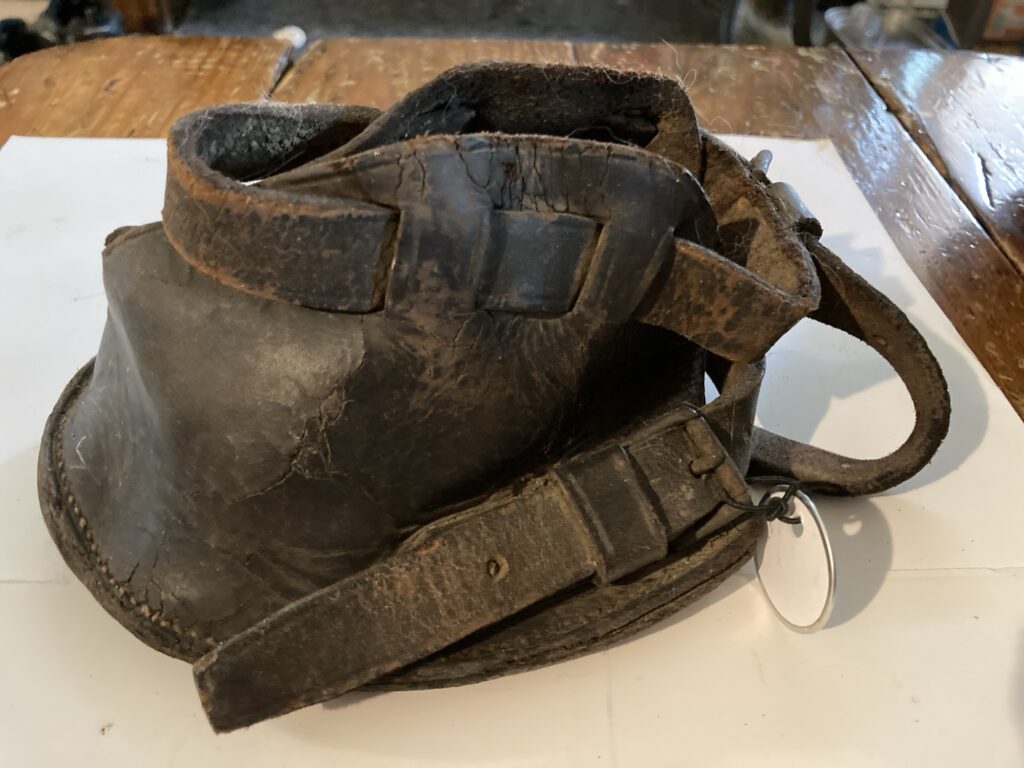
An antique leather spare horseshoe

This shoe is a new find for my collection. I believe it is a spare shoe used for emergencies.

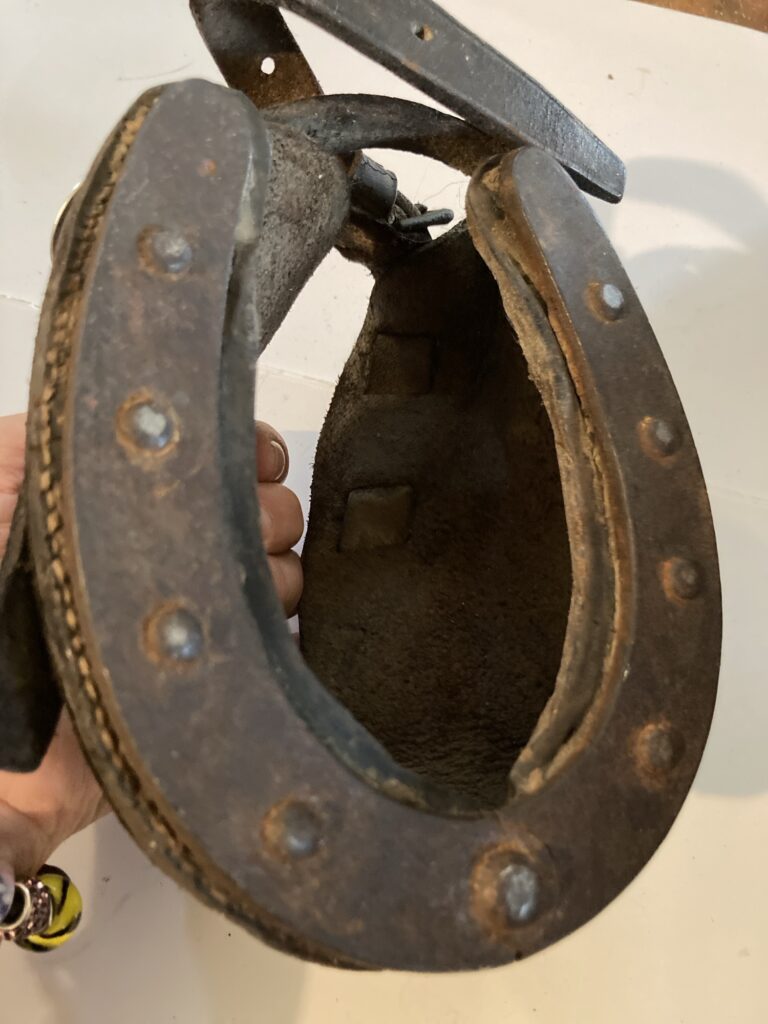
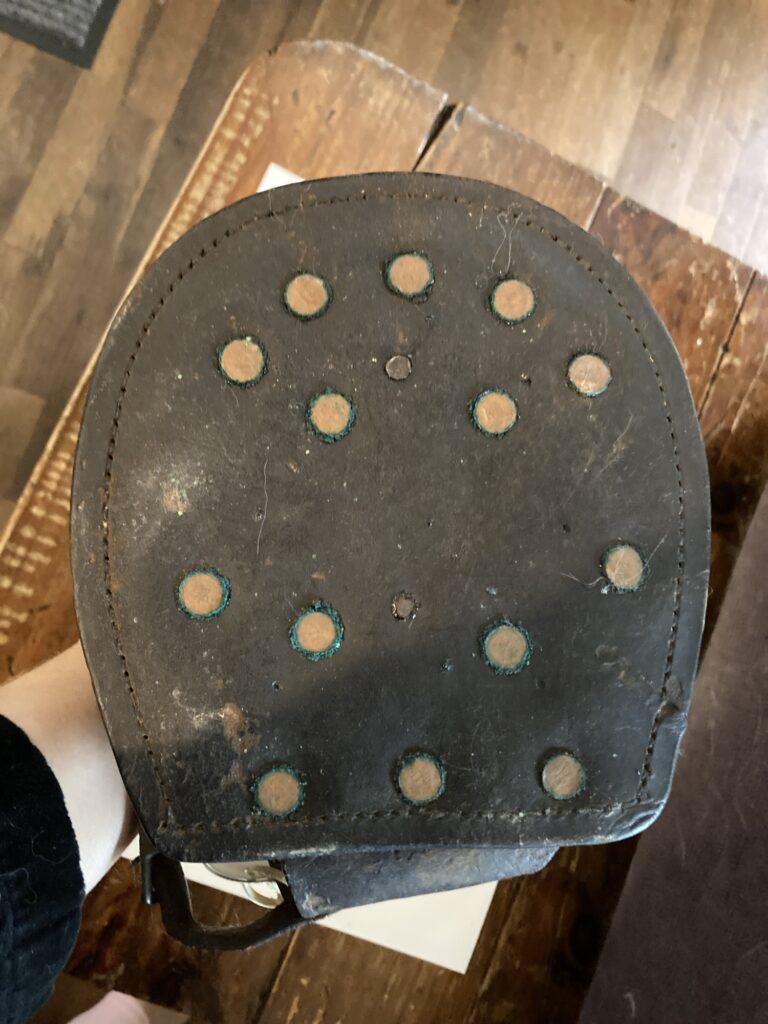
The leather is in poor condition, but it is a boot that buckles over the hoof. It is very similar to a lawn boot, and can easily be mistaken for one at first glance, except that the lawn boots were made with a flat, solid surface of leather to prevent clumps of sod from being scooped out as the horse walked. This spare boot has a horseshoe attached to the bottom and is hollow with no bottom except for the shoe.

Bottom of the spare shoe. There is a metal horseshoe attached, and the boot is basically hollow.
Bottom of an antique lawn boot. The surface is flat with no hollowed out area that might scoop out sod and ruin the grass.

The spare shoe boot would probably have been carried along, perhaps in a carriage or wagon, in case a horse lost its shoe while working. It could easily be buckled in place so the horse would still be able to finish the day of work in comfort. Just like people, if you lost one of your shoes it would be difficult walking the rest of the day with one shoe missing.

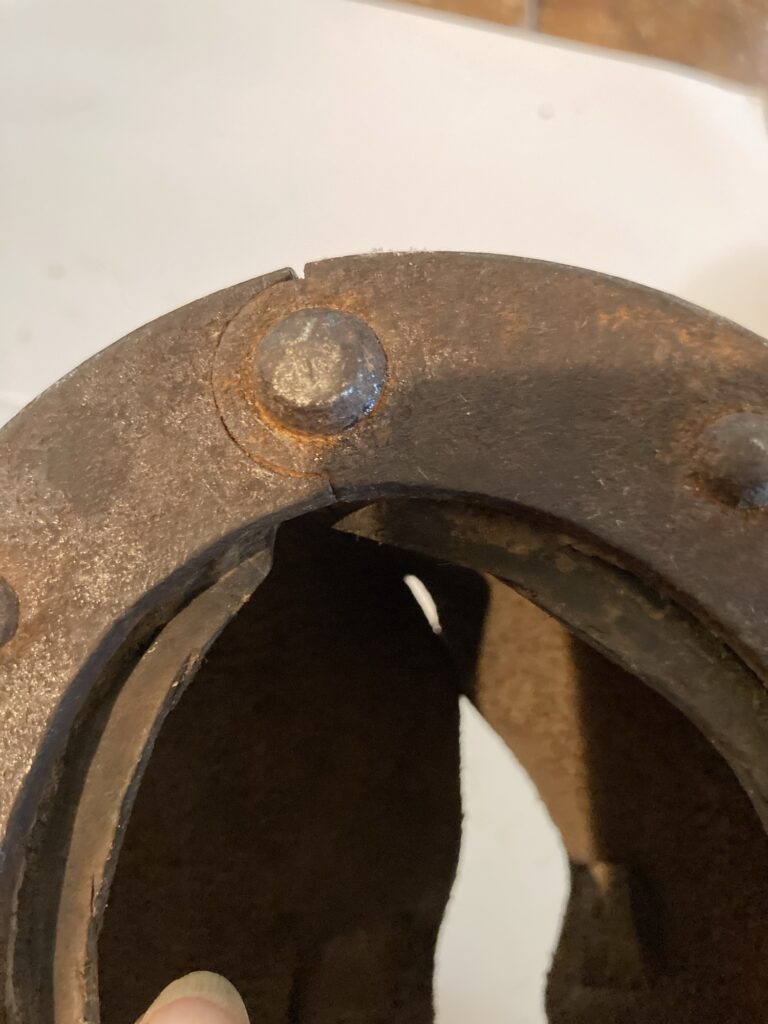
In the middle of the toe area, the metal shoe is hinged to allow fitting on different sized hooves.

Overall it is a most interesting shoe!